


Who Is Black Aly: The death of Criston Cole was always going to be a major moment. The man has been one of the most divisive figures in House of the Dragon since the beginning, a character who inspires the kind of visceral dislike that only the best antagonists can generate. His death in the sixth episode of season three, during the Battle of the Butcher’s Ball, was inevitable. The Dance of the Dragons doesn’t let its villains escape into peaceful obscurity. But the manner of his death, and specifically the person who delivers it, represents one of the most significant changes the show has made from George R.R. Martin’s source material.
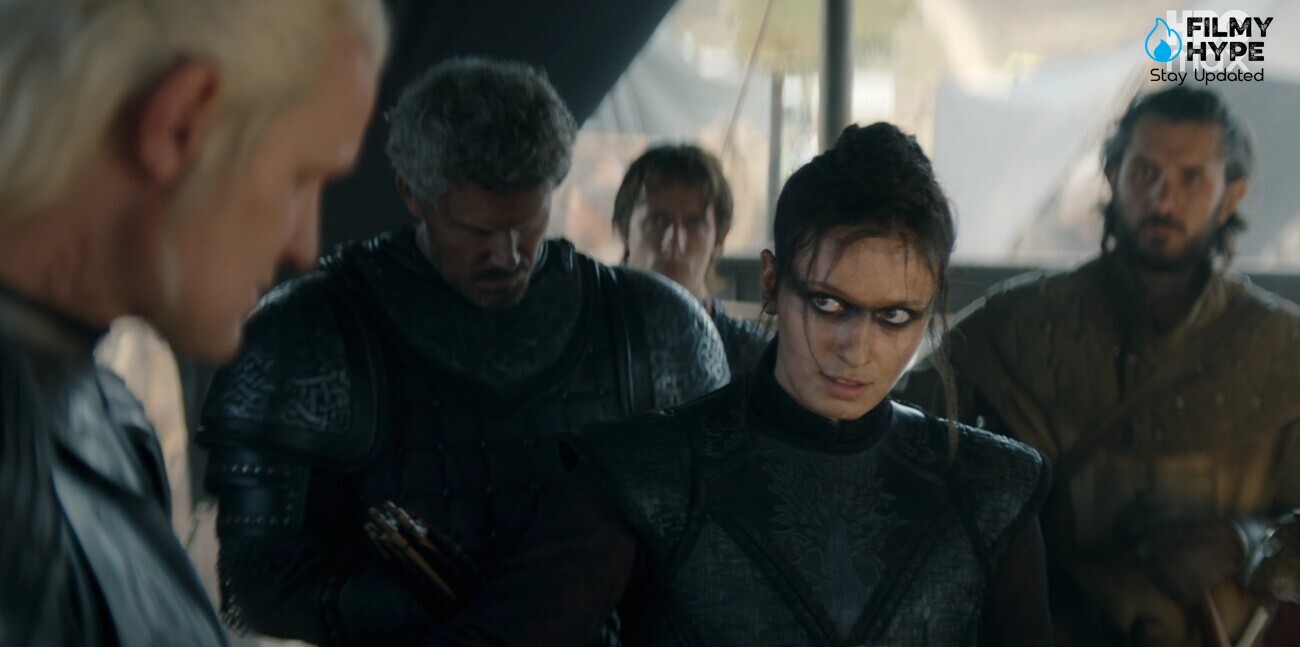
In Fire & Blood, Criston Cole dies in an ambush, denied the honorable duel he craves, shot down by archers before he can draw his sword. The identity of the archer who fires the fatal shot is never explicitly confirmed. The book offers the possibility that it was Red Robb Rivers, a bastard of House Blackwood and one of the finest archers in Westeros, but it keeps the detail deliberately ambiguous. The show makes no such ambiguity. The arrows that kill Criston Cole come from Alysanne Blackwood, known as Black Aly. The decision to give her this moment isn’t just a narrative convenience. It’s a statement about who this character is and why she matters to the story going forward.
Who Is Black Aly? Why the Show Gave Black Aly the Kill
To understand why this change matters, you have to understand who Criston Cole became over the course of the series. He started as a promising knight, someone whose skill with a sword seemed matched only by his sense of honor. Then came the rejection from Rhaenyra, the wounded pride, the slow transformation into something bitter and vengeful. By the time of his death, Cole had become the architect of much of the war’s violence, the man who helped crown Aegon II and who had spent years nursing a resentment that curdled into cruelty.

When he realizes the battle is lost and his army is surrounded, Cole does what he’s always done. He tries to control the narrative. He offers a duel, a chance to die with a sword in his hand, to go out as the great knight he’s always believed himself to be. The show denies him this. Before he can even properly draw his weapon, a volley of arrows strikes him in the chest and face. He dies not as a legendary warrior but as a target, eliminated from a distance by someone who refused to play by his rules.
That someone is Black Aly. A woman. A skilled archer from a house known for producing exceptional marksmen. The choice is thematically loaded. Cole’s entire trajectory has been shaped by his resentment of Rhaenyra, by his inability to accept rejection from a woman who had power he couldn’t control. To have him killed by a woman, and one who doesn’t even grant him the dignity of close combat, is the final humiliation. It’s the show’s way of saying that Cole’s story was never going to end the way he wanted it to. He chased glory and got an unmarked grave. He sought epic death and got an arrow from a distance. The poetry is deliberate.
How the Show Merges Two Book Characters
In Fire & Blood, the two prominent archers from House Blackwood are Red Robb Rivers and Alysanne Blackwood. Red Robb is the bastard son, considered one of the deadliest bowmen in the Seven Kingdoms. Black Aly is something slightly different. She’s a skilled fighter in her own right, but her reputation in the books is built as much on her personality and her later role in the peace settlement as on her martial prowess. She’s charismatic, sharp-witted, and one of the more memorable supporting characters in the latter stages of the Dance.
The show has chosen not to introduce Red Robb Rivers at all. Instead, it folds his characteristics into Black Aly, giving her the kill that the book leaves ambiguous. This is efficient storytelling. The series has a massive cast already, and introducing another Blackwood archer just to kill Criston Cole would have diluted the impact of the moment. By giving the kill to Black Aly, the show strengthens her character immediately, establishes her as a significant presence, and sets up her importance for whatever comes next.
It also aligns with something the books suggest about Alysanne anyway. Her skill with a bow is referenced in Fire & Blood. She’s not just a background noblewoman. She’s a fighter, someone who participates actively in the war rather than watching from the sidelines. The show is taking that established trait and amplifying it, making her the instrument of Cole’s death rather than just one of many archers who might have fired the fatal shot.
The Sabitha Frey Problem
Not all the changes to Black Aly’s story are additions. Some are subtractions, and they reflect the show’s broader decisions about what to prioritize in a season that’s already packed with plot.
In Fire & Blood, there’s a suggested romantic relationship between Alysanne Blackwood and Lady Sabitha Frey. The chronicles hint at a close bond between the two women during the military campaign toward Tumbleton, one that many readers have interpreted as romantic. It’s one of several queer relationships that Martin weaves into the margins of his history, presented through the unreliable narrators and ambiguous language that characterize the entire book.
The show has essentially eliminated this possibility by reinventing Sabitha Frey entirely. In the series, she’s an adult councilor to Rhaenyra in King’s Landing, a political figure rather than a warrior, and her path never crosses with Black Aly’s in a way that would allow their relationship to develop. The change isn’t necessarily malicious. Season three is juggling an enormous number of characters and plotlines, and the personal lives of secondary figures inevitably get compressed. But it does mean that a dimension of Black Aly’s character that existed in the books has been removed from the television version, at least for now.
Why Black Aly’s Future Matters
The decision to foreground Black Aly in Criston Cole’s death isn’t just about giving a cool moment to a minor character. It’s about setting up her role in what comes after the war. If the show continues to follow the broad strokes of Fire & Blood, Black Aly has a significant part to play in the endgame of the Dance.
After Aegon II dies and Aegon III ascends the throne, Cregan Stark arrives in King’s Landing. The Lord of Winterfell, already introduced in the series, comes south with an army and a mission. He wants to punish those responsible for the chaos of the war’s final days. His arrival threatens to prolong the violence even after the main conflict has ended. He’s ready to execute people, to settle scores, to bring northern justice to a southern capital that’s exhausted and bleeding.

In the books, it’s Black Aly who helps defuse this situation. She offers Cregan her hand in marriage, and through that union, she’s able to convince him to show mercy. Some of the planned executions are called off. The peace, fragile as it is, holds. Black Aly becomes Lady Stark, a bridge between the northern forces and the southern court, and her influence helps shape the early reign of Aegon III.
The show hasn’t introduced this development yet. Cregan and Black Aly haven’t shared a scene. But the fact that the series has given her such a prominent moment in season three suggests confidence in the character, a willingness to invest in her that makes it more likely her later role will be preserved. The growing importance of House Stark in the House of the Dragon universe, especially given the success of Game of Thrones and the affection audiences still hold for the Starks, makes the Cregan-Black Aly marriage an appealing thread to follow into the next season.
What the Change Says About the Show’s Approach
House of the Dragon has always made choices about what to adapt and what to alter. Some changes have been controversial. Others have been widely accepted as necessary for the transition from faux-history book to television drama. The decision to give Black Aly Criston Cole’s death falls into the latter category. It’s a change that makes sense narratively, thematically, and practically.
Narratively, it gives a memorable moment to a character who will matter later. Thematically, it’s a perfect end to Criston Cole’s arc, taking away the glory he sought, and letting him die at the hands of a woman from a house that fought for the cause he was against. Practically, it streamlines the cast and avoids introducing a new character whose only function would be to fire an arrow and disappear.
Black Aly now has a definitive introduction. Viewers who didn’t know her name before this episode will remember it. When she reappears in future episodes, possibly alongside Cregan Stark, she’ll arrive with the weight of having killed one of the show’s most significant antagonists. That’s good character building. It’s efficient. And it suggests the writers are thinking carefully about how to adapt the sprawling chaos of Fire & Blood into something that works as television without losing the spirit of the source material.
The Dance of the Dragons is entering its endgame. Characters who survive the war will shape the peace. Black Aly, by virtue of that single volley of arrows and the marriage she may yet make, is positioned to be one of those characters. The show has made its choice. Now it’s time to see where that choice leads.