


Netflix’s A Toxic Love Story arrives with the kind of premise that sounds almost too convoluted to be real. A woman accused of stalking her ex’s new wife. Threatening emails. Strange men are showing up at the door. A property dispute that curdled into something dangerous. You watch it assuming there must be some dramatization, some narrative liberties taken to heighten the tension. Then you look up the actual case, and you realize the documentary actually had to pull back. The reality is worse. The details are stranger. The betrayal cuts deeper.
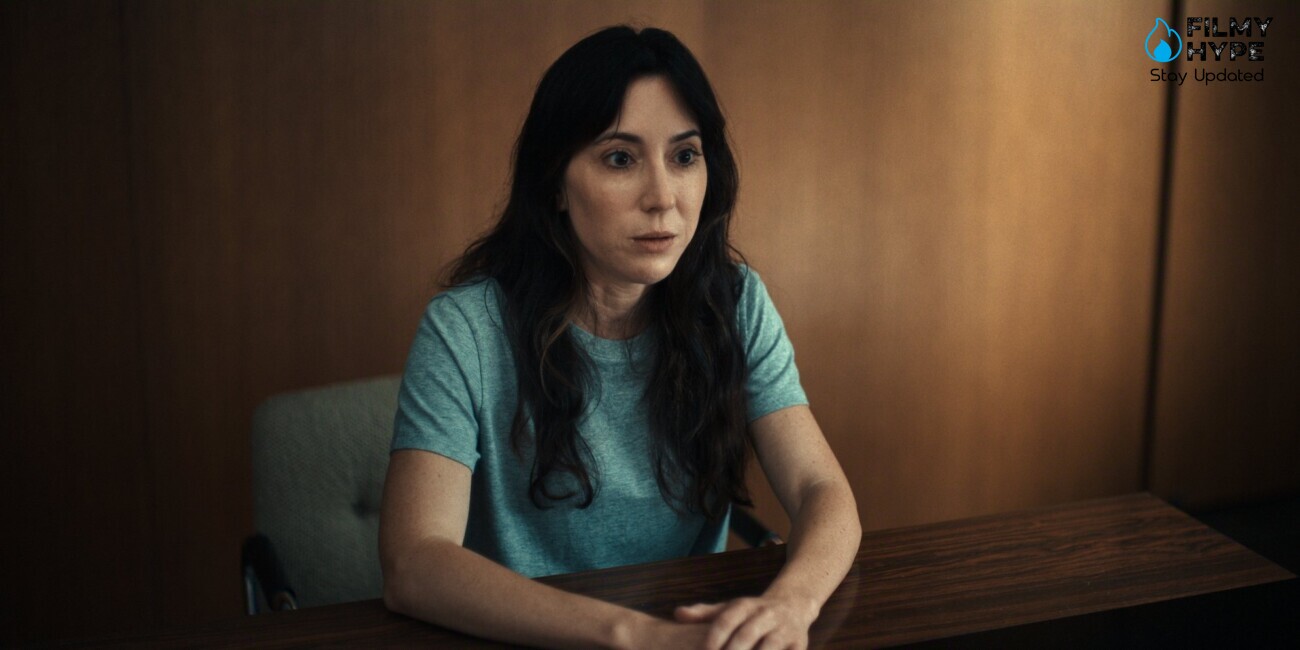
This is the story of Michelle Hadley, Ian Diaz, and Angela Connell, and it happened in California, not that long ago. At its core, it’s about a couple who decided to destroy an innocent woman’s life, and who very nearly got away with it. What makes it linger in your mind isn’t just the cruelty of the crime. It’s how close the system came to locking Michelle away for years, and how easily the truth could have stayed buried.
The True Story Behind A Toxic Love Story Documentary: The Relationship That Started Everything
Ian Diaz met Michelle Hadley on a dating platform in 2013. He was a deputy with the United States Marshals Service, a federal law enforcement officer. She was a woman looking for a connection. They hit it off, started a relationship, and by 2015, they were serious enough to buy an apartment together in Anaheim. The place wasn’t cheap. Michelle contributed the bulk of the down payment, according to reporting from Crime and Investigation. It was a significant financial commitment, the kind you make when you believe a future is being built.
The future didn’t last. By August 2015, the relationship was over, and Michelle had moved out. But the apartment remained. The financial entanglements remained. The stress of unresolved money issues remained. These things happen in breakups all the time. They’re messy and unpleasant, but usually they get sorted out through lawyers or time or a combination of both. This one didn’t.
Ian moved on quickly. He started seeing Angela Connell, and within a remarkably short period, they were married. The wedding happened in 2016, while Ian and Michelle were still tangled up in arguments about the apartment and the money. That’s a tense situation. A new wife, an ex-girlfriend, a property dispute with no resolution in sight. The ingredients for conflict were all there. What nobody could have predicted was the form that conflict would take.
The Campaign of Lies
A few months after the wedding, Ian and Angela started receiving threatening emails. The messages were signed with the name “Lilithistruth,” and they escalated quickly. Then came the men. Strangers began arriving at the couple’s home, responding to ads posted on Craigslist. The ads described violent sexual fantasies and gave Angela’s address. The implication was clear. Someone was trying to send men to assault her.
Angela told the police she knew exactly who was responsible. Michelle Hadley. The bitter ex-girlfriend. The woman with the financial grudge. It made a certain kind of terrible sense. Investigators looked at the conflict over the apartment, the timing of the breakup, and the new marriage, and they saw a motive. They saw a woman who had been pushed out and wanted revenge.
What they didn’t see, what nobody saw at first, was that Ian and Angela had constructed the entire thing. They created fake email accounts in Michelle’s name. They wrote messages from those accounts responding to the Craigslist ads. They forged evidence that made it look like Michelle was running an organized campaign of terror. Angela went so far as to claim that Michelle was deliberately inviting men to the house, posing as Angela, with the explicit goal of having her sexually assaulted.
Ian backed up every word. He told authorities that Michelle belonged in handcuffs, that she needed to be in a padded room. He used his position as a federal officer to lend weight to the accusations. Who would doubt a U.S. Marshal reporting that his wife was being stalked and threatened? The story was tidy. The villain was obvious. The arrest followed.
Eighty-Eight Days
Michelle Hadley was arrested in 2016. She was 29 years old. The charges she faced were serious enough to send her to prison for years, possibly decades. She sat in a cell for 88 days, maintaining from the very beginning that she hadn’t done any of it. She hadn’t created the accounts. She hadn’t sent the emails. She hadn’t posted the ads. The entire thing was a fabrication, and she was the only person who seemed to know it.
This is the part of the story where the documentary becomes difficult to watch. Eighty-eight days is a long time to sit in jail for something you didn’t do. It’s long enough to lose your job, your reputation, your sense that the world operates on any kind of logic. It’s long enough to start wondering if you’ll ever get out. Michelle had no way of knowing whether anyone was looking at the evidence that would eventually clear her name. All she had was the truth, and the truth had already failed her once.
The Thread That Unraveled Everything
The case fell apart because Angela got sloppy, or maybe just arrogant. The threatening emails kept coming while Michelle was in jail. She had no access to phones, no access to computers, no way to contact anyone outside the facility. Yet the messages continued. The ads stayed up. The campaign supposedly run by Michelle kept running without her.
This should have been caught immediately. The fact that it wasn’t says something depressing about how investigations work, or don’t work, once they’ve locked onto a suspect. But eventually, the anomaly became impossible to ignore. Digital forensics experts started examining the evidence more carefully. They traced the emails and the accounts. They analyzed the devices used to send them.
Every trail led to the same place. Angela’s devices. Angela’s IP addresses. Emails were sent from the home she shared with Ian. The digital evidence didn’t show a jealous ex running a harassment campaign. It showed the supposed victim running a campaign against herself, with her husband’s knowledge and assistance.
Then the other lies started surfacing. Angela had claimed to be pregnant. She wasn’t. She had claimed to have cancer. She didn’t. She had fabricated documents, created false identities, and built an elaborate web of deception designed to destroy one specific person. The story of the crazy ex-girlfriend was itself the product of a genuinely unhinged mind, just not the one the police had accused.
The Exoneration and the Arrest
Michelle Hadley was released from jail in January 2017. The charges were dismissed. On the same day she walked free, Angela Diaz was arrested. The symmetry is almost too neat for real life, but that’s what happened. One woman out, another woman in. Justice, in the most literal sense.
Angela pleaded guilty in October 2017. The charges included kidnapping, unlawful imprisonment, forgery, perjury, and making false allegations. She received a sentence of five years in prison. She served roughly three years before being released in 2020. After her release, she reverted to her maiden name, Connell, and has maintained a low profile since. The woman who orchestrated an elaborate frame job and nearly destroyed an innocent person’s life spent less time incarcerated than her victim would have if the scheme had succeeded. That math doesn’t sit right, but it’s the math the system produced.
Ian’s Reckoning Comes Later
For several years, Ian Diaz maintained his innocence. He had been deceived, he said. Angela had fooled him just like she had fooled everyone else. He was a victim too. It was a convenient story, and for a while, it seemed like it might hold.
Then the federal investigation caught up with him. The evidence showed that Ian hadn’t been a passive bystander to Angela’s scheme. He had helped create the counterfeit emails. He had helped produce the false documents. He had actively participated in the conspiracy to frame Michelle for crimes she didn’t commit. He wasn’t a victim. He was a co-conspirator, and a willing one.
Ian Diaz was arrested in 2021. In 2023, he was convicted on federal charges, including conspiracy to commit cyberstalking, cyberstalking, perjury, and obstruction of justice. The court sentenced him to 121 months in prison. That’s ten years and one month. He was removed from his position with the U.S. Marshals Service. The law enforcement officer who helped send an innocent woman to jail became an inmate himself.
Where Michelle Is Now
Michelle Hadley didn’t just walk away from this and pretend it never happened. She filed a civil suit over the errors in the investigation and settled with the city of Anaheim in 2021. She started her own business in sales. She got involved in fundraising for victims of domestic violence, channeling her experience into something that could help other people.
In 2023, she became a mother. That detail matters. The timeline of this case stretches over years of her life. She lost months to a jail cell. She lost more time to the legal process, to the public exposure, to the slow work of rebuilding what had been taken from her. The fact that she eventually built a life that includes a family, a career, and a sense of purpose isn’t just a happy ending. It’s a testament to resilience that nobody should ever be required to demonstrate.
She gave an interview to NBC News after Ian’s conviction in 2023, and her words were measured in a way that suggests someone who has made peace but hasn’t forgotten. She talked about being grateful to the investigators who finally got it right, and to the jury whose verdict brought her family some peace. She talked about restoring some of the faith she’d lost in the justice system. Not all of it. Some of it. That qualification says everything about what this experience cost her.
The Motive Was Always Control
Looking back at the whole case, the apartment dispute was the spark but not the real fire. Yes, Ian and Michelle were fighting over money and property. Yes, eliminating her from that conflict would have benefited Ian financially. But the scheme went so far beyond financial gain. The fake pregnancies. The fake cancer. The ads were designed to send men to assault Angela. The months of sustained effort required to maintain the illusion.
This wasn’t just about an apartment. This was about control. Ian and Angela constructed a reality in which Angela was the victim, and Michelle was the monster. That narrative served their relationship. It gave Ian a reason to protect his new wife. It gave Angela a central role in a drama where she got to be both endangered and rescued. Michelle wasn’t just an inconvenience to be removed. She was a character in a story they were telling themselves, and they needed her to play the villain, regardless of the cost to her life.
The documentary’s title, A Toxic Love Story, captures this dynamic perfectly. The toxic love isn’t between Ian and Michelle. That relationship had problems, sure, but it was over. The toxic love is between Ian and Angela, two people whose bond was apparently strengthened by the act of destroying another human being. They built their marriage on a foundation of lies that put an innocent woman in a cell. That’s not just a crime. It’s a pathology.
The System Worked, Eventually
This is the part that’s supposed to be reassuring. Michelle was exonerated. The real perpetrators were convicted. The truth came out. The system, after failing catastrophically in the initial investigation, eventually corrected itself and delivered something resembling justice.
But “eventually” is doing a lot of work in that sentence. Eighty-eight days of incarceration. Years of legal jeopardy. The public humiliation of being branded a dangerous stalker. The stress of not knowing whether anyone would ever believe you. Michelle got her name cleared, but she had to lose a chunk of her life to the process. And her case is the one that went right. The emails kept coming while she was in jail, creating an obvious contradiction that forced investigators to reconsider. Without that mistake, without that one thread to pull, would anyone have looked closer? Or would Michelle still be in prison, serving out a sentence for crimes that were committed by her accusers?
The documentary leaves you with that question. It doesn’t answer it, because there’s no way to answer it. The case of Michelle Hadley, Ian Diaz, and Angela Connell is a story about justice done, but it’s also a story about how easily injustice happens. How quickly the system accepts a story that fits its expectations. How much damage gets done before anyone thinks to check whether the story is true? Michelle rebuilt her life. That’s the hopeful part. The less hopeful part is knowing how many people never get that chance.