


Adarsh Baal Vidyalaya Ending Explained: The Questions the Finale Leaves You With
Adarsh Baal Vidyalaya’s first season ends with the kind of ending that feels both satisfying and unresolved, which is precisely the point. This isn’t a show that believes in tidy solutions. It believes in small victories, hard choices, and the slow, unglamorous work of showing up every day for students the system has forgotten. Let’s walk through the questions the finale raises and the answers it provides.
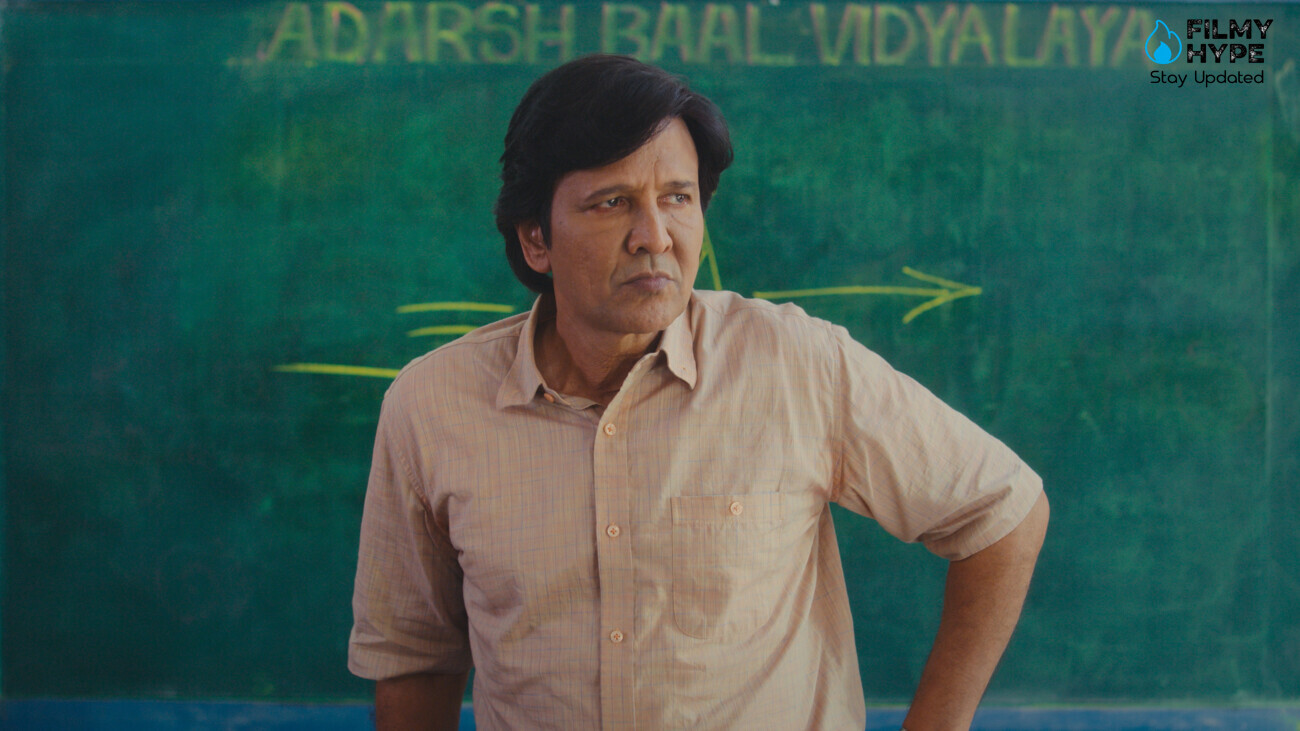
Adarsh Baal Vidyalaya Ending Explained: Does Principal Tripathi Get to Visit Cambridge?
No. And that’s the point.
The Cambridge trip is the engine that drives much of the season’s plot. A school inspector dangles the opportunity in front of Tripathi early on: the principals of Delhi’s ten best-performing government schools will get to visit Cambridge with their families. Tripathi latches onto this dream, partly for professional pride and partly because he wants to give his wife Sushma something she’s always wanted. It’s a deeply human motivation. He’s not chasing prestige for its own sake. He’s chasing a moment of joy for someone he loves.
But the pursuit of that goal leads him into ethical territory he’s not proud of. He hides the admit cards of weaker students because he’s terrified their board exam results will drag down the school’s average. He cuts corners. He compromises. The Cambridge dream becomes a justification for behavior that betrays everything he entered the profession to do.
The finale shows him catching himself. He returns the admit cards. The students sit their exams. And when the results come in, Adarsh Baal Vidyalaya does not make the list of the top ten schools. Tripathi does not go to Cambridge. The goal that launched the season evaporates, and the series treats this not as a defeat but as a recalibration. Tripathi started the season chasing a trophy. He ends it understanding that the real reward has nothing to do with foreign travel or certificates of recognition. It is in the confidence his students have gained, the renewed sense of purpose among his teaching staff, and the rediscovery of his own integrity.
Why Does Tripathi Stand Up to MLA Goldy?
Throughout the series, Goldy has loomed large. He’s the local MLA who treats Adarsh Baal Vidyalaya like his personal property. He uses the school grounds for political rallies. He makes vague promises about increased funding that never materialize. He expects Tripathi to be grateful for whatever scraps he deigns to provide. And for most of the season, Tripathi plays along. He avoids confrontation. He nods and smiles and swallows his objections. The fear of losing what little support the school receives keeps him compliant.
The turning point comes when TV reporter Amit visits the school. Tripathi hopes that the resultant coverage will bring attention to the needs of the school and draw the notice of sympathetic officials. But Amit focuses almost exclusively on the dilapidated state of the school, and frames it as a failure rather than a place that is fighting for survival against impossible odds. The unfairness of the coverage, combined with everything else Tripathi has been suppressing, finally pushes him over the edge.
He tells Amit about Goldy. About the misused funds. About the years of political interference. About the way the school has been treated as a campaign prop rather than an institution deserving of respect. Amit includes these details in his report, and Goldy’s behavior is publicly exposed. It’s not a takedown that topples the MLA from power. Goldy is still very much in office by the end of the finale. But he’s been publicly embarrassed, and for a politician like Goldy, public embarrassment is its own kind of wound.
What Are the Consequences of Standing Up?
The consequences are real and threatening. Goldy backs down from forcing students to attend his political rally, but he warns Tripathi directly that he’ll use his influence to have the principal, Kanchan, and several other teachers removed from their jobs. This isn’t an idle threat. Goldy has the connections and the political capital to make life very difficult for anyone who crosses him. Tripathi knows this. The teachers know this. The finale doesn’t pretend that standing up to power comes without cost.
But the show’s position is clear. The cost of continued silence was higher. Every time Tripathi accommodated Goldy’s demands, he lost a piece of himself. Every time he looked the other way while the MLA exploited the school, he betrayed the students he was supposed to serve. The threat to his job is real, but so is the recovery of his self-respect. The finale trusts the audience to understand that this trade-off, however frightening, is worth making.
What Happens to the Students?
The student arcs are the emotional backbone of the finale, and they’re handled with the same restraint that defines the rest of the series. There’s no montage of students acing their exams and celebrating in slow motion. There’s no triumphant score swelling as results are posted. What there is, instead, is a series of quiet victories that feel earned because the show has spent the whole season establishing how hard they were to achieve.
Gopal, one of the weakest students in the school, passes his board exams. This is directly attributable to Kanchan’s patience. She refused to give up on him when other teachers might have written him off. She worked with him one-on-one. She believed in him when he didn’t believe in himself. His passing grade isn’t presented as a miracle. It’s presented as the logical outcome of sustained, dedicated effort by a teacher who cared.
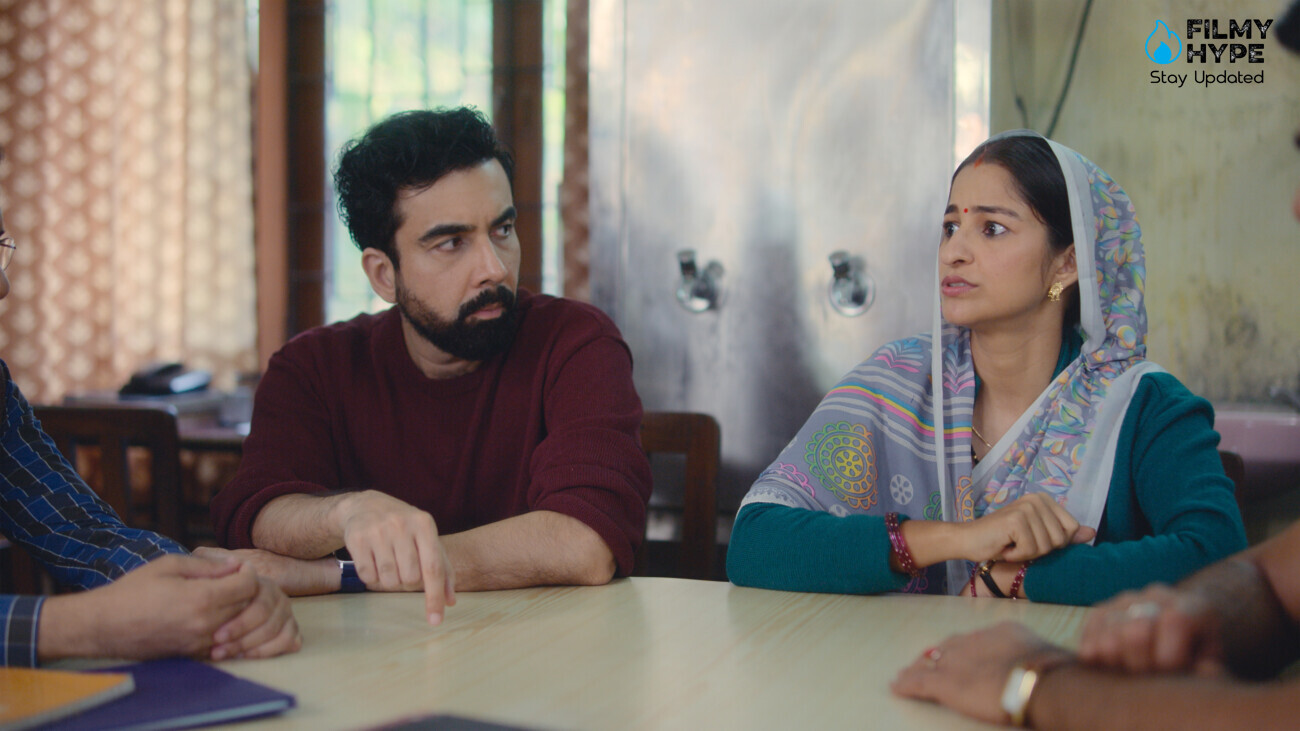
Shiney’s extra coaching is helping the English students. The sex education class, which created so much discomfort and pushback earlier in the season, ends up being actually educational because Mrs. Sharma kept finding ways to make the material accessible and engaging. These are little victories in the grand scheme of things. They don’t solve the systemic problems that made the school vulnerable in the first place. But for the individual students involved, they matter enormously. The show knows this. It treats each small success with the gravity it deserves.
How Do the Teachers End Up?
The teaching staff undergoes its own transformation over the course of the season, and the finale pays off each of their arcs in ways that feel consistent with the characters they’ve become.
Shiney Sharma, the English teacher, started the season frustrated and somewhat disconnected. She wanted to help her students but didn’t always know how. By the final, she’s found her rhythm. The extra coaching classes have imbued her with a new sense of purpose, and her decision to forgo Karan’s motivational speech for Bishnu’s heartfelt testimony of hard work is a sign of her increasing awareness of what her students really want from her.
Not shortcuts. Not flashy promises. Just the truth, delivered with patience.
Kanchan, the math specialist who was assigned to teach physics because there weren’t enough staff, becomes the heart of the school almost by accident. She believes in encouragement over punishment. She refuses to give up on struggling students. Her work with Gopal is the clearest example, but it extends to every student she teaches. By the finale, she has established herself as one of the most effective and beloved teachers on staff, not through grand gestures, but through the daily accumulation of small acts of care.
Mrs. Sharma, who teaches sex education, overcomes significant resistance from students and parents alike. Her persistence pays off as the students finally engage with the material.
It’s another small victory, another teacher choosing to do the job properly when it would have been easier to skim the surface and move on.
The teachers have also learned to work together. The rivalries and personality clashes that characterized the early episodes have given way to something more collaborative. The finale hammers this point home as being the key to whatever progress the school has made. No one teacher could have turned things around by themselves. The collective was what mattered.
What Was the Point of the Bishnu Subplot?
When Shiney invites a successful former student called Karan to inspire the class, it all goes wrong in spectacular fashion. Karan uses his platform to promote a money-making scheme, urging students to look for shortcuts instead of putting in the work. He’s the personification of a certain kind of success that looks good from afar but turns out to be hollow when you get closer.

Tripathi replaces him with Bishnu, a restaurant owner who works grueling hours to support his son Naren’s education. Bishnu’s message is the opposite of Karan’s. Work hard. Be honest. Show up every day, even when it’s exhausting and thankless. The students respond to him in a way they never responded to Karan, and the contrast is the series in miniature.
The Bishnu subplot matters because it clarifies what the show values. Real inspiration doesn’t come from wealth or shortcuts. It comes from watching someone struggle honestly and refuse to quit. Bishnu isn’t polished. He doesn’t have a motivational speaking career. He’s just a father trying to give his son a better life. That’s enough. The students see themselves in his struggle, and they see a path forward that doesn’t require them to compromise who they are.
Is the Ending Happy or Sad?
Neither. It’s honest.
And the finale is not a victory lap. The school still has funding issues.
Goldy is still an MLA with the power to cause trouble. The bureaucratic hurdles that made everything so difficult remain in place. Tripathi and his teachers still face an uphill battle every single day. The series is too grounded to pretend that one good semester can fix structural problems that have been building for decades.
But it’s not a sad ending either. Tripathi regains his integrity. The teachers find their collective purpose. The students benefit from having adults in their lives who genuinely care about them. The Cambridge trip doesn’t happen, but the show has spent the entire season demonstrating why the Cambridge trip was never the real goal anyway. It was a symbol of validation from a system that has spent years telling Tripathi and his school that they don’t matter. Letting go of that symbol is the victory.
The final note is one of cautious hope. The struggles continue, but the people fighting them are better equipped than they were at the start. They’ve remembered why they became teachers. They’ve found each other. They’ve stopped waiting for the system to save them and started doing the work themselves. That’s not a fairy tale ending. It’s something more durable. It’s the kind of ending that acknowledges how hard things are while still insisting that the effort is worth making.
Will There Be a Season 2?
The finale leaves the door open without being a cliffhanger. Goldy’s threat hangs over the staff. The funding issues are unresolved. The relationships between teachers and students have room to deepen. There’s plenty of material for a second season, and the world of Adarsh Baal Vidyalaya feels lived-in enough to sustain one.
Amazon Prime hasn’t confirmed a renewal yet. The season works as a complete story if it has to. Tripathi’s arc reaches a satisfying conclusion. The core themes are fully articulated. You can walk away feeling like you watched something whole. But there’s also a sense of ongoing struggle that makes a continuation feel natural rather than forced. Schools don’t get fixed in a semester. If the series returns, it’ll have earned the extension. If it doesn’t, it’ll have said everything it needed to say. Either outcome feels right, which is the mark of a show that knows exactly what it is.