


Operation Safed Sagar Ending Explained: The Kargil War of 1999 has been rendered on screen before, but never quite like this. Netflix’s six-episode series, Operation Safed Sagar, doesn’t just recount the battles. It reconstructs the political deception that started the conflict, the technological challenges that defined the air campaign, and the human cost of missions flown at altitudes that pushed both aircraft and pilots to their absolute limits. The series culminates with the recapture of Tiger Hill, the withdrawal of Pakistani forces, and the ensuing political fallout that ultimately led to Pervez Musharraf’s rise to power. But the heart of the story is the Golden Arrows squadron—the photo reconnaissance unit whose work made precision bombing possible in terrain that had never been bombed from the air before.
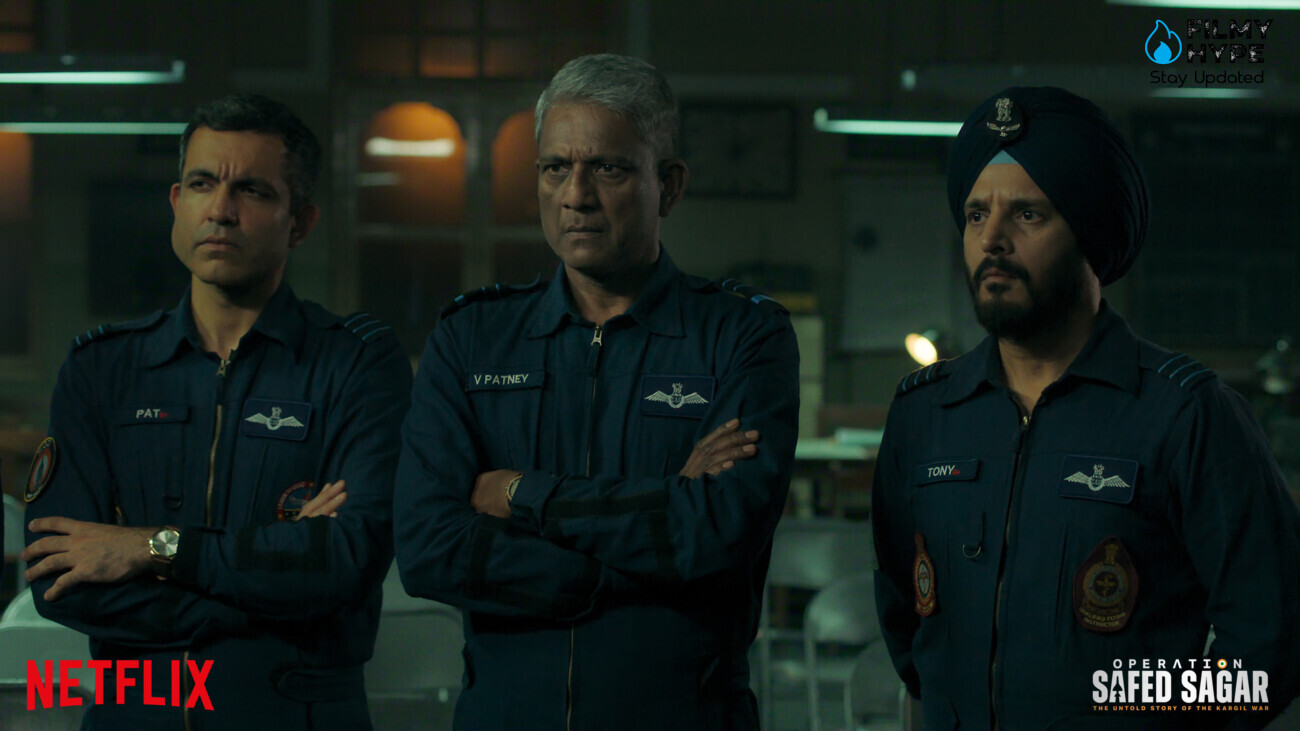
The series is unabashedly patriotic. It knows who the heroes are, and it doesn’t pretend otherwise. But it also takes the time to explain how the mission worked, which is where it distinguishes itself from more generic war dramas. The Kargil conflict wasn’t just about courage. It was about figuring out how to hit targets at 18,000 feet when the GPS signals were degraded, the enemy had Stinger missiles, and the mountains provided natural bunkers that had never been breached from the sky. The Golden Arrows solved those problems. This is how they did it.
Operation Safed Sagar Ending Explained: How the War Began?
Musharraf’s Deception
The series opens by establishing the geopolitical context with unusual clarity. In 1998, both India and Pakistan tested nuclear weapons, becoming declared nuclear powers. The international community watched nervously, concerned that the long-simmering Kashmir dispute might now carry existential stakes. In the midst of this tension, Indian Prime Minister Atal Bihari Vajpayee made the unexpected gesture of accepting Pakistani Prime Minister Nawaz Sharif’s invitation to visit Pakistan—a diplomatic overture that suggested peace might be possible.
It was a mirage. While Sharif pursued diplomacy, his Chief of Army Staff, General Pervez Musharraf, was planning an operation that would violate every agreement between the two nations. The Simla Agreement of 1972 had established that both countries would withdraw soldiers from high-altitude posts during the brutal winter months, when temperatures plunged, and survival at those heights became nearly impossible. Neither side would attack during this window. It was an arrangement built on mutual hardship—the mountains were simply too hostile to fight over in winter.
Musharraf broke the agreement. He ordered Pakistani soldiers to remain at the high-altitude posts through the winter and, once the Indian troops had withdrawn according to schedule, to move across the Line of Control and seize Indian positions. By the time Indian soldiers returned in the spring, the enemy was already dug in above them, occupying the peaks that controlled the approaches to the strategically vital National Highway One—the road connecting Srinagar to Ladakh.
The deception extended to appearances. Musharraf’s soldiers wore clothing associated with Mujahideen fighters and spoke Pashto rather than Urdu. When the Indian government confronted Pakistan about the incursion, Islamabad’s official response was that these were independent militants, beyond the control of the Pakistani state. The series makes clear that this was a lie from the beginning. Reconnaissance photographs showed the intruders moving in single-file formations—the signature of a trained military unit, not a militant group. Intercepted communications confirmed that Musharraf himself was directing operations on the ground.
The most damning piece of evidence came from a phone call that Indian intelligence managed to record. On the call, Musharraf discussed the situation in detail, demonstrated complete knowledge of troop positions, and ordered the execution of a captured Indian pilot. The recording made it impossible to maintain the Mujahideen fiction. Pakistan’s army was running the operation. Musharraf was running the army.
The Golden Arrows and the Problem No One Had Solved?
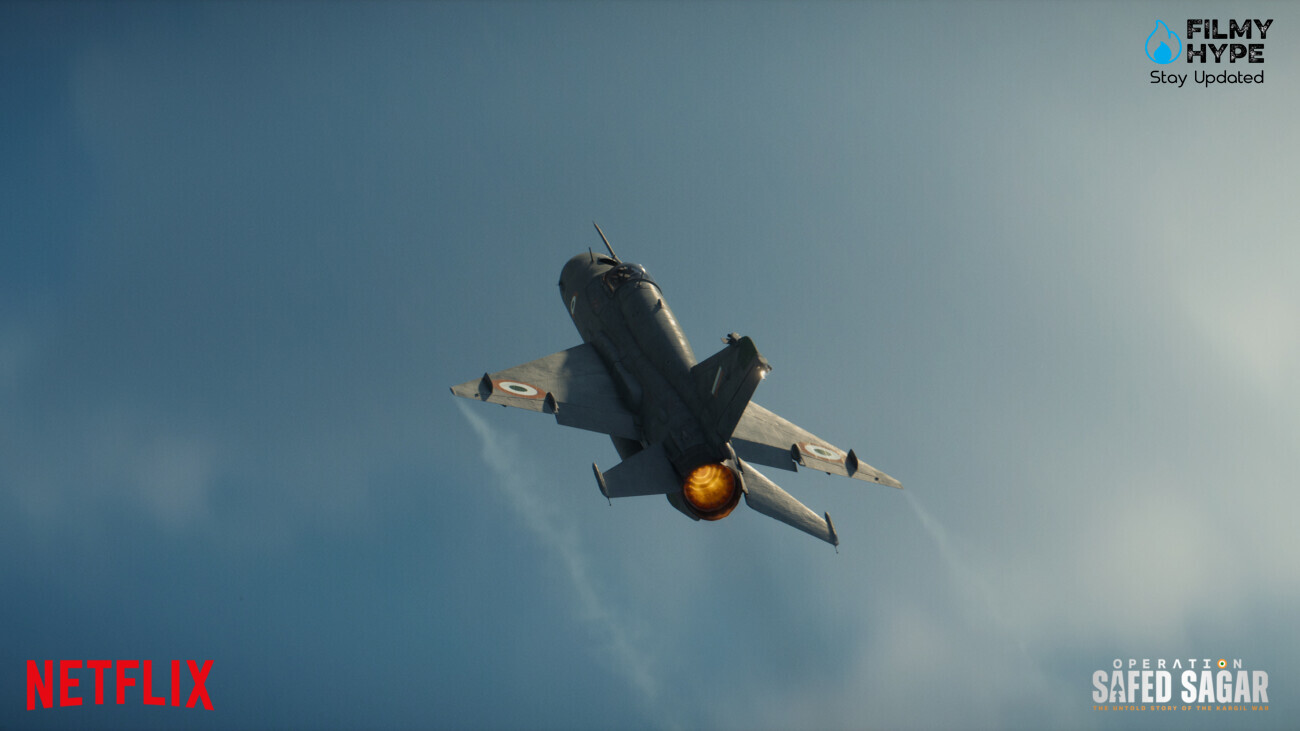
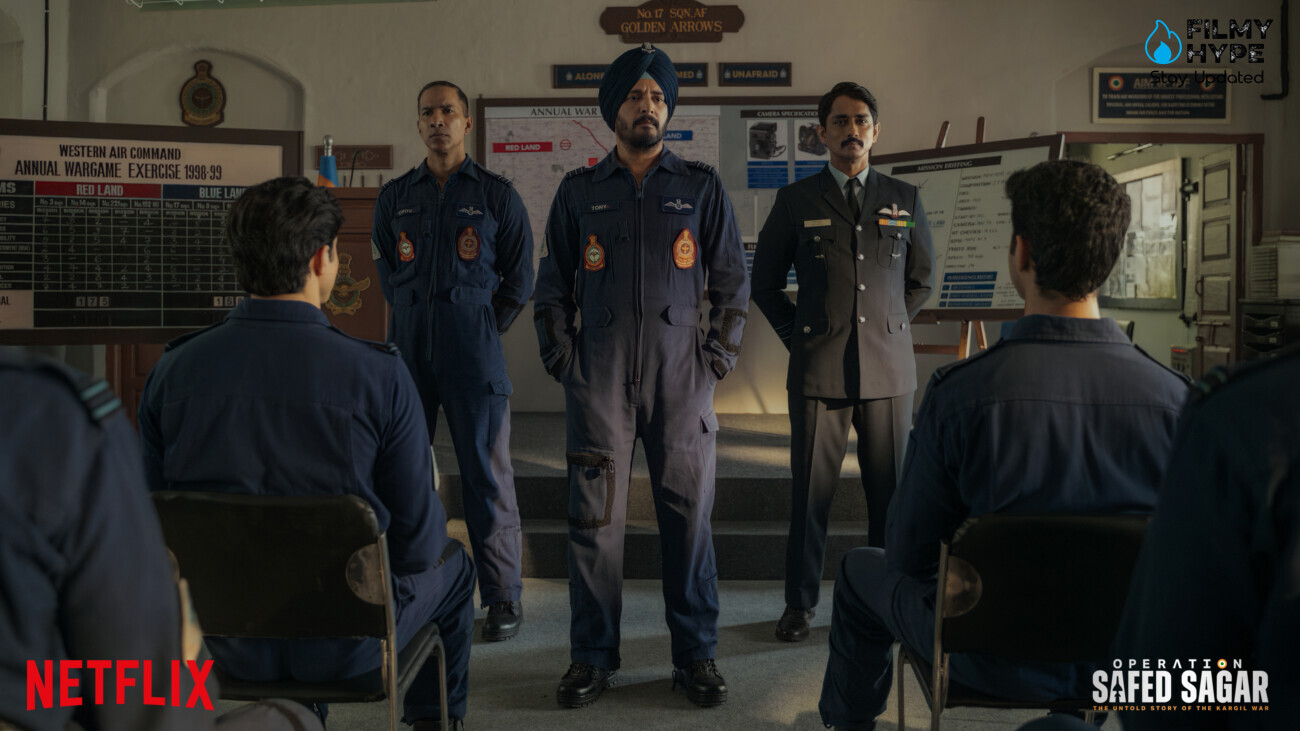
The Golden Arrows were a photo reconnaissance squadron—their job was to fly over enemy territory in MiG-21 fighter jets and take precise, detailed photographs that would allow bomber squadrons to identify targets. When the Kargil crisis erupted, the squadron was preparing for a routine war game exercise. Within weeks, they were at war.
The problem they faced was unprecedented. Pakistani soldiers were dug into positions at altitudes between 15,000 and 18,000 feet. The mountains provided natural bunkers—stone shelters that had never been penetrated by aerial bombardment. Stinger missiles, supplied by the United States to the Mujahideen during the Soviet-Afghan War and now in Pakistani hands, made low-altitude flight suicidal. The pilots would have to bomb from much higher than normal, and they had no way of knowing whether it was even possible to hit targets accurately from that distance.
Initial tests were failures. Bombs dropped from high altitude missed their targets by substantial margins. Wing Commander BS Dhanoa, played with steady authority by Jimmy Shergill, eventually identified the problem. The GPS signals the Indian Air Force relied on were provided by the United States military, and the Americans, wary of the conflict escalating between two nuclear powers, had deliberately degraded the signal quality. The pilots weren’t missing because of poor aim. They were missing because the coordinates they were using were wrong.
The series presents this as a moment of technical ingenuity rather than diplomatic outrage. Dhanoa and his team manually calculated the deviation in the GPS signals and adjusted their targeting coordinates accordingly. The bombs started landing where they were supposed to. The mission became viable.
The Death of Ajay Ahuja?
Squadron Leader Ajay Ahuja, played by Siddharth, is the emotional center of the series. When another pilot’s MiG malfunctioned and was forced to crash-land after ejecting, Ahuja refused to leave the area. He stayed behind, circling the mountains, trying to locate the downed pilot’s parachute so that a rescue could be mounted before the enemy found him.
During this maneuver, Ahuja’s own aircraft was hit by a Stinger missile. He ejected safely but landed in Pakistan-occupied territory. Rather than use his emergency flares—which would have brought enemy soldiers to his position—he destroyed them, preventing the Pakistanis from using them to bait Indian rescue teams. He was captured within hours.
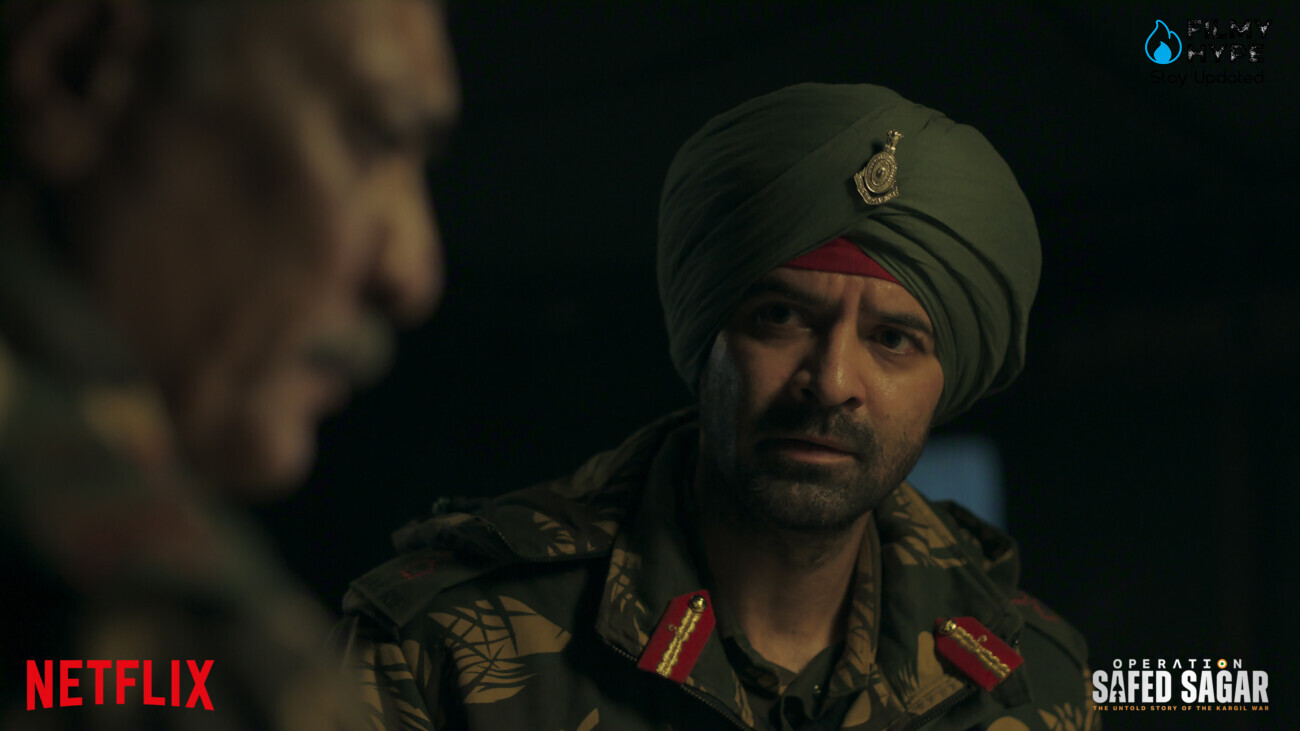
The series depicts what followed with restraint that makes it more powerful. Ahuja was interrogated and tortured. His captors wanted him to record a video statement claiming that India had crossed the Line of Control first, which would have given Pakistan the diplomatic cover it desperately needed. Ahuja refused. He was promised his freedom, a return to his wife and young son, if he would comply. He refused again. On Musharraf’s direct orders, he was executed.
His body, when it was returned to Indian authorities, bore clear signs of torture. Pakistan’s official response cycled through multiple lies: first that Ahuja had died in the crash, then that the Mujahideen were responsible for his death. Neither claim survived scrutiny. The intercepted phone call in which Musharraf ordered the execution made the truth undeniable.
How the Air Campaign Turned the War?
With the GPS problem solved, the Golden Arrows’ photographic reconnaissance became the foundation of the entire air campaign. The squadron’s photographs identified enemy positions, supply routes, and bunker locations that had been invisible to ground forces. With this knowledge in hand, bomber squadrons could make pinpoint strikes, slowly grinding down Pakistan’s ability to hold on to its high ground.
The series makes plain that this was not one climactic battle, but a long campaign of attrition. By destroying a bunker, you took away one more place for the enemy to hide from you. Each cut in a supply line meant fewer shells making it to the peaks. The Pakistani soldiers who had thot they could hold out forever were becoming more and more isolated and short of supplies.
The real turning point was the recapture of Tiger Hill, one of the most strategically important peaks of the Kargil sector. The loss of this position, combined with the cumulative damage from the air campaign, made the Pakistani presence unsustainable. The army that had crossed the Line of Control under cover of winter was now being driven back by forces they couldn’t fight from bunkers that no longer protected them.
The Political Aftermath?
The war ended after nearly three months when Nawaz Sharif, under intense international pressure, agreed to withdraw Pakistani forces. The United States, which had been quietly meddling throughout the conflict—degrading GPS signals, warning both sides against escalation—finally intervened more directly to broker a ceasefire.
The political consequences in Pakistan were immediate and lasting. Sharif attempted to hold Musharraf responsible for an operation that had been conducted without full civilian oversight and had ended in humiliating retreat. But Musharraf had prepared for this. He had ensured that photographs existed, placing Sharif in meetings where the operation was discussed, allowing him to claim that the Prime Minister had authorized everything. Musharraf reframed the withdrawal as Sharif’s decision—a political betrayal of an army that had been on the verge of victory.
The narrative took hold. Street protests erupted. Within months, Musharraf led a coup d’état, placing himself in power under martial law. He would serve as Pakistan’s president from 2001 to 2008. The Kargil War, which he had launched in secret and lost in public, became the instrument of his political ascent. Pakistan, for decades afterward, refused to officially acknowledge its army’s role in the conflict. The bodies of soldiers who died on those mountains were never fully accounted for. The official silence continues in various forms to this day.
What the Ending Means?
Operation Safed Sagar closes on a note of military triumph and political irony. The Indian Air Force achieved something that had never been done before—precision bombing at altitudes above 18,000 feet—and the Golden Arrows’ photographic work was essential to making that possible. The war was won. The territory was reclaimed. The soldiers who had been dying on the slopes, picked off by an enemy they couldn’t see, finally had air cover that worked.
But the series doesn’t end with a celebration. It ends with Musharraf consolidating power, with Sharif deposed, with the architects of the war escaping accountability. The pilots who risked their lives, the soldiers who held the line, the families who buried their dead—they did their jobs. The people who started the war faced no such reckoning.
The Golden Arrows changed the course of the Kargil War not just through courage but through competence. They solved problems that had never been solved before. They adapted to degraded GPS, to missile threats, to terrain that made every sortie a calculation with almost no margin for error. The series honors that competence by taking it seriously—by showing the work, the math, the planning that went into every mission. The heroism is real, but it’s grounded in something more substantial than rhetoric. It’s grounded in the specific, difficult things these men did to make the impossible possible.
That’s the legacy the series wants to leave. Not just a victory, but an understanding of how the victory was achieved. The Kargil War was fought in the mountains, but it was also fought in the sky. The pilots who flew those missions haven’t always had their due on screen. Operation Safed Sagar gives it to them. Not perfectly—the series has its longueurs, its over-extended political scenes, its moments where the dialogue reaches for applause rather than truth. But sincerely. And with enough craft to make the imperfections feel like part of the package. The Golden Arrows delivered when it mattered. The series, in its own way, does too.