


The Last House Ending Explained: There’s a moment near the end of The Last House that redefines everything the film has been building toward. After years of confinement, after watching his family slowly deteriorate inside a home that became a prison, after finally coming face to face with the creature responsible for it all, Jason has a clear opportunity to kill it. He doesn’t take it. He lets the thing live. And that choice—inexplicable in the logic of survival, incomprehensible in the logic of revenge—is what sets his family free.
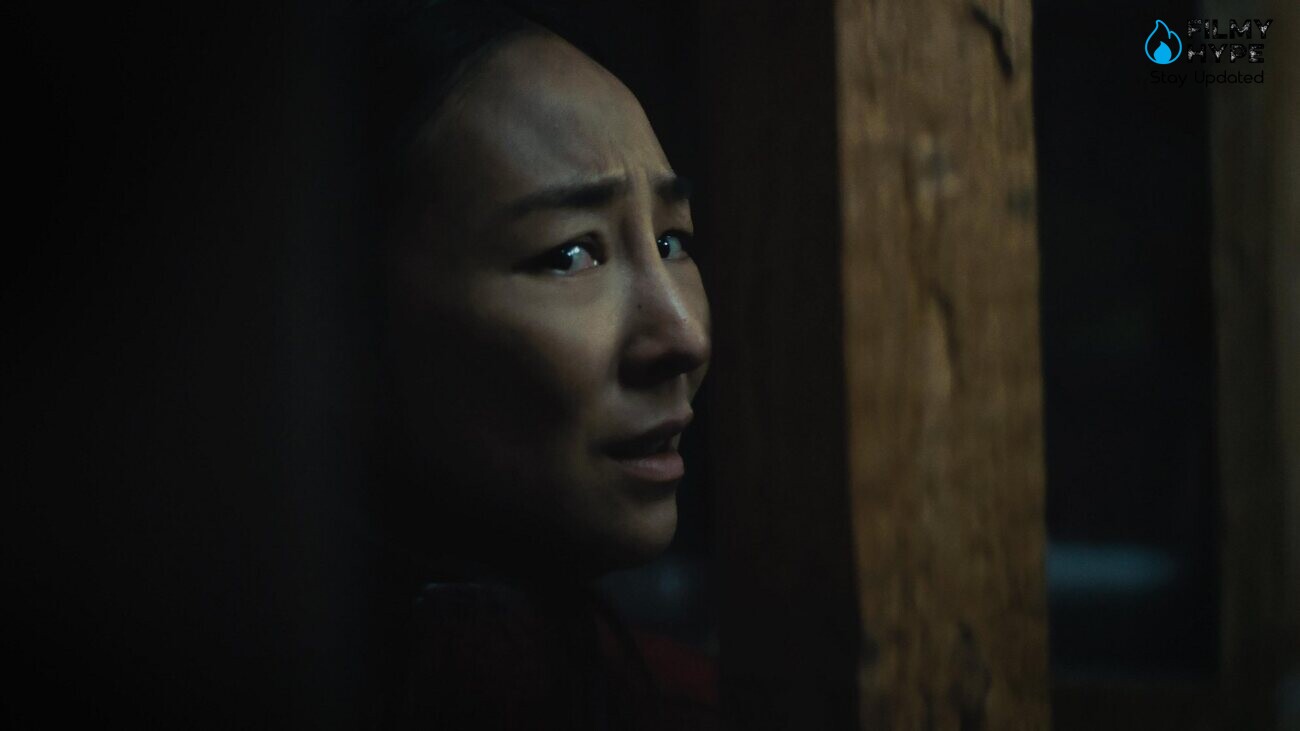
Louis Leterrier’s science-fiction thriller, starring Wagner Moura as Jason and Greta Lee as Ann, isn’t really about aliens. It’s not about invasion or escape or the mechanics of an invisible barrier that seals a family inside their home for years. It’s about what happens to people when they’re forced to live without hope, and what they become when hope is finally offered back to them. The ending is deliberately ambiguous about the nature of the creatures, the reason for the confinement, and the larger mythology of whatever has happened to the world outside. But it’s clear about what matters: the cycle breaks when someone chooses to stop it.
The Last House Ending Explained: How the Nightmare Began?
Before the confinement, Ann and Jason lived an entirely ordinary life with their children, Ruth and Graham. The normalcy ended on a rainy day when Jason tried to step outside and found the door wouldn’t open. The windows offered no escape. Breaking them did nothing. Whatever barrier surrounded the house was impenetrable, invisible, and utterly indifferent to their attempts to breach it.
The early response was rational. They checked every access point. They searched for structural weaknesses. They tried to contact the outside world. It became clear quickly that this wasn’t a mechanical failure or a localized incident. There was no one to negotiate with, no jailer to identify, no reason why this particular house had been selected. Jason, projecting control he didn’t actually have, became the protector. Ann became the emotional and practical anchor. Together, they tried to shield their children from the full weight of what was happening while grappling with a situation neither of them understood. The gap between what the kids needed to feel safe and what the adults actually knew grew wider every day.
The Years Inside
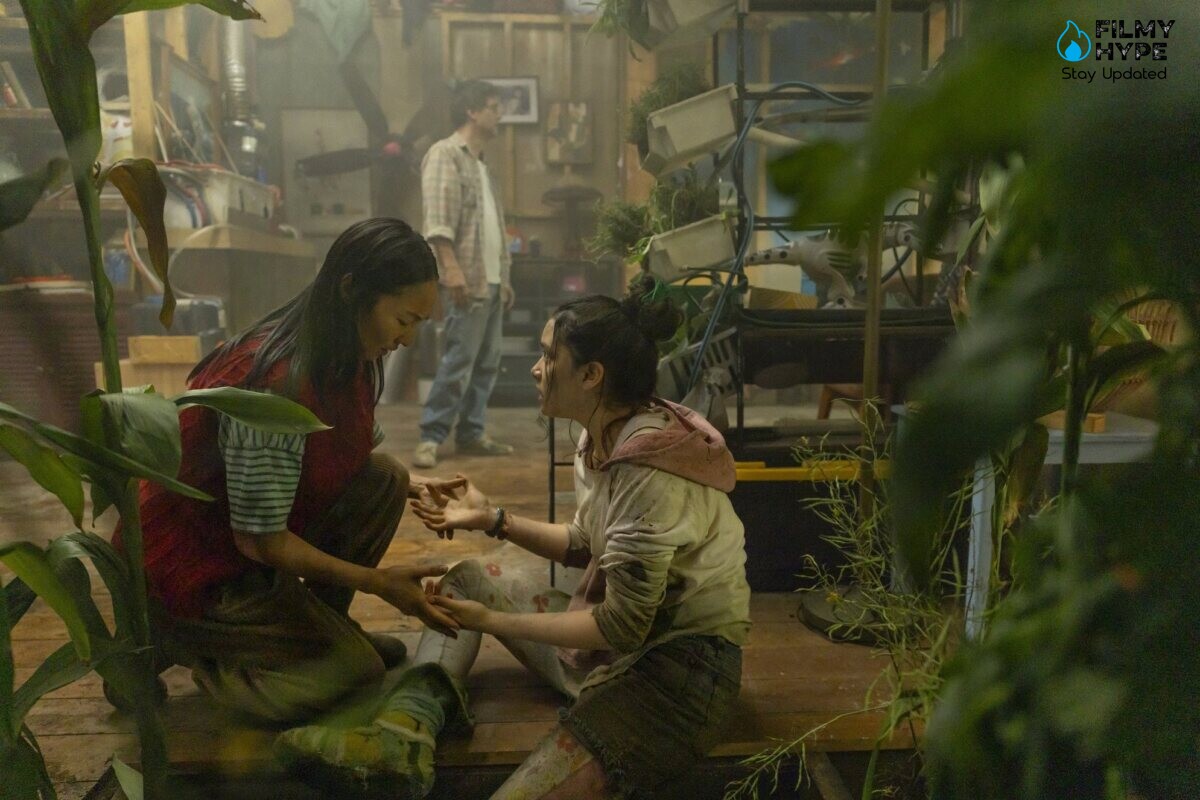
The confinement didn’t last days. It stretched into years. Supplies dwindled. Appliances stopped working. Everyday objects wore down along with the house itself. The family adapted by reshaping their living space entirely: floorboards came up, rooms once used for domestic life became makeshift farmland, seeds, water, and light became precious resources rather than background conveniences.
This shift marked the story’s biggest turning point. Ann, Jason, and the children stopped waiting for rescue and built an actual survival system. Every room lost its original purpose. The living room, the kitchen, and the bedrooms all became components of a closed-loop ecosystem. The family rationed everything, tracked environmental changes, and adapted to open-ended isolation with no end in sight.
The passage of time was most visible through the children. Riley Chung and Noah Alexander Sosnowski played Ruth and Graham in their younger years; Emma Ho and Gabriel Barbosa took over as the older versions later in the film. For them, the house stopped being the place they were trapped. It became the only world they’d ever really known. Watching them grow up inside that confinement sharpened one of the film’s most uncomfortable questions: Is survival enough if you never get to choose how you live?
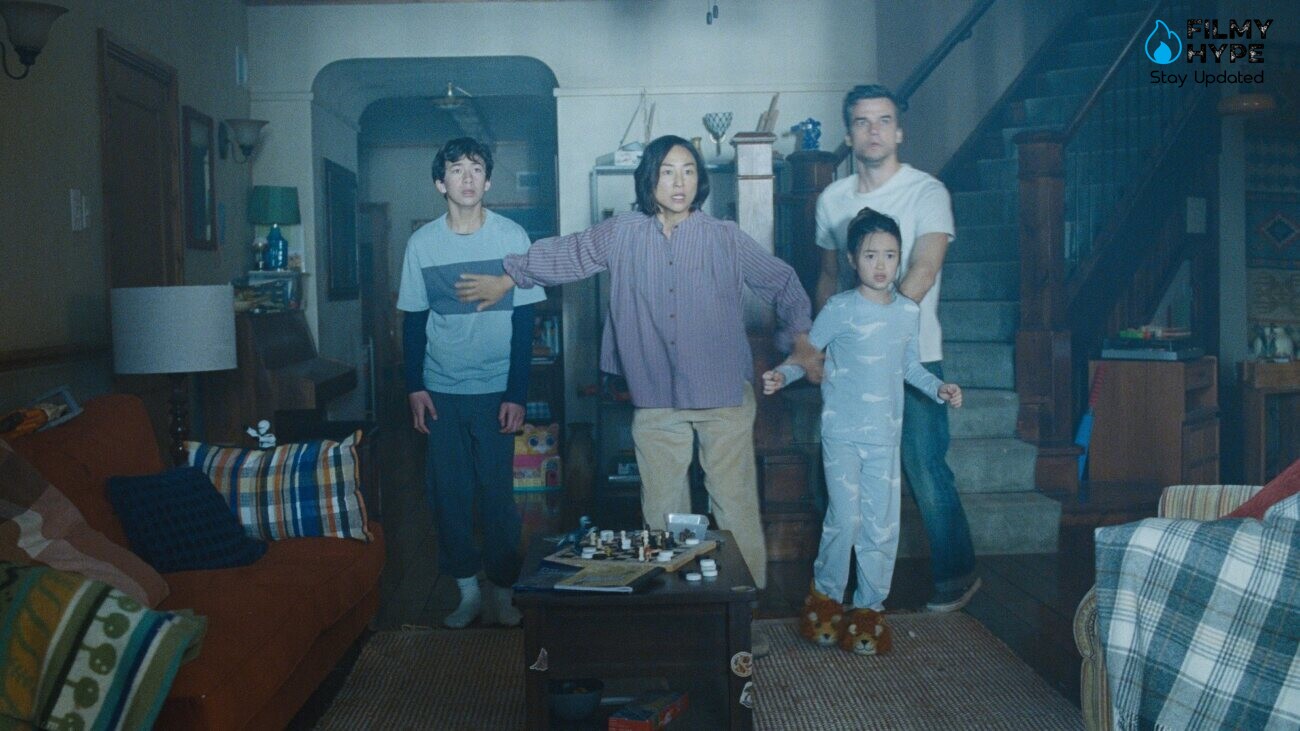
Unexplained noises, strange lights, and other phenomena inside the house suggested the danger wasn’t limited to whatever kept them locked in from outside. Something could also threaten them from within, testing the family’s already fragile dynamic. At one point, a woman appeared outside the house begging for help. Her presence complicated everything the family thought they understood. Someone else could move around out there, even as Ann, Jason, and the kids remained stuck. Whether she was a fellow survivor, a lure, or something else entirely was never made clear.
The Creatures
The film eventually confirms that the threat was never imaginary. The creatures are real, extraterrestrial in origin, and visually tied to something resembling salt water. Beyond that, the story stays deliberately vague. We never learn where they came from, why they arrived on Earth, or what their objective was. Their connection to the rain—the constant, oppressive rain that fell throughout the confinement—and their reason for targeting this specific family are never explained.
That mystery is intentional. The Last House isn’t interested in building out alien mythology. It’s interesting what years of confinement do to the people trapped inside it. The creatures are a catalyst, not the subject. The real story is the family, and the film never loses sight of that.
The Last Battle?
The story was changing when you could no longer hide. Years of rain had left the house badly deteriorated, and eventually the creatures forced their way inside. Jason, Ann, and the children had no choice but to confront the threat directly after years of only sensing it from a distance.
The struggle was prolonged and desperate. Jason eventually gained the upper hand. He had a clear opportunity to kill the creature in front of him. He didn’t take it.
That single decision changed everything. The creature responded to the mercy by mirroring it back. The other creatures stopped blocking the family’s path. The confinement that had defined years of their lives ended, not through violence, but through something the creatures apparently hadn’t encountered before: compassion.
Why Jason Spared the Creature?
This is the emotional core of the entire film. After years of fear, hunger, and desperation, the expected response would have been violence. A final act of retaliation against the thing that caused so much suffering. Jason did the opposite.
The film doesn’t present this as a calculated strategic move. It’s not a trick. Jason doesn’t spare the creature because he thinks it will let them go. He spares it because he refuses to become what the confinement has been trying to turn him into. After years of being treated as something less than human—caged, studied, tormented by forces that showed no interest in his family’s suffering—Jason reclaims his humanity in the only way left to him. He shows mercy to something that showed him none.
The creatures respond to that gesture. The film suggests they’ve never encountered this before. Whatever their purpose was on Earth, whatever they were doing to the families they trapped, the act of compassion was outside their framework. It broke the logic of the confinement. The creatures mirrored it back, and the family walked free.
What the Ending Means?
The Last House functions as a meditation on isolation and emotional endurance. The house represents both the safest possible place and the worst kind of prison. As the years passed, the real danger stopped being about what waited outside. It became the very real possibility that the family would destroy itself from within long before anything else got the chance.
The creatures act as a catalyst for that internal pressure, but they never become the true focus of the story. That’s why the ending doesn’t answer every question about the invasion. What matters isn’t who or what these beings are. It’s how Jason and his family respond to a situation that offered no good options.
The family gets out because they stayed together, and because Jason proved he was still capable of empathy even toward the thing that spent years trying to kill them. That choice is what breaks the confinement. Their survival isn’t just physical. It’s proof that years of fear never managed to turn them into something else.
The film is also unmistakably about the fragility of home. A house is supposed to represent protection, privacy, and control. The film holds onto all of that at first, then slowly inverts it. The same walls that keep danger out also stop the family from actually living. The shelter becomes a cage precisely because it eliminates choice.
Isolation puts pressure on the idea that family is automatically a source of safety. Ann and Jason can only make it through by working together, but being forced into that much closeness amplifies every fear, conflict, and responsibility between them. Protecting Ruth and Graham isn’t just about keeping them fed. It’s about giving them some reason to imagine a future their own parents can barely picture.
Ann represents resilience built on care. Her strength isn’t about extraordinary ability. It’s about sheer determination to keep the family intact. Jason copes by chasing stability, explanations, and concrete solutions. These approaches are not presented as opposing forces in the film. It shows how love and rational problem solving gets you to a dead end without a real desire to change.
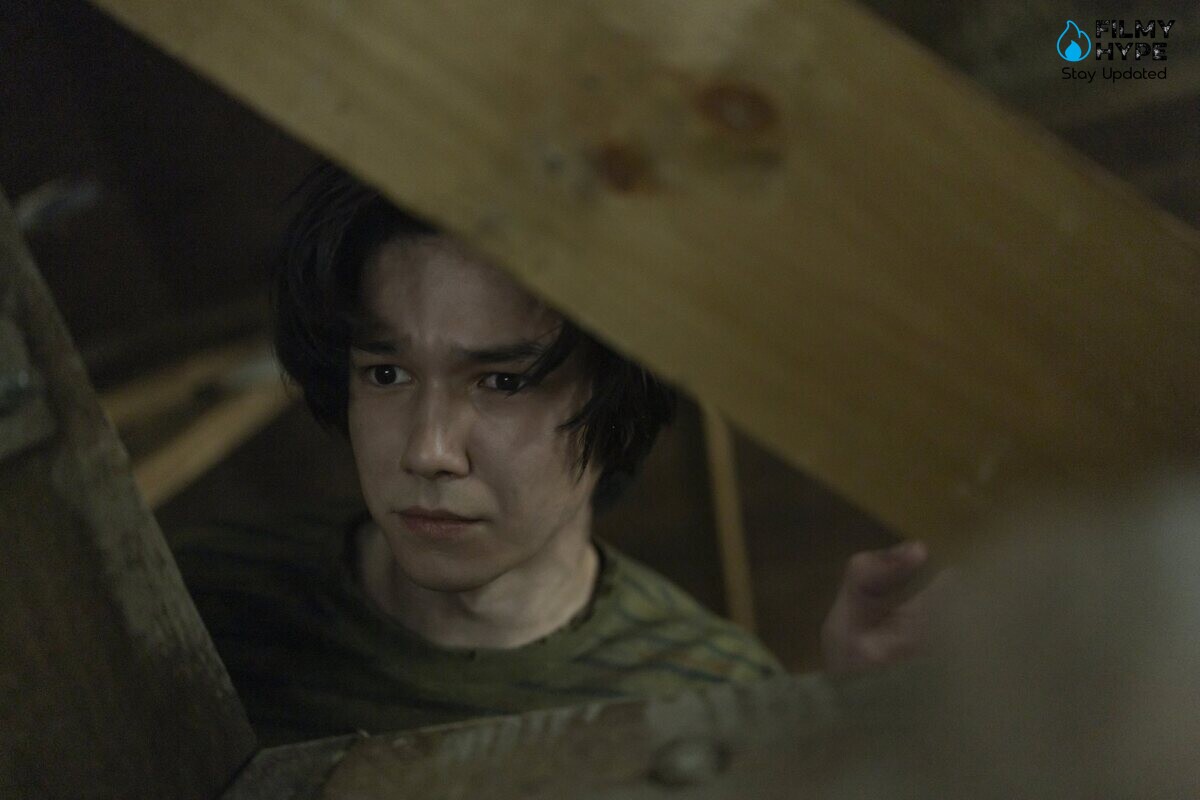
The growth of Ruth and Graham adds a generational element. The adults remember the world before, measuring every day against everything they’ve lost. The children are shaped entirely by the world inside the house. For them, it’s simply normal. That gap between trauma and normalcy creates very different reactions once a way out finally appears.
There’s an echo of collective lockdown experience running underneath all of this, though the film resists being reduced to a simple pandemic allegory. The bigger question it’s asking is how quickly comfort, technology, and familiar routines can lose their meaning under pressure. The Last House answers that by forcing its characters to rebuild an entire miniature society from scratch, built on scarce resources and relationships they have no choice but to hold onto. And in the end, it answers it again by showing that the way out of a nightmare isn’t through violence. It’s through refusing to let the nightmare change who you are. Jason spared the creature not because it deserved mercy, but because he did. That’s the difference. That’s the point.