The English-language Squid Game spin-off that David Fincher was developing for Netflix is dead. After years of rumors, speculation, and the kind of hushed reverence that accompanies any project linking one of the most popular streaming series in history with one of the most respected directors working today, the platform has reportedly pulled the plug. The project, which carried the provisional title Heckler, had been in development long enough to generate genuine anticipation—Dennis Kelly, creator of the cult British series Utopia, was writing the script under Fincher’s supervision. It was never officially announced, but the pieces seemed to be in place. Now they’re not.
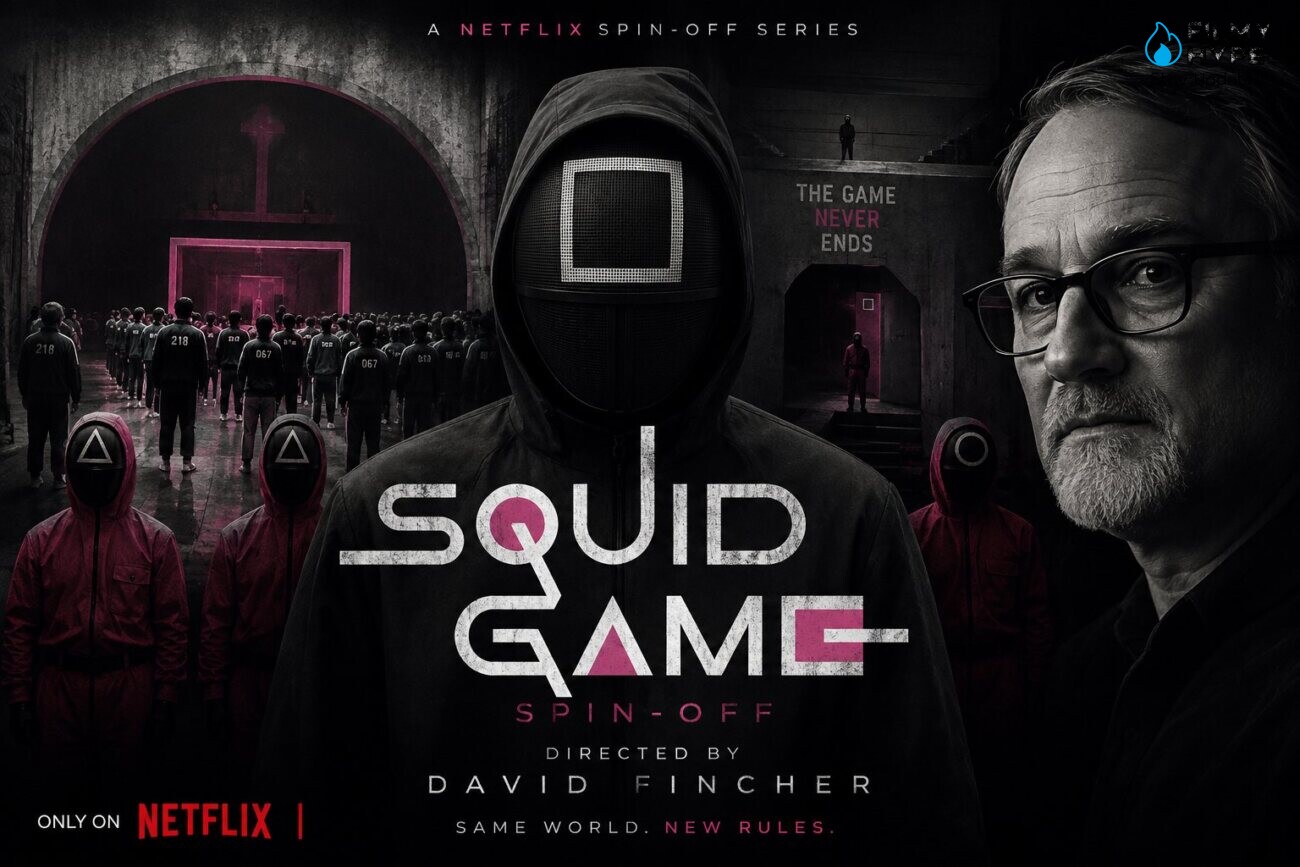
The Squid Game Spin-Off Directed by David Fincher Has Been Cancelled
The Playlist broke the news, citing sources who describe the cancellation as a consequence of shifting priorities at Netflix. The platform that turned Squid Game into a global phenomenon—the most-watched series in its history—has apparently decided that an English-language adaptation isn’t the way forward. Instead, the report suggests, Netflix is considering a strategy that would see the franchise expanded into multiple international markets, with localized versions tailored to different audiences rather than a single Anglo-Saxon reimagining. No official confirmation of new spin-offs has followed the cancellation, but the direction of travel seems clear. The Squid Game brand is too valuable to leave dormant. The question is what form its next iteration will take.
What Happened to Heckler
The Squid Game spin-off has been one of those projects that existed in the strange liminal space between rumor and reality for so long that its eventual fate feels almost beside the point. Fincher’s involvement was first reported years ago, and the idea of the director of Seven, Zodiac, and Mindhunter turning his attention to the world of Hwang Dong-hyuk’s hyper-violent capitalist satire was tantalizing enough to sustain interest even in the absence of concrete details. Fincher has spent much of his recent career working with Netflix—House of Cards, Mindhunter, Mank, The Killer—and the partnership seemed natural. Squid Game was Netflix’s biggest success. Fincher was Netflix’s most prestigious auteur. Bringing them together made a kind of corporate poetry.
Dennis Kelly’s involvement only heightened the intrigue. Utopia, the 2013 British series Kelly created, was a paranoid thriller about a conspiracy hidden in the pages of a comic book, and its visual language—hyper-saturated colors, symmetrical compositions, violence that arrived with shocking suddenness—felt like a dry run for the kind of aesthetic Squid Game would later popularize on a global scale. Kelly understood the tonal register the material required. Fincher understood how to make it look. The combination seemed potent.
But according to The Playlist’s sources, the project simply lost priority. Netflix’s internal strategy for the Squid Game franchise evolved, and Heckler no longer fit. The specifics of that evolution remain vague—the platform hasn’t commented publicly—but the suggestion is that an English-language spin-off came to be seen as too narrow an approach for a property with worldwide reach. If Squid Game could connect with audiences in every territory, why limit its expansion to a single language? Why not build versions that speak directly to different markets, the way streaming platforms have begun experimenting with localized adaptations of proven formats?
The report also clarifies a point of fan speculation. Cate Blanchett’s appearance in the final episode of the original series sparked immediate theories that she was being positioned as a bridge to Fincher’s spin-off. She wasn’t. The cameo was apparently unrelated to Heckler, a bit of casting that generated its own mythology simply by existing in proximity to a project everyone wanted to believe in.
What This Means for the Franchise
Squid Game is too big to sit still. The second season, whenever it arrives, will be an event. But the space between seasons—years, in the streaming model—creates a demand for content that keeps the brand alive. Spin-offs, prequels, expanded universes: these are the tools platforms use to maintain momentum. Netflix has been aggressive about building franchises out of its biggest hits, and Squid Game is the biggest hit it has. Something will fill the gap Heckler leaves.
The idea of multiple international versions makes a certain kind of sense. Squid Game was always, at its core, about systems—the economic pressures that drive people to desperate choices, the cruelty embedded in structures that pretend to be fair. Those systems look different in different countries, but the underlying logic is the same. A version set in Brazil, or India, or Japan, could explore the specific local manifestations of the same desperation that drove Seong Gi-hun and his fellow contestants. The format is flexible. The premise is adaptable. The brand recognition is global.
Whether any of this actually happens is another question. The report is careful to note that no new spin-offs have been officially confirmed. The cancellation of Heckler clears the deck. It doesn’t fill it.
What Fincher Is Doing Instead
Fincher, for his part, has already moved on. Principal photography has wrapped on The Adventures of Cliff Booth, his contribution to the expanding universe of Quentin Tarantino’s Once Upon a Time in… Hollywood. Brad Pitt is reprising his Oscar-winning role as the laconic stuntman who may or may not have gotten away with murder. Tarantino wrote the script, handing it off to Fincher in a rare instance of the director allowing another filmmaker to play in his sandbox.
The film is scheduled for additional shooting this month before an IMAX theatrical release in November, followed by a December debut on Netflix. The pairing of Fincher and Tarantino—two of the most visually exacting directors of their generation, each with an instantly recognizable aesthetic—is the kind of thing that generates attention simply by existing. Fincher’s cold precision meets Tarantino’s loquacious warmth. Pitt’s Cliff Booth, a character who was already one of the most memorable creations of Tarantino’s late career, is being handed to a director who has spent decades perfecting the art of watching men navigate systems of violence they only partially understand.
It’s a project that makes Heckler feel less like a loss and more like a trade. Fincher’s Squid Game would have been fascinating. Fincher’s Tarantino adaptation is, in its own way, just as intriguing—a collision of sensibilities that could produce something genuinely unpredictable.
The Bigger Picture
The Squid Game spin-off was always a strange proposition. Fincher has spent his career making films about the violence that systems inflict on individuals, but his approach is almost opposed to the one that made Squid Game a phenomenon. Hwang Dong-hyuk’s series was broad, emotional, operatic in its violence and its sentiment. Fincher’s work is clinical, restrained, and interested in the moments between explosions rather than the explosions themselves. A Fincher-directed Squid Game might have been brilliant. It might also have been unrecognizable as Squid Game.
Netflix, for all its willingness to spend money on prestige filmmakers, has also shown a growing preference for content that can travel. The platform’s biggest successes in recent years—Squid Game, Stranger Things, and Wednesday—are shows that work across languages and cultures without needing to be translated. An English-language spin-off, by its nature, would have been a more limited proposition. The pivot toward international versions, if it happens, would be an acknowledgment of what made the original work in the first place: it wasn’t just a story about Korea. It was a story about the conditions that produce desperation everywhere.
Fincher will be fine. He always is. The Adventures of Cliff Booth will premiere in November, and the director’s Netflix partnership remains intact despite the cancellation. The Squid Game franchise will continue in some form, because a property that generates that much attention doesn’t simply vanish. Heckler, the spin-off that never was, becomes another entry in the long list of intriguing projects that didn’t survive the gap between development and production. The idea was good. The timing wasn’t. The strategy changed. The show is dead. Long live whatever comes next.