


Clayface Movie Review and Ratings
Cast: Tom Rhys Harries, Naomi Ackie, Max Minghella, Eddie Marsan, Wil Coban, Jake Curran, Jack Colgrave Hirst, Jean-Pascal Heynemand, David Dencik, Ruby Sear, Sonita Henry, Tanya Moodie
Directed by: James Watkins
Filmyhype.com Ratings: 3.5/5 (three and a half stars)
Clayface takes a while to find its groove, but when it fully embraces body horror, it becomes a dirty, cruel, and funny film. James Watkins constructs a tragedy of vanity that works especially in the second part, when the search for empathy leaves room for revenge and the most grotesque possibilities of its protagonist. That’s where the film delivers on its promise of a DC horror film that can really get your hands dirty. The reference is not only to superhero cinema. There are echoes of the revenge thrillers and low-budget horror films of the 1950s and 1960s, filtered through titles like The Fly, Darkman and Johnny Handsome. Clayface belongs to that tradition of wounded men, destroyed faces, and impossible reconstructions: bodies that become the visible manifestation of something that has already broken inside.
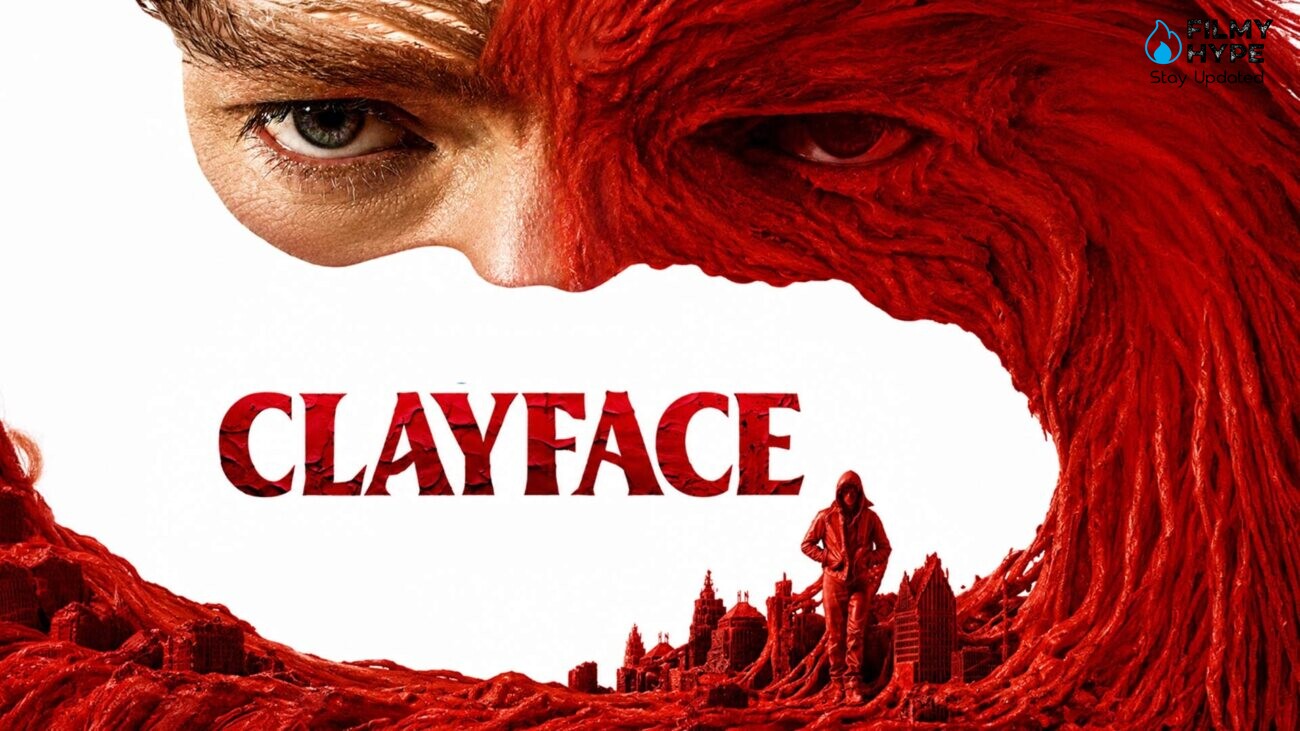
Actors wear many faces and live many lives for work, but… what about theirs, about life? Clayface develops from a not-so-innovative reflection that compares humanity with fame and success with the person behind it and takes the reasons to the extreme, using the underlying comic book dimension. Although developing from not-so-unprecedented premises, the feature film directed by James Watkins, with a screenplay by Mike Flanagan and Hossein Amini, attempts to leave its mark by embracing the most macabre and disturbing dimension of a story that is always, and in any case, over the top. Thus, the big screen becomes the home of internal and external demons, and talent on set is both a condemnation and a gift capable of crushing everything else.
Clayface Movie Review: The Story Plot
But let’s start with the basics, with some notes on who the Clayface of the DC comic book world is: he is a character who has had several incarnations starting in 1940, first under the name Basil Karlo, then Matt Hagen, then Preston Payne, and so on until a seventh appeared in 2003 under the name Johnny Williams. They all have one thing in common: it is always a supervillain who is Batman’s adversary, usually equipped with a clay body and the ability to change shape as you like. Power that, of course, he uses to commit crimes and keep the city of Gotham City in check whenever he is released or escapes from Arkham Asylum. He is an evocative character, as can be seen from the visual inspiration for his first incarnation, when Bob Kane sketched him, inspired by Lon Chaney in The Phantom of the Opera.
History follows the rise of Matt Hagen, a street kid from Gotham City who manages to conquer Hollywood, building a career and an identity in public. His path is brutally interrupted by the actions of a local crime boss, who leaves him disfigured and deprived of everything he had conquered. When his own entourage abandons him, Matt clings to a treatment experiment that promises to give him back his lost face. The result seems miraculous, at least initially. The possibility of recovering your aspect becomes, however, the beginning of an increasingly uncontrollable process, in which the perception of reality is altered, and the desire for revenge takes over.
This is where Clayface finds its core more interesting: the body becomes the place where an identity crisis occurs, while the need to return to what it was before fuels a destructive spiral. The premise offers material enough to build an incisive psychological horror, capable of exploring the relationship between public image, ambition, and loss of self. The narrative, however, struggles to give depth to these elements, often leaving events to follow one another without a really convincing connection.
Clayface Movie Review and Analysis
Clayface‘s thematic intent is crystal clear from the start. Watkins’s film is first and foremost about Hollywood, the star system, and how its “sucks” everything out of you if you don’t set the right limits and boundaries. All this in a way that pushes the accelerator, especially when it comes to disturbing the viewer in the room, translating the internal pains of this protagonist through a lacerating body horror in many different ways. The skin itself, in Clayface, becomes a language in itself and a distorted reflection not only of Matt’s inner pains but also of the world around him and in which he lives day by day. This protagonist’s parable doesn’t have much new, but the film manages to capture you precisely because of the ways in which it is staged and told.
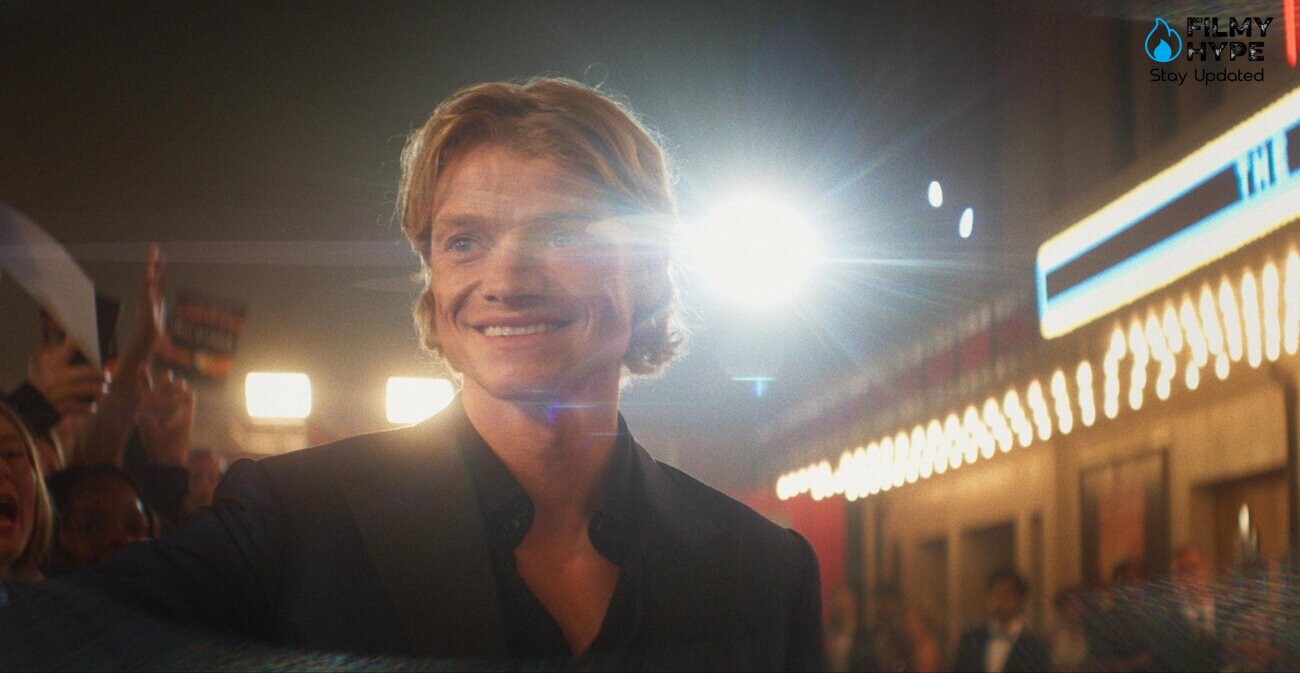
The direction, while not too refined, does what it’s supposed to, conveying a sense of anguish that comes directly from Harris’s performance. His face communicates many different things even without the special effects of chance. At the same time, we find the aesthetics of an urban context, that of Gotham City, which is perfectly consistent with the imagery that DC enthusiasts have always been accustomed to (dirt, shadows, neon, and decadence dwell in the streets of a city that eats itself). But Clayface isn’t just these things. It is also, and above all, a work of images that reflects on the human and his psyche in contact with pain, gradually defining an interesting story precisely because of everything it doesn’t say and doesn’t show clearly on screen. Self-loss, mental dissociation, and sociopathy are just some of the more subtle themes behind a job that speaks without speaking.
Reflecting on the feature film in its entirety, it’s certainly not a perfect work, but it gets straight to the point and chooses its own path, maintaining it from start to finish. In some plot points, it’s easy to read hypothetical inspirations from the world of cinema (A Different Man or The Crow, to give two examples), but the film remains true to itself, with general ups and downs. Clayface doesn’t innovate, but he introduces a completely more adult dimension to contemporary comic book films and, between more physical horror and the narrative of the psyche, he gives us a dark picture that is impossible to ignore.
The film, the third in the new DCU series led by James Gunn, features the second Clayface, at least in terms of the name used: Tom Rhys Harries plays Matt Hagen, who is, however, a young actor and not a treasure hunter as on paper. The film’s Matt is in a fortunate moment, with his career on the rise and the world of cinema seemingly at his feet, until something dramatic happens for someone who also entrusts his professional opportunities to the outside world: he wrongs a local gangster who, out of revenge, disfigures his face. Various reconstructive surgeries are not enough to resolve the situation, and Matt, who is also targeted for his behavior, is unable to work again.
Tom Rhys Harries is one of the film’s most convincing elements. He has a young Malcolm McDowell air: a cheeky charm that hints at a dark area. It avoids overcharging passages that might lend themselves to histrionics and makes Matt’s desperation as believable as the determination that ends up devouring him. Naomi Ackie plays researcher Caitlyn Corr with equal sensibility. The character is not simply a mad scientist: she is a frustrated woman, deprived of recognition for her work and willing to accept an experiment she would have reason to fear. When Matt offers himself as a human subject for an experimental regenerative technology, their collaboration arises from the meeting of two people who have lost something essential.

The treatment initially seems to give Matt back what he wanted. However, the film finds its interest in the ambiguity of the result: is technology creating a new personality, or is it releasing a part of him that already existed? Physical transformation thus also becomes a moral issue. The main limitation is the time it takes to get to the heart of the film. The first part insists on Matt’s suffering and tries to make it understandable. It’s useful work to build tragedy, but it’s not always incisive enough to sustain the pace. There is a sense of restrained malice, as if the story hesitated before indulging in the most absurd ideas.
Mike Flanagan and Hossein Amini’s script finds a more effective direction when it stops just asking for compassion. Matt is no longer exclusively a victim: he becomes someone who chooses what to do with the power he gains. The transition energizes the film and makes the relationship between personal responsibility and body deterioration more interesting. It is also the moment when the homage to genre cinema ceases to be just atmosphere. Revenge finally tests the protagonist’s abilities and allows Watkins to alternate tension, disgust, and dark humor. The most successful idea is to tie the shapeshifter to the actor. Matt doesn’t just change his appearance to get closer to his targets: he plays other people, uses acting to occupy different identities, and transforms professional talent into a tool of violence. The film uses this possibility with inventiveness, finding situations that are both threatening and mocking.
The best sequences arise from the distance between what we see and what we know about the body hidden beneath that face. Watkins and her creative team manage to make tension coexist with the macabre pleasure of makeup, without reducing each transformation to a simple display of power. Artisanal makeup effects give the metamorphoses an unpleasant texture, supported by Harris’s interpretation. The flesh that loses stability is not just a spectacle: it makes perceptible an identity that can no longer remain together. When revenge finally takes over, moral and physical degradation proceed in the same direction. The most recognizable form of the character is reserved for the final moments. The choice completes Matt’s tragic journey and works precisely because it comes after seeing how much it cost him to try to recover his appearance.
Given the premise, character work is crucial to the film’s economy, and Tom Rhys Harries does a great job of sketching the psychological nuances of his Matt Hagen, a successful man who finds himself catapulted into an injury that drags him into the darkest crisis. From beauty to disfigurement, from success to poverty and the inability to work, Harries makes Matt Hagen’s total breakdown and the desperation that drives him to make crazy choices to get back to who he was believable. He is accompanied on this dramatic journey by the equally good Naomi Ackie, who plays Dr. Corr, building with him a complex relationship of interdependence and complicity, at the center of a group of secondary characters who complete the picture of this corner of Gotham in which the story moves, but also of the cinematic context that he does not give up criticizing.
The result of Watkins’ work on the character, thanks in part to the solid basis of Flanagan and Amini’s script, is more of a horror film than the cinecomic the source material would suggest. And this makes Clayface very interesting, because it doesn’t shy away from staging its most disturbing component: on a superficial and visual level, it draws on the more strictly body-horror imagery, while mitigating it in a version accessible to a more mainstream audience, but also on a psychological level there are subtle developments that are disturbing and leave the viewer thinking and disturbing.

Some sequences in particular are particularly successful and lead to looking away if you have certain sensitivities. An example above all? You will hardly be able to watch a particular sequence lightly if you have problems with scenes that touch the characters’ eyes. Watkins is comfortable between moderately well-conceived and executed effects, sound that he emphasizes with criterion, and a soundtrack that he accompanies with taste, amplifying the staging. A successful film in which the director confirms how good he is with Speak No Evil, enjoying exploiting Clayface‘s abilities in a creative yet disturbing way. And the first DC horror was served with brutal taste, and there’s no need for any other films seen before!
Clayface Movie Review: The Last Words
Clayface is at his best when he accepts his own B-movie nonsense. The start is slower and less impactful than it should be, but the second part pays for the wait with inventive transformations, dark humor, and a protagonist who becomes progressively more disturbing. Tom Rhys Harries’s ordeal holds together the pain of man and the ferocity of the monster, while Naomi Ackie prevents the scientific side from being reduced to a function of the plot. It is a horror film that is especially successful in its final act, recommended for those seeking a physical and grotesque tragedy within the DC Universe. You don’t need to know Batman’s story: you need to be willing to follow a man who, in trying to get his face back, loses much more than that.