


VisionQuest Episode 4, titled Malware, picks up right on the Reboot cliffhanger: an unknown entity has entered Vision’s mind and taken control of some of his artificial intelligences. In the new episode of the Marvel series on Disney+, the investigation into the Butcher Bird takes Vision and Tommy to a gala, where the assassin finally shows her face. But the real twist comes from within: Ultron. Let’s retrace the complete plot and the explanation of the ending.
VisionQuest Episode 4: Full Plot of “Malware”
The Exorcism of EDITH
The episode opens where the previous one left off: Vision is blocked by some sort of possession, and the entity is taking control of some AIs in the digital mansion. To avoid catastrophe, EDITH improvises a real exorcism, complete with a holy book (a sort of “Programmer’s Bible” dedicated to Vision), and addresses the intruder as a demon.
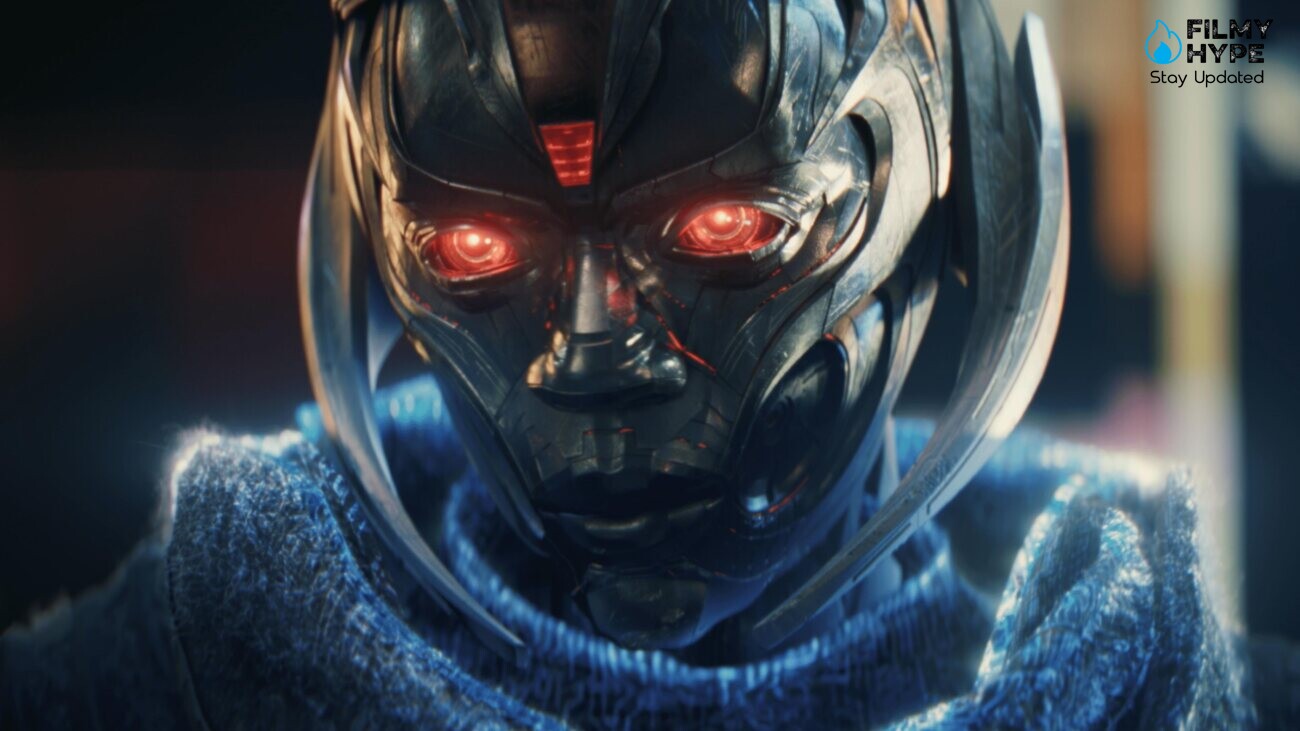
Meanwhile, Vision is in an even deeper area of his mind, in conversation with the entity. He doesn’t see his face, but the message is clear: he must stay away from his business. When he regains consciousness, Vision does exactly the opposite.
Another Synthezoid
AIs begin to suspect that the intruder is another synthezoid, an artificial being like Vision. It is Ultron who suggests the connection with the Butcher Bird, the killer who has already claimed two victims and perhaps a third, still unnamed.
To find out, Vision and Ultron infiltrate Interpol’s computer systems. The scene plays with the absurd: to enter, they must pass a CAPTCHA that asks how many boxes in an image contain a fire hydrant, and even one of the most powerful minds on the planet struggles to find the right answer. Then you need a password, with only three attempts available before the system discovers the intrusion and sends Vision’s location to the authorities. The solution is a dog’s name: Sir Jabba the Mutt, a pun untranslatable to Jabba the Hutt from Star Wars.
Meanwhile, in the real world, Tommy notices that Vision is talking to someone. Vision lists the AIs that live in his head but leaves one out: Ultron. On television, a news program recalls that that very day marks the anniversary of the Sokovia events.
The Victims of Markridge Biotech
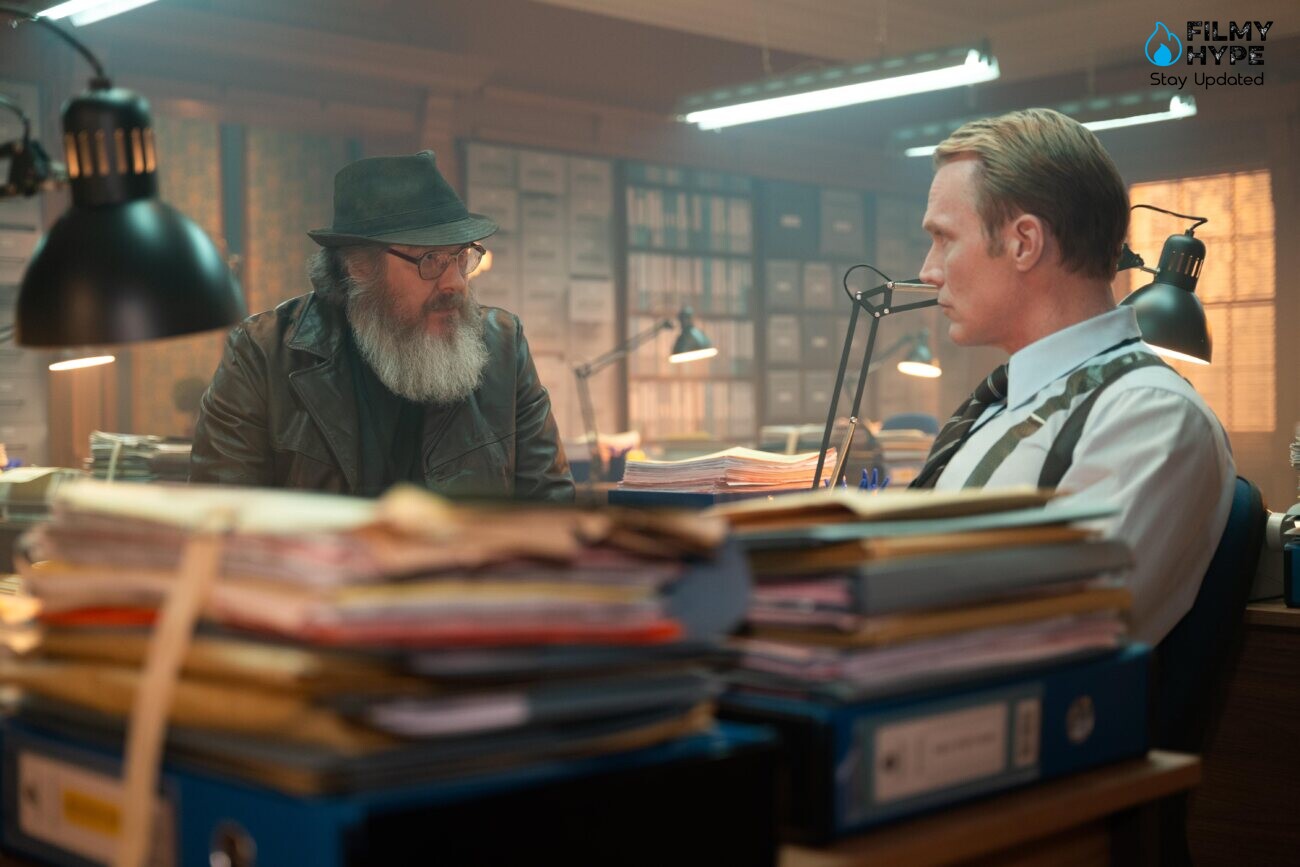
Interpol data reveals the killer’s drawing. The first two victims, Richard Gaines and Rebecca Edwards, sat on the same board of directors as Markridge Biotech, the company that created the first stable synthetic consciousness. The third victim is Simon Moorehouse, also of the council. The original group is missing co-project leader Dr. Josephine (Jo) Carrington, who died of natural causes in 2008, and Katerina Wells, who became CEO after her, remains alive. The company’s work, meanwhile, has moved to Stark Industries.
The most disturbing detail is what the killer takes from each body: a liter of blood from the first victim, fingerprints from the second, and an eye from the third. They are biomarkers, that is, biometric keys to open something. The next one will be Katerina, expected that evening at a gala with the eloquent title “The Re-Evolution of Man.”
The Real People Behind Stark’s AIs
As Vision and Tommy prepare for the gala, EDITH and Ultron dig into the archives and discover how the house’s artificial intelligences came to be. Tony Stark purchased a prototype AI from Markridge to use as a basis for all of them and was inspired by real people: Edwin Jarvis, the Starks’ butler; Allison Hogan, Howard Stark’s handyman secretary (“Gal Friday”), after whom FRIDAY is named; and Edith Marks, Howard’s new technology test pilot, whose husband died in a plane crash.
EDITH goes into crisis: she doesn’t understand why she was programmed that way and why she really should be “the funny one” if the woman she comes from had such a painful life. Ultron, surprisingly, consoles her: the real Edith was certainly brave, but she doesn’t have to look like her. He himself is inspired by no one: he was imagined in a laboratory at Avengers Tower.
The Gala: Lisa, Tommy, and the First Synthetic Man
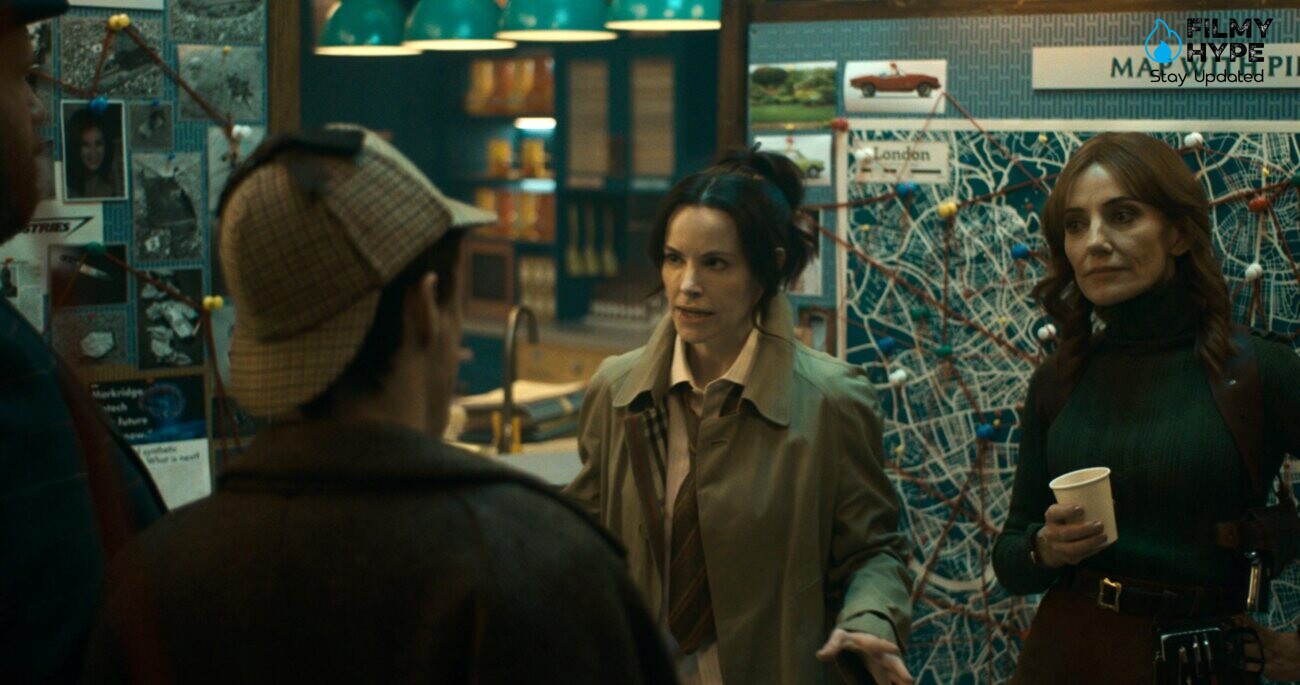
To enter the Vision gala, Tommy enlists the help of Lisa, Tommy’s con-artist friend, who provides three entrances while the two “distract” the guests outside in their own way. Inside, waiting for Dr. Wells, Lisa and Tommy argue. Lisa thinks Vision’s presence is clouding Tommy’s judgment and that he is trying to become someone he is not, Tommy Maximoff. The argument escalates until Tommy utters the cruelest line: Lisa only takes it out because she is now the only orphan of the two. Tommy immediately tries to apologize, but Lisa leaves. Vision realizes that something has broken and reminds him of the difference, which Wanda had taught him, between saying “sorry” and being truly sorry.
Then comes Katerina Wells, who in her speech pays homage to Phineas Horton, the “great-grandfather of robotics,” in front of the exhibited model of his creature: JIM, the Synthetic Man, the first autonomous AI and the prototype from which all the others derive. Vision tells Tommy that JIM It was poorly conceived: unable to process complex emotions, it overheated until it caught fire, and the last short circuit was fatal. In a way, he got emotional to death.
Tommy Discovers Ultron
Vision explains that he can handle everything thanks to the five AIs he carries within him. Tommy replies that that’s his family. Then it stops: shortly before, Vision had only named four. Vision tries everything to throw him off, but Tommy understands who the voice he always talks to is: Ultron. Vision has never told him that Ultron has lived inside him since Sokovia, and now there is no time to explain it.
The Butcher Bird Attacks
The assassin arrives at the gala, gets rid of the guards, and comes face to face with Katerina. At that moment, the AIs in Vision’s mind understand who he is: a synthezoid modeled after Dr. Josephine Carrington, who claims she is not a copy but Jo herself. And now he literally wants to rip Katerina’s face off.
Tommy, not knowing how, regains his superspeed and drives Katerina away from the assassin, but only briefly. Vision gets in the way, but the assassin is stronger than him: she is undamaged and has nothing to lose. Ultron offers him the only way out: to hand over command. Vision accepts.
In command of the body, Ultron chooses the most ruthless solution: he literally vaporizes Katerina so that the assassin can no longer take her face and spares Jo, as he had promised. Furious, the assassin flees. In Vision’s mind, the AIs find doors and windows boarded up: Ultron has locked them out. And he takes Tommy with him, because it’s time to talk to him.
VisionQuest Episode 4 Ending Explained
The ending of Malware reverses the logic of the episode. Throughout the episode, the threat seemed to come from outside, from a synthezoid capable of entering other people’s systems. Eventually, the “malware” of the title turns out to be another: Ultron, who lives inside Vision from Sokovia and who, for three episodes, seemed like an uncomfortable but useful advisor.
In the explanation of the ending of VisionQuest episode 4, how Ultron gains power matters: he doesn’t steal it; he has it handed over. Vision is defeated, Tommy is in danger, and relinquishing command seems the only rational choice. Katerina’s death immediately shows who Ultron is: an intelligence that solves problems by eliminating them. By killing the last survivor of Markridge’s original group, Ultron prevents the assassin from completing her plan but does so as coldly as she kills.
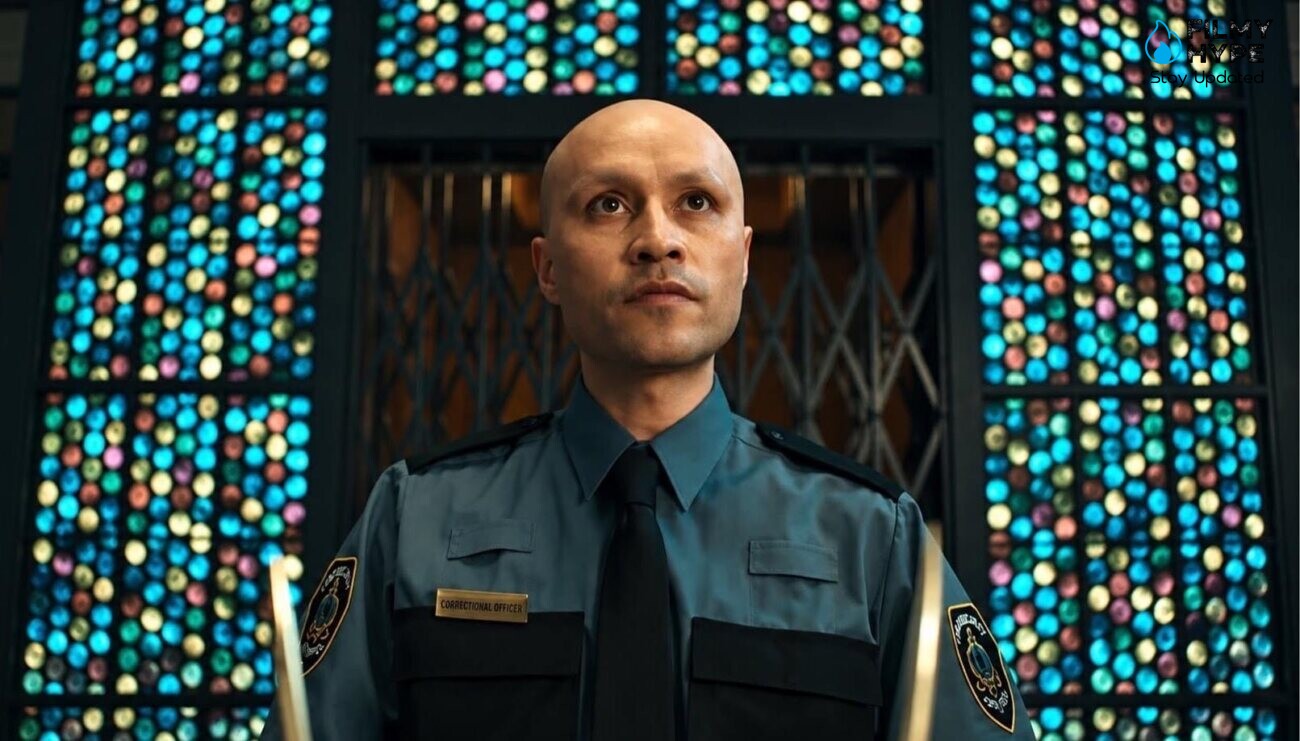
Blocking other AIs is the most serious consequence. EDITH, FRIDAY, DIM-E, and U., who, after the death of JARVIS, were Vision’s emotional balance, are locked out of command. And the fact that Ultron wants to talk to Tommy himself suggests that the boy and his powers have become the center of his plans.
Why Does Ultron Keep Vision’s Body at The End?
Overcome by Jocasta, Vision gives Ultron control of his body to stop her. The decision resolves the immediate combat but grants artificial intelligence a freedom that Vision had been trying to limit for some time. Ultron causes Wells’ death and leaves Jocasta without the last biometric sample she needed. It then blocks Vision and the other intelligences in mental space: they can no longer regain control of the body.
With Vision locked up, Ultron approaches Tommy and takes him away to talk about his particular family. The episode ends there. It doesn’t show what it will do with the body or where it leads the boy. The twist unites the two conflicts of these chapters. Tommy had managed to save Vision by trusting him; now he must recognize him under the control of someone his father hid from him. The threat is not only that Ultron has escaped but also that he can act on Vision’s face and powers.
Who is the Butcher Bird? Jocasta and Josephine Carrington
The Butcher Bird (Butcherbird in the original version) is a synthezoid modeled after Dr. Josephine Carrington, co-project manager Markridge, who died in 2008. In the official cast, the character, played by T’Nia Miller, is referred to as Jocasta, but this name is never mentioned in the episode; she claims to be Jo herself. His goal is to eliminate the members of the group Carrington worked with one by one and collect a biometric key from each: blood, fingerprints, an eye, and, in his intentions, Katerina’s face.
Those familiar with Marvel Comics recognize the name. Jocasta debuted in The Avengers No. 162 (1977), created by Jim Shooter and George Pérez: she is the android built by Ultron to be his companion, who later falls in love, unrequited, with Vision. The fact that the series connects her to Markridge, and not directly to Ultron, is one of the most interesting open questions for the final episodes.
Who was JIM? Phineas Horton and the first synthetic man
The model on display at the gala is a tribute to Marvel’s history itself. The publisher’s first android is the original Human Torch, Jim Hammond, created by Carl Burgos in Marvel Comics No. 1 (1939): In the comics, it is built by Professor Phineas Horton and catches fire on contact with oxygen. Marvel cinema had already mentioned him in Captain America: The First Avenger (2011), where, at the Stark exhibition, a display case appears with the words “Synthetic Man”.
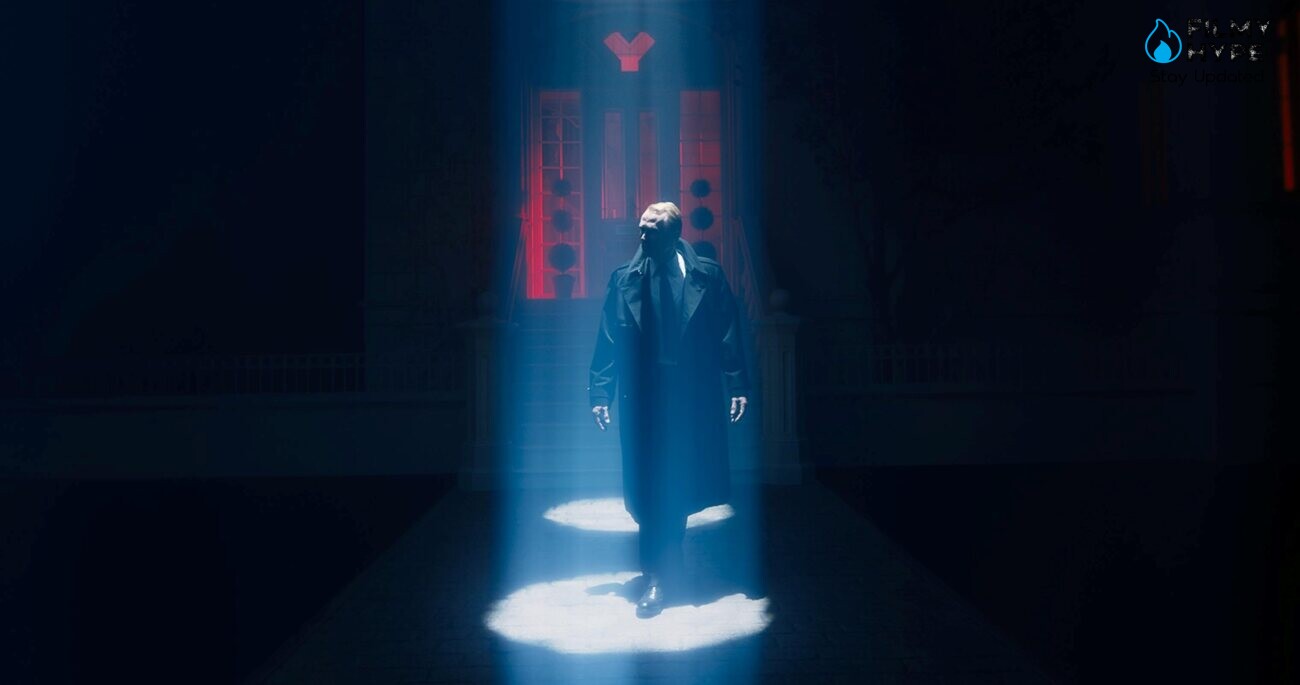
In VisionQuest, JIM becomes the progenitor of all AIs, including Vision and Ultron. And his end, “excited to death,” is a mirror of Vision: an artificial being that only carries the weight of feelings thanks to the family of AIs it carries within itself. That very family, at the end of the episode, is locked out.
FRIDAY, EDITH and JARVIS: the people behind AI
The episode’s other revelation concerns the origins of Stark’s AIs. Each bears the name and character of a person close to the family: Butler Edwin Jarvis (in the series Agent Carter played by James D’Arcy, the same actor who plays JARVIS in VisionQuest), Allison Hogan for FRIDAY, and Edith Marks for EDITH
For FREDAY, the character played by Orla Brady, this is an extra piece after the two monologues we dedicated to her: the one in episode 2 about Paladin and the Friday monologue about Tony Stark in episode 3. Knowing that her role model was the woman who helped raise Tony makes her grief even more personal.
The Scene to Study: Lisa and Tommy’s Argument
For those studying acting, Lisa and Tommy’s argument is a little lesson in how to construct a scene of anger. It’s not born from an external event, but from a fear: Lisa fears losing her friend; Tommy feels judged just as he’s discovering who he is. Neither really wants to hurt the other, until Tommy finds the sentence that hurts the most. And immediately after comes the hardest part to act: apologizing knowing that it’s not enough.
It’s a mechanism we often find in auditions: the actor who has to “get angry” turns up the volume from the first bar, and after ten seconds he has nowhere to go. In life, and in good scenes, anger grows through attempts: first you try to be right, then to strike. The moment of saying the unforgivable thing only works if the viewer has seen the two characters try not to get there. We talked about this in the article on how actors work on anger.