

Lupin Season 4 Review and Ratings
Cast: Omar Sy, Antoine Gouy, Clotilde Hesme, Hervé Pierre, Ludivine Sagnier, Soufiane Guerrab, Mamadou Haidara, Etan Simon
Directed by: Édouard Salier, Everardo Gout, Hugo Gélin
Streaming Platform: Netflix
Filmyhype.com Ratings: 3.5/5 (three and a half stars)
It took some time, after watching Lupin Season 4, to jot down my thoughts on these new episodes that arrived on Netflix on October 23rd. I wanted to wait to settle the conflicting opinions that emerged in my mind as I watched this new installment in the series that made Omar Sy, in our eyes, the ultimate gentleman thief. Did I like it? I didn’t like it? And is a pop crime series like this, which has become a true global phenomenon since its debut, still capable of winning us over after four seasons? To hold its own against previous seasons and still have something to say and give to the audience? There is a time when even the world’s smartest thief risks becoming a victim of his own success. Assane Diop knows this well. After spending three seasons turning every escape into an exercise in style and every deception into a demonstration of intellectual superiority, the protagonist of Lupin Season 4 finds himself faced with a problem he cannot solve simply by changing his disguise.

Someone decided to steal using his name, replicate his methods, and turn his reputation into an accusation. The return of the Netflix series, available from October 23 with eight episodes, starts with a promising intuition: what happens when the master of appearances loses control of his image? Four years have passed since Assane’s surrender to the police. Omar Sy’s protagonist is in prison, a week after his release, and finally dreams of keeping the promise he made to his family: to leave France, reach Senegal, and start a life away from theft. The perspective seems almost too simple for a man who has built his existence on complication. Then two museums are robbed, and a series of cyberattacks announce new Lupin-branded heists. The evidence appears to nail Assane, despite him being held in a maximum-security facility. His name becomes an early sentence, while the protagonist must figure out who is trying to imitate him and why.
Lupin Season 4 Review: The Story Plot
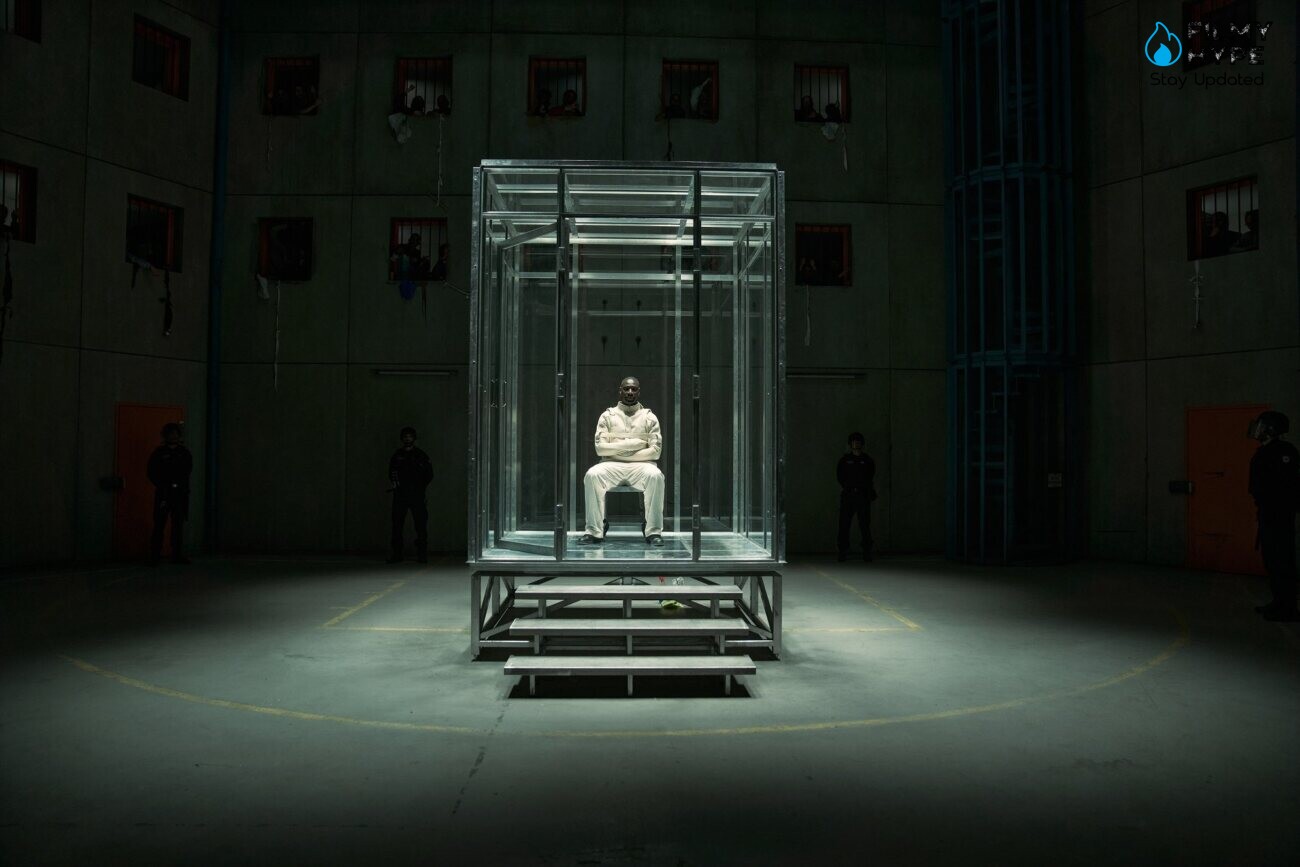
Season four opens in prison, where Assane Diop is serving a sentence that is nearing its conclusion. Four years have passed, and the protagonist is behaving like a model prisoner, so much so that he is close to being released from prison. Two prison officers question him about how he managed, years earlier, to help corrupt businessman Hubert Pellegrini, played by Hervé Pierre, escape France. Assane, however, seems to have other plans for his own future. His goal is simple: to leave his life of crime behind and keep a promise he made to his son Raoul, taking him to Senegal to introduce him to his paternal family. But just when freedom seems within reach, Paris is rocked by a cyber-attack.

The message released by the hackers announces two simultaneous robberies of two museums and appears to come directly from Assane, or rather from his famous identity as Lupin. To prevent him from organizing further heists, the prison director has him locked in a special transparent structure, immobilizing him with a straitjacket. Then the lights go out, and Assane seems to disappear into thin air. Meanwhile, the two thefts are carried out exactly as announced. Everything suggests that Assane is responsible, but the protagonist claims to be innocent. The situation escalates when Captain Sofia Belkacem, a colleague of Detective Youssef Guédira, is seriously injured during the chase related to the robberies.
Youssef, who has known Assane for some time, must choose whether to trust his friend or consider him the prime suspect. Assane explains how the mysterious impersonator organized the thefts and made everyone believe he had escaped. To prove his innocence, however, all he has to do is do what he does best: truly escape from prison. His search for answers leads him to Juliette, the daughter of Hubert Pellegrini, his historic enemy. A risky choice, especially since the past continues to pose a threat to the future Assane would like to build.
Lupin Season 4 Review and Analysis
Assane must deal with a fame that has become cumbersome and a past that continues to resurface. The story recalls that of his father, Babakar, who was wrongly accused of theft and died in prison. History seems to repeat itself, but this time it is the son who risks being crushed by an accusation that does not belong to him. The parallel gives the story a more solid emotional dimension and recalls that, behind the gentleman thief, there was always a man seeking justice. Lupin‘s fame thus becomes a cage. Assane has built a character that allows him to face more powerful opponents, but that character now lives beyond his control. People want to see the thief who always manages to get by, not necessarily the man who pays the price for his choices.
The series questions the boundary between identity (a focus on the topic of identity in Split) and spectacle, between the person and the myth built around them. It’s an interesting theme in a story that has always played with masks but now must prove that it can go beyond the simple pleasure of exposing someone. The problem is that Lupin Season 4 doesn’t always turn this premise into a surprising tale. The season continually relaunches, multiplies the twists and turns, and builds increasingly elaborate situations, but the feeling of déjà vu ends up making itself felt. The mechanism of the seemingly impossible plan, the last-second escape, and the explanation that comes after the fact is now an essential part of the series’ identity. When it works, it gives you the pleasure of seeing Assane get ahead of everyone. When it repeats itself too much, it becomes a formula that the viewer recognizes before the protagonist even puts it into practice.

In the early seasons, Assane seemed a step ahead of the others because the viewer discovered details with him that could change the meaning of a scene. The pleasure came from being able to reread what we had just seen. When, however, the series accumulates obstacles and solutions in succession, the twist risks becoming a mandatory appointment. He expects Assane to have a plan, that plan to fail at least in part, and a new stunt to get everything moving again. The protagonist continues to be brilliant, but brilliance loses value if it is not accompanied by a real surprise. However, Omar Sy remains the main reason why Lupin Season 4 manages to maintain its charm. The actor retains that combination of irony, elegance (here is Hannibal’s elegance), and confidence that made Assane Diop instantly recognizable.
This time, however, Sy plays a more tired protagonist, less in control of events and more exposed to the consequences of his own choices. The desire to stop being Lupin, the fear of losing his relationship with his son Raoul, and the need to prove his innocence give his performance a fragility that in previous seasons often remained hidden. Sy is especially effective when he lets out the conflict between the confidence Assane shows others and the clutter he brings within. His intelligence allowed him to get out of impossible situations, but it did not guarantee him a peaceful life. The limitation is that the script sometimes seems to rely too heavily on his presence, as if Sy’s talent could make up for any less convincing passage.
This time, the robberies are more elaborate, the chases more spectacular, and the escapes seem designed to turn each episode into a small blockbuster. The sequence related to the Eiffel Tower, with the attempt to steal the ruby, is one of the moments that best show this ambition. Lupin Season 4 aims to be an international series, capable of competing with great action thrillers. But spectacularity doesn’t necessarily coincide with ingenuity: a more elaborate waterfall doesn’t automatically make a robbery more interesting. The risk is that the series will forget how much fun it was to watch Assane build a plan with few elements and manage to fool everyone thanks to his intelligence.
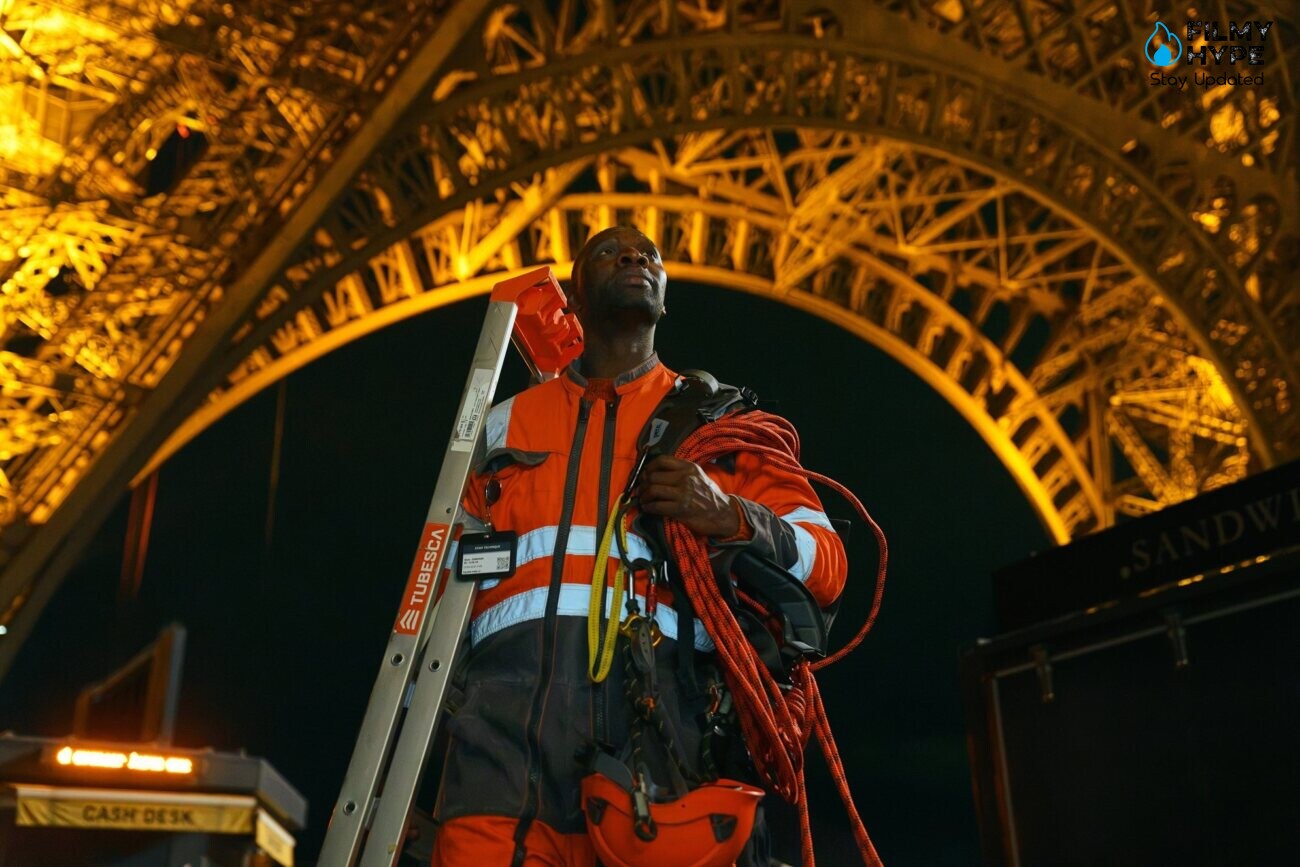
The visual dimension remains one of the strengths of the production. Paris continues to be more than a backdrop: it is a city that Assane passes through and transforms into part of his own spectacle. Recognizable museums, streets, and buildings help give the series an instant identity. The protagonist seems to move in an environment he knows intimately but which, at the same time, belongs to him less and less. The city has become Lupin‘s stage, and each new venture fuels the legend. Even then, however, a recognizable location can make a scene memorable, but it is not enough to give it meaning.
Assane wants to get out of crime, but his name keeps dragging him into a story that won’t let him stop. Claire, Raoul and Benjamin represent the possibility of a different life but also the price of his previous choices. The son is now older, and the relationship with the father cannot be rebuilt simply with a promise or a new journey. The series tries to give weight to this dimension, alternating action with more intimate moments. In some passages he manages to do so effectively; in others he insists too much on emotions, explaining what the images had already communicated. The relationship between Assane and Raoul highlights the cost of the protagonist’s dual identity. Assane can fool the police and change his appearance, but he cannot ask his son to live eternally within the same pretense.
The family is not an obstacle to overcome before the next robbery (here are the best heist series). It is the place where the consequences of his actions become concrete, with no possibility of escape. The series finds more interesting ground here than simply confronting the thief and investigators, because the conflict does not depend on Assane’s intelligence but on his ability to take responsibility. Lupin Season 4, however, does not always let this emotional dimension breathe. Family moments are often interrupted by a new danger, another revelation, or an escape that brings the story back to the action track. The result is a season that seems to want to tackle more mature themes but which is struggling to give up its habits. Assane would like to stop; the story gives him a moment of reflection and immediately after puts him back in motion.

The October 23 Guardian acknowledges Omar Sy’s magnetism, production ambition, and the pleasure of constant twists and turns, but points to the risk of a series increasingly approaching blockbuster, with some melodramatic excess and a loss of the specificity that had made the first seasons so recognizable. Télérama is more severe: in his October 23 review, he criticizes a story that, in his opinion, runs in vain, with caricatured characters and overly insistent dialogue. Spectacularity, according to the French newspaper, fails to compensate for writing that seems to have exhausted part of its inventiveness. On a more positive note is the review by the Times of India, published on October 24, which considers Lupin Season 4still an engaging watch, while acknowledging that the series has lost some of the freshness of its best moments.
The judgment values Omar Sy, the mystery of the impersonator and the action sequences, but also observes how some turns are not very credible and how the story could have benefited from greater synthesis. FlickOnClick gives the season four out of five stars, appreciating the new premise and the ability to put Assane in trouble. Critics therefore seem to be divided on one specific point: Lupin Season 4 is still capable of entertaining, but not everyone is convinced that the increase in ambition has brought with it an improvement in the writing. The difference between the judgments also depends on what you are looking for in the series. Those who watch Lupin for the pleasure of robberies, for Omar Sy and for the succession of stunts can find in the fourth season a confirmation of the formula. Those who expect a story capable of truly renewing the character may feel the weight of repetition more.
The weak part of Lupin Season 4 is precisely its plot, which forces some dynamics to justify the entry of new characters and to try to always create new twists that, however, are not always believable in this case. Many of Lupin‘s scenes and tricks are far-fetched, and the viewer’s trust in the heroic exploits of the gentleman thief is somewhat lost. Moreover, he behaves in ways that are not always in line with the character he was in previous seasons. The relationship with her son is at the heart of the story and perhaps becomes the worst part of the season. Lupin, in this, changes radically from who he was in the first chapters, and one wonders: who is the real Lupin? The one who would do anything for his son or the one who almost forgets about him?
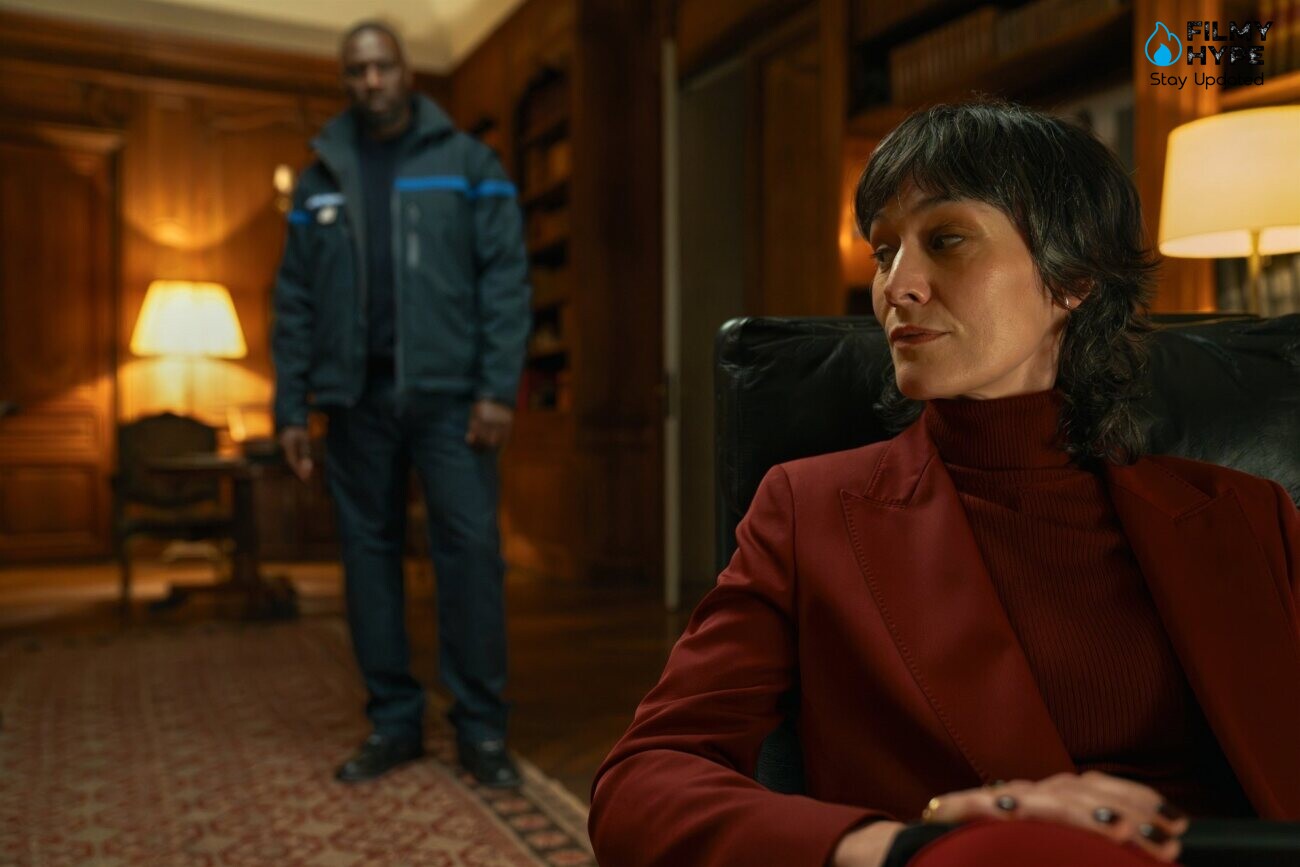
The rest of the characters also take a turn that isn’t always believable and contribute little to a story that, overall, isn’t as strong as the previous ones and as this series deserved. It almost feels like you sat on the success of this Netflix title knowing that, anyway, the public would watch it. But a series, to become unforgettable, must be convincing not only in the first chapter but in all seasons. It is undeniable that Lupin remains an enjoyable series to watch. It carries a veil of lightness and intrigue that is always popular, but the plot, character development, and new dynamics between good and bad-despite a super twist at the end-do not do justice, in this case, to the value of a series that deserved more. So, after four seasons, do we still like Lupin? Yes, but much less than at the beginning. And let’s hope we don’t completely lose faith in this series and in this wonderful character who, five years ago, had entered our hearts.
Lupin Season 4 Review: The Last Words
Lupin Season 4 isn’t necessarily the season for too many. She is rather the one who has to decide what to do with her own success. The series still has Omar Sy, a charismatic protagonist, and a premise that could open interesting avenues. But he cannot continue to confuse ingenuity with the amount of pursuit, nor rely on yet another mystery to postpone confronting the consequences of his own choices. The gentleman thief built his legend by managing to disappear when everyone believed they had finally caught him. Now, however, the hardest blow may be another: figuring out when it’s time to stop stealing the show.