


Some shows arrive quietly and build their audience through word of mouth, the kind of series that people press into each other’s hands with the urgency of someone sharing a secret. Asur has been that show for Indian streaming audiences since 2020. It arrived without the fanfare of bigger productions, but over two seasons and sixteen episodes, it has built a reputation as one of the most ambitious and unsettling crime thrillers the country has produced. The rating on IMDb sits at 8.5. The fanbase is rabid. And now, with Season 3 preparing to begin filming in September 2026, the story is about to continue.
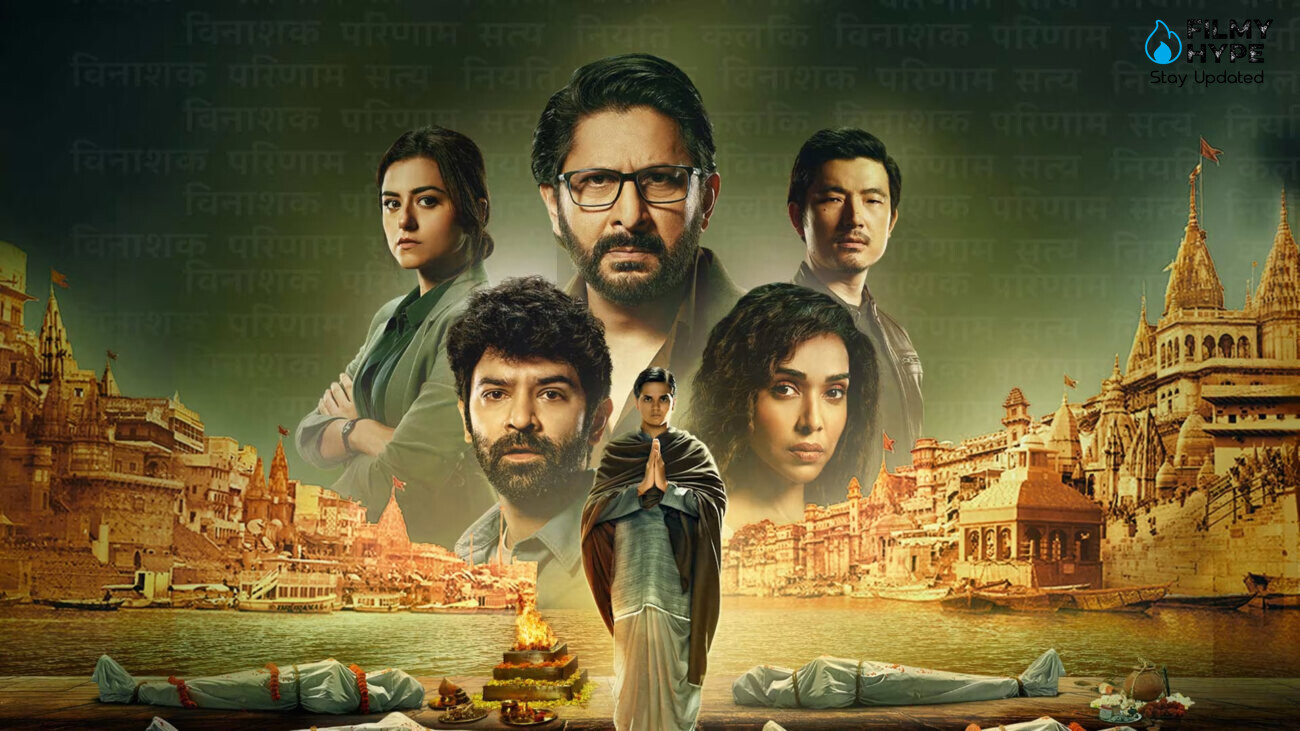
Asur Season 1 and 2 Recap: The Complete Story Before Season 3
But Asur is dense. It weaves together forensic science, ancient Hindu mythology, serial killer psychology, and a philosophical argument about the nature of evil that spans decades. Jumping into Season 3 without remembering exactly what happened in the first two would be like walking into a crime scene without reading the case file. So here’s a complete recap—where the story began, who the major players are, and how the first sixteen episodes set up whatever comes next.
Season 1: The Birth of a Monster
The series opens with a flashback that sets the tone for everything that follows. A young boy murders his father by poisoning him. It’s a cold, calculated act, and the boy’s expression afterward suggests something deeply wrong—not rage, not fear, but a kind of detached curiosity. This is Shubh. And Shubh, as we’ll come to understand, is not a conventional killer. He’s something closer to a believer, a zealot whose god is darkness and whose scripture is the ancient concept of the Asur—the demon, the force of chaos that opposes the divine.
In the present day, forensic expert Nikhil Nair is teaching at the FBI academy in America. He lives with his wife Naina and daughter Riya, but he’s restless. The classroom doesn’t suit him. He misses his days with the CBI in India, the real work of chasing killers and reading crime scenes. For some time, he’s been receiving mysterious coordinates from an unknown source—locations he forwards to his old colleague Lolark Dubey at the CBI. When bodies start turning up at those exact coordinates, Nikhil realizes someone is playing a long game. Someone wants him back in India.
He returns and rejoins the CBI after a five-year absence. He’s immediately assigned a case that hits closer to home than he could have anticipated: the murder of Sandhya, the wife of his former mentor and teacher, Dhananjay Rajput—known to everyone as DJ. The evidence, circumstantial but damning, points toward DJ himself. A veteran investigator, a man who has spent his career hunting killers, is now accused of being one.
The flashbacks continue to fill in Shubh’s history. His father abused him, calling him Asur—demon—as an insult, a curse, a way of making the boy feel like something monstrous. His grandfather, recognizing that the child was different, took him to a psychologist. The diagnosis was that Shubh was a special child, gifted but fragile. The warning was clear: if you treat him like a monster, he’ll become one. The warning went unheeded.
In the present, DJ is arrested and sent to jail. Nikhil, now leading the investigation, receives three more coordinates linked to three separate murders across Kolkata, Gurugram, and Delhi. While pursuing one of these leads, he’s ambushed with knockout gas and kidnapped. He wakes up in Shubh’s hideout, a prisoner. And then Shubh makes him an offer: help me kill my next target—a neurobiologist named Dr. Abhilasha Chandran—or your family dies. Nikhil agrees, feeding Shubh the idea for the murder while desperately trying to leave clues for DJ to find.
DJ, working from prison and later from the outside, pieces together the truth. He discovers that Shubh’s name doesn’t appear in any official file from ten years ago because Shubh was a minor at the time of his father’s death. The system that should have tracked him instead erased him. And as DJ digs deeper, he realizes that the boy he once suspected—the strange child at a funeral who showed no grief for his dead father—has grown into something far more dangerous than a simple killer.
Shubh escapes custody and begins killing openly. DJ and Nikhil race to stop him. But the final twist of Season 1 is the revelation that Shubh is not alone. He was never alone. Kesar, a figure who seemed peripheral, is revealed as the mastermind—the architect of a philosophy that treats violence as purification and chaos as a form of divine truth. And Shubh, the boy who was called a demon until he became one, is his most devoted disciple.
Season 2: The Dark Side Rises
Season 2 opens with DJ in seclusion at a Buddhist monastery, trying to find peace after everything he’s seen. Nikhil is broken—his marriage has collapsed, his daughter is dead, and he’s struggling with a depression that makes the darkness of the cases he once pursued seem almost comforting by comparison. Shubh, meanwhile, is still out there. And he’s evolved.
The second season introduces a more technologically sophisticated version of the threat. Shubh is no longer just a serial killer. He’s built an advanced AI network that allows him to manipulate digital infrastructure, challenge society on a mass scale, and commit murders that are as much about spectacle as they are about body count. He kidnaps key figures, including Kesar, and uses them to demonstrate his central thesis: that human nature is fundamentally sick, that civilization is a mask, and that the only honest response to existence is destruction.
A special Anti-Terror Task Force joins the CBI in pursuing him. The investigation becomes a cat-and-mouse game played across the country, with Shubh always one step ahead, always anticipating the moves of the people hunting him. He targets those close to the investigation team. He forces the lead characters into impossible moral dilemmas, the kind that have no clean answers and no comfortable resolutions. His philosophy isn’t just a justification for murder. It’s a coherent worldview, and the series takes it seriously enough to make it unsettling.
The climax unfolds at the ghats of Varanasi, one of the oldest and most sacred sites in India. Nikhil finally confronts Shubh in captivity. And then he does something that no amount of training at the FBI could have prepared him for. He uses poison—administered through a handshake—to kill Shubh. It’s an execution, not an arrest. The forensic expert who spent his career gathering evidence and building cases becomes the thing he’s been hunting. He ends Shubh’s life with his own hands.
But the series doesn’t end on a note of triumph. Shubh’s body is dead. His ideology, the series suggests, is not. The darkness he represented—the Asur philosophy, the belief that chaos is truer than order—survives him. It’s out there, waiting for new adherents, new believers, new monsters to carry it forward.
Where Season 3 Begins
The announcement of Season 3 confirms that the story isn’t over. Arshad Warsi returns as DJ, Barun Sobti as Nikhil. Gaurav Shukla, who created and wrote the series, takes over as director this season, replacing Oni Sen who helmed the first two. Shweta Basu Prasad joins the cast in an undisclosed role.
The thematic groundwork is already laid. Shubh is dead, but the Asur philosophy isn’t. Nikhil crossed a line when he killed Shubh, and the question of what that did to him—what kind of person emerges from an act of calculated murder, even one dressed up as justice—will have to be addressed. DJ, who spent his career navigating the gray areas between law and morality, will presumably be pulled back into whatever new threat emerges. And somewhere, the ideology that Shubh and Kesar built is waiting for a new vessel.
The show has always been interested in the intersection of ancient mythology and modern crime, in the idea that the old stories about gods and demons aren’t just stories—they’re patterns that repeat across generations. Shubh was called an Asur until he became one. The question Season 3 will have to answer is whether the name creates the reality, or whether the darkness was always there, waiting for the right voice to call it forth. Either way, the ghats of Varanasi didn’t wash away what Shubh represented. They just marked the place where one chapter ended, and another began. The monster is dead. The mythology lives on.