


The Last House 5 Unanswered Questions: Some movies wrap everything up neatly, tying every loose thread into a satisfying bow. The Last House is not one of those movies. Louis Leterrier’s claustrophobic thriller, which just landed on Netflix, strands a family in their own home for years—sealed in by an invisible barrier, tormented by creatures that may or may not be aliens, forced to survive on dwindling resources.
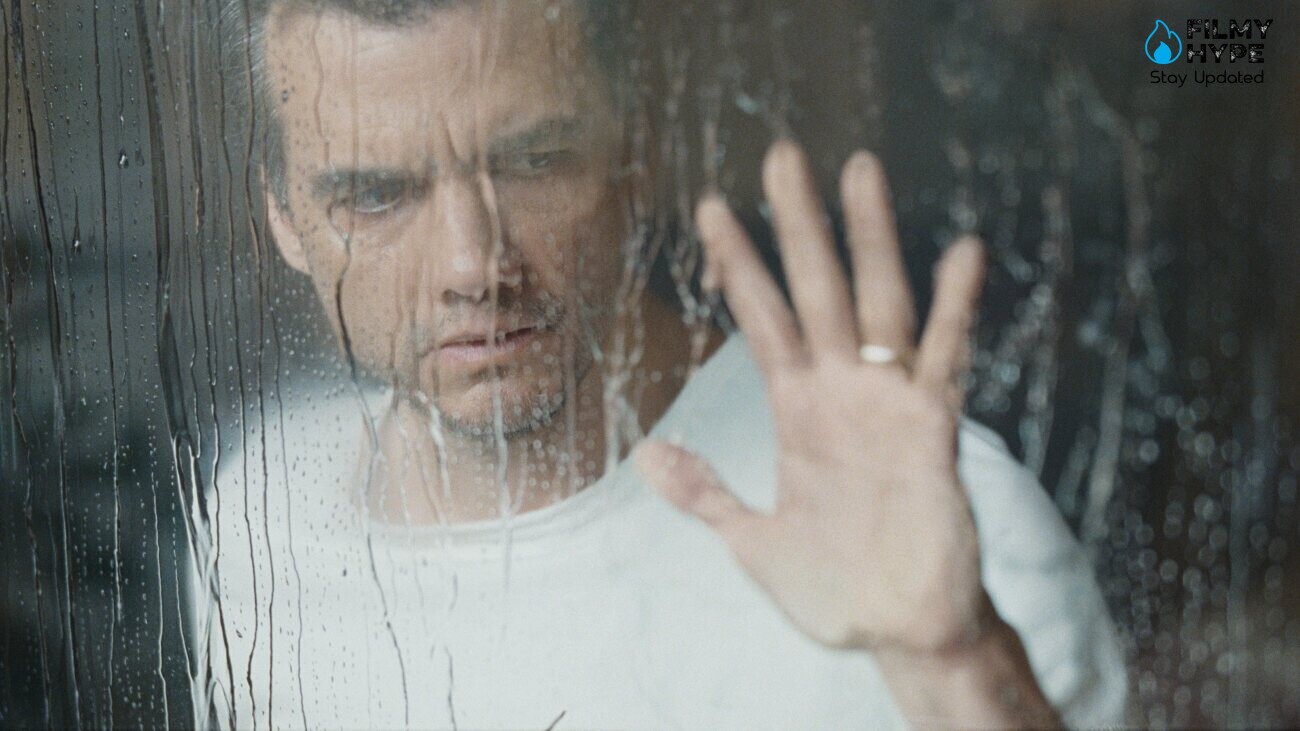
The Last House: 5 Unanswered Questions After the Netflix Thriller’s Ending
At the same time, the world outside apparently falls apart. By the time the credits roll, the Delgado family has escaped, but the film has left a trail of unanswered questions in its wake. Some of those gaps feel intentional, the kind of purposeful ambiguity that fuels post-movie debates. Others feel like threads the script simply forgot to pull. Here are the five biggest mysteries the film leaves hanging.
1. How Does the Barrier Actually Work?
The rain is the key. Throughout the film, water falls in sheets, coating the house in a shimmering film that hardens into something impenetrable. Doors won’t open. Windows won’t break. Even cell signals and Wi-Fi are blocked, cutting the family off from the outside world as completely as if they’d been dropped into a void.
But the mechanics of this barrier are never explained. How does water behave intelligently? What determines its range? Why does it select this particular house, this particular family, while presumably doing the same to the entire neighborhood? The film treats the barrier as a fact of the world rather than a phenomenon to be understood, and that’s a choice. It keeps the mystery alive, but it also means we’re left with a central conceit that operates on dream logic rather than any coherent set of rules. The rain is both a physical substance and a kind of sentient force, and the film never reconciles those two things.
2. What Are the Creatures, Really?
The late-film revelation reframes everything. The creatures aren’t aliens, as early scenes suggest. They’re something older—beings from the depths of the ocean, tied to salt water, awakened after centuries of pollution and warming seas. It’s a sharp thematic pivot, turning what seemed like an invasion narrative into something closer to ecological horror. Humanity didn’t get conquered by outsiders. Humanity woke something up by poisoning its own planet.
But the script stops there. We learn what the creatures represent—nature’s retaliation, the planet’s immune response—but we don’t learn what they actually are. Where did they come from originally? What are the limits of their powers? Can they be killed, or are they functionally immortal? The film gestures toward answers without providing them, leaving the creatures as symbols rather than fully realized entities. For some viewers, that’ll be enough. For others, it’ll feel like the movie borrowed the language of cosmic horror without committing to the worldbuilding that makes cosmic horror satisfying.
3. Why Keep Humans Alive for Years?
If the creatures wanted to eliminate humanity, they could have done it. The barrier that trapped the Delgados could have been a tomb instead of a cage. But it wasn’t. The family was kept alive—confined, yes, and slowly starved of resources, but alive. For five years.
The film suggests the creatures act partly out of fear, confining humans to prevent attacks against the planet’s new dominant species. But that logic raises more questions than it answers. How do the creatures decide who gets preserved and who gets killed? The desperate stranger who appears outside the house is quickly captured, presumably dead. The Delgados are kept alive. What’s the criteria? And why provide minimal conditions for survival—enough to keep breathing, but not enough to thrive—instead of simply eliminating the threat?
The film gestures toward an answer by having Jason, played by Wagner Moura, spare the creature he finally confronts. That act of mercy breaks the cycle, and the creatures respond by letting the family go. But the broader logic of the confinement—the years of slow attrition, the apparent indifference to human suffering—remains unexplained. Maybe that’s the point. Maybe the creatures operate on a morality so alien that “why” isn’t a question they’d understand. But the film doesn’t quite commit to that either.
4. What Happened to the Neighbors?
Early on, the film establishes that the Delgados aren’t alone. The entire neighborhood has been sealed off by the same force. The family even finds a passageway through the sewer connecting the houses on the block, hinting that there may be a network of trapped families, each isolated in their own home, presumably fighting the same fight for survival.
At one time, a desperate stranger pounded on the door, begging for help. She’s quickly captured by the creatures, and before she’s dragged away, she screams that everyone else is already dead. It’s a chilling moment, but the film never follows up on it. After the Delgados finally escape, they make their way through a flooded Seattle without encountering a single neighbor. No other survivors. No bodies. No explanation for what happened to the families who were trapped alongside them.
Did anyone else make it out? How many people in the neighborhood were confined? What was actually on the other side of that sewer tunnel? The film leaves the neighborhood as a ghost town, and while that emptiness is evocative, it also feels like a loose end the script forgot to tie.
5. Who Answers the Radio?
The final scene takes place on a boat. The Delgados have escaped their house, escaped their neighborhood, escaped whatever version of Seattle still exists above the waterline. They’re adrift, but they’re together. Jason tries the radio, and after a moment of static, a voice comes through. Just one word: “Hello?”
That’s it. The film ends.
The identity of the voice is deliberately withheld. Director Louis Leterrier has said in interviews that he wanted to keep the answer secret, preserving the possibility of a sequel and the sense that this transformed world still holds mysteries. It’s a smart move for franchise-building, but it’s also frustrating for anyone hoping for closure. We don’t know who answered. We don’t know how many humans are left. We don’t know if the voice belongs to a survivor, a trap, or something else entirely.
The boat is named Cassidy, after the family dog who didn’t survive the confinement. It’s a small, poignant detail—a tribute to the one member of the family who didn’t make it out. But the dog is gone, and the voice on the radio could be anybody’s. The film ends on a note of fragile hope, but it’s hope wrapped in uncertainty. Someone is out there. We just don’t know who, or what they want, or whether the Delgados’ escape has really earned them a future or just a longer journey toward the next disaster.
What the Silence Means
The Last House is, at its core, a film about what happens to people when they’re forced to live without answers. The creatures, the barrier, the years of confinement—none of it comes with an explanation, and that’s the horror. The Delgados don’t get to understand why they’re suffering. They just have to survive it. The film extends that same uncertainty to the audience, and whether that feels profound or frustrating depends on what you came looking for.
Some of the gaps feel earned. The creatures, as an ecological metaphor works better for not being fully explained; the mystery is the point. But other gaps—the abandoned neighborhood subplot, the radio voice that functions more as sequel bait than thematic resolution—feel less like ambiguity and more like the script running out of room. The film builds a fascinating world and then leaves most of it unexplored. Maybe that’s a promise. Maybe that’s a cop-out. Either way, the questions linger. The Delgados are still on that boat. The radio is still crackling. Someone is out there. We’re just not invited to know who.