


House of the Dragon Season 3 Ending Explained: The third season of House of the Dragon ends the way it was always going to end. Not with a clean victory or a noble death or any of the other comforts that lesser stories offer their audiences, but with a city on fire, a queen embracing tyranny, and the gentlest soul in Westeros impaled on the spikes below her own window. This was a transitional season, the kind that takes the pieces the first two seasons arranged on the board and starts knocking them over. Rhaenyra Targaryen began the season conquering the Iron Throne. She ends it having lost whatever moral high ground she once claimed, her reign already crumbling under the weight of her own choices.
The finale, centered on the Battle of Tumbleton, is as brutal an hour as the show has ever produced. But the violence on the battlefield is almost secondary to the quieter devastation happening inside the Red Keep. Helaena Targaryen dies in this episode. And her death, more than any dragonfire or military maneuver, is what will echo through the rest of the story.
House of the Dragon Season 3 Ending Explained (Episode 8): Helaena’s Choice
For those who’ve read Fire & Blood, Helaena’s death was always coming. Knowing it’s coming doesn’t make it easier to watch. She’s been the show’s one truly innocent figure—not naive, not simple, but genuinely good in a way that the world around her punishes relentlessly. She lost her son Jaehaerys to the butchery of Blood and Cheese. She’s been used as a political pawn by both factions. She’s been kept confined, monitored, and manipulated. And through all of it, she held onto the hope that she and her daughter might somehow escape.
In the finale, that hope dies. Mysaria, dismissed by Rhaenyra earlier in the episode, warns Helaena of what’s coming. Rhaenyra will never let her go. With Aegon and Sunfyre still alive, Helaena’s unborn child would be kept as a hostage, leverage against her husband’s claim. There’s no escape. There’s no future where her child is safe. There’s only the window.
Helaena throws herself from the tower, and the show doesn’t look away. Her body lands on the spikes below the Red Keep, and the image is going to haunt the rest of this series. Rhaenyra returns to find the tapestry Helaena had been weaving—an image of a woman falling, connected to the Iron Throne. She closes the windows and moves on. The queen has become someone who can look at that kind of tragedy and keep going.
The political calculus behind Rhaenyra’s treatment of Helaena was always cold. A Targaryen heir, especially a male one, would be invaluable leverage against Aegon. Helaena herself was a dragonrider—Dreamfyre was bonded to her, and even if she refused to fly, her mere presence strengthened Rhaenyra’s claim. And then there were the dragon dreams, the visions that Helaena experienced, which Rhaenyra hoped she could harness. All of that is gone now. Helaena can no longer be useful to anyone.
But the real damage is to Rhaenyra’s reputation. In Martin’s telling, rumors spread that the queen had her half-sister murdered. The smallfolk loved Helaena. She was the one Targaryen who never hurt anyone, who seemed to carry the weight of the world’s cruelty without ever returning it. Her death, coming on the heels of the slaughter at Tumbleton, will make it almost impossible for Rhaenyra to rule peacefully. The people will turn on her. They’re already starting to.
The Battle of Tumbleton
The military centerpiece of the finale is a disaster for everyone involved. Ormund Hightower’s forces are outnumbered, but he’s counting on Ulf the White to turn the tide. The plan was simple: Ulf would betray the Blacks mid-battle, turn Silverwing on Rhaenyra’s army, and the Greens would win the day.
The plan goes wrong almost immediately. Ormund finds Ulf passed out drunk on a toilet, completely insensible. By the time the dragonrider sobers up enough to fly, the battle is already chaos. Ulf does eventually betray Rhaenyra, but not in the controlled, strategic way Ormund envisioned. He just starts burning everything. The Greens. The Blacks. The city itself. Silverwing’s fire doesn’t discriminate.
The show has combined the two Battles of Tumbleton from Fire & Blood into a single engagement. In the book, the Greens win the first battle thanks to Ulf and Hugh Hammer’s betrayal. Ulf sits out the second battle because he’s too drunk to fight, which allows the Blacks to claim victory. The series merges these events, and the result is something more chaotic and more devastating than either version alone. Ulf annihilates both armies and the town itself. Innocent men, women, and children die in the flames. Rhaenyra had specifically asked Daemon not to make her look like a monster. Ulf does it for her.
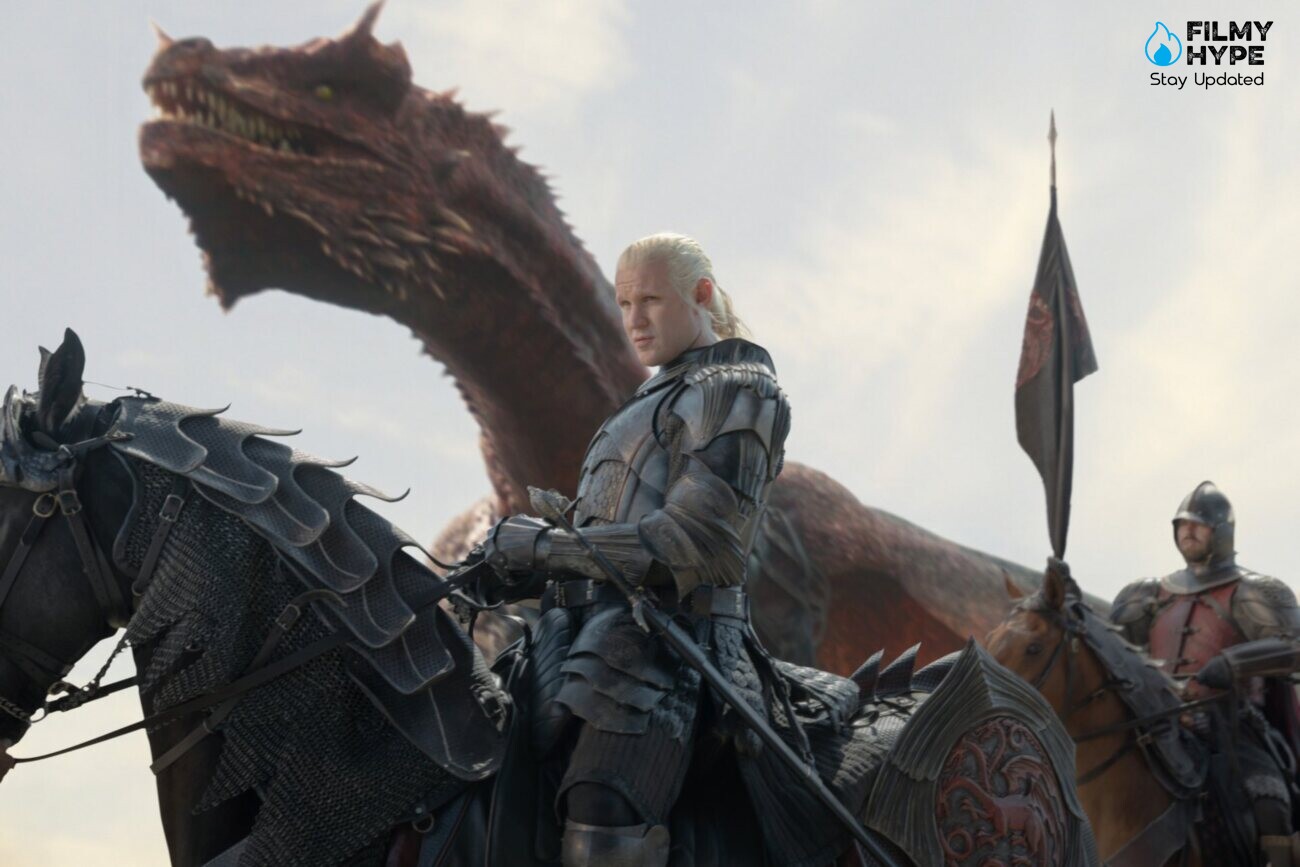
Ormund Hightower dies in the fighting. Roddy the Ruin, the grizzled Northman who came south looking for a good death, delivers the killing blow. Gwayne Hightower attempts to negotiate a political solution before the battle begins, but Daemon rejects any terms. Daemon himself nearly dies when he faces Ser Jon Roxton and is only saved because a collapsing building intervenes. Wounded, he makes his way through the ruined city until Corlys Velaryon finds him and convinces him to withdraw. There’s nothing left in Tumbleton worth holding.
Hugh Hammer’s storyline diverges from the book in important ways. In Fire & Blood, Hugh betrays Rhaenyra alongside Ulf. Here, he doesn’t join the Greens, but he does ignore Rhaenyra’s orders to stay in King’s Landing. He flies to Tumbleton to protect his wife, who’s trapped in the city. His arc is left unresolved by the episode’s end, a thread waiting to be pulled in Season 4.
Rhaenyra Embraces the Crown
Before the battle, Rhaenyra makes a series of decisions that mark her final transformation from reluctant claimant to absolute monarch. She goes to the Temple of Baelor to be consecrated by the High Septon. When he refuses, she has him executed as a traitor. In front of the gathered crowd, she reveals the prophecy of the Song of Ice and Fire—the secret that the Targaryens have carried since Aegon the Conqueror, the warning that a great darkness will come from the North and that a Targaryen must be seated on the Iron Throne to face it. She declares herself the Prince Who Was Promised.
It’s a bold move, and it’s also a desperate one. Rhaenyra is trying to transform her claim from a legal dispute into a divine mission. The problem is that divine missions don’t feed hungry people or rebuild burned cities. The smallfolk who listened to her prophecy are the same smallfolk who will soon learn about Tumbleton, about Helaena, about the High Septon’s execution. Prophecy sounds hollow when your family is dead, and your home is ash.
Daemon is the one who pulls Rhaenyra back from despair when she learns that Aegon has survived. His argument is simple: Westeros respects strength. If she wants to hold the throne, she has to show that she’s willing to do what’s necessary. The Rhaenyra of Season 1, the one who tried to avoid unnecessary bloodshed, is gone. The woman who emerges in this finale understands that power, once claimed, has to be enforced. And enforcement, in this world, means violence.
The Brothers Targaryen
Aegon and Aemond reunite at Harrenhal, and it’s a stranger encounter than anyone might have predicted. These two have spent the season trying to destroy each other. Aemond left his brother to die at Rook’s Rest. Aegon has been nursing his wounds and his hatred ever since. When they finally come face to face, the possibility of murder hangs in the air.
But Aemond shows something unexpected: regret. He doesn’t kill his brother. He seems, for the first time, genuinely shaken by what he’s done. Aegon, for his part, makes it clear that forgiveness isn’t coming anytime soon. He might be able to pardon Aemond, he says, once he’s back on the Iron Throne and Rhaenyra’s head is on a spike. Not before.
The scene sets up the final season’s central dynamic. Aegon and Aemond, however damaged their relationship, are still brothers. They’re still Greens. And they’re both still alive, with dragons and grievances and a shared enemy. Rhaenyra’s position in King’s Landing is already crumbling. The return of Aegon and Sunfyre, combined with Aemond and Vhagar, could shatter it entirely.
What Season 4 Holds
The fourth and final season of House of the Dragon won’t be a happy one. This is still a Game of Thrones story, which means the trajectory bends toward tragedy. Rhaenyra has become a tyrant. The people of King’s Landing, already restive, will rebel when they learn of Helaena’s death—whether they believe she was murdered or driven to suicide, the queen will be blamed. Aegon is coming. Daemon is still in the field. The dragons are still hungry.
Alys Rivers survives the season, and her connection to Aemond—and to whatever ancient power resides in Harrenhal—remains one of the show’s most intriguing wild cards. The dragon eggs she revealed earlier in the season are still hidden. The prophecy Rhaenyra claimed is still in play. And the North, with its own secrets and its own agenda, has barely begun to involve itself in the war.
Ulf’s betrayal proved something that should terrify every faction equally: a dragonrider with grievances is more dangerous than any army. The dragonseeds were supposed to be Rhaenyra’s trump card. Instead, they’ve become the most unpredictable element in the conflict. Loyalty can’t be commanded. It can only be earned, and Rhaenyra didn’t earn it.
The finale closes on an image of a kingdom in ruins. Tumbleton burns. Helaena’s body lies broken on the spikes. The High Septon is dead. The queen has declared herself a prophet. And somewhere out there, Aegon Targaryen is flying toward King’s Landing on a golden dragon, ready to take back what he believes is his. The Dance of the Dragons isn’t over. It’s just entering its final, most brutal phase. The only question is how many people will still be alive when the music stops.
Rhaenyra’s Transformation and the Season 3 Finale: How Power Changes Everything
The woman who took King’s Landing at the start of Season 3 is not the woman who ends it. That’s the real story of this finale—not the battle, not the betrayals, not even Helaena’s death, though that death will echo through everything that follows. The real story is Rhaenyra Targaryen, alone on the Iron Throne, having shed nearly everyone who once supported her, convinced now that her legitimacy comes not from law or council or the consent of the governed but from something older, bloodier, and far more dangerous. She’s stopped asking Westeros to accept her. She’s decided that Westeros doesn’t get a choice.
Ryan Condal, the showrunner, has talked about Rhaenyra as a character suspended between two models of power. There’s the model she inherited from her father, Viserys—cautious, diplomatic, always seeking consensus. And there’s Daemon’s model: fire and blood, dragon superiority, the willingness to destroy anything that refuses to bend. For most of the series, Rhaenyra has tried to navigate between them. The finale is where she stops trying.
The Black Queen
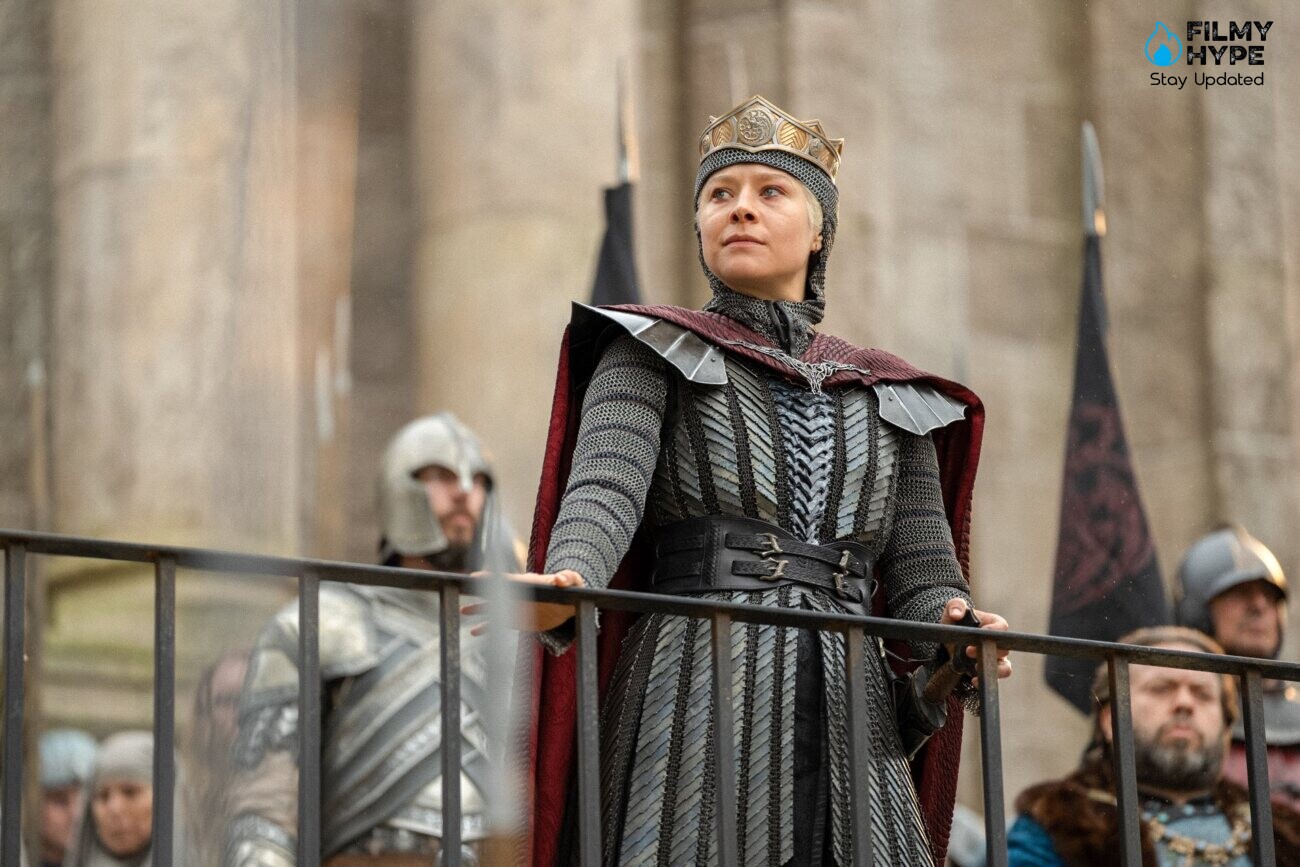
The visual transformation is deliberate. When Rhaenyra appears before the people in the finale, she’s not the petitioner who spent earlier seasons arguing her case to anyone who would listen. She’s the Black Queen, a warrior sovereign, her imagery closer to a conqueror than a claimant. The shift isn’t just aesthetic. It’s philosophical.
The decisive break comes with the Faith. When the High Septon refuses to consecrate her, Rhaenyra doesn’t negotiate. She doesn’t try to find another path to legitimacy through the established religious order. She has him executed as a traitor and then proclaims her authority by invoking the gods of ancient Valyria—gods her ancestors brought with them from a destroyed civilization, gods who answer to no institution in Westeros. Condal described this as a profound change in Rhaenyra’s relationship with her people. She’s no longer trying to convince them she’s the rightful heir. She’s begun to believe her legitimacy comes from something beyond their judgment entirely.
That’s a terrifying shift. At the end of Season 2, Rhaenyra was still searching for a path that might avoid catastrophe. She was still, in her own way, trying to be the queen her father would have wanted. By the end of Season 3, that version of her is barely visible. The woman who takes the throne at the start of the season could still imagine herself as a just ruler. The woman at the end has decided that justice is whatever she says it is.
The Battle of Tumbleton and Ulf’s Betrayal
The military catastrophe at Tumbleton is the other half of the finale’s argument about power. The battle brings together all the threads the season has been weaving: Ormund Hightower’s army, Daeron Targaryen, Daemon’s forces, and the new dragonriders Rhaenyra recruited to strengthen her position. That last group was supposed to be her advantage. It became her undoing.
Ulf the White was never a knight. He wasn’t raised to command, wasn’t trained in politics or strategy, wasn’t prepared for the weight of what it means to ride a dragon. He was a man from the streets of King’s Landing who happened to have Targaryen blood, and Rhaenyra gave him Silverwing because she needed riders more than she needed reliability. Then she failed to manage him. She denied him the status and recognition he believed he’d been promised. She let Daemon humiliate him in public. She treated him like a tool rather than an ally.
So Ulf did what tools don’t do: he made a choice. During the battle, he switched sides. Silverwing’s fire didn’t discriminate between Green and Black. It consumed soldiers, civilians, and the city itself. Ormund Hightower died. Countless innocents died. The battle became a massacre, and the massacre became a symbol of everything Rhaenyra had lost control over.
Condal has said that Ulf isn’t written as a natural traitor. He’s an ordinary person who was handed what amounts to a nuclear weapon and then left to manage it without guidance or support. The tragedy at Tumbleton isn’t just Ulf’s fault. It’s the fault of a system that thought it could control people by giving them power and then refusing to treat them with respect. Rhaenyra created the dragonseeds because she needed them. She’s learning, too late, that people who are only valued for their usefulness will eventually find somewhere else to be useful.
Daeron Is Missing, Not Dead
One thread the finale deliberately leaves unresolved is the fate of Daeron Targaryen. After the chaos at Tumbleton, Gwayne Hightower searches for the young prince but can’t find him. The show doesn’t confirm his death, and that’s important. In Fire & Blood, Daeron survives the First Battle of Tumbleton. The series has already altered so many details of the book that his survival isn’t guaranteed, but the finale’s refusal to show a body or confirm a kill suggests the writers are keeping their options open. Daeron’s fate is now one of the major questions heading into Season 4.
Helaena’s Death
The death that matters most in this finale isn’t on the battlefield. It’s in the Red Keep, where Helaena Targaryen—pregnant, psychologically shattered, imprisoned in a gilded cage—finally reaches her limit. She throws herself from a window, and her body lands on the spikes below.
Emma D’Arcy, who plays Rhaenyra, has called Helaena the moral heart of the series. She was the one person close to power who remained genuinely uncorrupted by it. She didn’t want the throne. She didn’t scheme or manipulate. She saw things—prophetic visions, fragments of the future—that could have changed the course of the war if anyone had been willing to listen. But Rhaenyra, increasingly consumed by her own sense of destiny, wasn’t listening.
Helaena’s death isn’t just a tragedy. It’s a threshold. As long as she was alive, there was still some limit to what the war could become—some reminder that beyond the politics and the dragons, there were innocent people caught in the middle. When she dies, that limit disappears. Rhaenyra’s reaction tells you everything. She finds the tapestry Helaena had been weaving, which depicts a woman falling from a tower, connected to the Iron Throne. She understands what it means. Then she closes the windows and moves on. The queen who once agonized over every death has become someone who can look at her half-sister’s broken body and keep going.
Helaena’s death also destroys whatever fragile possibility remained of reconciliation with Alicent. Alicent spent the season trying to save what was left of her family. Now her daughter is dead in Rhaenyra’s custody, and no amount of political maneuvering can undo that. The personal relationship between the two women, already strained past breaking, is effectively over. What remains is pure enmity.
Aegon Returns
On the other side of the war, a different kind of transformation is happening. Aegon II had seemed finished—broken at Rook’s Rest, humiliated, reduced to a fugitive. The finale shows him returning on Sunfyre, and his survival changes the entire calculus of the conflict. Rhaenyra’s panic when she learns he’s alive tells you how dangerous this is. She took King’s Landing. She sits on the Iron Throne. But Aegon is still out there, with a dragon and a claim and a grievance that’s only grown sharper through everything he’s suffered.
Condal has pointed out how Aegon’s journey has shifted audience perception. He started as a figure who was easy to despise—a spoiled, cruel boy who stumbled into a crown he didn’t deserve. But suffering has a way of complicating characters, and Aegon’s suffering has been extensive. He’s no longer the villain he once seemed. He’s something more unpredictable: a man who has lost almost everything and is still fighting.
The finale sets up a new balance. Rhaenyra has the capital. Aegon has a claim, a dragon, and the narrative of a rightful king returning to reclaim what was stolen. Both of them have firepower. Neither is going to back down.
The Daenerys Parallel
The comparison has been hovering over House of the Dragon since it began. A Targaryen queen, convinced of her destiny, growing more authoritarian as her grip on power tightens, talking about prophecy and blood and legitimacy, while the people she claims to rule grow increasingly afraid of her. It’s impossible not to think of Daenerys.
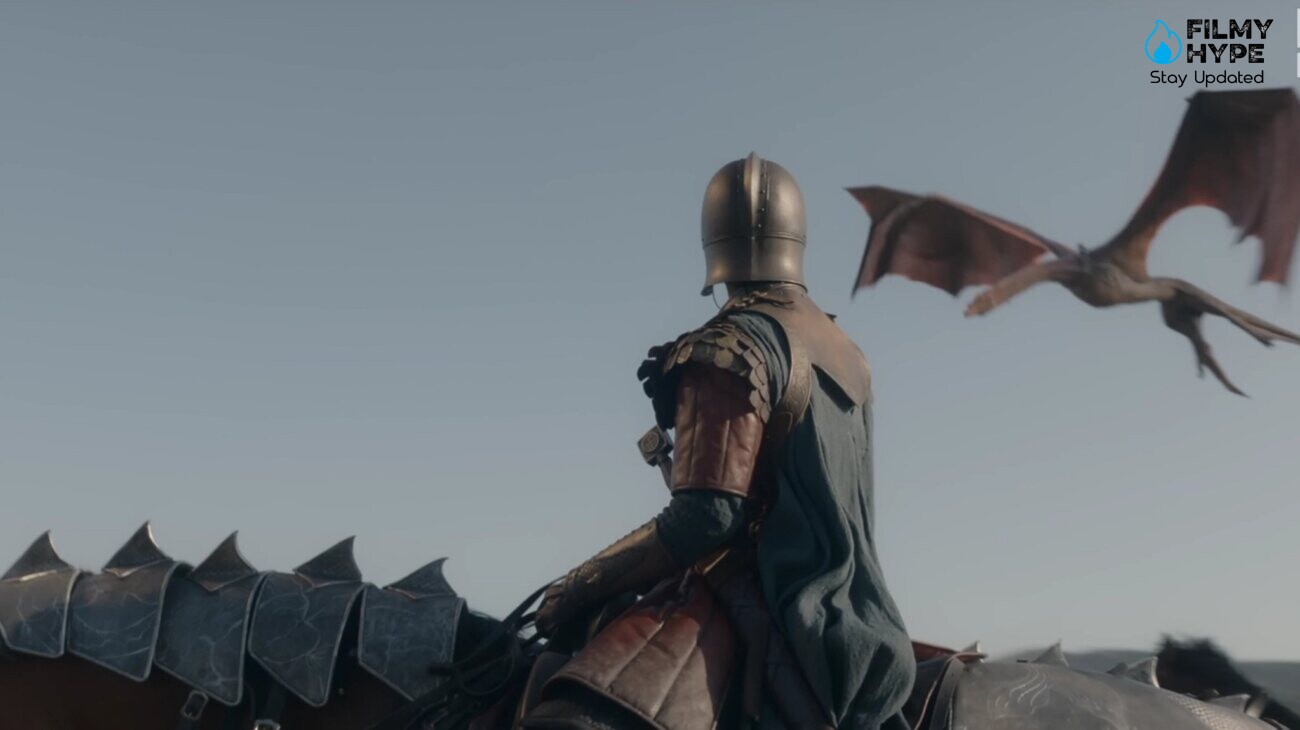
Condal has acknowledged the parallel while insisting the two characters are on different paths. Daenerys arrived at King’s Landing at the end of her story, after years of conquest. Rhaenyra took the throne much earlier and is being transformed by the experience of trying to hold it. The common element is power itself. It’s not enough to win it. What you’re willing to do to keep it—that’s what changes you.
What Season 4 Inherits
The finale leaves the board arranged for the endgame. Aegon is back. Sunfyre is alive. Helaena is dead, and with her goes any hope of reconciliation with Alicent. Daeron is missing. Ulf has betrayed the Blacks. Rhaenyra’s rule grows more authoritarian by the day. The Dance of the Dragons isn’t close to resolution. It’s just entering its most brutal phase.
Condal has confirmed that Season 4 will be the last, consisting of eight episodes that will bring the Dance to its conclusion. The finale doesn’t function as a break. It’s the moment almost every character crosses a line they can’t uncross. Helaena is gone. Aegon is at war again. And Rhaenyra, who spent most of the series wondering whether Westeros could accept her, has stopped wondering. She’s going to be queen regardless. The only question left is how much of the kingdom will still be standing when the fighting finally stops.