House of the Dragon Season 3 Episode 8 Review and Ratings
Cast: Matt Smith, Emma D’Arcy, Sonoya Mizuno, Bethany Antonia, Harry Collett, Abubakar Salim, Clinton Liberty, Olivia Cooke, Tom Glynn-Carney, Phia Saban, Fabien Frankel, Matthew Needham, James Norton, Benjamin Evan Ainsworth, Freddie Fox, Kurt Egyiawan
Director: Andrij Parekh
Streaming Platform: HBO
Filmyhype.com Ratings: 4/5 (four stars)
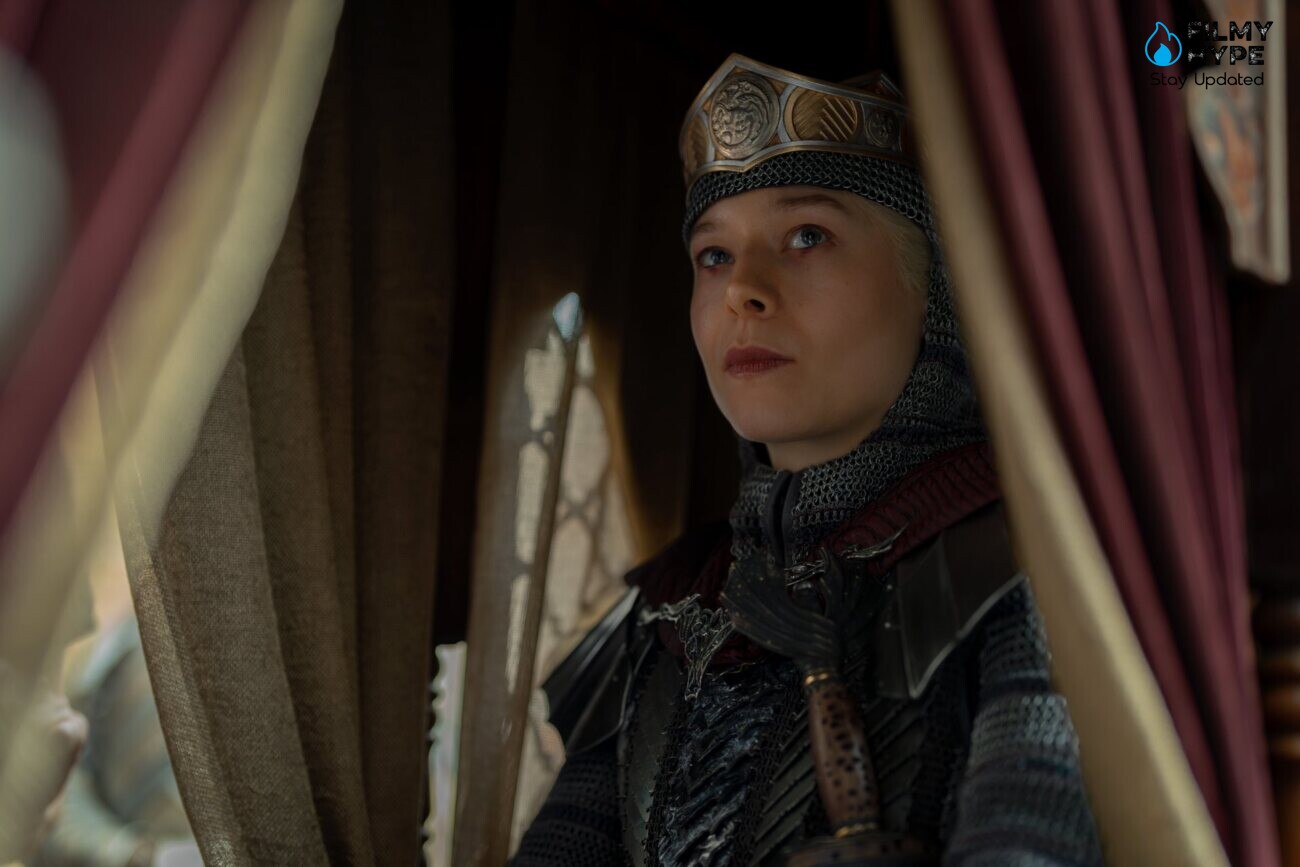
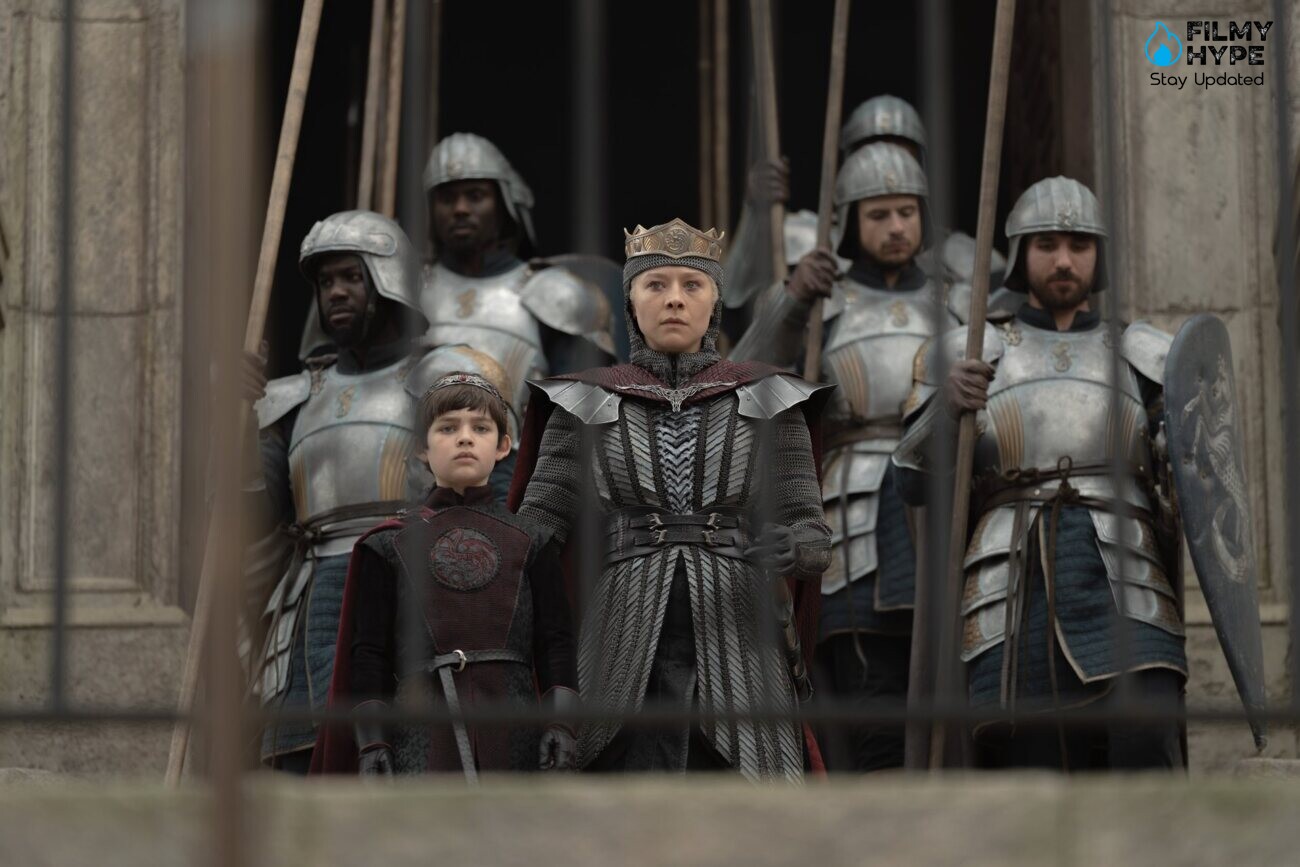
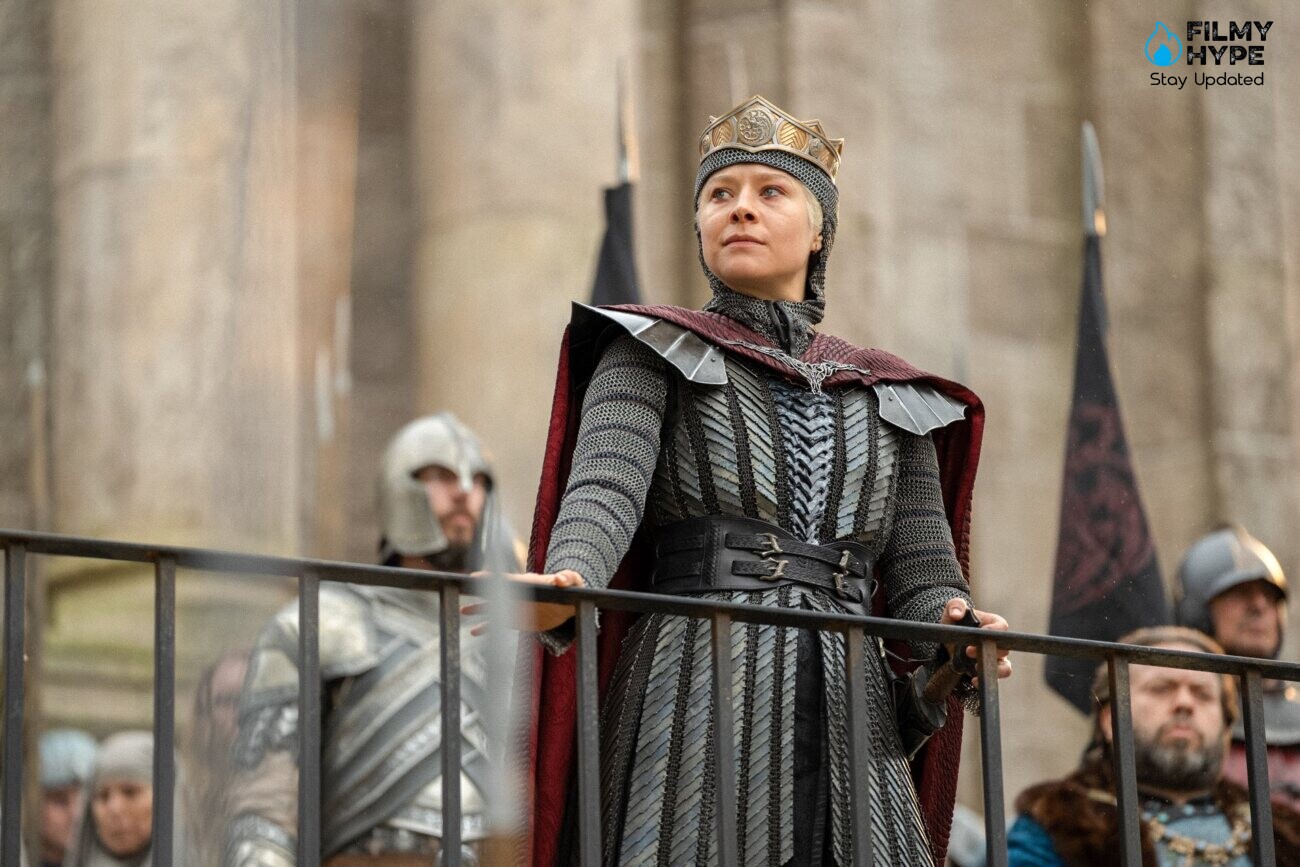
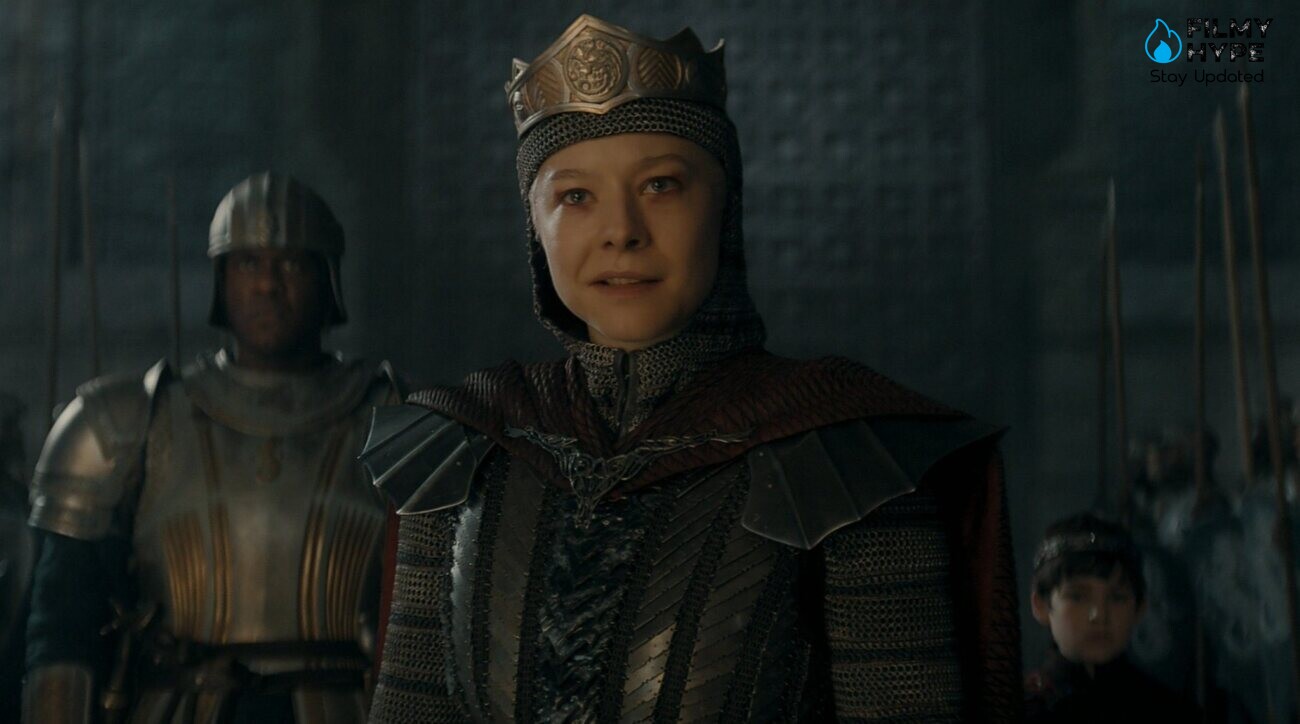
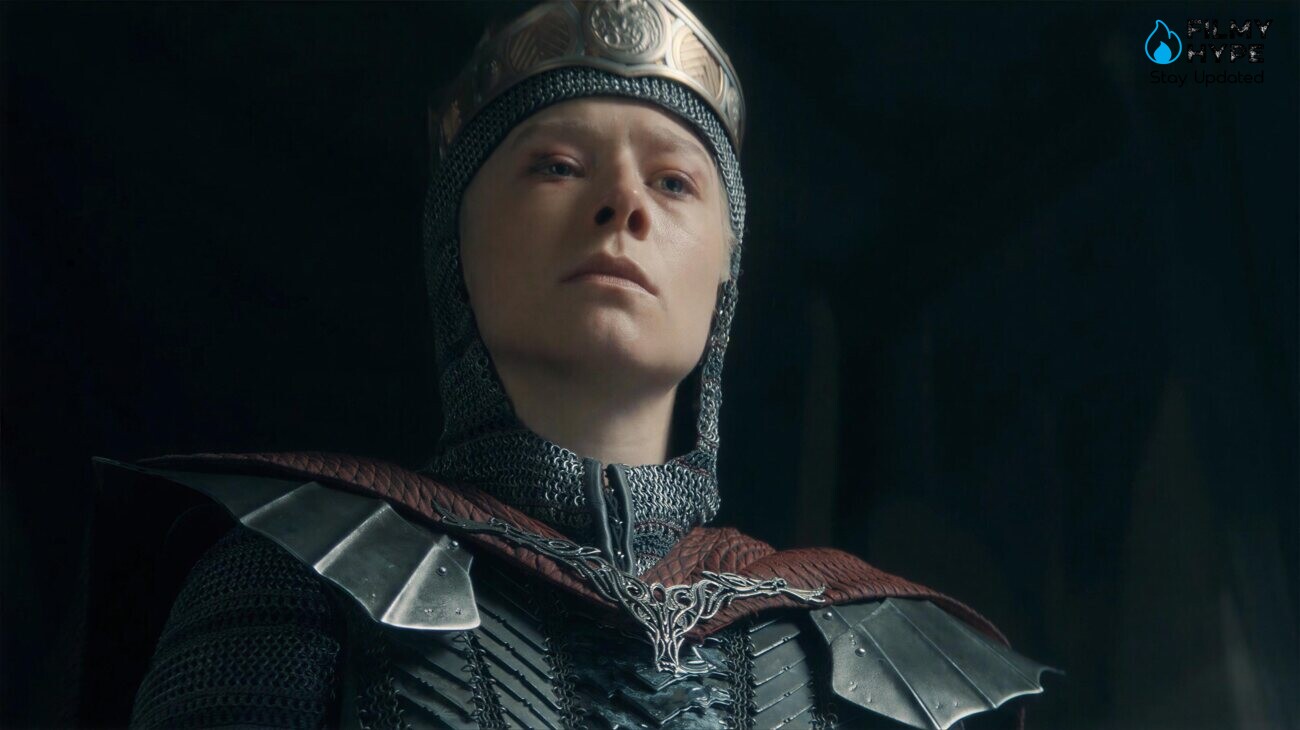
HBO Max has already aired House of the Dragon Season 3 Episode 8, written by Ryan Condal and Ti Mikkel and directed by Andrij Parekh. The expectation was maximum since our biggest fear is that we would be left without a climax again final, at the doors of the la First Battle of Ladera o Battle of Tumbleton. The good news is that the series delivers and gives us that moment at the end of the chapter, the bad news is that the narrative is far from ideal and that the writing of the script is often confusing, not very congruent and lacking the emotion that we expected from a story of such magnitude. With a crown on her head and chain mail on, Rhaenyra looks out over the crowd in King’s Landing like a warrior queen. Then he opens his mouth, and instead of the war he is fighting, he speaks of an ancient prophecy, of a dark evil to be rejected, of a sacred destiny engraved in the blood of his lineage.
Even his supporters exchange embarrassed glances. It is at that moment, more than on any battlefield, that the finale of the third season of House of the Dragon reveals its true protagonist: a woman who has stopped fighting for the throne and has begun to devour everything around her. The start of this third season of House of the Dragon had given us hope in terms of staging and storyline compared to last year, but the further the episodes went, the more the audience’s patience was tested. Some interesting twists didn’t have the right counterweight in terms of pacing: as we said in the review of episode 3×07 of House of the Dragon, the series chose to linger too long and often, even one step away from the final season, fueling the tension instead of releasing it.
Now, with the latest episode, some issues and times can no longer be postponed. Between Harrenhal, Tumbleton, and King’s Landing, every front opened this season is destined to close or at least crack further. The question remains whether, by the end of this season, whose biggest and most divisive criticism remains its pace, viewers will have been rewarded. The episode that closes the third season is the longest ever produced by the series, seventy-five minutes that intertwine three different narrative lines and detonate them almost simultaneously. It is also, in all likelihood, the most successful of the season: it holds together the chamber drama that House of the Dragon has always handled and a pitched battle on a ladder that the prequel had never dared to stage. But above all, it is the episode in which Rhaenyra Targaryen’s parable reaches its lowest and sharpest point.
House of the Dragon Season 3 Episode 8 Review: The Story Plot and Recap
House of the Dragon 3×08 starts when Rhaenyra is going to see Daemon, very upset to inform him of the reappearance of Aegon and Fuegosol. Her power is more in doubt than ever, and she has an anxiety flare-up. Daemon speaks to him in High Valyrian to tell him that, on the contrary, it is his time and he must rise. She pulls herself together and orders Hugh to stand guard at Dragon Pit and for Daemon to go to Hillside and search house by house, finishing all the Hightowers. When I’m done with Ormund and Daeron, Aegon comes out of hiding, and she will finish him off herself.
Baela wants to go rescue her grandfather, Corlys, and she challenges Rhaenrya, who is convinced that she and Addam should stay there. Alyn summons the men of Driftmark before those presented as the designated successor of House Velaryon to become the future Lord of the Tides: they must defend the kingdom. Ormund prepares for battle. He asks Daeron to let him kneel to be knighted before being crowned. He names him Daeron the Bold after taking his oath.
Ulf does his part in the taverns, where he announces that Daemon won’t dare use a Caraxes because Rhaneyra has it under control. The queen has one more reason to worry because Helaena doesn’t eat anything, and they fear for her pregnancy. She asks to be anointed queen in the Great Sept immediately. White Worm receives an invitation to go to Pentos, where he can settle in with servants and comforts. Helaena contemplates Mysaria’s leave, and just before leaving, he tells her not to trust the queen, that Aegon is still alive, and that he fears the son she is carrying, that he will never let her leave.
Aemond woke up and discovered that Alicent had poisoned him. He is considered a bad blood who carries a curse. Alys tells him about the history of Harrenhal. How the dragon Balerion set fire to the castle to finish off the Harren. However, a child with burns survived. His mother tried to save him, but everything was useless, even though she even resorted to ancestral knowledge and the beings that lived in the forest (the children of the forest?). When the boy died, she wanted to follow him but discovered that she was cursed and condemned to live in the lands of the Rivers. Aemond is startled because that happened over a hundred years ago, but kisses her.
Rhaenyra is going to see Helaena, and he tells him that he must eat. He asks if he knows if he has a boy or a girl, but he doesn’t answer. The queen asks her if she believes she is capable of harming her, and Helaena asks her if she believes that being alive is the same as not being dead. Then he tells her that everything she believes in is ugly, that the castle is ugly, and so is she. Rhaenyra only tells her that she either eats or he will force her to do so, something the guards take care of. Addam and Alyn face. The first believes that Rhaenyra is losing her mind because she has locked up Baela in a dungeon and is not willing to free Corlys. Alyn just wants to do her duty and is not willing to betray her.
-
- House of the Dragon Season 3 Episode 8 Image 6 (Image Credit: HBO)
-
- House of the Dragon Season 3 Episode 8 Image 5 (Image Credit: HBO)
Ormund has a strategy that he has hidden even from Daeron: He bets children on the battlements and is waiting for Ulf’s dragon, which does not appear. When it appears, Caraxes, the Black troops almost taste victory. Gwayne takes out Corlys from his dungeon and takes him before Daemon to exchange him in exchange for peace. He proposes that they divide the lands and that Daeron reign in Antigua. Corlys argues for this idea: he tells Daemon that a woman cannot reign and that Daeron can serve Rhaenyra. The problem is the resurgence of Aegon; I didn’t know anything about Corlys. Daemon opts for war, crushing the Hightower and rejecting a peace agreement. Mysaria takes advantage of an oversight to get away and flee. Rhaneyra is being escorted along with her heir, Joffrey, to be anointed by the High Septon.
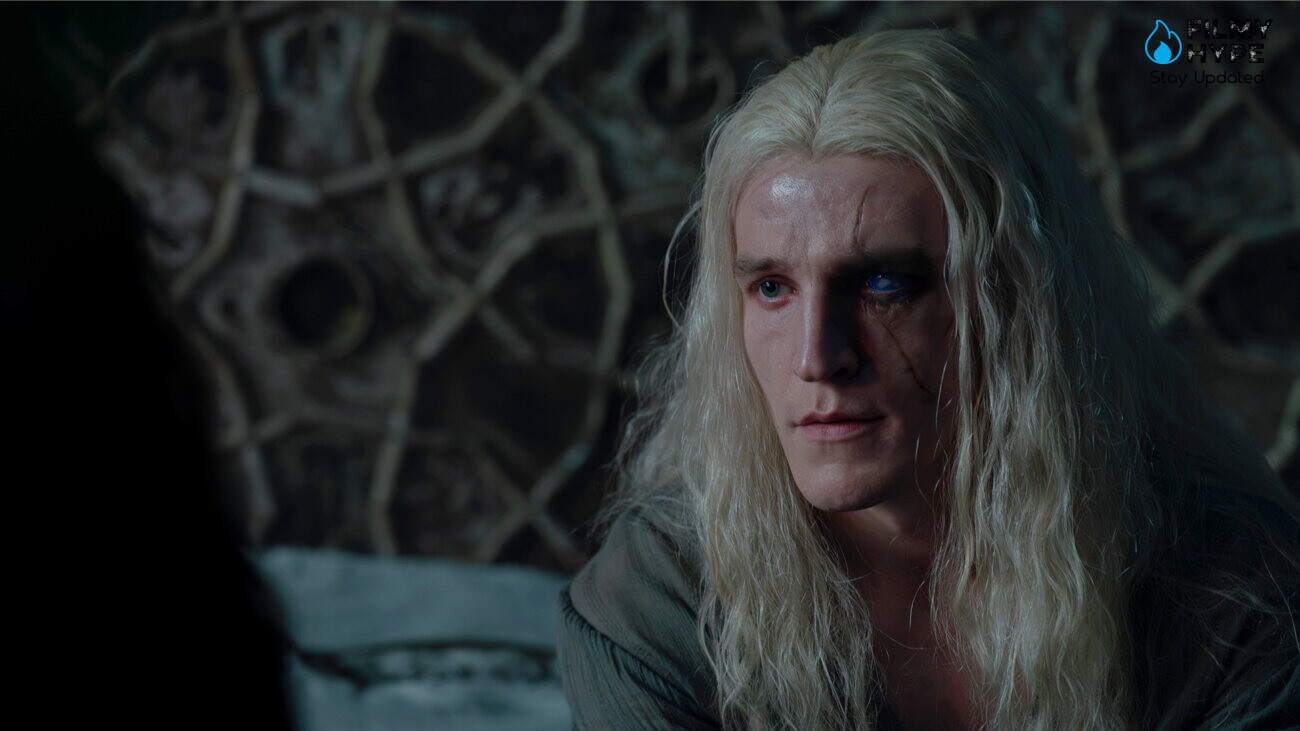
Aegon appears on Sunfire in Harrenhal and finds Aemond prostrate; he was convinced that he was dead and begs for forgiveness. Aegon slaps him, insults him, calling him a usurper and a bastard, but he is shocked. He introduces Alys to him as his fiancée. Aegon tells his brother that they will look for Vhagar to go to Ladera, finish off Ormund and Daeron, and then fly to King’s Landing to recover the throne with his banner, and that only then may he spare his life. Daemon outlines the strategy for taking the castle when he is informed that Ormund has used the children to put them on the front page and thus undermine the queen’s moral authority. He believes that they will have Ulf and Silverwing in the rear and that in a few hours they will control the situation.
When Rhaenyra is presented in the Supreme Sept. The septon, once again, denies her being anointed, and she declares him a traitor. Alyn kills him, and Rhaneyra appears before the people to tell them that she was proclaimed successor by Viserys and that his reign was predestined by a prophecy that spoke of a darkness beyond the walls of Winterfell. Only dragons can safeguard the kingdom. She says that he is the prince who was promised and that he will be the one who lights the way. Daemon harangues the troops, asking them not to have any mercy on them, Hightower, and to let them all be killed. The northerners prepare to attack while the children are terrified on the battlements.
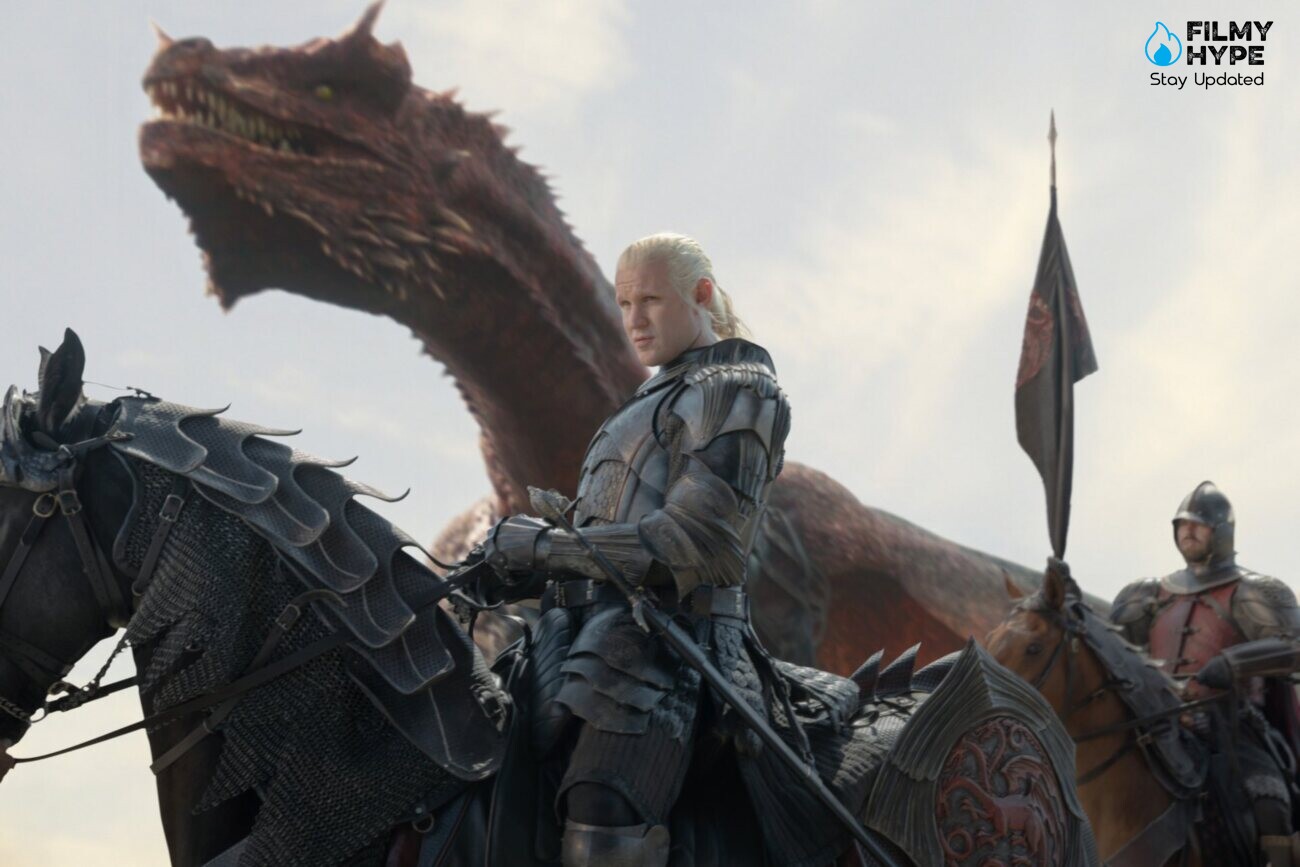
A man informs Ormund that Daeron’s peace proposal has not borne fruit; he did not know that he had tried to negotiate by freeing Corlys. The northerners try to overcome the castle’s defenses while being shot down by arrows, boiling water and oil, catapults… They manage to enter through the south wall and begin to prevail. Daemon, you are informed of the absence of Ulf: He is not with his dragon. In its place, it appears Vermithor; it should be in King’s Landing. Call Caraxes, and he makes his way with him. Then enter with the troops on horseback. The northerners search for the king, while Roderick Dustin wants to take care of Ormund himself.
-
- House of the Dragon Season 3 Episode 8 Image 4 (Image Credit: HBO)
-
- House of the Dragon Season 3 Episode 8 Image 3 (Image Credit: HBO)
Ormund, for his part, has to take Ulf out of the tavern and tell him to get on his dragon, which has practically condemned them. Gwayne goes in search of Daeron, who is about to climb on his dragon. Gwayne asks him not to fight for Ormund’s ego, to get to safety. Meanwhile, Ulf appears, and he attacks the Black troops, turning the fight in favor of the Greens and stopping Daeron.
Roderick charges against Ormund, and he cuts off her arm. So, Roderick sticks a knife in her ass and tells her that “that’s how they fuck in the north”. Ulf sets them both on fire. The destruction caused by the dragon generates a series of landslides and debris falls on Daemon, who cannot believe what is happening. Even though everything seems lost, he goes out and continues killing the men who come his way. Corlys catches up with him and tells him that Ulf has betrayed them, and they must retreat.
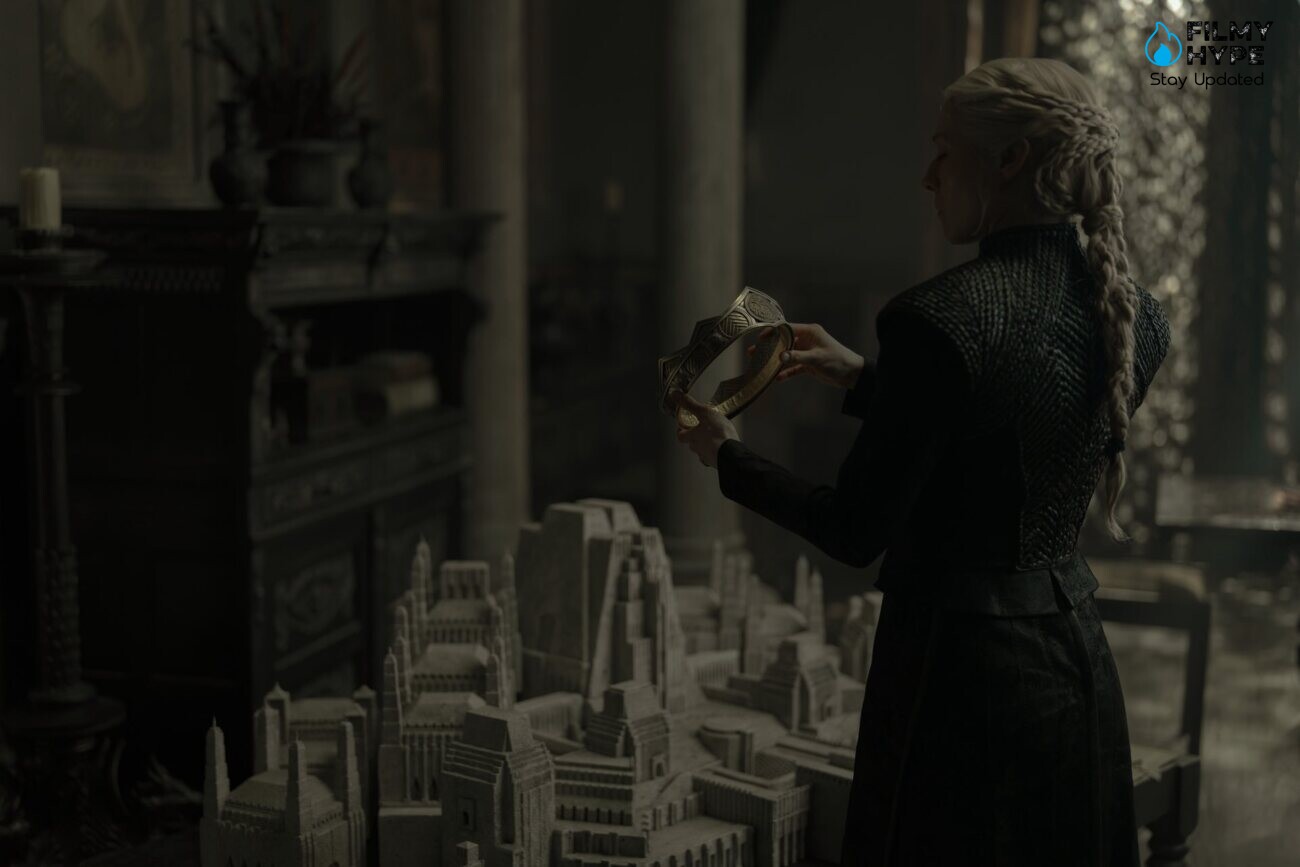
Gwayne survives and crawls to look for Ormund, who is dead. Hugh also finds his wife dead. Back in the fortress, Rhaenyra is informed of the defeat at Ladera. Alicent is safe away from the fight and witnesses a strange phenomenon when a bunch of butterflies fly away simultaneously: it is the announcement of the end of Helaena, who has committed suicide. Rhaenyra looks at the tapestry she had completed before she died, in which she is seen on the burning throne, wielding the sword. Close the shutters: King’s Landing is now the most dangerous place in Westeros.
House of the Dragon Season 3 Episode 8 Review and Analysis
The Battle of Tumbleton has finally arrived, but a grueling anticipation hasn’t made the wait worthwhile. Built alongside the Battle of the Gullet in the first episode as the nerve centers of this third season, Daemon’s arrival on the Hightowers does not have the same visual power as the premiere’s maritime clash. Told in fits and starts, it seeks a spectacularism that the entire season has pursued, but which it has watered down in the central part, which is not very satisfying compared to the rest.
Meanwhile, an internal division is growing among families that could reshuffle the factions once again in the future. Daeron (Benjamin Evan Ainsworth) is left to his own devices, while Rhaenyra’s choice to remove Mysaria (Sonoya Mizuno) – another piece of his control – could open up interesting scenarios. While many questions remain with all these cards on the table, we can say with certainty that the third season of House of the Dragon has taken its time to preserve the juiciest events of the Dragon Dance for the next and final season.
However, the series’ detachment from George R.’s original material is also now evident. R. Martin, so what exactly are the showrunners preparing us for? There are more doubts than certainties, and in the meantime, many storylines could pay the price, such as the fractures between the Velaryons and the fate that awaits Aegon and Aemond (Ewan Mitchell) in the face of an inevitable clash with Rhaenyra (another one that will be expected). Thus, the season ends on an epilogue divided between the uncertain (not to say confusing) and the dark, casting a heavy shadow not only on the story but also on the future of the series.
King Viserys loved his brother but was always looking for new ways to remove him from court by virtue of the nefarious influence he knew he would have on less wise minds, such as that of his very young eldest daughter. When, in The Betrayals of Tumbleton, we hear the rogue prince say that “The only quality the realm understands is strength,” we already know that this time there will be no one to save Rhaenyra. Significantly, just at the moment when the sovereign would most need someone capable of reading the facts, she ends up alienating two of the people who best know how to do so: Corlys and Mysaria. Rhaenyra progressively gives up on both, just as the war becomes more difficult to control, with an opponent like Ormund instead finding his greatest expression in strategy (it is no coincidence that he deeply admires the Lord of House Velaryon).
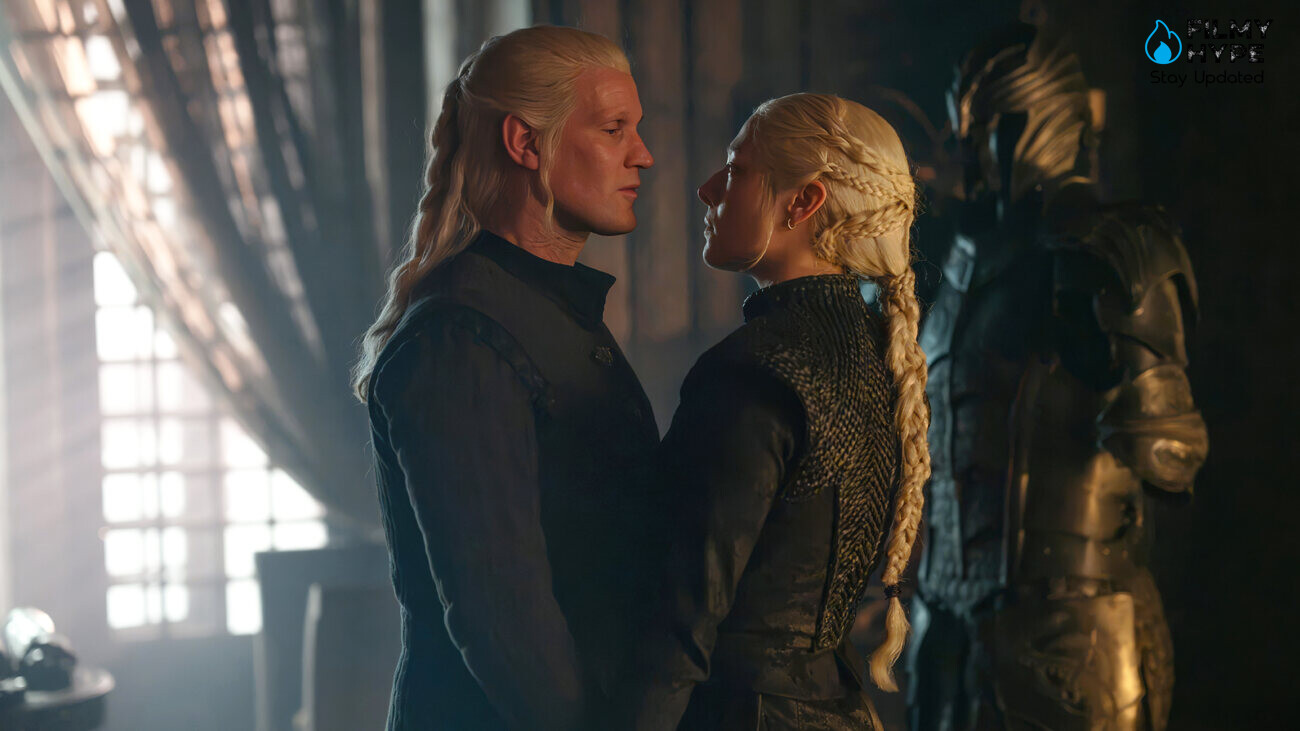
In their place, Daemon’s vision prevails, who continues to consider force the only language truly comprehensible to the kingdom. It’s not just a military issue: for the prince consort, Valyrian blood, dragons, and the fear they can instill constitute a sufficient form of legitimacy. It’s a temptation that Rhaenyra ends up giving in to. Why would he still need to convince anyone? Why deal when it can impose? The problem is that a dragon can conquer a kingdom, but it cannot teach how to rule it. And it is precisely in Tumbleton that this illusion begins to burn.
If King’s Landing shows what happens when a ruler entrusts her idea of power to a prophecy, Tumbleton shows what happens when that power is handed over to someone who has no awareness whatsoever of what it means to exercise it. Ulf the White is, in this sense, much more important than it seems. Not because the series needs to turn him into the complex character he isn’t (in this direction, Condal worked more on Hugh Martello than in the book). His presence in Tumbleton, however, takes to its extreme practical consequences one of the contradictions on which the entire Targaryen war is based: blood can give access to power, but it says nothing about the ability to manage it.
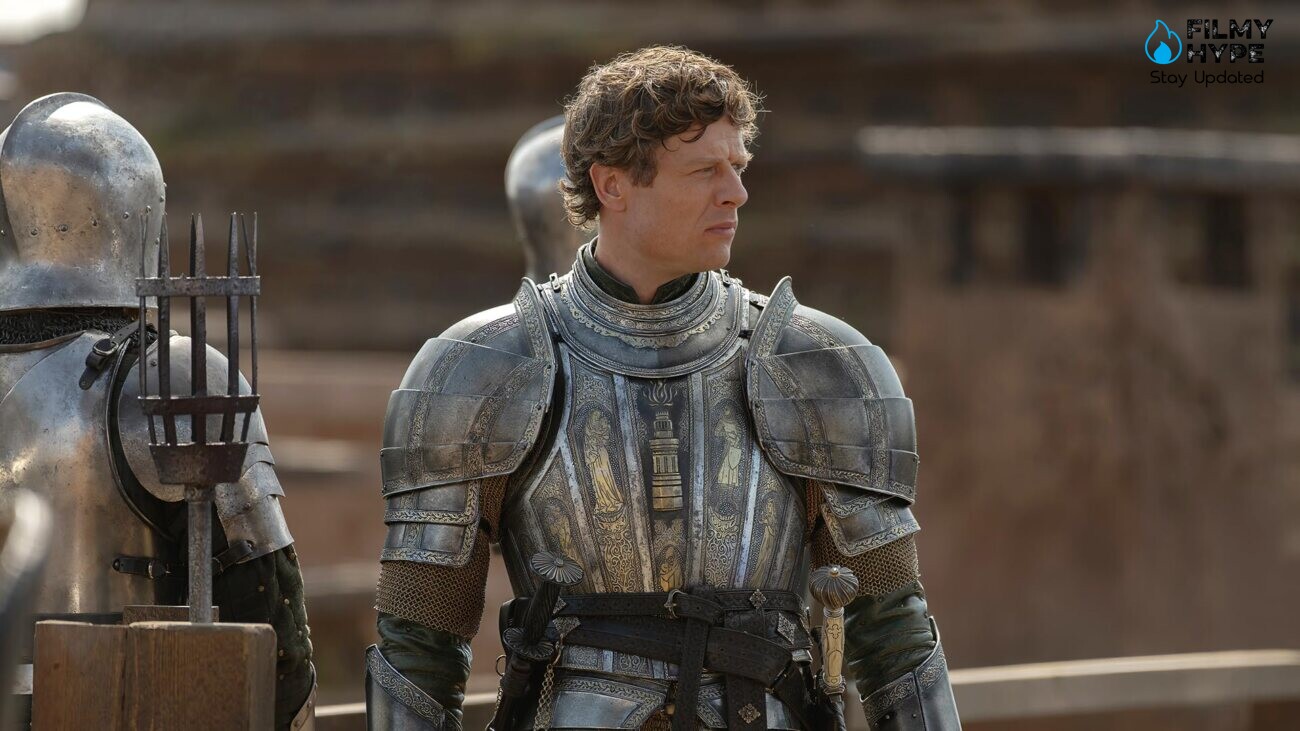
Ulf has (only in part) the blood of ancient Valyria, has conquered a dragon, and with Silverwing, suddenly possesses a force capable of deciding the outcome of a battle. But the transition from one condition to another does not make him more aware; it simply gives him a power infinitely greater than his capacity for judgment. And it is precisely this that makes his “rebellion” more ambiguous. Because, if the way Ulf decides to “escape the war” isn’t the right one (he gets there too late), that doesn’t necessarily mean the reason he decides to do it is too. In the spectacular Battle of Tumbleton (25 minutes of pure adrenaline), Green and Black’s war appears for what it is: a dynastic contest in which men (and children!) are sent to die for the power of others. Ulf, in his crude and irresponsible way, refuses to continue being a pawn.
There is, therefore, a principle of disobedience that is even humanly understandable. The problem is the form in which it is exercised. Ulf does not distance himself from the war: he makes it even more uncontrollable. He doesn’t simply refuse orders: he puts the power of his own dragon at the service of his own impulses. And so what could have been a rebellion ends up turning into the most destructive form of will. The Tumbleton Massacre stems from a disproportion on which both House of the Dragon and Fire and Blood stand: the power granted to the Targaryens is enormous, while the capacity with which they wield it remains irretrievably human.
In a war dominated by the impulses of men and dragons, Ormund Hightower is almost an anomaly (as was his uncle Otto and as ultimately has always been Alicent in a family of “mad” Targaryens). He is not morally better than the others (he is a vain and tyrannical fanatic who shields himself from the children of Tumbleton to push the Blacks not to attack the city with dragons!), but he is one of the few on the field who has understood that a war can also be won through strategy.
Tumbleton (in the series, in the book, the character finds much less space) could be his masterpiece, the fruit of a carefully planned strategy, which brought the destabilization of royal power into King’s Landing, and the turmoil among the troops on the battlefield. A plan, however, that he had forgotten to consider the most important variable: the possibility of minimal error. Not only Ulf’s disobedience, but also the distrust of Gwayne and Daeron, who hand over one of the fundamental pawns, Corlys, to the Blacks for inflexibility and lack of the same tactical vision. The death of Ormund (an extraordinary James Norton to the end) thus takes on a meaning that goes beyond the simple loss of a commander. Strategy is swept away by the choices and betrayals of those who no longer wanted or knew how to stick to the plot.
The visions place “Helaena the Dreamer” in a completely different position than the other protagonists: while everyone is fighting to change the course of events, she seems to know that some are hopelessly already written. He doesn’t use this knowledge to gain power. On the contrary, it seems to be crushed by it. He sees what others cannot see, but precisely for this reason, he understands how useless it is to try to oppose the plot of fate. In this, it is the opposite of Rhaenyra: both are linked to prophecy, but while the queen turns it into the justification of her own actions, Helaena seems to recognize in prophecy the limit of the action itself.
It’s also what makes his relationship with Aegon and Aemond so interesting. Helaena knows that they are both trapped in a war that is consuming them, but she can only warn them and not simply save them. Aegon is now a man devastated by the desire for revenge, towards the “usurping” ruler, but above all towards his brother, who tried to kill him. Aemond, for his part, became a prisoner of the destructive force he had chosen to embody. Helaena is the only one who knows, thanks to her visions, that neither of them can truly win. And this is where the story of George R.R. Martin finds one of his best insights: the character who knows the future is also the one who least wants to rule it. Helaena would only like to escape a world in which every choice seems to inevitably lead to tragedy.
-
- House of the Dragon Season 3 Episode 8 (Image Credit: HBO)
-
- House of the Dragon Season 3 Episode 8 War (Image Credit: HBO)
The problem is that House of the Dragon, in one of its now countless variations from the pages, always fails to transform this insight into an equally solid dramatic construction. Helaena’s death is a clear case. On a symbolic level, she is extremely powerful: the woman who weaves the plot of fate on her tapestry decides to leave, leaving the others a war whose outcome she already knows. But precisely because the gesture has such great weight, its narrative construction needed to be more convincing. It is no coincidence that in Fire and Blood, there are even more versions of what may have driven the princess to suicide. The HBO series reconstructs his torment, his visions, and his fear for what might happen to little Jaehaera and Maelor, whom he still carries here.
But the shift from awareness of fate to the decision to take one’s own life remains more suggested than actually constructed. The scene is unconvincing as an inevitable consequence of the character’s journey, especially after seeing her riding Dreamfyre. And it’s a shame, because Helaena has always been a time for reflection throughout the season on all the great contradictions: prophecy, power, dragons, war, and the illusion that men can control a story that is perhaps already dragging them elsewhere. In this sense, his encounter with Rhaenyra takes on even greater weight. When he calls her “horrible,” he’s not simply judging the woman in front of him. She is rejecting everything that woman represents and, above all, will represent. Rhaenyra feels indispensable for fate to be fulfilled. Helaena understood, bitterly, that knowing destiny does not mean being able to change it.
The Problem of Prophecy, Which Not Even a Great Ending Solves?
And here we need to say what needs to be said, because on filmyhype we don’t pretend that a good episode has no cracks. The crack, in this ending, is the monologue of prophecy. Rhaenyra decides to march on the Great Temple to force the High Septon to crown her, although the man has already refused, and Aegon has already been anointed. The logic of the operation is fragile from the outset. When the clerics protest, he orders them all killed, and his guards obey, Alyn of Hull with a less than convinced expression. Then he goes out into the square and delivers that speech: he speaks of the song of ice and fire, of the sacred mission entrusted to his lineage to prevent an ancient evil from submerging the world, and he closes Valyrian high by declaring himself the prince who was promised.
The problem is not new, but it explodes here. Prophecy has always been the most foreign element to this series, and reintroducing it at the end, through the mouth of a queen who is supposed to be fighting a very real dynastic war, derails it for a few minutes towards a cheap fantasy. House of the Dragon works when there remains a political drama about ambition, about succession, about a patriarchal system that denies a woman her rightful throne. Rhaenyra wants the crown because her father promised it to her and because she burns with resentment towards those who take it away from her as a woman. The others don’t support her because she’s a woman. Aegon has the support of many because he is the firstborn male. It’s all here, and it’s more than enough: it’s a dynastic struggle rooted in ancient and cruel beliefs, and it doesn’t need cosmic fates to be compelling.
-
- House of the Dragon Season 3 Episode 8 Spoilers (Image Credit: HBO)
-
- House of the Dragon Season 3 Episode 8 HBO (Image Credit: HBO)
To graft a prophecy upon it is to replace human motives with supernatural ones, and to empty of sense what made history mature. This had already been seen in Game of Thrones with Daenerys, and here it sounds even more out of tune: Rhaenyra has no real reason to believe himself to be the “promised prince”, and the linguistic contortion to make the prophecy say “princess” remains as awkward today as it was then. It should be acknowledged that the monologue has at least one function: it shows how much Rhaenyra slipped into delirium, how much desperation detached her from reality. It can be read like this, like the symptom of a mind that is giving way. But it remains the weakest moment of an otherwise powerful episode, the mythological ballast of a tale that soars when it keeps its feet in the mud of politics.
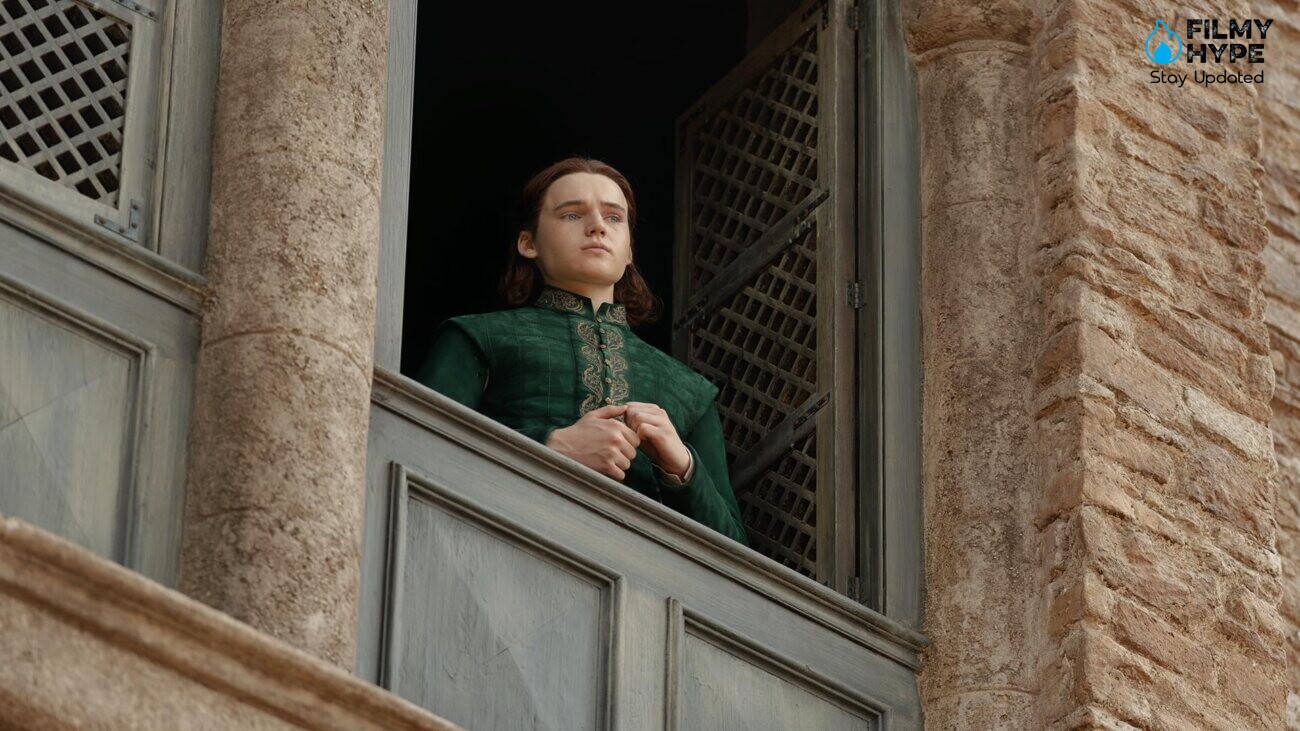
Helaena’s death is the emotional heart of the episode, and is, together with her most questionable choice. After the atrocious scene of forced feeding, after learning from Mysaria that her son is destined to remain a hostage forever, Helaena looks out the window and lets herself fall. When Rhaenyra discovers her stepsister’s body, there is almost no trace of pain on her face. She approaches the window, looks at the city, and ends up staring at the tapestry that Helaena, dreamer and seer, was embroidering: she herself can be seen falling from the tower in tears, and Rhaenyra on the Iron Throne, surrounded by fire and blood. Helaena’s intimate prophecy has been fulfilled, while the public one recited by Rhaenyra rings hollow. The contrast is powerful.
Yet something doesn’t add up. Why is Helaena throwing herself now? Do you fear the monster you would become by staying in King’s Landing? Does he see the scene of his vision again, where he rides the dragon and orders everyone to be incinerated? The series leaves the question open, and that’s okay. The logic of the gesture works less well: Helaena’s daughter is still alive and in Rhaenyra’s hands, and appears inconsistent with the character of a mother taking her own life, leaving the child behind. It’s a step that deserved more breathing, more preparation. It hits the stomach, but it doesn’t quite convince the head.
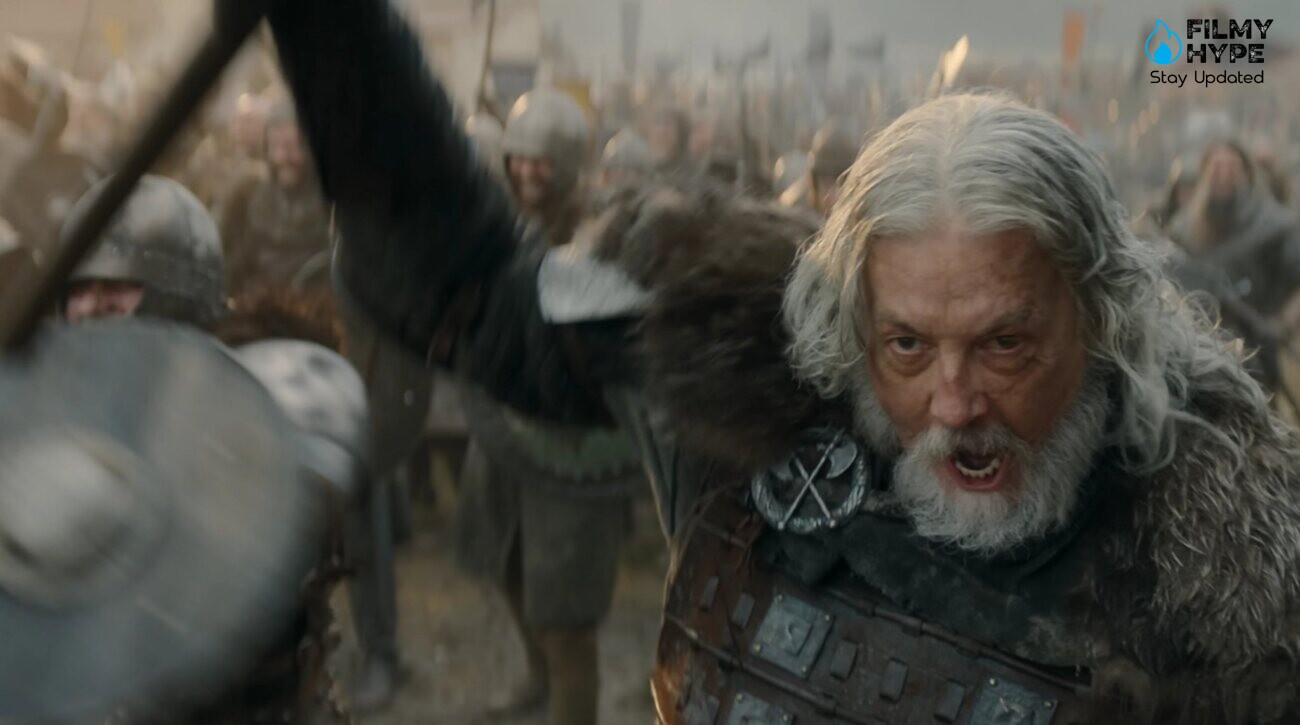
If the ending has an indisputable triumph, it is the battle. For seasons, House of the Dragon locked itself in the hallways, in the bedrooms, in claustrophobic conversations whispered in half a voice. It is his trademark, and often his limit. Here, for the first time, the camera moves back and takes flight. Daemon marches on Tumbleton with his army to link up with the River Lords and Northern men in an all-out assault on the city. The order is to spare the dragons as much as possible, so as not to slaughter the innocent. But Lord Ormund Hightower, the great antagonist built by this season, does not count on the Queen’s clemency: he deploys children on the walls, human shields to deter any draconic attack. He is a man who, over the months, the series has made the true puppeteer of the Green faction, and James Norton has given him a sneer of absolute cynicism: a tactician devoid of any moral scruples, better than anyone to come to terms with.
-
- House of the Dragon Season 3 Episode 8 HBO (Image Credit: HBO)
-
- House of the Dragon Season 3 Episode 8 Analysis (Image Credit: HBO)
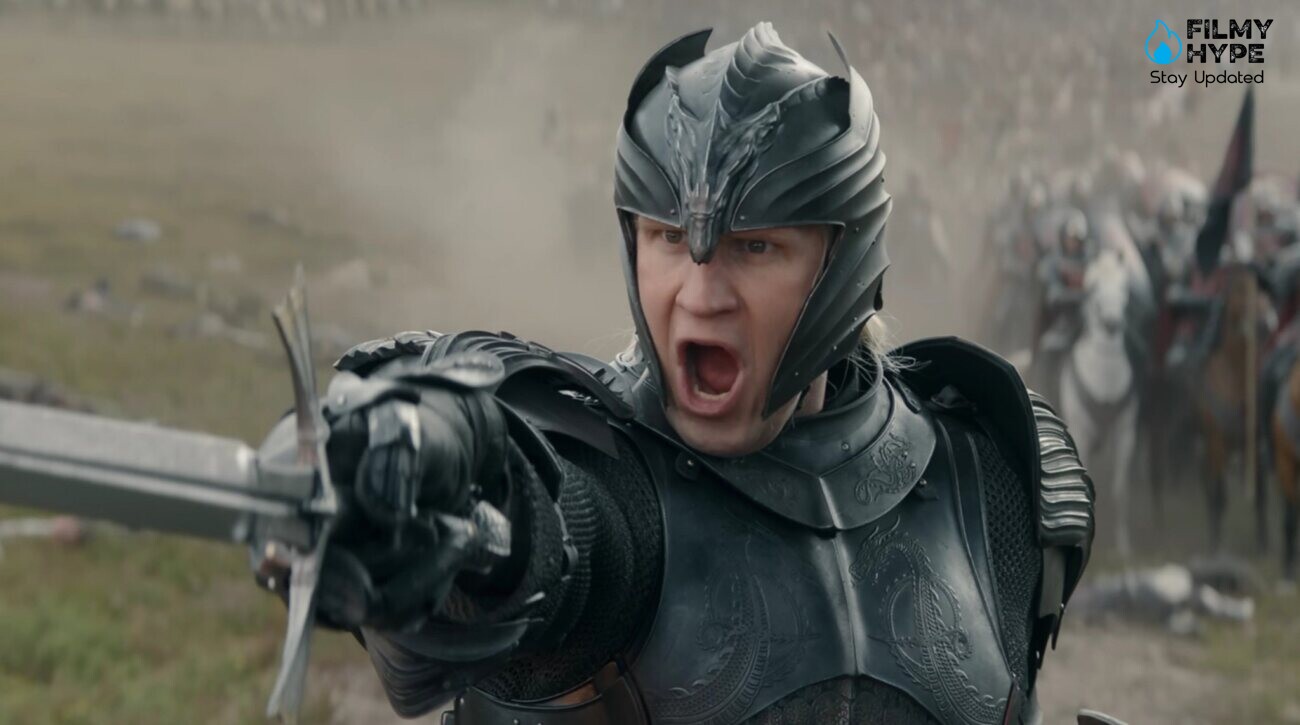
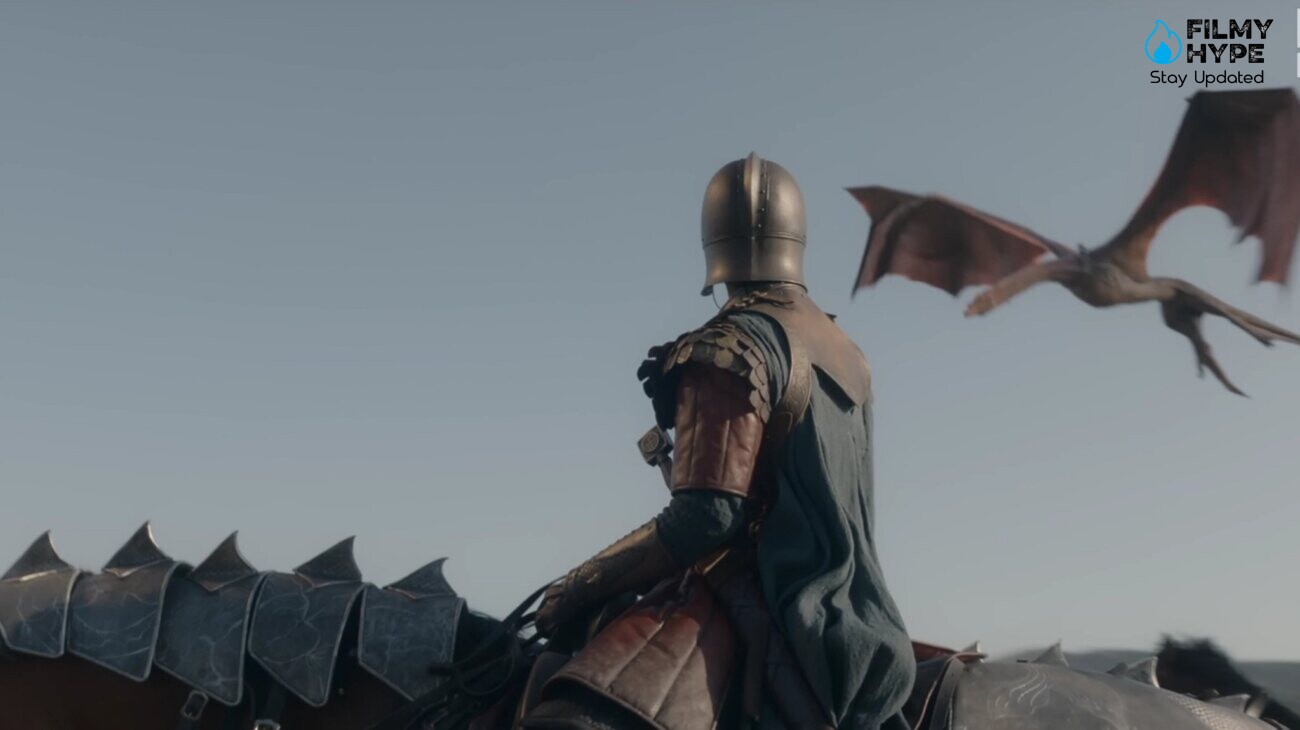
The clash is huge. The charge of the Nordics, the ram at the main door replaced by Caraxes burning it, the fighting in the streets and on the walkways, the boiling oil spilled on those who climb the stairs. All seems lost for Ormund and the Hightowers, until it is revealed that Ulf, the drunken dragon-knight, sleeps in a latrine instead of fighting. Ormund insults him, kicks him, and sends him to retrieve his dragon. Ulf obeys, but has had enough of the nobles giving him orders when he is the one who possesses a dragon. So he burns first Daemon’s troops, those at whose side he had sworn to fight, then turns his fury on the city and leaves it in smoking ruin, Ormund included.
It is Roddy, the Northern warrior nicknamed the Ruin, who deals the mortal blow to the patriarch Hightower: he loses an arm but still finds the strength to pierce it, just in time for Ulf’s dragon to appear above them. Ormund dies watching that mutilated man laugh triumphantly in the flames. It’s not the death he imagined. Daemon, in turn, risks falling, overwhelmed by the enormous Ser Jon Roxton, Ormund’s right-hand man: only the collapse of a building set on fire by dragons saves him. In the end, it is Corlys who snatches him from the burning city and forces him to flee. Meanwhile, Hugh finds his wife Kat’s lifeless body and cries over her, a detail that opens up a dark scenario for his character. Three dragons rise into the sky as the Blacks retreat, but only Ulf is in the saddle: what became of Daeron and his dragon Tessarion remains, for now, an enigma. The battle is impressive in scope and ambition, the kind of sequence that pays for years of whispered scenes. House of the Dragon loves to zoom close, very close. This time, he zoomed out and took flight.
As Tumbleton burns, the finale still finds time for a more intimate and, in some ways, superfluous yet precious moment. Aegon, crippled and disfigured, fleeing from everyone, flies with Sunfyre to Harrenhal and finds his brother Aemond there, profoundly changed: the boy’s dark arrogance has almost vanished, and in his place is a more circumspect, almost contrite man, who kneels before the elder. Aegon is furious; he wants revenge. But he soon realizes that Aemond and his companion have been so isolated in the haunted old castle that they know nothing of what is happening in the world. Aemond begs for his brother’s forgiveness, and Aegon replies that perhaps, after bringing Daeron and Ormund back into line, after giving Rhaenyra and Daemon the lesson they deserve, perhaps then he will consider forgiving him for trying to burn him alive. Perhaps. It’s a magnificent scene right in his suspension, and it confirms how irresistible every moment has become with Aegon on the pitch.
The Divergences from George R.R. Martin’s novel are numerous, and in this third season, they worked better than in the second. Ormund, who on the page is a pawn in the hands of others, here becomes a full antagonist, endowed with cunning and power, the face that Rhaenyra was missing while Aegon and Aemond remained hidden. Tumbleton’s defense changes sides from the book, but the result doesn’t change much. Not all choices are equally convincing: Helaena’s suicide appears more forced than on the page, and Hugh’s new trajectory leaves many questions open. But they are details in a picture that, overall, holds beautifully.
Because net of everything, prophecy monologue included, this is an extraordinary episode. The battle possesses a scale and power that the series had never achieved, and Rhaenyra’s bow reaches its peak of cruelty and desperation just when it is needed. House of the Dragon closes its third season by proving that it can live up to the best of Game of Thrones whenever it wants. Now we just have to wait for the fourth and final season to find out where this now out-of-control dragon dance will take us.
House of the Dragon Season 3 Episode 8 Review: The Last Words
House of the Dragon closes a volatile third season focused on two protagonists: on the one hand, the writing of a multifaceted Rhaenyra brought to the stage by an increasingly talented Emma D’Arcy, and on the other, a Matt Smith who gives Daemon an important but not always coherent physicality. However, there was a growing, exhausting and exhausting pace that tested the patience of the spectators. Culminating in a less incisive battle than promised, the series responds with more doubts than certainties, now far removed from the source material: with a dark epilogue that leaves too many avenues open, the season ends up convincing at times.