The Hunger Games: Sunrise on the Reaping Review: Haymitch’s Tragedy Matters More Than Surprise!
The Hunger Games: Sunrise on the Reaping Review and Ratings
Cast: Joseph Zada, Mckenna Grace, Jesse Plemons, Elle Fanning, Ralph Fiennes, Kieran Culkin, Maya Hawke, Whitney Peak, Kelvin Harrison Jr., Lili Taylor, Glenn Close, Ben Wang, Molly McCann, Jefferson White, Iris Apatow, Edvin Ryding, Billy Porter
Directed by: Francis Lawrence
Where to Watch: In Theaters
Filmyhype.com Ratings: 3.5/5 (three and a half stars)
What can turn a brave, loving boy into a disillusioned man, unable to free himself from memories of the past? The Hunger Games: Sunrise on the Reaping returns to the universe created by Suzanne Collins to tell the story of the youth of Haymitch Abernathy, Katniss Everdeen and Peeta Mellark’s mentor, whom we met in the original saga. A figure who has long remained on the margins of history, but whose past allows us to observe from another perspective the violence on which the power of the Capitol is based. Directed by Francis Lawrence, who was already responsible for most of the previous film installments, the film adapts Collins’ novel of the same name and brings viewers back to the Hunger Games arena. This time, however, the challenge is not so much to find out who will survive, but to understand the consequences that experience will have on the protagonist. Joseph Zada plays the young Haymitch, joined by a cast that includes Ralph Fiennes, Glenn Close, Jesse Plemons, Kieran Culkin, and Mckenna Grace.

The result is a visually imposing prequel, capable of recovering the brutality and atmosphere of the first films but also deeply tied to a narrative formula that is beginning to show its limits. Sunrise on the Reaping has moments of great intensity, especially when it recounts the workings of propaganda and the cruelty of the Games, but it struggles to fully justify the need to return to the same mechanisms once again. With Sunrise on the Reaping, Suzanne Collins and Francis Lawrence continue the literary and cinematic journey begun with The Ballad of Songbirds & Snakes, the first prequel to the original saga. A project that, from the very beginning, has carried out the narration of novels and films in parallel, with the intention of transferring Collins’ stories to the big screen as faithfully as possible. This time too, the result remains unchanged: Sunrise on the Reaping is a transposition practically identical to the source material, both in the construction of the story and in its fundamental passages.
The Hunger Games: Sunrise on the Reaping Review: The Story Plot
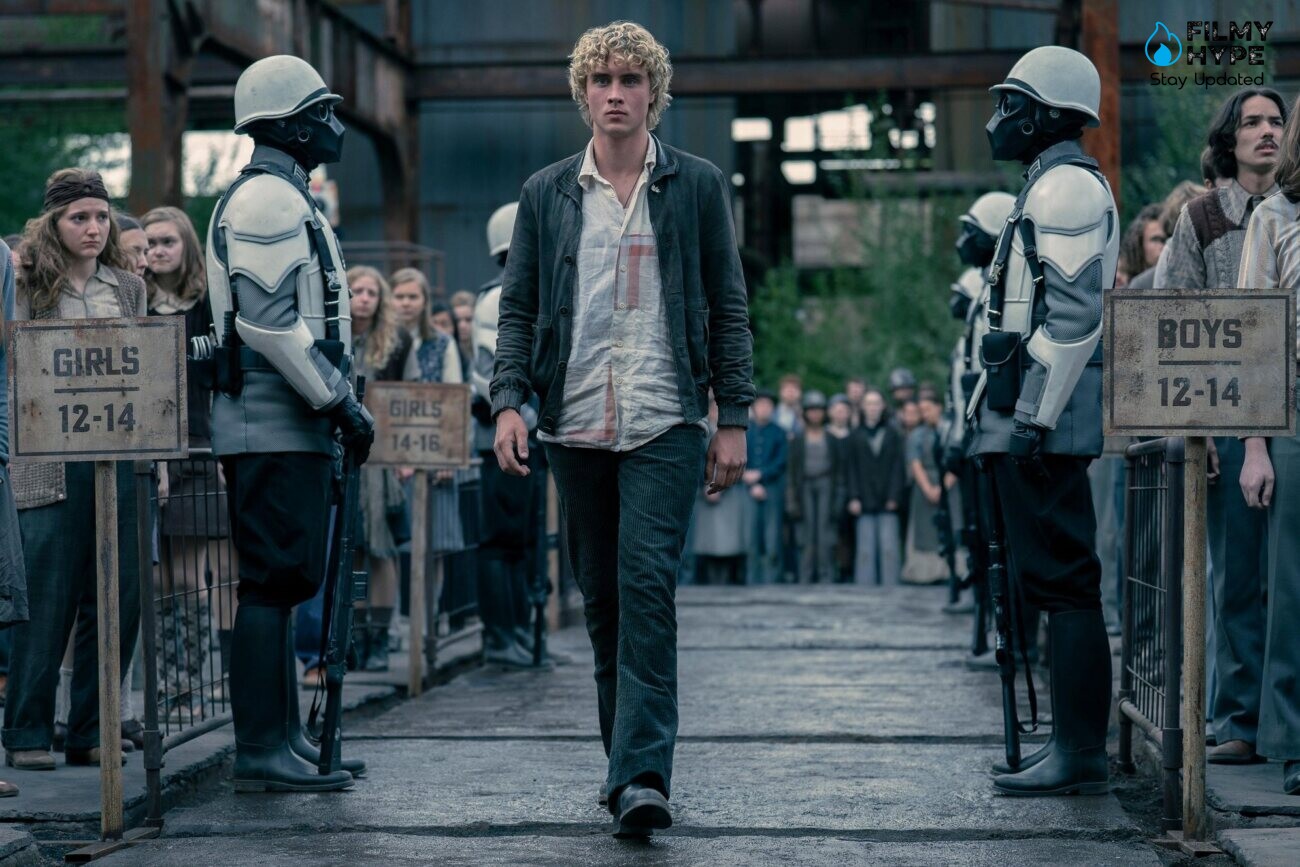
The story is set twenty-four years before the events involving Katniss Everdeen. Haymitch Abernathy is sixteen years old, lives in District 12, and is trying to build a future with his girlfriend, Lenore Dove Baird (Whitney Peak). His existence is turned upside down when the Capitol hosts the fiftieth annual Hunger Games, a special celebration that includes a doubling of tributes: four boys from each district, instead of the usual two. Haymitch ends up among the participants and is taken to the Capitol, where he has to face a path of preparation and meetings with the other competitors. The competition is designed to entertain Capitol residents and remind districts that any form of opposition can be punished. But the boy is not willing to passively accept the role assigned to him.
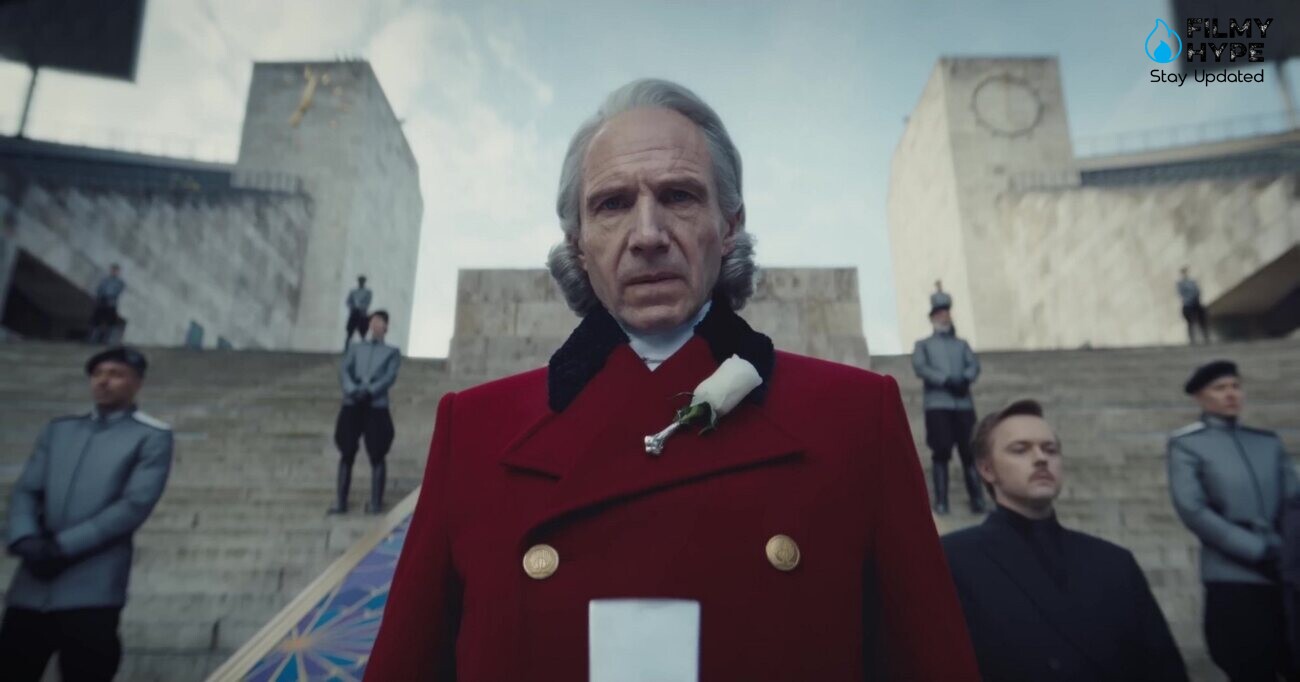
While in the Capitol, Haymitch comes into contact with figures who will be of pivotal importance in Panem’s history, including Plutarch Heavensbee (Jesse Plemons) and President Coriolanus Snow (Ralph Fiennes). When tributes are finally brought into the arena, the protagonist must find a way to survive an environment designed to turn every choice into a threat. The story follows a structure very close to that of the first Hunger Games but tries to place greater importance on the personal consequences of the competition: Haymitch is not just a boy who has to face a deadly game but someone who finds himself understanding how high the price of rebellion can be.
The Hunger Games: Sunrise on the Reaping Review and Analysis
The choice to dedicate a film to Haymitch Abernathy has a clear appeal for those familiar with the saga. In the original chapters, Woody Harrelson had played a sarcastic man, marked by alcoholism and seemingly incapable of taking anything seriously. Behind that attitude, however, emerged a painful knowledge of the Capitol system and the consequences the Games could have on survivors. Joseph Zada is tasked with telling the story of the person Haymitch was before he became that man. His interpretation gives an impulsive boy, capable of courageous gestures and still convinced that it is possible to oppose injustice. The contrast with the adult character is one of the most interesting elements of the film, because it allows us to observe a phase of his life in which hope has not yet been destroyed.

Zada manages to make this youthful version of Haymitch believable, especially in the scenes where fear coexists with the desire not to be humiliated. His character is still far from the cynical and disillusioned man played by Woody Harrelson in the original saga, and this very distance represents one of the most interesting aspects of the film. The script, however, does not always manage to delve deeper into his inner change, focusing more on the events that involve him than on the emotional consequences of his experiences. When the story enters the competition, Sunrise on the Reaping rediscovers some of the energy that had characterized the first chapters. Francis Lawrence demonstrates a perfect understanding of Panem’s universe and builds a seemingly lush arena, where the beauty of the landscape hides unpredictable dangers. Animals and natural elements are transformed into instruments of death, while tributes face threats that can come from any direction.
The action sequences are carefully crafted and at times particularly violent, reminding the viewer that behind the television show lies a system based on the killing of young people. The contrast between the arena’s almost fairytale-like appearance and the brutality of the events works, especially because it makes the organizers’ cynicism even more evident. However, even these sequences end up reproposing now-familiar dynamics. Temporary alliances, betrayals, survival strategies and attempts to defy the rules have always belonged to the structure of the saga. The problem is not about the lack of spectacularity but the difficulty of finding something truly new within a competition that the public has already learned about. The film changes the characters and introduces different dangers but does not significantly change the way the story works. Familiarity can be a pleasure for enthusiasts, but it also makes many developments less surprising.
The most successful part of The Hunger Games: Sunrise on the Reaping concerns the relationship between political power and television spectacle. The Games are not just a system of punishment but a tool through which Capitol builds a version of reality destined to be accepted by citizens. The character of Plutarch Heavensbee, played by Jesse Plemons, allows you to take a closer look at how this propaganda machine works. Images conveyed to the public can be selected and manipulated, while anything that risks compromising the official narrative is hidden or reinterpreted. Competition thus becomes a narrative constructed by power, in which even gestures of rebellion can be deprived of their meaning.

It is a theme that has been present since the beginning of the saga but which retains considerable relevance. The film shows how information control can become as important as that exercised through violence. For President Snow, played by Ralph Fiennes, it’s not enough to stop districts from rebelling: it’s also necessary to establish what people must believe they saw. Fiennes offers a more rigid and authoritarian version of the character than Donald Sutherland, while Glenn Close stands out as Drusilla Sickle, the Capitol representative in charge of accompanying the tributes. His interpretation accentuates the grotesque character of the elite, showing how luxury and eccentricity can coexist with a total indifference to the suffering of others.
With a duration of 158 minutes, Sunrise on the Reaping seeks to dedicate space both to the preparation of the Games and to the consequences of Haymitch’s participation. This choice allows us to delve deeper into some aspects of the protagonist but makes the rhythm rather irregular. The first part takes a long time to introduce characters and situations, while some subsequent sequences seem to drag on beyond what is necessary. The greatest difficulty concerns the relationship with previous films. The Ballad of Songbirds & Snakes had tried to tell the story of Snow’s youth and the origins of his vision of power. Sunrise on the Reaping instead chooses a story that takes Katniss’s experience more directly, returning to focus on a young man from District 12 forced to participate in the Games and determined to challenge the Capitol.
This similarity makes the film instantly recognizable but limits its originality. Even when introducing new characters, the story often seems to move towards situations already addressed by the saga. Knowing Haymitch’s fate isn’t necessarily a hindrance: a prequel can be engaging even when the audience already knows the main events. To achieve this, however, it must offer a sufficiently different perspective to justify returning to the past. The film finds this perspective primarily in the psychological consequences of violence and in its reflection on information control but fails to maintain it as effectively throughout. Every story about the origins of an already known face carries a structural limit. Those familiar with the saga know that Haymitch will survive and that his future will not be peaceful. The movie can’t use the question “Will it save itself?” in the same way as the first Hunger Games with Katniss. He must seek a different tension: how much he will lose along the way, what he will be forced to understand, and what price he will pay for not obeying the role assigned to him.
This is where the project becomes more interesting than an episode built just to complete the timeline. In Suzanne Collins’ novel and the film based on it, Haymitch is not a young hero naturally destined for victory. He is someone who lives in a system built to make any gesture of resistance insignificant. The difference between winning a game and escaping its political significance remains the story’s most productive conflict. The difficulty consists in balancing the known fate with the surprises present. New relationships, solidarity between tributes, and the mechanisms of the arena can gain their own weight; references to already beloved characters, however, risk shifting attention towards the recognition of names and previews. A prequel works when the audience wants to stay in the present of the story, not just when they recognize the future.
This tension also explains why the connections with the original saga do not guarantee emotion. Knowing that a character will become important doesn’t automatically make every appearance significant. A scene must contribute to the current relationship, theme, or conflict; if it only serves to make those who have seen previous films smile, the price is a narrative slowdown. Adult Haymitch owes much to Woody Harrelson’s presence: sarcasm, bitterness, and tiredness are not just eccentric traits, but traces of something the character has carried for many years. Joseph Zada must return a person before those defenses, without erasing the continuity between the two ages. His interpretative task cannot be reduced to repeating the posture or intonations of the older actor.
It is necessary to make credible the evolution of a boy who is confronted with institutional violence and discovers how risky it is to try to change its meaning. The choice of a relatively young interpreter supports the contrast between the vulnerability of age and the responsibilities that the world imposes on him. Haymitch doesn’t necessarily have to have the same magnetism as Katniss: her path revolves around another form of loss and opposition. The sticking point is the story’s ability to make this difference a dramatic advantage: the goal should not be to create another protagonist identical to Katniss, but to make a different form of opposition perceived.

Mckenna Grace as Maysilee Donner offers the story an important role in shifting attention away from the protagonist’s story alone. The relationship with other tributes is essential because it prevents competition from being reduced to a succession of trials. When history recognizes that each contestant has their own perspective, the Games’ device becomes frightening again: they are not simply obstacles in the hero’s path, but people forced into the same system. Francis Lawrence knows Panem’s universe and its central contradiction: the story must make a competition that he condemns as a cruel spectacle cinematically engaging. It is a tension that has accompanied the saga since the beginning and which becomes particularly evident when the size of the arena and the number of tributes increase.
The expansion of the stage scale serves to demonstrate the ambition of power, but it can accentuate the problem that the work seeks to denounce. Traps, dangerous creatures, and clashes serve a spectacular function; for them to also be part of a political critique, their effect on the characters must not be absorbed solely by the desire to amaze. The film finds its strongest foundation in the connection between survival, spectacularization, and personal consequences. The visual choices associated with the paradisiacal arena introduce an eloquent contrast: an environment capable of appearing hospitable is transformed into an instrument of death. The theme is not the aesthetics of nature itself, but the power to manipulate what appears safe and what is dangerous. On the website, we’ve already delved into the arena’s construction and the film’s visual approach, which helps us understand why this scenario isn’t just a backdrop.
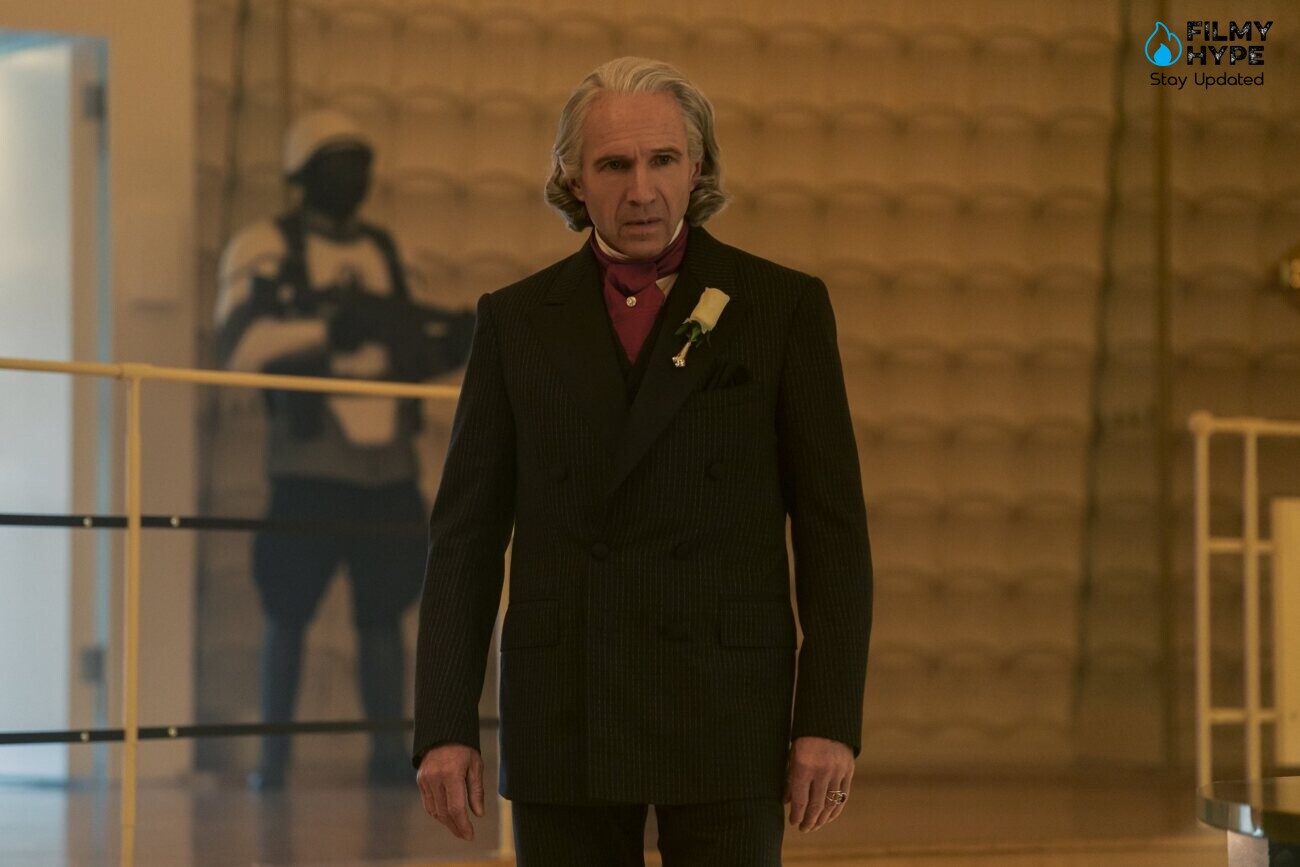
Time allows us to give weight to preparation, competition, and consequences, but it asks writing to prevent the phases of the story from becoming separate episodes. Here lies a risk of dramatic construction: the wealth of characters can detract from the overall path. Ralph Fiennes plays President Snow in a different phase than the one already told in The Ballad of Songbirds & Snakes. The transition between interpreters and historical periods offers an interesting perspective on the evolution of an antagonist who does not need to physically participate in the Games to influence every outcome. Snow represents a power that acts above all through rules, threats, and public representation.

The presence of Kieran Culkin as Caesar Flickerman, Elle Fanning as Effie Trinket, Jesse Plemons as Plutarch Heavensbee, and Glenn Close as Drusilla Von Tryst broadens the relationship between arena and propaganda. They are characters placed at different points in the apparatus: those who present the show, those who accompany the tributes, those who help shape the system, and those who use it as a control tool. The wealth of the ensemble is an opportunity, not a guarantee. If each important face demands its own introduction and recognizable moment, the film can lose its emotional center. Conversely, if these characters make the functioning of the Capitol tangible, their presence becomes a concrete way to show that violence does not arise solely from the order of a dictator: it requires organization, consent, complicity, and habits.
It is useful to remember that a political history does not necessarily have to turn every dialogue into a manifesto. Denunciation works best when it emerges from the rules of the world and the limited possibilities of the characters. The saga has built its identity precisely on the friction between spectacle and brutality, and this prequel makes sense as long as it manages to make the friction still perceptible. The main novelty is not an unseen technology or a radical breakthrough of the formula. The film returns to an already familiar competition and political environment, but changes the vantage point. Katniss acted as an exception, gradually transforming into a symbol; Haymitch is a protagonist we know especially after being scarred by the effects of that system.
The prequel is therefore about the cost of survival rather than the triumph of the victor. The idea is strong because it challenges one of the most used words in sports and adventure narratives: victory. In Panem, coming out alive is not necessarily the same as reclaiming your existence. The event can continue to define a person’s life even when the competition is over. This shifts the center of gravity from the mystery of the outcome to the character’s transformation. It’s also his advantage over a simple replay of the Games. The strength of the film, in a critical reading, depends on how well it manages to keep this promise without consigning all its energy to the inventory of connections with future chapters.
A sixth film in a saga cannot live only on the promise of re-proposing the experience of the first. The return to the arena is consistent with Haymitch’s origin, but the risk of déjà vu remains real. When the progression resumes selection, preparation, confrontation, and the unveiling of the balance of power, the story must find in the protagonist a perspective capable of modifying the meaning of these passages. Dramatic construction also suffers from the paradox of having to surprise while moving towards a known destiny. If the accumulation of encounters with already famous faces takes up too much space, the world seems smaller rather than richer. The strength of the more political parties, however, arises precisely from the opposite idea: Haymitch is one of many individuals involved in a power that cannot be reduced to the biography of a few famous names.

It is a substantial reservation, not a condemnation of the formula. The dystopian genre can return to the same rituals to illuminate different aspects of them. But repetition only becomes useful when it produces understanding. The question that sets this prequel apart from a nostalgic product is how much it makes Haymitch realize that the previous films couldn’t tell the story. The film is especially recommended for those who already know Haymitch’s character and want to place his cynicism within a story of loss and opposition. It may also be of interest to viewers who appreciate dystopias in which physical competition hides a reflection on image control and consensus.
Those entering the Panem universe for the first time can still follow the premise, but a knowledge of the saga makes the tension between the adolescent protagonist and the adult figure he will become more readable. Conversely, those expecting a standalone, short, and completely unpredictable adventure must consider both the length and the many connections to the franchise. The Hunger Games: Sunrise on the Reaping thus confirms Suzanne Collins’s ability to return to the world of Panem while still finding interesting stories to tell. It’s not a film that seeks to reinvent the saga, nor an adaptation intended to surprise those already familiar with the novel; rather, it’s an operation designed to complete a story, delve deeper into one of its most beloved characters, and show how the consequences of the Games can continue to exist even after the competition ends. A return to Panem that does not change the rules of the saga, but allows us to better understand its wounds.
The Hunger Games: Sunrise on the Reaping Review: The Last Words
The Hunger Games: Sunrise on the Reaping has a compelling narrative core: turning the story of a winner into the story of the price he paid. The return of Francis Lawrence, Joseph Zada’s young Haymitch, and the political apparatus built around the Games provide solid elements for a critical reading of the themes already dear to the saga. The limitations lie in structural repetition, the abundance of references, and the difficulty of always keeping the protagonist at the center of a large ensemble. The overall assessment is that of a good but not unreserved prequel: when it reflects on trauma, propaganda, and the impossibility of an innocent victory, it adds depth to Panem; when it chases the franchise’s recognizability, it risks once again revealing what we already know. Haymitch’s value is perhaps precisely this: to remind us that survival does not coincide with freedom. What, for you, is the prequel to the saga that best changes the meaning of the original films?