


The Whisper Man Film Review and Ratings
Cast: Robert De Niro, Adam Scott, Michelle Monaghan, Michael Keaton, Acston Luca Porto, Hamish Linklater, Owen Teague, Will Brill, Robert Clohessy, Exavier Montanez, Aniela Zeig
Director: James Ashcroft
Streaming Platform: Netflix
Filmyhype.com Ratings: 3.5/5 (three and a half stars)
Serial killers, missing children, a disturbing nursery rhyme, a house plunged into darkness, and an old detective tormented by the case that marked his life. The Whisper Man makes no secret of its intentions: James Ashcroft’s film aims to take us back to the territory of the dark thrillers of the ’90s, when Seven and The Silence of the Lambs had transformed the hunt for the killer into a journey into the obsessions of its protagonists. Based on the bestselling novel by Alex North and adapted by Ben Jacoby and Chase Palmer, the new Netflix thriller also boasts a remarkable cast: Robert De Niro, Adam Scott, Michelle Monaghan, Michael Keaton and Hamish Linklater. The result, however, is less memorable than these names would suggest: a discreetly packaged and easy-to-follow mystery, which works especially when it builds atmosphere and much less when it has to surprise.
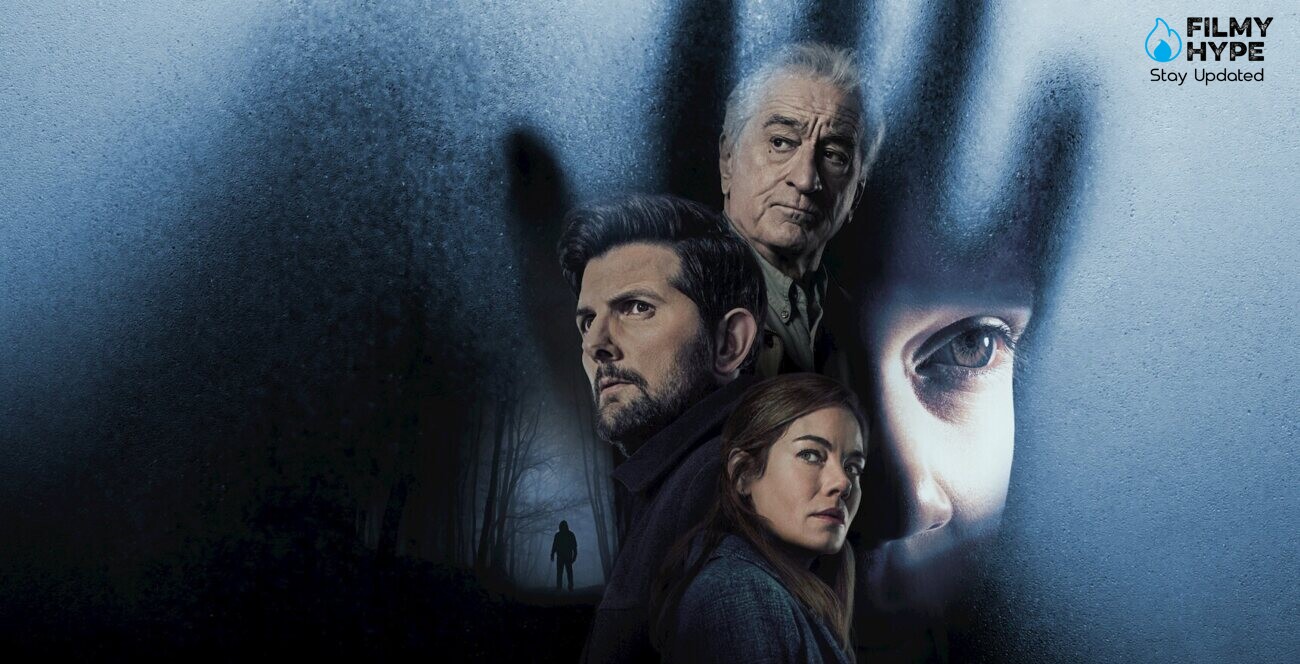
The new Netflix thriller directed by James Ashcroft takes a missing child, a serial killer seemingly returned from the past, a creepy nursery rhyme, a house that seems to be hiding something, and an old detective haunted by the case that shaped his life. It’s not hard to see where he wants to take us. The surprise is that, for much of the film, it still works. Not because The Whisper Man invents something new, but because he has extremely familiar elements with sufficient confidence, and above all, he can count on Adam Scott, Robert De Niro, Michelle Monaghan and Michael Keaton. The result is a flawed but solid thriller, more interesting when it stops dealing with the monster and starts talking about the people that monster left behind.
The Whisper Man Film Review: The Story Plot
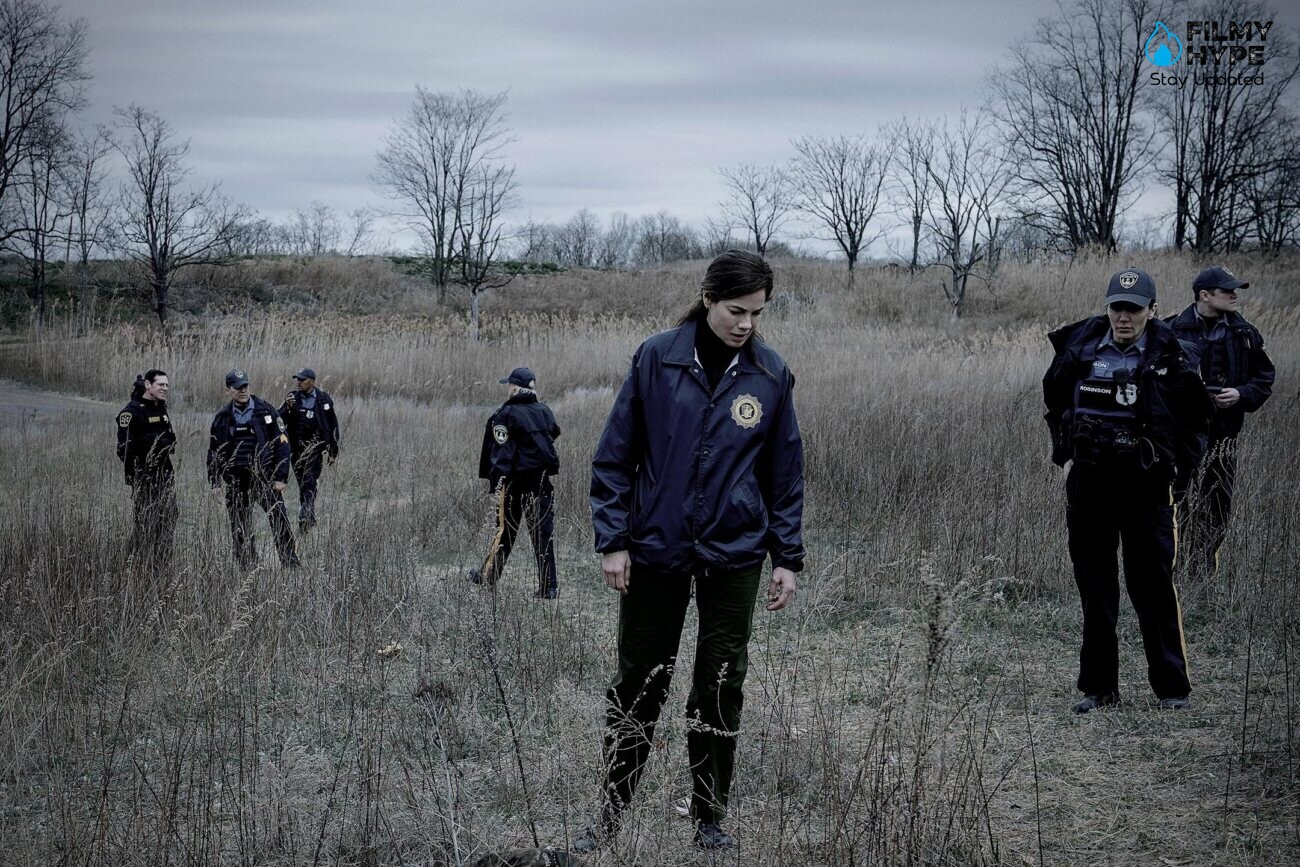
In New Jersey, Detective Amanda Beck (Michelle Monaghan) is coordinating the search for a missing child when the body of another young victim is found in the woods. The evidence emerging from the investigation is disturbingly reminiscent of a series of murders that occurred some twenty-five years earlier. The perpetrator had become known as The Whisper Man for the way he lured children by talking to them through bedroom windows. However, the killer is still in prison, where he is serving a life sentence, and some seem to have decided to replicate his crimes.
He was captured by Pete Willis (Robert De Niro), a retired detective still obsessed with a child who disappeared at the time and was never found. Pete initially wants nothing to do with the new investigation, but everything changes when Jake (Acston Luca Porto), son of recently widowed crime novelist Tom Kennedy (Adam Scott), is kidnapped. Jake is also the nephew Pete has never met: Tom and his father have not had sex for years. The search for the child forces the two men to return to each other’s lives, while Amanda tries to figure out what connection exists between the new kidnappings and the killer Pete had arrested decades earlier.
The Whisper Man Film Review and Analysis
One of the most successful aspects of The Whisper Man is the way it unabashedly recovers the structure of classic detective thrillers. Ashcroft unhesitatingly embraces all the ingredients of the classic detective thriller: the incarcerated killer who may know crucial information, the detective haunted by the case that ruined his life, the macabre clues, the disturbing nursery rhyme, the disturbing suspects, and the race against time to save a child. The most obvious reference is inevitably The Silence of the Lambs, especially when Pete has to confront the man he had captured again. The film, however, possesses neither the psychological complexity nor the suffocating atmosphere of Jonathan Demme’s masterpiece and, more generally, does not seem really interested in competing with his models on their own ground.
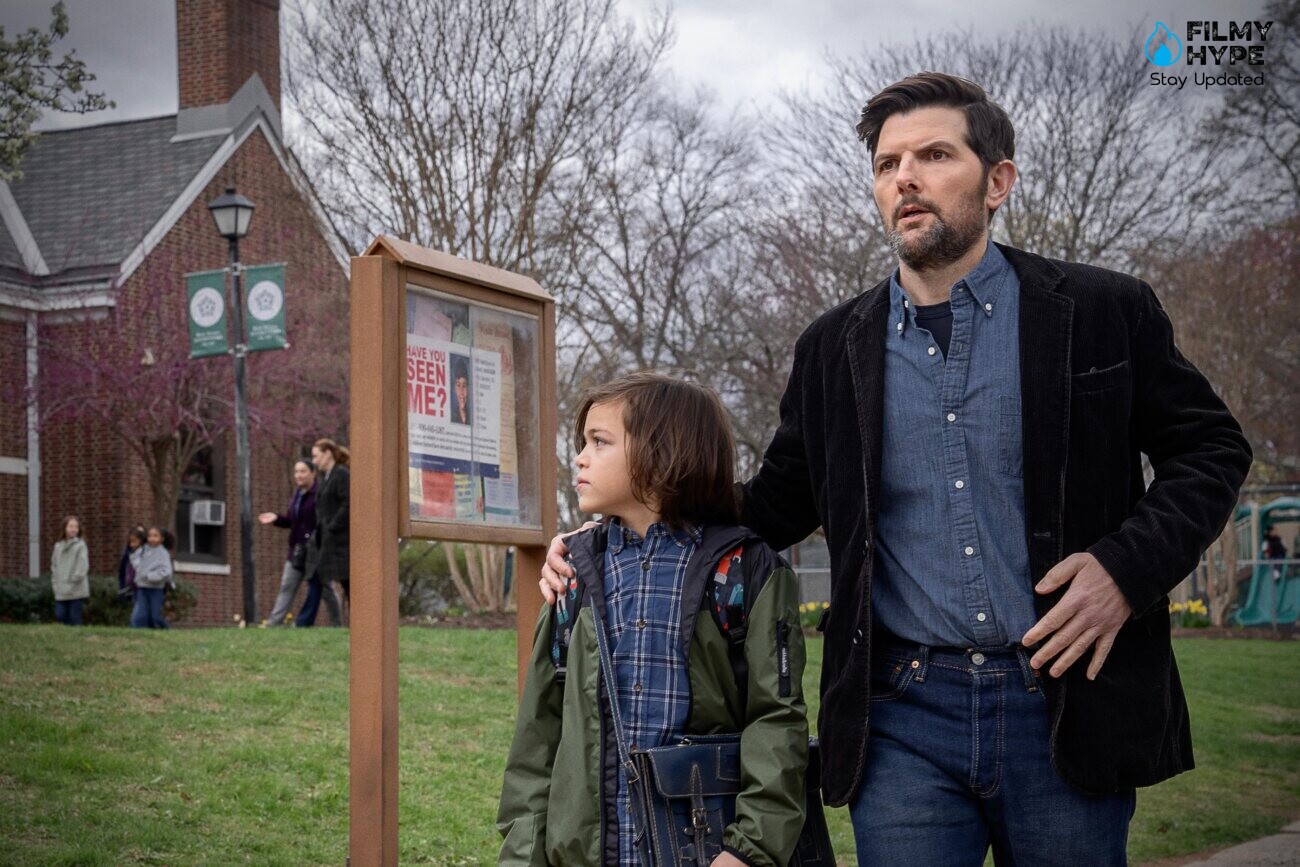
It works rather like a solid popular thriller, almost the film adaptation of one of those crime novels that devours itself in a few days. Ben Jacoby and Chase Palmer’s script moves forward with revelations, suspicions, and red herrings, always keeping something moving. Not all the twists are as believable, and in the last part some mechanisms become quite evident, but the film hardly loses its grip completely. However, the investigative component is only half of the film. What allows him to go beyond simple procedural concerns is the relationship between Tom and Pete and, more generally, how parents and children end up inheriting wounds they have never really faced.
Tom just lost his wife and is trying to raise Jake alone. Moving to the town where he and his wife grew up should be a fresh start, but Jake is still deeply grieving. She talks to an imaginary friend, fears some parts of the new house, and expresses a discomfort that her father can’t always interpret. When the child disappears, guilt is added to the pain. It is at that very moment that Tom is forced to turn to Pete. The film conveniently avoids explaining every detail of their breakup through long flashbacks or didactic dialogue. We know enough to understand that Pete was an absent father, scarred by alcohol and devoured by work, and that the case of the Whispering Man ended up taking up a huge space in his existence.
Jake’s kidnapping then becomes the point where two paternal failures risk overlapping. Pete can still save his grandson after failing to be there for his son; Tom must rely on the very man he spent years fending off. It is Robert De Niro above all who gives substance to this report. Pete Willis seems like a consummate man long before the film begins: tired, alone, and still unable to free himself from an investigation that ended only on paper. De Niro works by subtraction and makes remorse and a desire for reconciliation legible without turning the character into the classic gruff detective seeking redemption. Adam Scott instead chooses an inevitably more nervous acting.
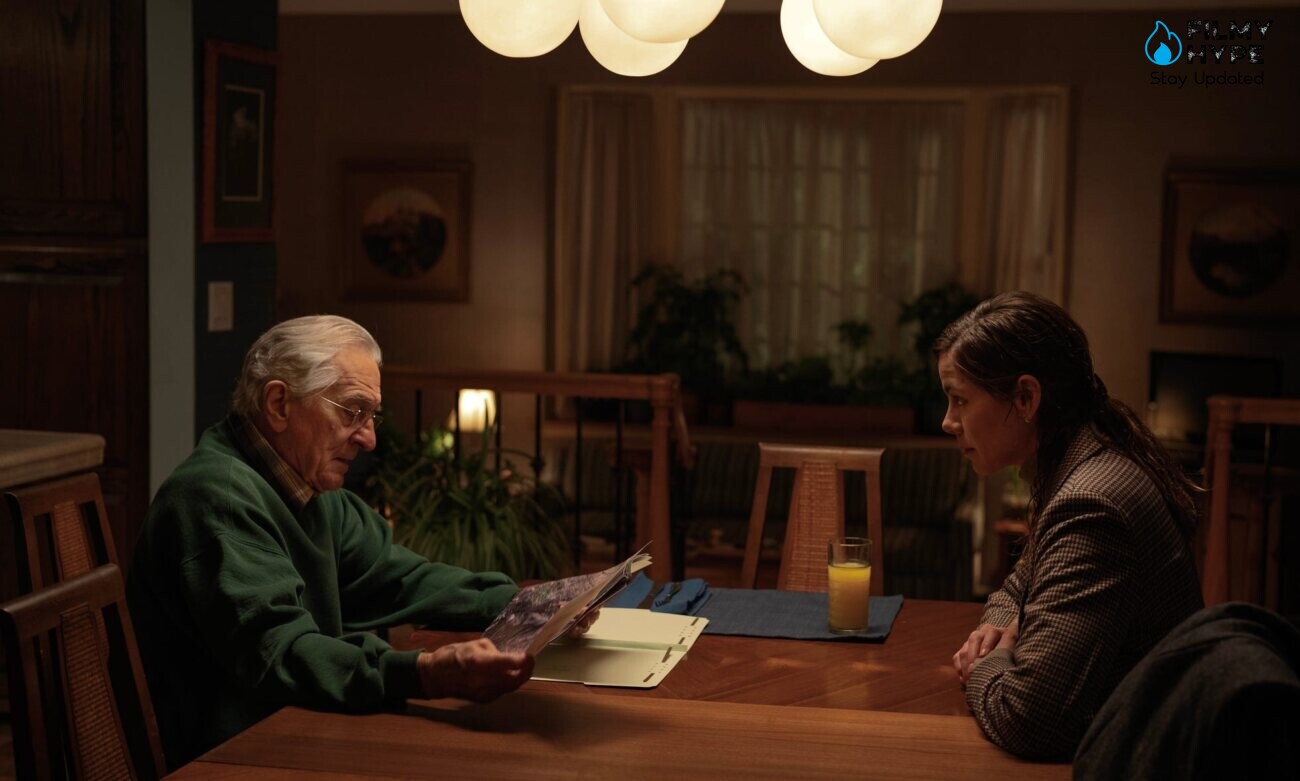
Tom is a terrified father, still grieving and suddenly forced to simultaneously confront the possible loss of his son and the return of his father. In some passages his performance risks becoming too insistent, but his relationship with De Niro remains the film’s most emotionally compelling center. Michelle Monaghan brings naturalness to Amanda Beck, even if it is her character who is penalized by the script. She leads the investigation, but once the bond between Pete, Tom, and Jake takes over, Amanda remains above all the determined detective who must connect the clues and advance the case. A functional role played very well, but less developed than it deserved.
Around the protagonists, Ashcroft then builds a small gallery of deliberately unpleasant and ambiguous figures. Hamish Linklater enjoys his time as Norman Collins, a collector of murder memorabilia and one of the most disturbing characters encountered during the investigation. His presence also allows the film to touch, without delving too deeply into, the theme of the transformation of serial killers into cult objects. Owen Teague contributes to the same climate of suspicion, while the original killer becomes a relatively limited but pivotal presence. The film makes good use of the idea of a murderer who witnesses his crimes being reproduced from prison, leaving the more interesting question open for a long time: is someone simply copying his method, or does what is happening outside prison somehow continue to depend on him?
Ashcroft seems to be particularly comfortable with these eccentric and sinister characters, to whom he gives greater freedom than the protagonists. They are the ones who give the film that dirtier, pulpier component that prevents the Netflix packaging from becoming too smooth. The Whisper Man is not a horror film, although it uses several elements of the genre. The house Tom and Jake move into, with its labyrinthine basement and overly large spaces, immediately becomes a menacing place. Jake’s fictional friend also introduces a possible supernatural component that the film deliberately leaves hanging.
Ashcroft uses these elements above all to create uneasiness. The nursery rhyme associated with the killer, the voices, the windows, and the very idea of someone who can communicate with a child without the parent noticing are simple but effective tools. Colin Stetson’s score also helps maintain a constant tension. The film is less disturbing, however, than the source material might suggest. The direction often prefers the thriller mechanism and a few jump scares to the construction of a truly persistent fear. Those expecting something close to Longlegs in atmosphere or The Silence of the Lambs in psychological depth may therefore be disappointed.
The weakest part comes when all the elements must finally converge. Up until that point, the film manages to distribute information and suspicions quite well, but some revelations in the final act ask the viewer to accept coincidences and behaviors that belong decidedly more to the logic of a bestselling thriller than that of a realistic investigation. It’s not enough of a flaw to bring down what was previously built, especially since the emotional component continues to function. But there is a gap between a rather controlled first part, capable of suggesting a lot without explaining everything, and an ending that instead feels the need to close every gear through more forced turns. This is also where The Whisper Man‘s main limitation emerges: Ashcroft possesses an effective story and can tell it, but rarely manages to turn it into something truly memorable.
There’s not much new in The Whisper Man, and maybe there doesn’t have to be. The film is perfectly familiar with the genre to which it belongs and revives a type of adult thriller that mainstream cinema has progressively abandoned: dark without becoming extreme, macabre enough to unsettle, and built around an investigation before even the spectacle. James Ashcroft does not achieve the great models evoked by the story, and some overly mechanical steps, especially towards the end, prevent the film from taking a further leap. But Robert De Niro and Adam Scott give Pete and Tom’s relationship a weight that goes beyond the serial killer game, while Michelle Monaghan keeps the procedural component firm. In the end, The Whisper Man does exactly what it promises: it creates tension, spreads suspicion, offers some good thrills, and takes the viewer to the solution without wasting too much time on the road. He doesn’t reinvent the serial killer thriller, but he remembers why this genre worked so well for so many years.
This is where The Whisper Man finds the idea that makes him something more than yet another hunt for a murderer. The film certainly has a mystery to solve. Who kidnapped Jake? Is there a new Whisper Man? Is anyone imitating the original murders? And above all: what is really behind the nursery rhyme associated with the killer? These are enough questions to move the story forward, but the real mystery of the film is the relationship between Tom and Pete. The two are not simply a father and son who have stopped talking to each other. They are two men who have built their lives around two different ways of living with trauma. Pete sacrificed a part of himself to the investigation that made him famous. Tom grew up with the consequences of that choice. Now Tom risks becoming, against his will, another father unable to protect his own son.
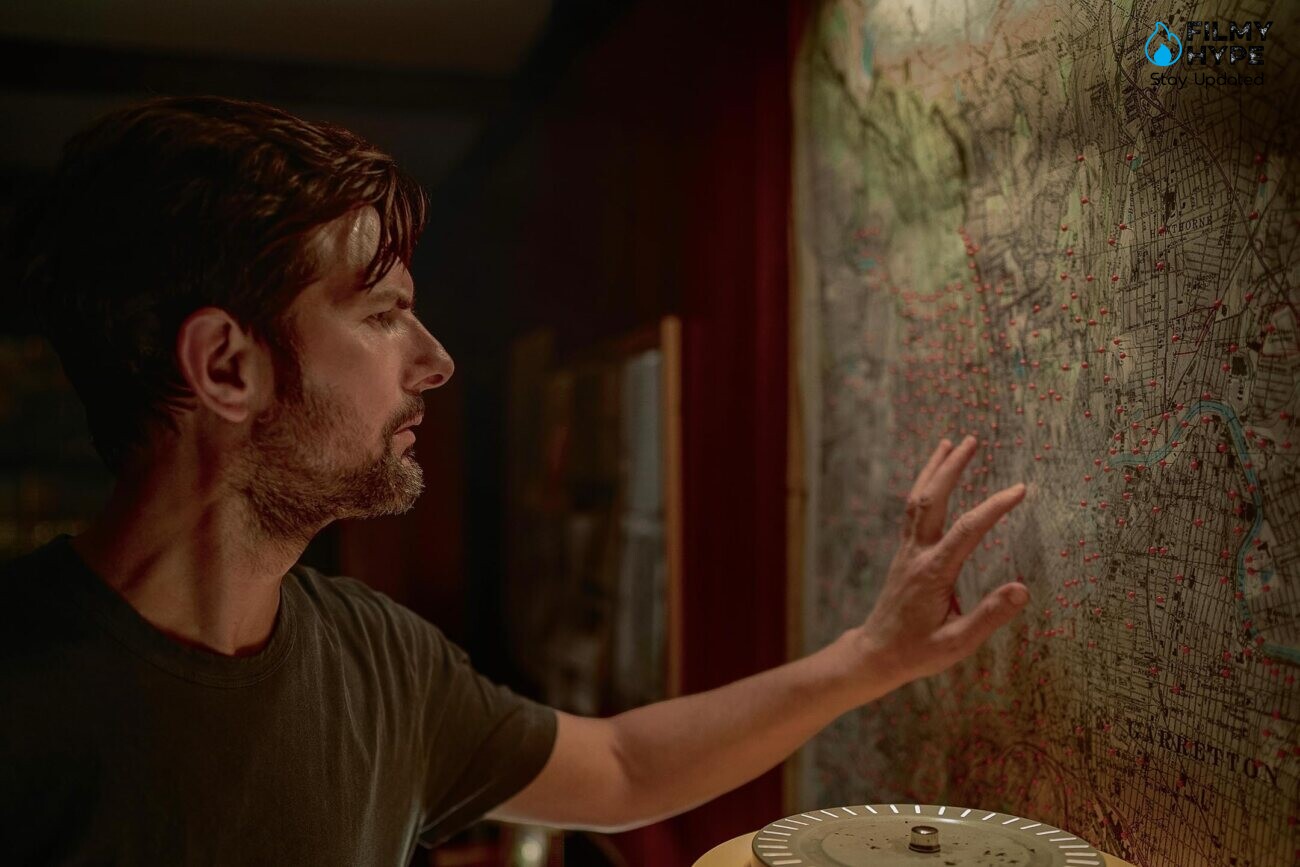
It’s an interesting circular structure: three generations of the same family are progressively drawn into a story that began decades earlier. When The Whisper Man works on this parallelism, it is much more effective than when he simply tries to surprise us. Robert De Niro is inevitably the name that attracts the most attention, but Adam Scott is the real emotional protagonist of The Whisper Man. His Tom doesn’t suddenly become Liam Neeson when his son is kidnapped. Adam Scott works better as a scared father than as a thriller protagonist, while Michelle Monaghan brings energy to the investigation despite a character who deserved more depth.
Michael Keaton, for his part, uses his space to introduce a more eccentric and disturbing note. It is in the second half that the film’s limitations emerge most clearly. Being predictable doesn’t necessarily mean being ineffective: a thriller can suggest its own solution very early and still keep the viewer on edge. In The Whisper Man, however, some developments become intuitable long before the characters manage to connect the clues. As a result, just as the investigation is supposed to accelerate, the suspense paradoxically begins to wane. The relationship between crime and the supernatural also ends up being less daring than it initially promised. Ashcroft continues to litter disturbing images, effectively supported by Colin Stetson’s music, but the script progressively prefers the confidence of the bestselling thriller.
The Whisper Man Film Review: The Last Words
The Whisper Man effectively recovers the old-school serial killer thriller, relying on a suspect-filled investigation and, above all, the troubled relationship between Robert De Niro and Adam Scott. The ending loses some of the solidity of the construction, but James Ashcroft signs a tense, dark, and decidedly gripping film. The Whisper Man remains a film perfectly watchable from the couch at home. It has a good cast, a sufficiently elegant packaging, and some moments capable of generating authentic restlessness. Above all, Ashcroft prevents the nearly two hours from becoming completely inert even when the story slows down.
But beneath the atmosphere remains a thriller constructed from materials we have encountered many times before and often used more effectively. It lacks the moral anguish of Seven, the psychological precision of The Silence of the Lambs, or the unpredictability needed to find its own identity. The result is therefore decent rather than disappointing: a solid streaming thriller that entertains for an evening, but is unlikely to continue whispering in the viewer’s head once the credits roll.