


Resident Evil 2026 Movie Review and Ratings
Cast: Austin Abrams, Zach Cherry, Kali Reis, Paul Walter Hauser, Andrea Miltner, Karel Dobrý, Chris Lew Kum Hoi, Griffin Newman, Emily Piggford, Johnno Wilson, Isla McRae, Sara Paxton, Magdalena Sittova, Zach Cregger
Director: Zach Cregger
Filmyhype.com Ratings: 4/5 (four stars)
After years of zombies, shootouts, explosions, and increasingly spectacular fights, Resident Evil returns to theaters with a film that chooses to change its approach. The new installment, directed by Zach Cregger, director of Barbarian and Weapons, does not attempt to continue the film saga with Milla Jovovich and does not directly adapt one of Capcom’s video games. Instead, he chooses to tell an original story set in the Resident Evil universe, trying above all to recreate on the big screen the typical sensations of survival horror. Zach Cregger’s feature film takes this particular lesson and makes it his own, following its own “way”; however, a vision that transforms a non-innovative story into a sort of experience on the big screen, with references, direct or not, to video games, and a “playful” spirit that tries to make a difference with a trite genre. From the very first announcements relating to this film project, Resident Evil fans.
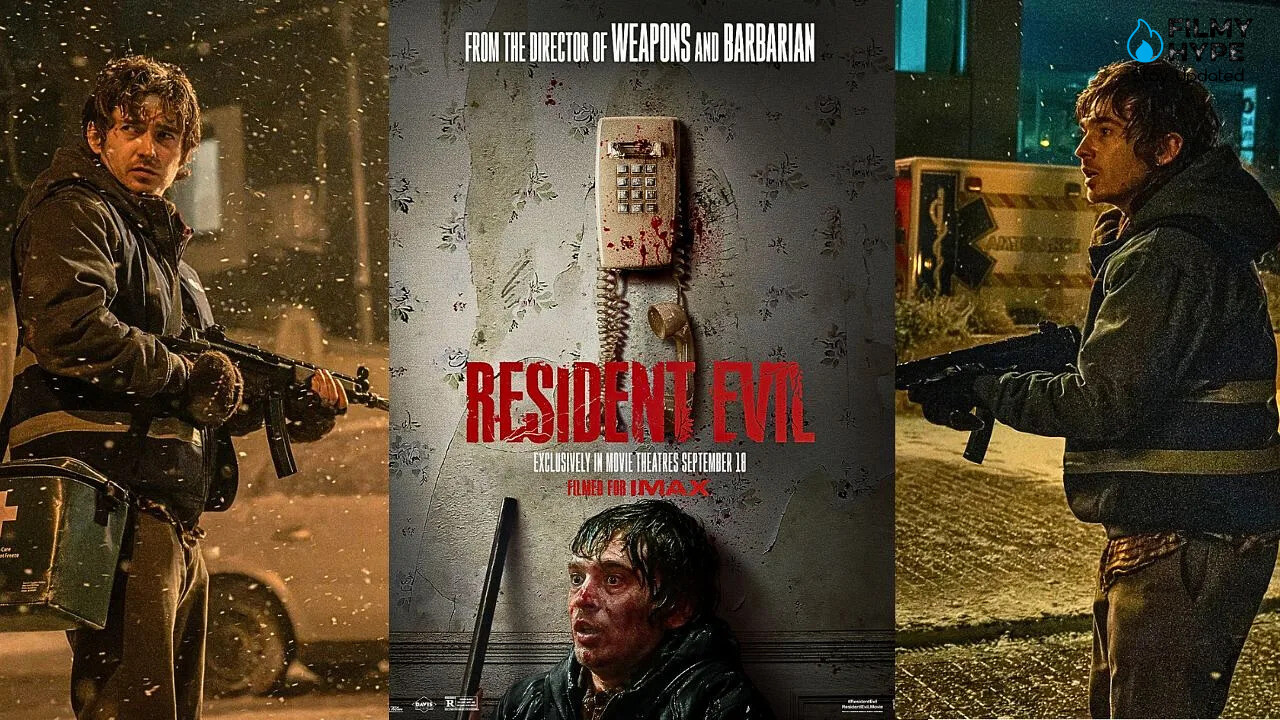
We’ve been waiting so long for it, and it didn’t disappoint: Zach Cregger’s Resident Evil will delight cinephiles, entertain horror fans, and perhaps anger a certain type of fandom. The director and author of works such as Barbarian and the highly regarded Weapons plays with a cult saga whose spirit he fully captures, without, however, re-proposing a faithful adaptation of one of the many titles that compose it. For the record, it should be remembered that over the years this franchise has seen adaptation after adaptation, some more faithful than others, but none ever fully convincing fans, with a seesawing quality and clumsy attempts to make the atmosphere and infected look naturally grotesque. Cregger distances himself from all this, making it his own by offering a personal and authorial, yet absolutely successful, interpretation of the famous Capcom series.
Resident Evil 2026 Movie Review: The Story Plot
For Bryan (Austin Abrams), life has become complicated in the last days. His job as a courier ended on a snowy street at night, in charge of carrying a mysterious urgent package to the hospital in Racoon City. His girlfriend remained in love, not knowing exactly how to approach the situation, but within a few hours she would discover that this was the last of her problems. Without the chain or snow gum, he proceeded to climb the tentacles until he landed in that snowstorm for a minute. Why did I come here? How is it possible that he did not die from the shot? Bryan could not have imagined that this would be just the beginning of a terrifying nocturnal odyssey. A mysterious virus has escaped the control of a group of scientists, and the very pack it’s carrying could be the key to solving everything. I took him to the hospital; it was like a world of horror waiting for him.

“Resident Evil” is written and directed by Zach Cregger (the creator of that jewel of “Weapons” and of “Barbarian”), making things clear at once: the saga of Capcom, which does not live here, if not as a marginal source of inspiration, then as a point of departure. Follia? No, the only real possibility is not to go to the bottom. It was 2002 when Milla Jovovich and her husband Paul W. S. Anderson took her to the cinema for the first time. That version of “Resident Evil” was a great success, started a new saga, but gradually got worse and worse, becoming a cult. Then, five years later, Johannes Roberts tried to put everything back in order, creating a reboot that took inspiration in the same faithful way from the first two chapters of the video games, not recovering the characters, the environments, the plot, the mythical Umbrella Corporation, obviously.
But “Resident Evil: Welcome to Raccoon City” was a disaster of criticism and incarceration, and it died as a possible saga had already arisen. It is then that Cregger solves the problem by creating new characters, but above all by building a narrative machine with suspense, black humor, and the recovery of the classics of body horror, and they unite in a terrifying embrace, gradual and that does not lose the step. All this in a Prague riadatta, another perfect proof of the soul of the film of the series B that Cregger claims from the beginning all the way, avoiding the Hollywoodian heroism and, above all, acknowledging the great masters of the genre, which the new generations may know.
Resident Evil 2026 Movie Review and Analysis
The B-movie per se is clear, and the $75 million budget is so much money, but Cregger gets to cite not only the diverse moments and elements of the video game saga, but also goes on a tangent and becomes an homage to vintage impudence. Then let’s start paying homage to John Carpenter, David Cronenberg, Yuzna, Ridley Scott, M. Night Shyamalan, and George A. Romero. The special effects are very convincing, dosed with care, especially in the way Cregger leaves the imagination: the illusion created by a galloping darkness, and when instead it is splatter, flat, but even dramatic. These are at least two or three sequences that speak to the heart, but which, however, are not allegorical in reality so much, giving all of them together often a dramatic tone typical of the more canonical survival. I think Austin Abrams is bringing everything to his binary black comedy.
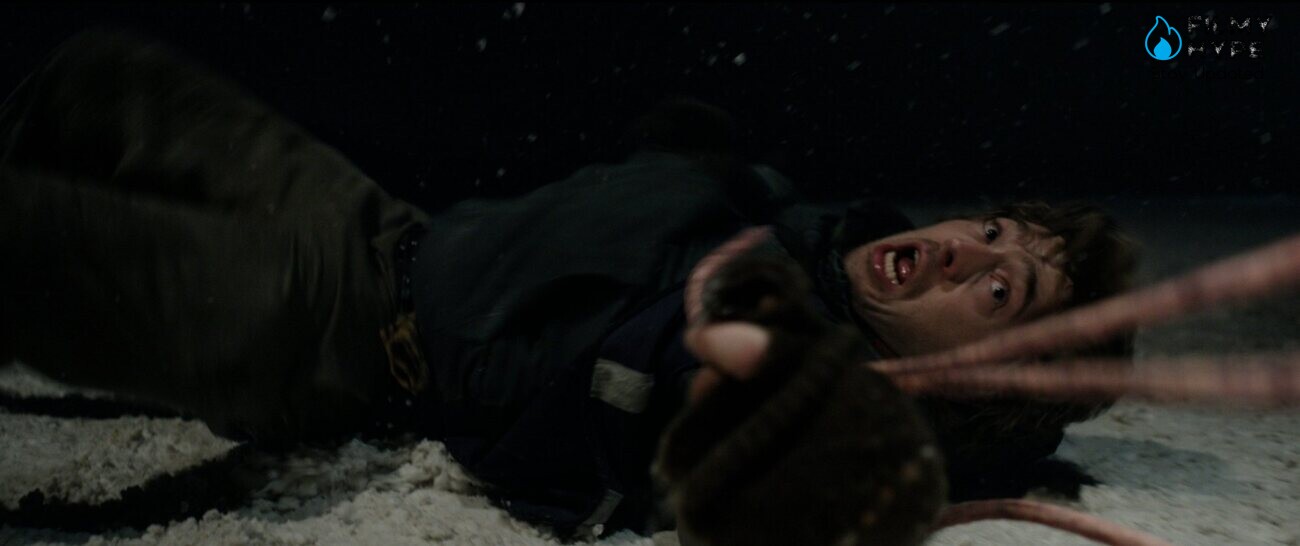
A true honor, it is the greatest prize and ultimately the greatest flaw of “Resident Evil”. This is because the bench neutralizes all possible rhombism, carrying with it a dose of idiocy and ineptness to which Cregger gives a little more of a cord, risking a volte of derailment towards a component almost Chaplinian. “Resident Evil” has a finale that is full and cynically pungent, leaving the road open to an eventual sequel coming to light, that could finally shine a spotlight on a saga that paradoxically needs to be modified to live on the big screen. We will come again, but now the reviews are enthusiastic; the film is very much liked, confirming the resurgence of horror as a great popular genre, in this year in which it has assisted a huge metamorphosis of the industry and the public.
“The Substance”, “Longlegs”, “Obsession”, the new chapters of the “28 Days Later” saga, and “Backrooms” were a triumph. It was given both a ridiculously low budget (considering the quality of this film is an exception) and a promise of freedom, creativity, and genuineness that other genres of recent years had not guaranteed. However, don’t forget how much the marketing budget is; instead of being much more considerable, the campaign went viral on social media and everything else. “Resident Evil” could, in this, represent a leap in the quality of production, the desire to make horror part of the new renaissance of the blockbuster on a wide spectrum, with which Hollywood has managed to respond to the offensive of the small screen.
The difference from previous films in the saga is evident. The series started in 2002 with Paul W. S. Anderson and gradually abandoned the survival horror dimension of video games to become an increasingly spectacular action movie, with Alice (Milla Jovovich) at the center of the story. Resident Evil: Welcome to Raccoon City, in 2021, had instead attempted to recover more characters, settings and situations from the first video games. Cregger’s film chooses a third path. There is no Alice, Leon Kennedy, or Claire Redfield, and no specific chapter of the video game series is adapted. The protagonist is a completely new character, and the story is autonomous.
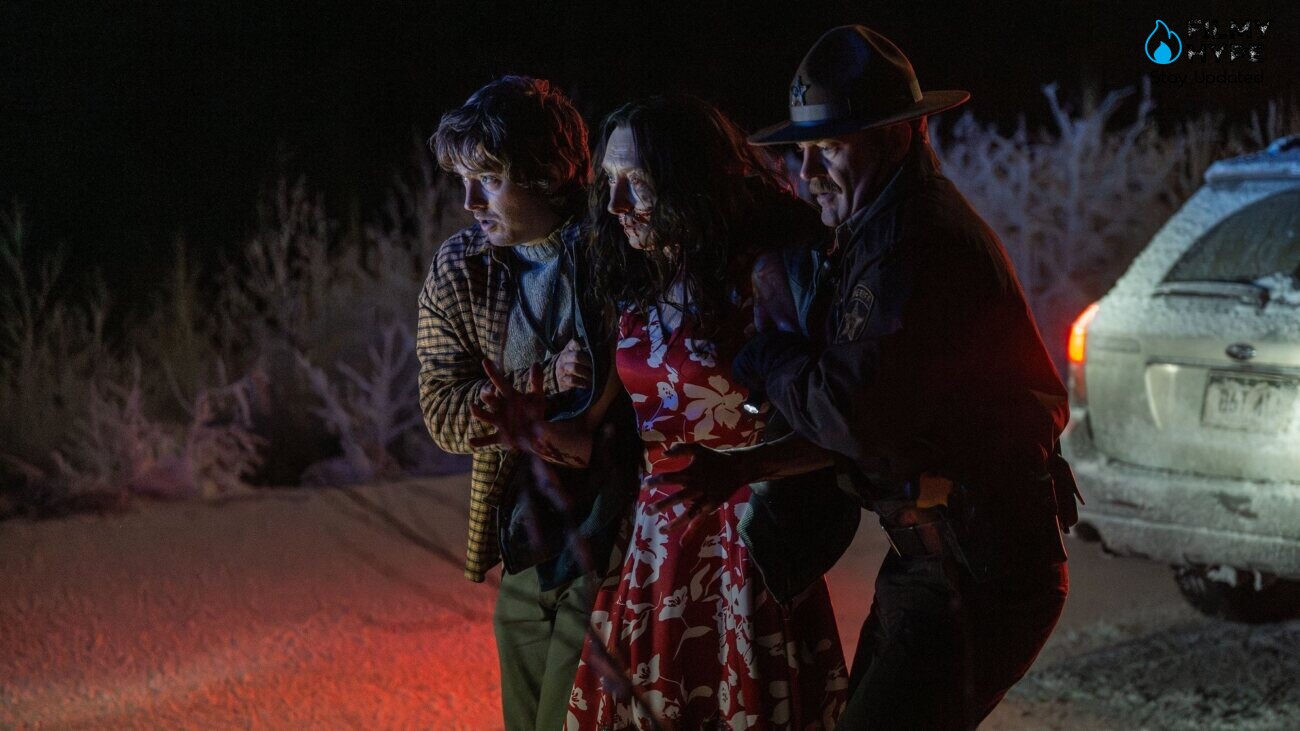
This does not mean, however, that the connection with video games has been abandoned. On the contrary, the film seems primarily interested in recreating its structure: Bryan must reach certain places, find resources, face increasingly dangerous creatures, and progressively understand the rules of a world he doesn’t know. Rather than telling a video game, Cregger therefore tries to make the viewer experience playing it. References to the saga are present, from the Umbrella Corporation to the recognizable creatures and elements of the Capcom universe, but they do not become the main reason for the operation. It’s a choice that allows the film to work even for those who don’t know video games in depth.
The true identity of the film comes from the direction of Zach Cregger. After Barbarian and Weapons, the director confirms that he has a particular ability to play with the codes of horror, alternating tension, violence, and grotesque moments. Dariusz Wolski’s photography contributes to this result through dark settings, cold lights, and numerous enclosed spaces, where darkness becomes an integral part of suspense. The film thus manages to build a dirty and disturbing atmosphere without sacrificing a spectacular dimension, especially when the creatures enter the scene.
And the monsters themselves represent one of the most successful components of the film. Zombies are just the beginning: the story progressively introduces mutations and increasingly grotesque creatures, moving the horror towards the monster movie and accompanying the whole thing with a good dose of gore. What is surprising, however, is above all the comic side. Resident Evil is not a horror comedy, but Cregger often uses humor to break up tension, especially through Bryan’s reactions. The protagonist is not a super soldier and does not know how to deal with what is happening to him: he is afraid, makes mistakes, and often reacts to situations with disbelief. The jokes thus become an integral part of the character and, in most cases, do not compromise the horror atmosphere. It’s a balance that isn’t always obvious, but which allows the film to have a very different personality from previous installments.
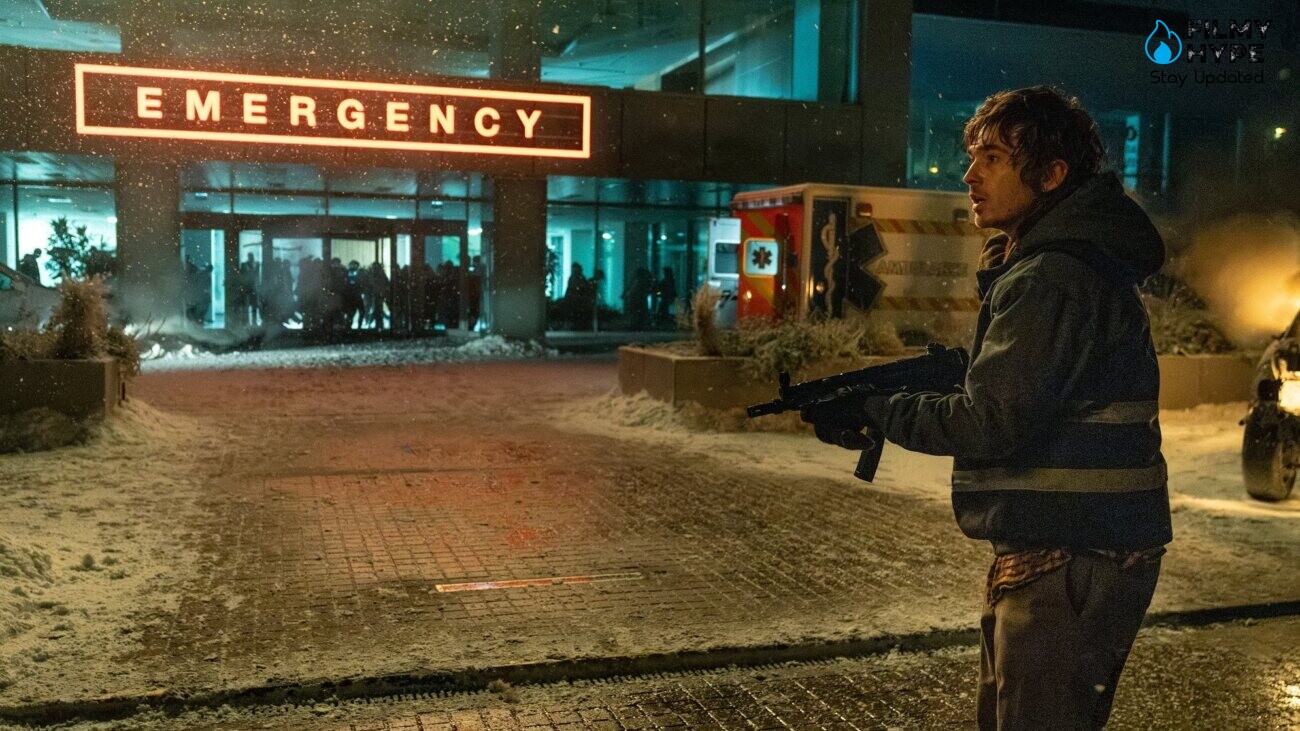
Austin Abrams is the one who mainly supports the film. His Bryan is far from the traditional heroes of the saga: he is an ordinary person who has ended up in an extraordinary situation. Abrams manages to make this vulnerability believable without turning the character into a caricature. Bryan runs, misses, improvises, and just tries to stay alive. His journey consists above all of the transition from a completely unprepared person to a survivor, and it is precisely this that makes him an effective protagonist. The cast also includes Zach Cherry, Kali Reis, Paul Walter Hauser, and Johnno Wilson. The secondary characters help make the story more lively, although not everyone has the same space to be truly explored. It is also a consequence of the film’s running time, which is around 90 minutes and prioritizes pace over more complex character development.
The limited duration is at the same time one of the strengths and limitations of Resident Evil. The film moves quickly, and there are not many dead moments. Cregger constantly keeps the story moving, moving from one situation to another without burdening the narrative with superfluous explanations. On the other hand, precisely this speed leaves the feeling that some ideas could have been developed more. Bryan’s personal journey remains fairly straightforward, and in the final part the film tends to accelerate, resolving some elements more quickly than it did in the first half.
It’s not a problem that compromises the overall experience, however: Resident Evil seems aware that it wants to be above all a compact, funny, and adrenaline-fueled horror film, rather than a work interested in constructing a complex mythology. It’s a new beginning that focuses on horror and irony to distinguish itself from previous films in the saga. It’s not perfect and would have benefited from more space to develop characters and the ending, but Zach Cregger manages to give Resident Evil a new identity without forgetting its spirit.

Resident Evil does not draw directly from the world of video games from which it takes its name, but nevertheless preserves it in all its underlying, more playful and exploratory spirit. Cregger manages to take one of the most obvious contexts that exist in cinema, a world into which people transform due to some infection, and reworks the narrative reasons precisely thanks to the cinematic medium and a precise vision of things. It is very easy to come into contact with Bryan because he is identical to all of us and moves and behaves exactly as a normal person would, in the context in which he is projected in Resident Evil. Thus, all the most action and terror moments are continually translated and transformed by this particular filter that alternates the grotesque with moments of profound anguish and disturbance.
The ruined world and the protagonist’s goal fuel the feature film’s identity. The intrinsic meaning of this new cinematic Resident Evil unfolds in a game of subtraction in the narrative, in favor of an immersion that transports you directly both to the protagonist’s side and into his own shoes, thanks to a direction that is always dynamic and moving. Some directorial ideas give substance and form to Resident Evil. The film’s strongest moments, therefore, pass through the same scenic construction. This impacts very strongly at certain specific moments, and continually breaks the flow of a story in which it is easy to even glimpse quotes and references to the video games themselves.
The entire credibility of the story, then, rests on the performance of an Austin Abrams who is totally at ease in a sui generis part. He is the one who dictates the “reason” of the film, in narrative terms, managing to remain consistent with the development of the story. The fact that he is almost always alone manages to bring out the value of an actor who takes on a very human protagonist, and continually transposes his limits and difficulties, without making a mess. Of course, Resident Evil is in no way relevant to the more action-oriented spirit typical of video games, and perhaps for this very reason it manages to surprise and entertain from start to finish.

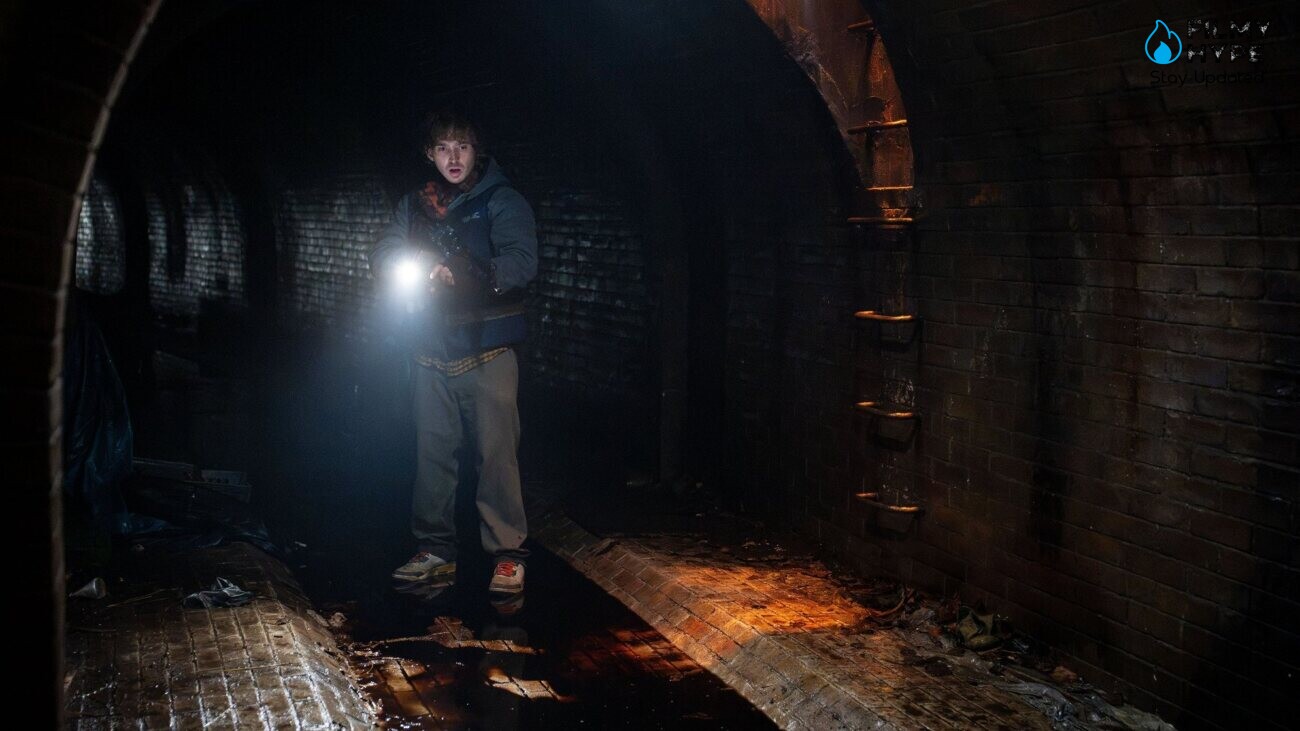
Zach Cregger chooses to entrust the film’s main events to one person, like many others, stripping the entire on-screen adventure of any epic elements. The director also plays with the same survival genre, offering a journey with a rather unexpected and curious tone. What remains with you while watching Resident Evil is a whole series of sensations that the most passionate gamers know very well. In this very way, Cregger’s film manages to be interesting, connecting in its own way with video games, without having a real direct relationship with them. The choice not to transpose anything from the original canon relies entirely on the experience of a film that thrives on atmosphere. Those same sensations you can feel, pad in hand, when you launch into one of the Capcom-branded chapters and look for the courage to move forward, open the next door or lock, or cross a flight of stairs, while we check the assets we have with us in inventory.
Resident Evil 2026 Movie Review: The Last Words
The new Resident Evil has the merit of not simply trying to repeat what has already been done. After Paul WS Anderson’s long action saga and the attempt to reconnect with the video games of Welcome to Raccoon City, Zach Cregger chooses to build something new. The result is a horror that manages to be violent, grotesque, and funny without completely losing tension. The direction, the photography, the creatures, and especially Austin Abrams contribute to giving him a precise personality, while the narrative structure recalls video games without turning into a simple collection of quotes. Bryan is not Alice, he is not Leon, and he is not a superhero. He is simply a man who finds himself in the wrong place and must learn, along the way, how to survive. It’s a simple yet effective perspective and is probably the most interesting new development in this new chapter.