


Primetime 2026 Movie Review and Ratings
Cast: Robert Pattinson, Merritt Wever, Anna Faris, Skyler Gisondo, Bokeem Woodbine, Tony Revolori, Matthew Maher, Sean Bridgers, Phoebe Bridgers, Jessica Blackmore, Lacey Dover, Rob Eubanks, Bob Ari, Creed Bratton, Jonathan Lipnicki, Alex Winter, Caroline Hebert
Director: Lance Oppenheim
Where We Watched: At Venice Film Festival 2026
Filmyhype.com Ratings: 3.5/5 (three and a half stars)
Primetime movie was supposed to be one of the strongest films at this Venice Film Festival. It was one of the most anticipated. But “Primetime”, with Robert Pattinson, was a bit of a disappointment. Behind the camera is Lance Oppenheimer (“The Whale”), and in front is the “villain” from Christopher Nolan’s Odyssey, who plays the American host and journalist Chris Hansen with great talent. “I wasn’t supposed to be the protagonist but only the producer of the film – explained Robert Pattinson during the press conference in Venice. But I grew fond of the character while studying him”. Why were we all waiting for this movie? Because it brings a piece of American television history to the big screen: the program “To Catch a Predator”, a revolutionary format that aired from 2004 to 2007 on NBC. The show featured a television crew led by Chris Hansen working with law enforcement to arrest, on camera, men accused of grooming minors online. Hansen thus became one of the most recognizable faces on American television.
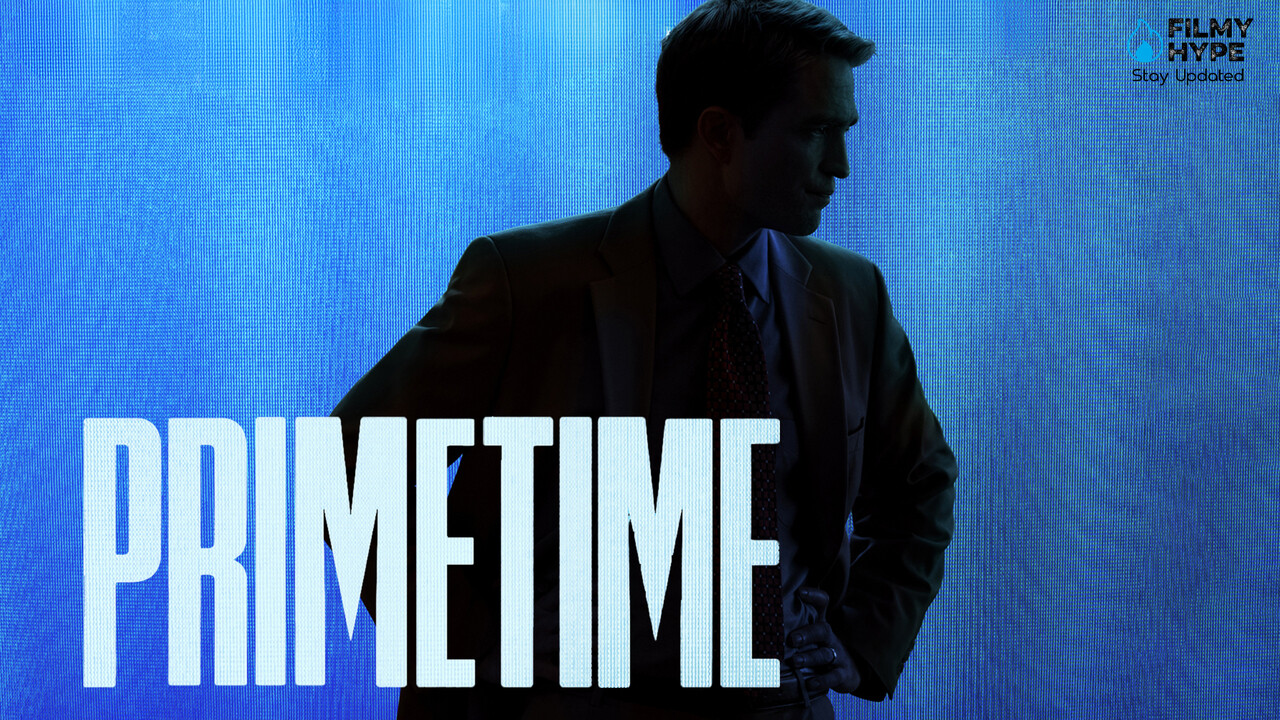
We write it at the beginning: it took Lance Oppenheim, a boy born in 1996, in his first feature-length fiction film (after many documentaries), to save the independent A24 studio from a rampant narrative crisis (which was perhaps physiological). Intelligently pleased and electrified, echoing the aura of a protagonist who, to call it controversial, is nothing short of controversial, Primetime draws inspiration from the Safdie Brothers’ cinema and, despite Oppenheim, who was just ten years old at the time, manages to fully translate the aesthetics, vibrations, and visual language of the beginning of the millennium. Moreover, behind the (re)staged true story, Oppenheim does not hide a significant cinematic taste that seems to fit perfectly with the profile of Chris Hansen, that cumbersome journalist who, by the director’s admission, recalls “a kind of Tony Montana”. Not to mention, a perfect match for one of the best titles of 2026.
Primetime 2026 Movie Review (Venice 2026): The Story Plot
Taken from Luke Dittrich’s Tonight on Dateline This Man Will Die article, with a screenplay by Ajon Singh, Primetime takes us within an inch of sexual predators. It’s 2006, as the war on terror rages and the news is looping images of Saddam; Chris Hansen (Robert Pattinson), who is introduced into the film as if he were some sort of cynical and unscrupulous hero, is making television history: he is behind To Catch a Predator, an NBC format designed to capture and reveal pedophiles who lure minors via chat.
The pattern is always the same: a man arrives, intercoms, is let into the house. He thinks he has a date with a little boy or girl. The “baits,” as the ruthless producer (Merritt Wever) calls them. On the table are biscuits, spicy salami pizza, high-calorie sweetened tea. Then, from the shadows, Hansen appears. Elegant, triumphant, stern look and decisive tone. “Why don’t you sit down?” says Chris. Showtime, the show is served: the predator becomes prey, the decoys leave the scene (Skyler Gisondo and Phoebe Bridgers) the media process has begun. But when a big fish bites the hook, things go badly for Hansen.
Primetime 2026 Movie Review and Analysis
At the heart of it all is, of course, Robert Pattinson. His Chris Hansen is a man who gradually discovers how seductive it is to be not only the journalist who tells a story, but the protagonist of that story himself. The goal is no longer simply to expose men intent on having sex with minors: it’s to win over audiences, get the prime-time slot, find an increasingly important case, and turn To Catch a Predator into something no one can ignore. Pattinson does a remarkable job once again. He takes on mannerisms, posture, and above all the characteristic tone of voice of the real Hansen without limiting himself to building an imitation of him, confirming himself as one of the most versatile actors of his generation. It’s perfectly believable as much when Hansen checks the situation on camera as when that security slowly begins to crumble.
However, it is the character written around his interpretation that does not always find an equally precise dimension. Oppenheim constantly keeps him on the line between the pathetic and the charismatic, between the journalist convinced of the legitimacy of his mission and the man devoured by the need to be recognized. An ambiguity that is certainly intentional, but which does not always manage to transform into complexity. Hansen is at times suspended between these two identities without the film really being able to decide how close it wants to get to him and how much it wants to observe him with cynical detachment.
Primetime is much more effective when it widens its gaze to the television machine surrounding Hansen. Oppenheim comes from the documentary and consciously uses the language of reality TV and American news in the early 2000s, constructing a film that seems continually contaminated by the material he is telling. Daniel Garber’s editing is frenetic, nervous, capable of conveying the feeling of a production constantly searching for the next moment, the next encounter, the result that can surpass the one just achieved. It is one of the elements that keep you most glued to the screen during the 110 minutes of the film and which effectively conveys the progressive transformation of the investigation into a television product.
The supporting cast also works very well, starting with Merritt Wever as the producer who accompanies Hansen on his rise. An apparatus is gradually being built around him in which personal ambitions, editorial needs, listening and moral convictions become increasingly difficult to distinguish. The problem is therefore not just a man who wants to become famous: it concerns a system that needs to transform each new operation into something bigger than the previous one. And that’s probably the most lucid part of the film. The first evening evoked by the title becomes the true object of desire: it is not only important to do something that has value, but to do something that is watched.
This is precisely where, however, Primetime’s most important limitation emerges. Oppenheim chooses a deliberately grotesque tone that runs through virtually the entire film and allows him to construct a cynical portrait of the television world. But when at the center of the story are men trying to sexually meet minors, that same choice becomes much more problematic. The film clearly seeks to challenge the methods of To Catch a Predator: the construction of traps, the presence of cameras, the increasingly invasive collaboration with law enforcement, and above all, the progressive shift in focus from reporting to show production. It is a legitimate and potentially very interesting reflection. But in the finale, the balance shifts to the point that the main moral target seems to become Hansen himself, rather than the man at the center of the latest operation.
The story the film is inspired by makes it inevitable to question the limits of that machine. In 2006, during an operation in Texas, Deputy District Attorney Louis Conradt committed suicide while police and crew were outside his home. The case caused enormous controversy and contributed to the subsequent cancellation of the program. Primetime uses that episode as the culmination of the drift it is telling, but the choice to keep everything within the same grotesque register makes the speech less incisive than it could be. Because it’s one thing to wonder how far journalism can go when the search for truth is tainted by the search for audience. Another is to construct a reversal in which the man hunting the harassers risks appearing more morally compromised than the men he is trying to expose. The film aims to show how even a seemingly unassailable cause can be corrupted by ambition and fame, but in doing so it ends up blurring too much the difference between the original problem and the questionable way chosen to address it.
The same problem arises when Primetime tries to delve deeper into the private dimension of its protagonist. Hansen’s professional success runs parallel to the disintegration of his personal life, until the possibility of a newspaper publishing a story about his betrayal of his wife contributes to his collapse. Even here, however, the script remains too nuanced. The relationship between the public image of the man pillorying the faults of others and the fear of suddenly seeing his own exposed could have represented one of the most interesting short circuits in the film. Instead, it remains a less developed element than it should be, used mainly to accompany the protagonist’s breakdown.
And above all, it is a shame to see Anna Faris essentially relegated to the role of wife and hearth angel. In a film so interested in the distance between what Hansen shows in front of the cameras and what happens when they go off, his perspective could have offered a much more meaningful look at the man behind the television character. The idea behind Primetime is crystal clear: to construct a cynical portrait of American television and the point where the desire to tell something important is consumed by the need to gain fame, ratings, and an increasingly prestigious slot in the schedule. Hansen wants prime time because prime time means he’s made it. But once you reach it, you immediately need something even bigger.
Oppenheim himself called To Catch a Predator a “show of punishment”, born at the moment when moral outrage became television not to be missed. And it’s an insight that Primetime often manages to translate very well into images: the preparation of the houses, the bait, the cameras, the arrival of the men, and finally Hansen entering the scene progressively transform justice into a performance. It is when he has to determine what to do with this insight that the film becomes less convincing. Everything remains deliberately ambiguous, grotesque, and morally dirty, but so much ambiguity ends up producing the opposite effect to that desired. Instead of making the speech more complex, it makes it at times less incisive.
That leaves Robert Pattinson, once again extraordinarily willing to deform himself within a character. His Hansen is vain, insecure, charming, unpleasant, and progressively consumed by the need to be seen. It’s a performance built on detail, from mannerisms to voice, and probably the element that more than any other allows Primetime to work even when the writing fails to resolve its contradictions. Lance Oppenheim thus makes a formally confident, fast-paced, and often highly engaging fictional debut, but less lucid when he has to fully address the moral implications of the story he has chosen. Primetime wants to tell the story of what happens when even the fight against something indefensible becomes a tool for fame. That’s an interesting question. However, the doubt remains that, in telling the story of the degeneration of the television show, the film, in turn, ends up losing sight of the story that would have been truly important to tell.
Halfway between documentary and fiction and therefore a bit chaotic in its intentions, this film has some positive aspects, such as the performances of Robert Pattinson and Skyler Gisondo and the choice to bring the story of Chris Hansen and his revolutionary program to the big screen. But, unfortunately, overall it becomes a collage of less fluid scenes. The film does not delve deeply into the origins of the program, nor does it delve deeply enough into the man, husband, and father behind idol Chris Hansen, whom Pattinson tries to imitate as much as possible in his tone of voice, but to whom the script gives little three-dimensionality. Static, chaotic, and not as provocative as it would like to be, “Primetime” aims to make you think, and in this it is appreciable, but it is not a film destined to remain imprinted. It needed more.
Primetime 2026 Movie Review: The Last Words
Primetime turns the rise of To Catch a Predator into a cynical portrait of American television and its protagonist’s hunger for success. Robert Pattinson is excellent as Chris Hansen, and Lance Oppenheim builds a fast-paced, formally confident film, but the grotesque tone and extreme moral ambiguity ultimately undermine the very delicate discussion of the relationship between justice, spectacle, and the pursuit of fame. Young director Lance Oppenheim, making his debut after many documentaries, creates a powerful film that plays with the Y2K aesthetic to portray the controversial figure of journalist Chris Hansen, played by the great Robert Pattinson. Not only that, there is a deep reflection on the concept of performance at its core. A theme that runs and recurs, and that dominates a society dedicated to success. Whatever the cost.