


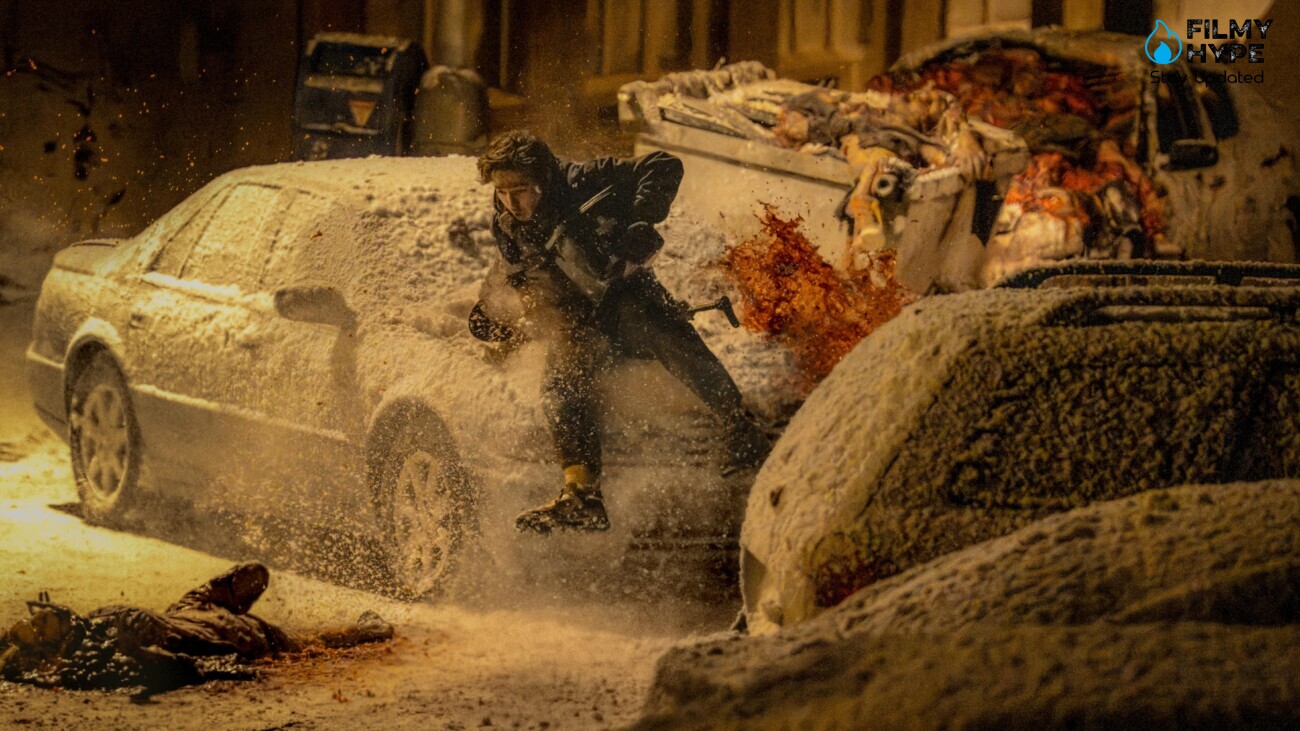
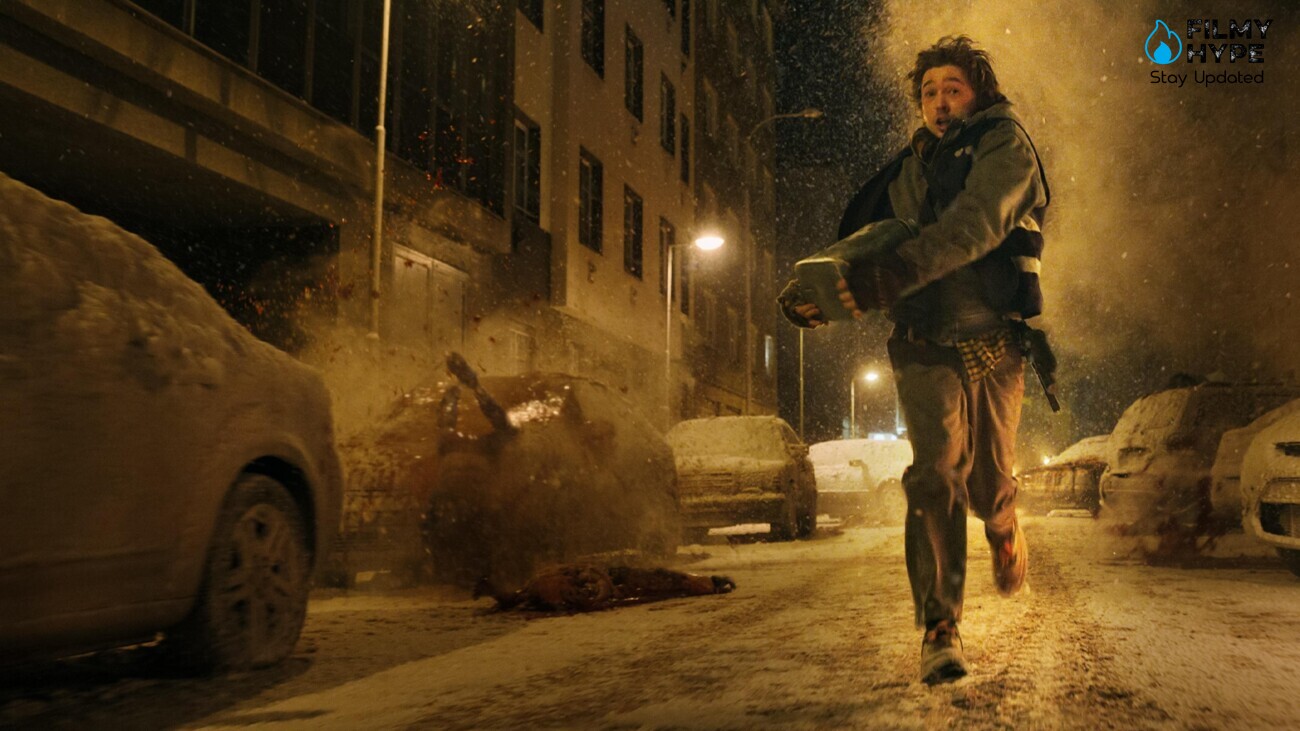
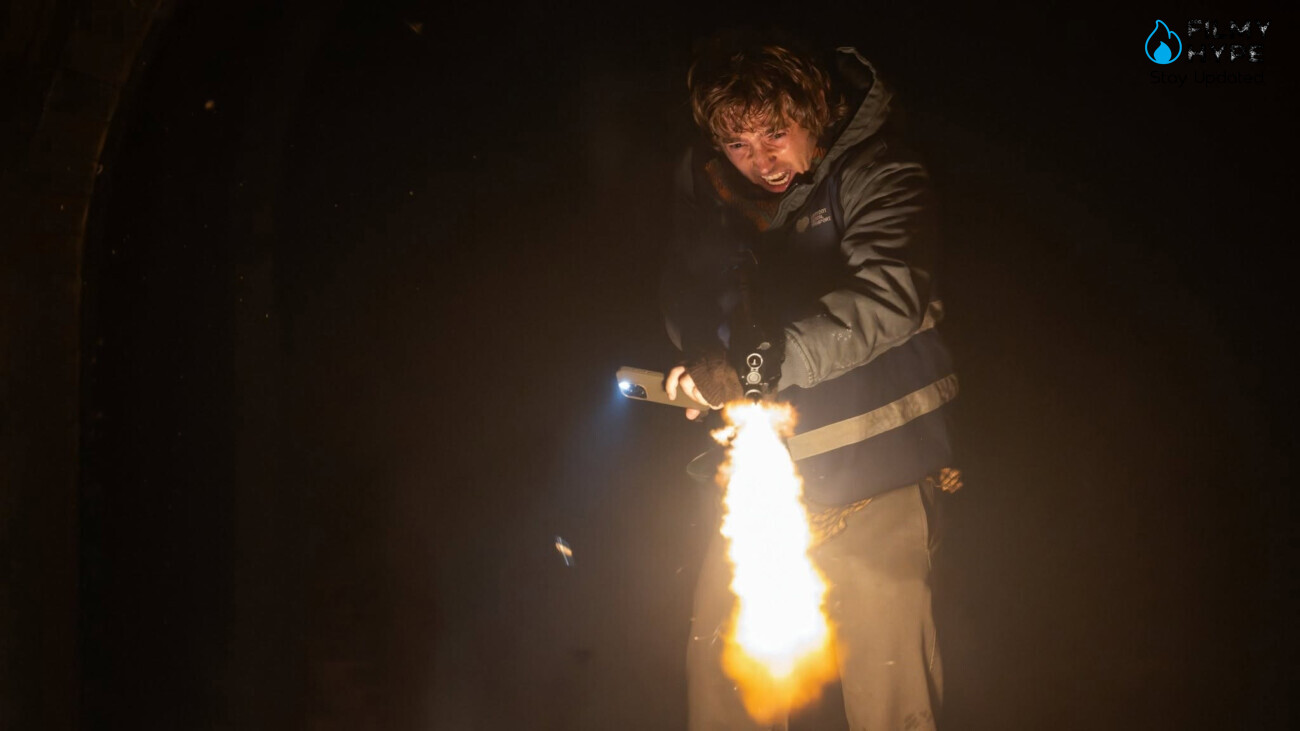
Resident Evil 2026 Trailer: There’s a moment in the new Resident Evil trailer that will tell you everything you need to know about what director Zach Cregger is trying to do. The protagonist, Bryan, played by Austin Abrams, steps into an abandoned house. The lighting is dim, the silence is heavy, and the camera moves with the kind of slow, deliberate dread that makes you certain something is waiting just off frame. Bryan scans the room. He finds a typewriter. A rifle. And then, sitting on a dusty shelf like a promise and a warning at the same time, a green box of ammunition.
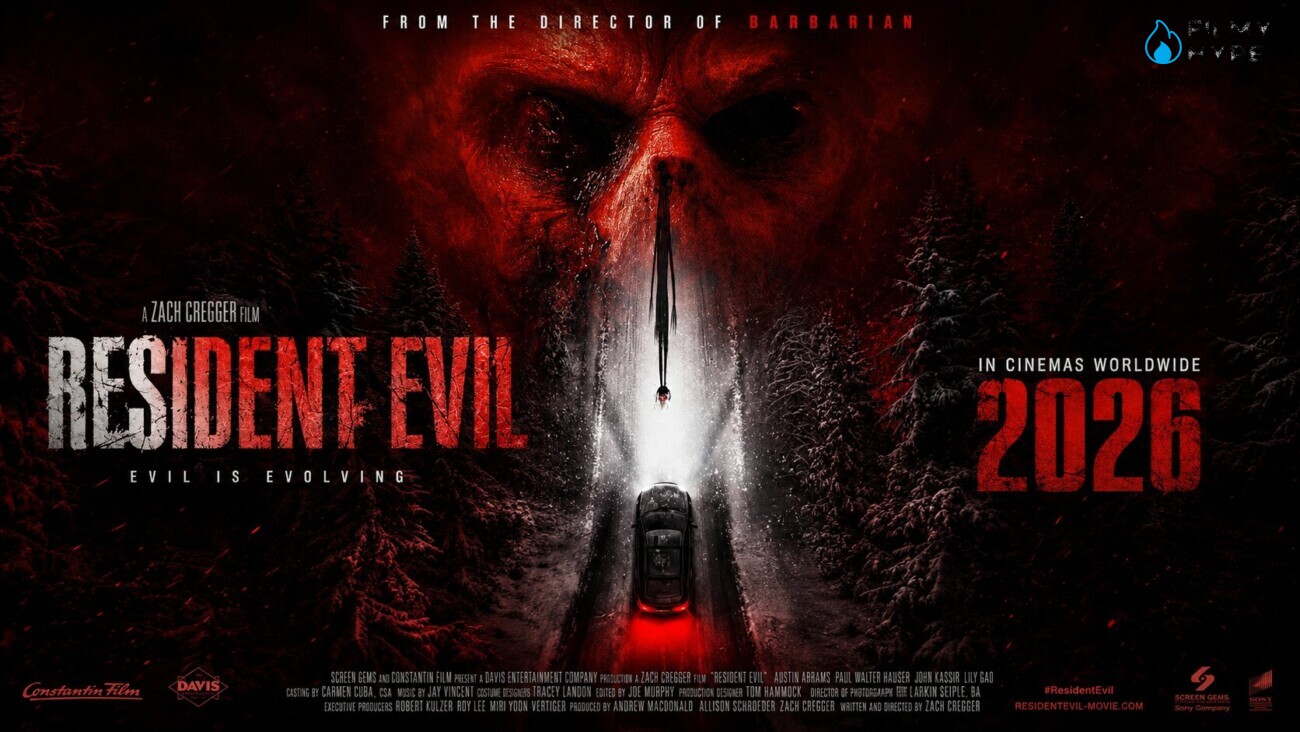
If you’ve ever played a Resident Evil game, you felt your pulse quicken at that green box. It’s not just a prop. It’s a symbol. It’s the thing you find in a save room when you’re low on resources, and you don’t know what’s behind the next door. It’s relief and anxiety bundled together—relief because you have more bullets, anxiety because the game is telling you, without words, that you’re going to need them. Cregger putting that box in the trailer isn’t fan service. It’s a mission statement. This film understands what Resident Evil is supposed to feel like.
Resident Evil 2026 Trailer: A New Story, A New Protagonist
The most significant creative decision Cregger has made is also the most counterintuitive one. There are no legacy characters in this film. No, Leon Kennedy. No, Jill Valentine. No, Chris Redfield. No, Albert Wesker. For a franchise that has spent nearly three decades building an elaborate mythology around its recurring cast, stripping all of them away seems almost perverse.
Cregger’s reasoning is straightforward and, the more you sit with it, difficult to argue against. “It would be unnatural in this self-contained story,” he explained. “I have to put history first. For me, history comes first. The idea is to follow a ‘stupid.’ Not because he’s really stupid, but because he’s not your typical video game protagonist: he has no combat experience and is completely incapable of surviving.”
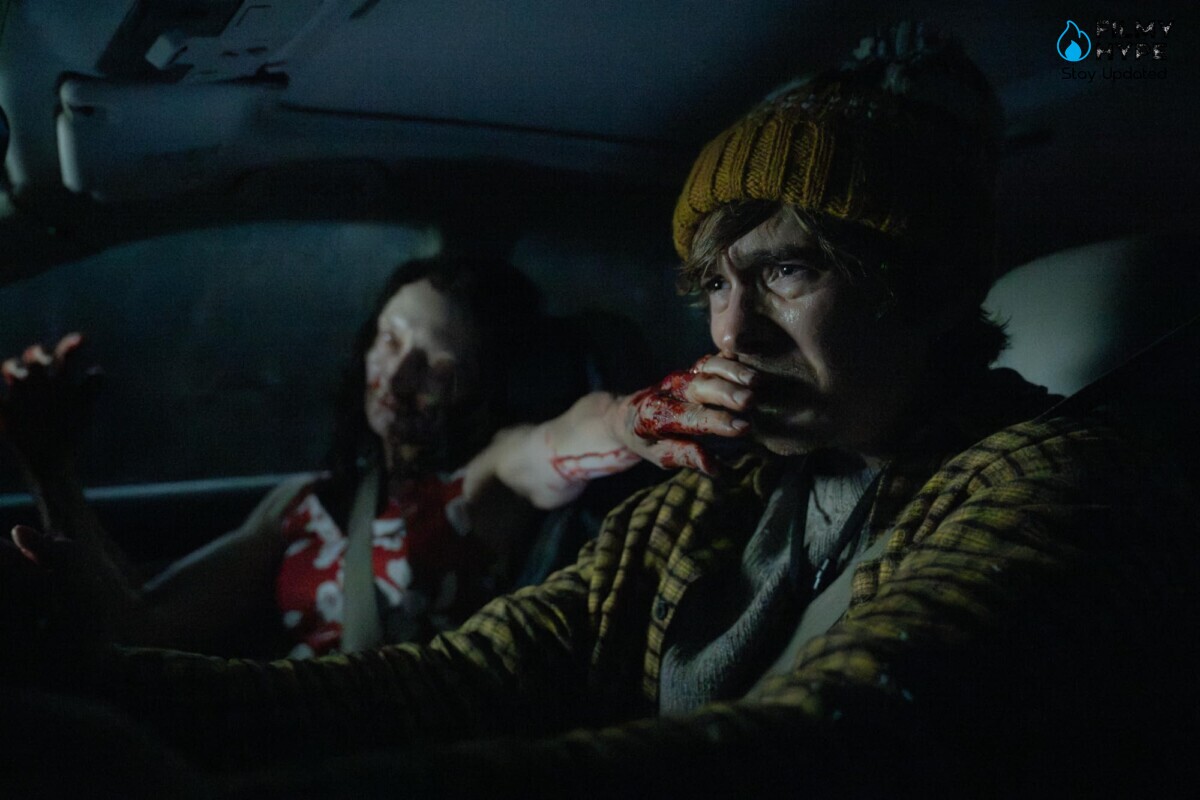
Bryan is an ordinary person. No military training. No special forces background. No mysterious connection to the Umbrella Corporation. He’s just a man who finds himself in a situation that would be overwhelming for anyone, and the film is going to watch him try to figure it out in real time. This is the essence of survival horror as a genre, and it’s the thing that the original 1996 Resident Evil game understood intuitively. The terror doesn’t come from fighting monsters. It comes from being underprepared to fight monsters. It comes from the gap between what you’re facing and what you’re capable of handling.
By centering the film on someone who has no business being in a horror movie, Cregger is returning the franchise to its roots. The mansion in the original Resident Evil was terrifying not because of what was in it, but because of who was walking through it—a rookie cop, a college student, people who were scared and confused and making it up as they went along. Bryan is that energy, updated for a new generation.
The Typewriter and What It Means
The typewriter is the other half of the trailer’s most important image. In the games, typewriters are where you save your progress. They require ink ribbons, a resource you have to manage carefully. The decision to save or to press forward without saving is a constant low-level anxiety, a mechanical representation of the larger question the games are always asking: Are you sure you want to open that door?
Cregger, including a typewriter in the trailer, suggests he understands that Resident Evil is as much about resource management and tension as it is about zombies and bioweapons. The games have always been about scarcity—scarcity of ammunition, of healing items, of safe spaces, of information. The horror emerges from limitation. You can’t shoot your way out of every problem because you don’t have enough bullets. You can’t heal through every mistake because you don’t have enough herbs. Every choice has a cost, and you won’t know if you made the right one until much later.
The previous film adaptations, particularly the Milla Jovovich series, largely abandoned this logic. Alice was an action hero, increasingly superpowered, mowing through enemies with balletic precision. Those films had their pleasures, but they weren’t survival horror. They were action movies with horror aesthetics. Cregger’s trailer suggests he’s building something that operates on a different set of principles entirely.
Learning from Welcome to Raccoon City
The 2021 reboot Resident Evil: Welcome to Raccoon City tried a different approach. It brought back the legacy characters, stuffed the plot with references to the first two games, and attempted to be the faithful adaptation that fans had been requesting for years. It didn’t work. Critics were unimpressed. Audiences were divided. The film’s box office was disappointing enough that the planned sequel never materialized.
The problem, in retrospect, was structural. Resident Evil has almost thirty years of lore. The Umbrella Corporation alone has a backstory that spans multiple games, novels, and spin-offs. Trying to compress that into a two-hour film while also introducing the core cast, establishing the setting, and delivering satisfying horror set pieces was an impossible task. The film ended up feeling like a highlight reel—moments fans recognized, stitched together without the connective tissue that made those moments meaningful in the games.
Cregger’s approach solves this problem by sidestepping it entirely. He’s not trying to adapt the mythology. He’s trying to adapt the experience. The difference is crucial. You don’t need to know who Albert Wesker is to feel the tension of walking through a dark hallway with three bullets left. You don’t need to understand the history of the T-Virus to appreciate the terror of hearing something breathing on the other side of a door. Cregger’s film can exist in the Resident Evil universe without being crushed by the weight of its continuity.
Who Is Zach Cregger?
Cregger’s emergence as a horror director is one of the more unlikely stories in recent Hollywood. He started as a sketch comedian, part of the troupe that created The Whitest Kids U’ Know. His transition to horror came with Barbarian in 2022, a film that began as a rental-property nightmare and spiraled into something genuinely unclassifiable. Barbarian was one of the best-reviewed horror films of its year, and it announced Cregger as a filmmaker who understood that horror works best when the audience has no idea what’s coming next.
His follow-up, Weapons, sparked a studio bidding war before landing at Warner Bros.’ New Line division. Starring Josh Brolin and Julia Garner, the film received strong reviews and grossed approximately $270 million worldwide. Cregger was promised “complete creative freedom” on that project, and the results suggested the trust was well-placed.
His attachment to Resident Evil is the kind of hire that signals a studio is serious about getting a reboot right. This isn’t a director-for-hire who can be pushed around by producers. This is someone who has earned the leverage to make the film he wants to make. And based on the trailer, the film he wants to make prioritizes atmosphere, tension, and the specific texture of video game horror over franchise obligations.
The Cast
Austin Abrams, best known for his work on HBO’s Euphoria and the film Wolves, anchors the film as Bryan. Abrams has a quality that’s essential for this kind of role—he reads as a real person rather than a movie star playing a real person. You believe he’s scared because he looks like someone who would be scared, not someone who’s been training for a fight scene for six months.
Kali Reis, fresh off her acclaimed work in True Detective: Night Country, brings intensity and physical presence to the ensemble. Paul Walter Hauser, who has made a career out of playing men whose surfaces don’t match their depths, takes on an undisclosed role. Zach Cherry, from the Apple TV+ series Severance, rounds out the main cast.
Cregger co-wrote the screenplay with Shay Hatten, whose work on the John Wick franchise and Zack Snyder’s Rebel Moon suggests someone comfortable with action mechanics. The combination of Cregger’s horror instincts and Hatten’s action fluency could produce something that feels both grounded and propulsive.
The Production
Constantin Film, which has held the Resident Evil film rights since the beginning and produced all six Milla Jovovich films as well as Welcome to Raccoon City, co-finances the project. Robert Kulzer, a veteran of the franchise, produces alongside Roy Lee and Miri Yoon. PlayStation Productions is also involved, a detail that signals how seriously Sony is taking the integration of its gaming and film divisions.
Sony Pictures, through Columbia Pictures, is distributing. Sanford Panitch, president of Sony Pictures Motion Picture Group, has called Cregger “one of the most promising directors working today,” and the studio’s willingness to let him pursue an original story within the Resident Evil universe suggests a level of trust that hasn’t always been extended to directors working on video game adaptations.
The franchise’s track record makes the stakes clear. The Jovovich films grossed over $1.2 billion globally, making Resident Evil one of the most commercially successful video game adaptations in history. But the critical reception was always mixed, and the creative distance between the films and the games grew wider with each installment. Welcome to Raccoon City, tried to close that gap and stumbled. Cregger’s film is an attempt to try a completely different approach, not closer to the games in terms of plot and characters, but closer to the games in terms of feeling.
The Release Date
Resident Evil is scheduled to hit theaters on September 18, 2026. The late September date positions the film as a bridge between summer blockbuster season and the Halloween horror window, which suggests Sony sees it as a hybrid—a horror film with enough action and brand recognition to play broadly.
The trailer has done its job. The green ammunition box, the typewriter, the lone figure in a dark house with no special skills and no backup—these images have sparked a conversation among fans who have been waiting a long time for a Resident Evil film that captures what it actually feels like to play the games. Whether Cregger can sustain that feeling across a full feature remains to be seen. But for the first time in a while, the anticipation around a Resident Evil movie isn’t just about whether it’ll be better than the last one. It’s about whether someone has finally figured out how to translate the specific, sweaty-palmed terror of survival horror from a controller to a screen. The typewriter is waiting. The green box is on the shelf. All that’s left is to see what happens when Bryan picks up the rifle and opens the door.