I need to talk about this theory because it’s been rattling around in my head since the Avengers: Doomsday trailer dropped, and judging by the state of Marvel Twitter and Reddit, I’m not alone. The trailer gives us Steve Rogers in its final seconds—Chris Evans, back in the MCU, walking into frame with long hair and an expression that doesn’t quite sit right. And the internet has done what the internet does: it has looked at those few seconds of footage, squinted hard, and come up with something genuinely unsettling.
What if that’s not our Steve?
What if the man walking toward the Avengers in that trailer is Captain America of Hydra, and his reappearance isn’t a triumphant return but a trap?
I know how that sounds. “Evil version of beloved hero infiltrates the team” is the kind of comic book plot that could easily tip into absurdity. But the more you dig into the evidence—from the comics source material to the specific details of the trailer to the broader direction the Multiverse Saga seems to be heading—the more this theory starts to feel less like fan paranoia and more like actual foreshadowing.
The Disturbing Theory About Steve Rogers’ Return in Avengers: Doomsday: What the Trailer Actually Shows
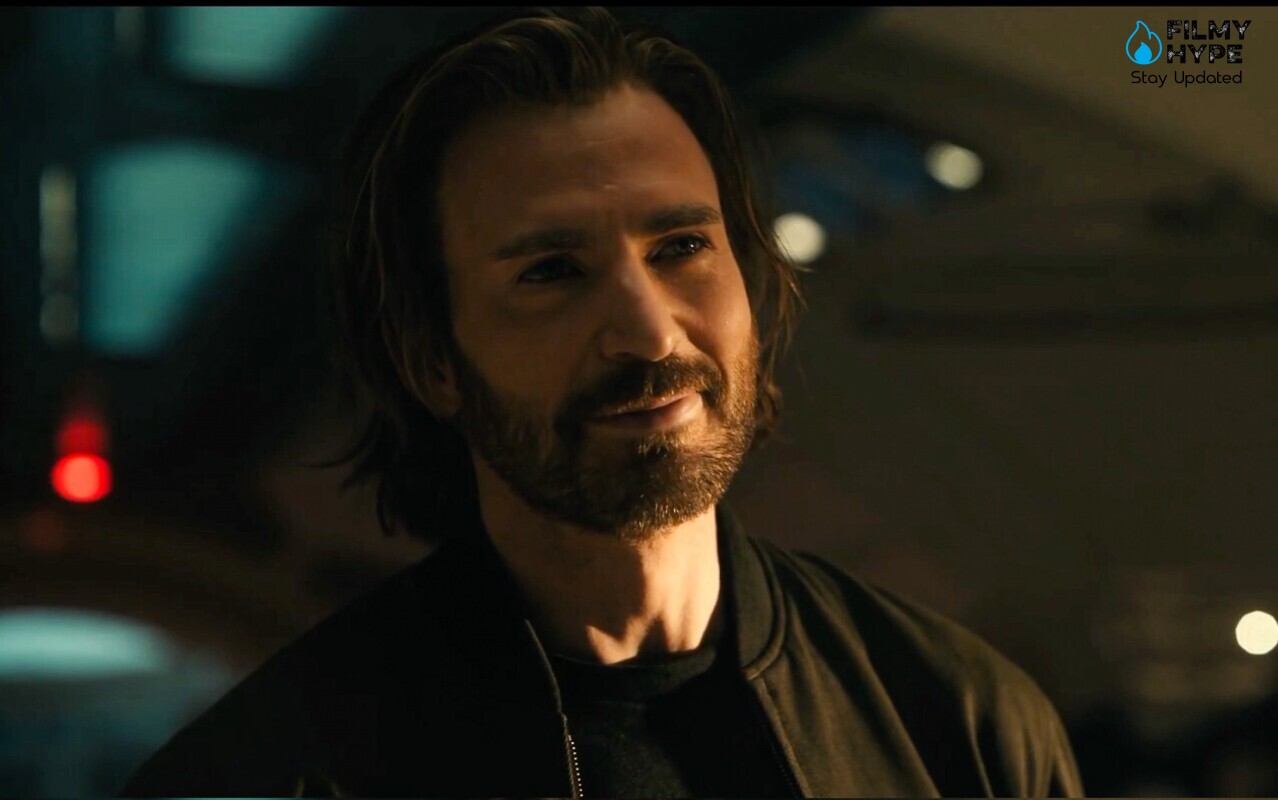
Let’s establish what we’re working with. Steve Rogers appears only at the very end of the first Doomsday trailer, and his screen time amounts to maybe five or six seconds. But those seconds are doing a lot of work.
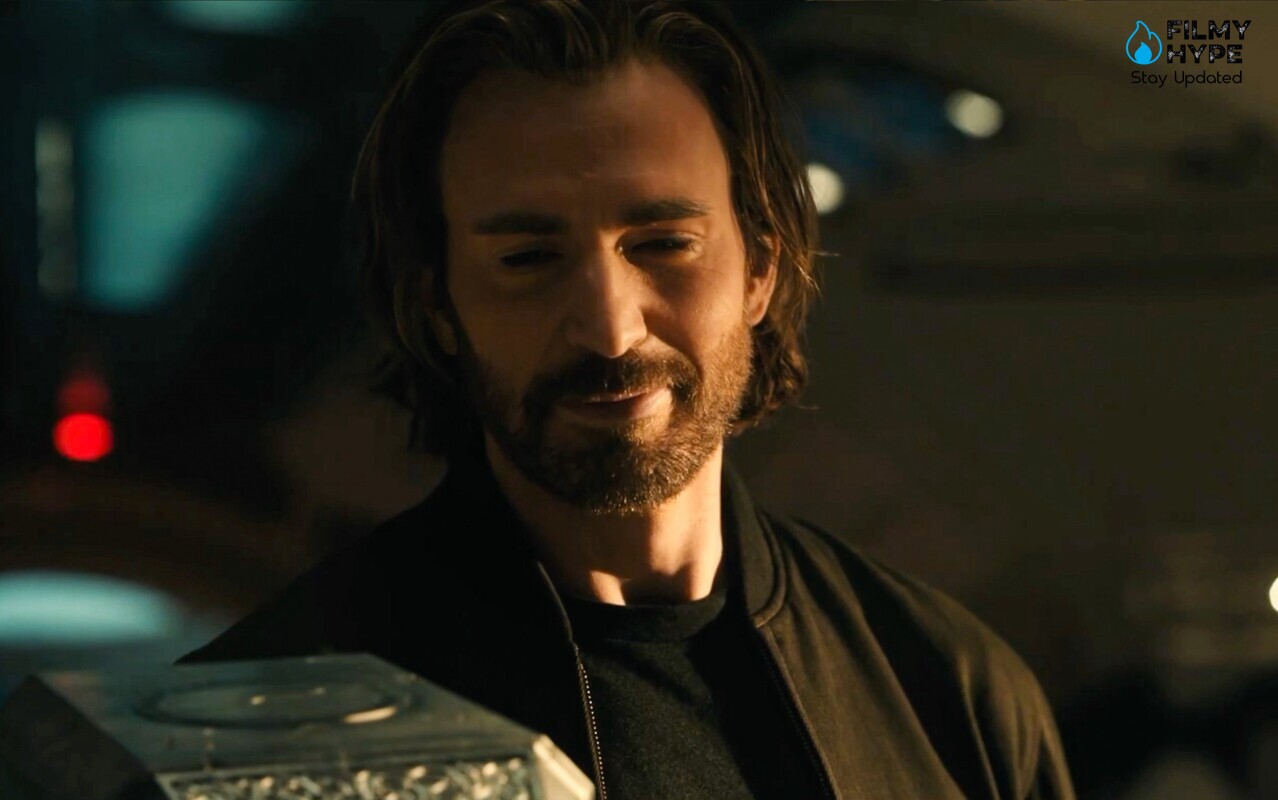
He has long hair. This isn’t the clean-cut Steve we’ve known across a decade of films. It’s not even the slightly rumpled older Steve from the end of Endgame. The hair is longer, unkempt, and almost deliberately contrasting with the iconic silhouette we associate with the character.
More importantly, his demeanor is off. The trailer doesn’t give us a clear shot of his face in close-up, but his posture, his walk, the way he’s framed—it all feels wrong in ways that are hard to articulate but impossible to ignore. And then there’s the reaction shot from Thor, who looks genuinely shocked when Steve appears. Not happy-shocked, not relieved-shocked. Something closer to alarmed.
The fan theory that erupted on social media immediately after the trailer dropped connects these dots in the darkest possible way: “The long-haired Steve Rogers is not our Steve, he is Captain America of Hydra. He could be an ally of Doom.” The post went on to note that Thor seems “genuinely shocked” by the appearance, which doesn’t make sense if this is simply the Steve Rogers everyone knows and trusts.
Who Is Hydra’s Captain America?
If you’re not deep into Marvel Comics, the phrase “Hydra’s Captain America” probably sounds like an oxymoron. Steve Rogers fighting Hydra is about as fundamental to his character as Peter Parker feeling guilty or Tony Stark being brilliant and self-destructive. However, in 2016, Marvel Comics took a genuinely audacious step with Captain America: Steve Rogers #1.
The issue ends with a panel that became instantly infamous: Steve Rogers, having just thrown a loyal ally off a building, says two words that broke the internet. “Hail Hydra.”
The backstory, as developed through the Secret Empire event, is complicated but fascinating. A sentient Cosmic Cube named Kobik—who takes the form of a young girl—was manipulated by the Red Skull into creating an altered timeline. In this timeline, Steve Rogers was recruited into Hydra as a child and grew up as a sleeper agent, his entire history rewritten so that his deepest loyalty was to the organization he spent his life fighting in every other universe.
This wasn’t mind control. It wasn’t a Skrull imposter or a clone or a parallel dimension doppelganger. This was, in some twisted sense, Steve Rogers himself—a version of him shaped by different circumstances, his fundamental decency warped into something unrecognizable. The horror of the storyline came from watching a character defined by moral conviction become the avatar of everything he once opposed.
Crucially for the theory, Hydra’s Captain America was able to lift Mjolnir. The worthiness enchantment didn’t stop him. This detail is important because it means he can fool everyone—even Thor, even the hammer itself. The external markers of heroism that the Avengers rely on to verify identity simply don’t work on him.
How the Theory Maps Onto Doomsday
The MCU has been building toward something like this for a while, even if we didn’t recognize the breadcrumbs at the time. The Multiverse Saga has been, among other things, a sustained meditation on variants and the uncomfortable truth that the heroes we love could have turned out very differently under different circumstances.
We’ve seen evil versions of Doctor Strange in What If…? and Multiverse of Madness. We’ve seen multiple Lokis, some heroic and some monstrous. We’re about to get Robert Downey Jr. back not as Tony Stark but as Victor Von Doom—a casting choice that only works because the audience has been trained to understand that faces can be deceiving in the multiverse.
Hydra’s Captain America fits perfectly into this pattern. He’s a version of Steve Rogers who is recognizably himself—same face, same voice, same mannerisms—but whose moral compass has been inverted. He can walk into Avengers headquarters, greet old friends, and no one would suspect anything because he looks and sounds exactly like the man they trust implicitly.
The theory suggests that Doctor Doom is using this variant as an infiltrator. The real Steve Rogers—the one we saw at the end of Endgame, old and at peace after returning the Infinity Stones—may have already been captured by Doom. The Steve who appears in the trailer is a replacement, a sleeper agent whose mission is to get close to the Avengers, gain their trust, and then betray them at the critical moment.
The long hair, in this reading, isn’t just an aesthetic choice. It’s a visual signal that this isn’t the Steve we know. It’s the filmmakers giving the audience a clue that something is wrong before the characters realize it.
Thor’s Reaction: The Detail Everyone’s Obsessing Over
Let me zoom in on Thor’s reaction shot, because it’s the piece of evidence the theory’s proponents keep returning to, and for good reason.
Thor and Steve have fought together across multiple films. They’ve saved the universe side by side. When Steve was worthy enough to budge Mjolnir in Age of Ultron, Thor’s reaction was delight mixed with something like pride. When Steve actually wielded the hammer in Endgame, Thor’s “I knew it!” was one of the most satisfying moments in the entire Infinity Saga.
So if Thor sees Steve Rogers walking toward him, his reaction should be joy. Relief. Maybe confusion about the hair, but fundamentally, happiness to see an old friend.
That’s not what the trailer shows. Thor looks shocked in a way that reads as disturbed. His expression isn’t “Steve, you’re back!” It’s something closer to “What is this?” And that reaction only makes sense if Thor is picking up on something wrong—something his instincts recognize as a threat even if his conscious mind can’t explain why.
In the comics, Hydra’s Cap fooled everyone, including Thor, because he could lift the hammer and pass every test of worthiness. The trailer might be setting up the same dynamic: a Steve Rogers who registers as authentic on every objective measure but whose presence triggers an instinctive unease in the people who knew him best.
The Doom Connection
We know from various leaks and reports that Doctor Doom will be targeting Steve Rogers specifically in Avengers: Doomsday. This makes strategic sense from Doom’s perspective. Steve Rogers isn’t just a powerful fighter; he’s the moral center of the Avengers. He’s the person everyone trusts, the leader whose judgment is rarely questioned. If you want to destabilize the team, you don’t attack their strongest member—you corrupt or replace their most trusted one.
Doom is, among other things, a master planner. He doesn’t fight battles he hasn’t already rigged. Replacing Steve Rogers with a Hydra variant would be an elegant move, one that turns the Avengers’ greatest strength—their trust in each other—into a vulnerability.
The theory also gives the real Steve Rogers a potential role in Avengers: Secret Wars, which is reportedly the culmination of the entire Multiverse Saga. If the real Steve has been imprisoned by Doom throughout Doomsday, his rescue could become a major plot point in the finale. The return of the genuine Captain America, at the moment when hope seems lost, would hit every emotional beat Marvel has spent fifteen years setting up.
Why This Theory Is Gaining So Much Traction
Fan theories are a dime a dozen, and most of them dissolve on contact with actual footage. But this one has legs, and I think there are a few reasons why.
First, the evidence in the trailer is genuinely suggestive. The long hair, the odd demeanor, Thor’s shocked expression—these are deliberate creative choices. They might add up to something other than “Hydra sleeper agent,” but they’re clearly meant to signal that something about this Steve Rogers is not what it appears to be.
Second, the theory draws on comic book source material that Marvel has shown willingness to adapt. The Secret Empire storyline was controversial, but it was also one of the most talked-about Marvel events of the 2010s. The MCU has a track record of taking divisive comic storylines and refining them for the screen—Civil War being the most obvious example.
Third, the Multiverse Saga has been building toward exactly this kind of identity horror. The idea that someone who looks like your friend might not be your friend has been a recurring motif. From Skrulls in Secret Invasion to variants in Loki to the multiple Strange variants in Multiverse of Madness, Marvel has been training audiences to distrust appearances. Hydra’s Cap is the logical endpoint of that trajectory.
Finally, the theory is emotionally resonant in a way that a simpler “Steve comes back and helps save the day” plot wouldn’t be. The MCU has always been at its best when it puts its characters through genuine emotional wringers. Forcing the Avengers to confront an enemy wearing the face of their most trusted friend—and forcing the audience to watch Chris Evans play against type as a villain—would be genuinely powerful.
What Would This Mean for the Real Steve Rogers?
If the Hydra variant theory is correct, the obvious question becomes: where is the real Steve?
The end of Endgame left Steve in an ambiguous position. He lived a full life with Peggy in an alternate timeline, then returned to the main timeline as an old man to pass the shield to Sam Wilson. Is he still alive? Is he still in this timeline? The MCU hasn’t explicitly answered these questions.
The theory suggests that Doom captured the real Steve—perhaps plucking him from the timeline at a vulnerable moment, perhaps finding him in whatever reality he settled in after returning the stones. The Hydra variant was then inserted in his place, a ticking time bomb waiting for the right moment to detonate.
This would set up a potential rescue mission in Secret Wars, with the Avengers racing to free the real Steve before Doom’s plan reaches its conclusion. It would also allow Chris Evans to play both hero and villain across the two films—a challenge that, given his range, he’d likely relish.
Alternatively, the real Steve might be dead in this scenario, killed by Doom to clear the way for the Hydra variant. This would be a darker choice, and probably less satisfying for audiences who have waited years to see Evans return to the role, but it would raise the stakes considerably.
The Risks of This Approach
I should acknowledge that this theory, if accurate, comes with significant risks.
The Secret Empire storyline was deeply controversial among comic book fans. Many readers felt that making Captain America a Hydra agent—even an alternate version—was a betrayal of the character’s fundamental nature. The imagery of Steve Rogers saying “Hail Hydra” landed differently than Marvel intended, particularly given the real-world political climate at the time of publication.
Bringing this storyline to the MCU would mean navigating those sensitivities for an audience many times larger than the comics readership. The filmmakers would need to be extremely careful about how they frame the story, making it clear that the Hydra variant is not the real Steve and that the ideals the character represents haven’t been tainted by this doppelganger.
There’s also the risk of audience confusion. The multiverse is already a lot to keep track of. Adding evil variants of beloved characters on top of everything else could tip into incoherence if not handled with precision.
But Marvel has navigated similar risks before. Civil War took a divisive comic event and turned it into one of the MCU’s most acclaimed films. The Russos, who are directing Doomsday and Secret Wars, have a track record of balancing complex storytelling with emotional clarity. If anyone can make Hydra’s Cap work on screen, it’s probably them.
Conclusion
The theory that Steve Rogers’ return in Avengers: Doomsday is actually the introduction of Hydra’s Captain America is disturbing for exactly the right reasons. It takes a character defined by trustworthiness and turns that trust into a weapon. It forces the Avengers—and the audience—to confront the possibility that the person they most rely on might be the person planning their destruction. And it gives Chris Evans the chance to do something genuinely new with a role he’s already defined for a generation.
The long hair, Thor’s shocked expression, the established comic book precedent, the leaks about Doom targeting Steve Rogers—none of this is proof, but all of it is suggestive. The pieces fit together in a way that feels intentional rather than coincidental.
Whether the theory proves accurate or not, its very existence points to something interesting about where the MCU is right now. After years of multiversal storytelling, audiences no longer trust appearances. We’ve learned that familiar faces can hide unfamiliar intentions. The return of a beloved character isn’t automatically cause for celebration anymore—it’s cause for suspicion.
And that, maybe more than any specific plot twist, is what the Multiverse Saga has been building toward all along. The real horror isn’t that enemies might attack from outside. It’s that they might already be inside, wearing the faces of friends, waiting for the perfect moment to say the two words that change everything.
Hail Hydra.