


Insidious: Out of the Further Ending Explained: The Insidious franchise has spent over a decade building its mythology around a single terrifying idea: The Further is a place you can get trapped in. Dalton Lambert could reach it through astral projection. His father Josh inherited the same ability. Elise Rainier could perceive it, communicate with it, and eventually exist within it after her own death. The horror was always about the boundary between worlds—and what happened when someone crossed it unprepared. Insidious: Out of the Further changes the equation. Gemma, the new protagonist played by Amelia Eve, doesn’t just visit the Further. She can bring things back.
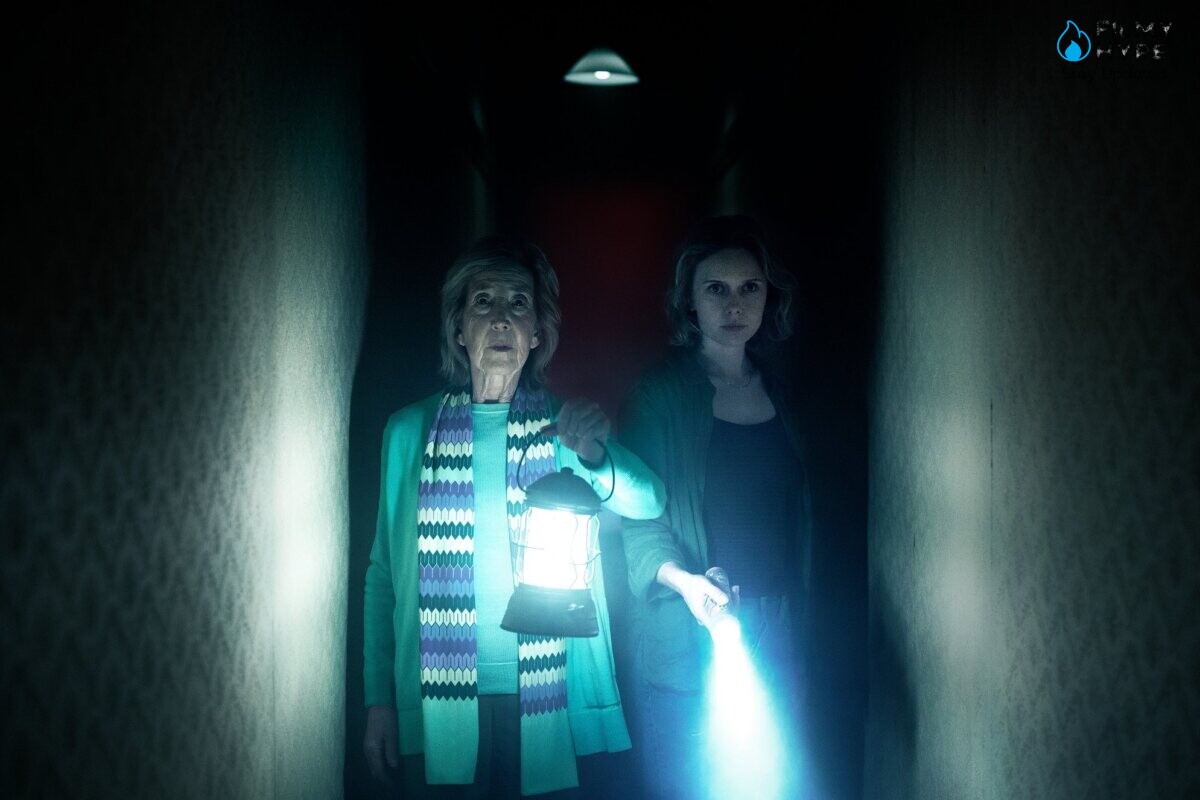
Insidious: Out of the Further doesn’t really end when the credits start rolling. The sixth chapter of the horror saga contains an extra scene that completes the fate of the new antagonist Cyrus and, above all, brings back to the forefront one of the most recognizable symbols of the entire franchise: The Red Door. Jacob Chase’s film abandons the Lambert family as the lead and introduces Gemma (Amelia Eve), a single mother plagued by nightmares and memories of her childhood. What initially seems like a trauma inherited from her mother, however, turns out to be something much more concrete: Gemma possesses the ability to enter the Out of the Further and, above all, to transport objects and beings from one dimension to another. An ability that makes her and her daughter Maya (Island Austin) particularly valuable to entities trapped in the Out of the Further.
That single reversal transforms the franchise. The threat is no longer about getting lost in the realm of the dead. It’s about what happens when the dead find a way out.
Insidious: Out of the Further Ending Explained: Why Do Demons Turn on Cyrus?
Cyrus had promised the entities of Out of the Further the chance to return to the world of the living. When the plan fails because of Gemma, those same creatures realize they are trapped again. Their reaction is immediate: Cyrus loses all authority and is left in the hands of the creatures he had tried to use to achieve his goal. The film could end here, simply letting you guess its fate. Chase decides to show it to us during the headlines instead.
The Return of KeyFace and the Red Door?
However, there is one particularly interesting detail for those who follow the saga. KeyFace, one of the entities already encountered in previous chapters, also witnesses the punishment and intervenes to lock Cyrus in the room. Insidious: Out of the Further horror film, 2026). And it does so through the famous Red Gate. The meaning of the image is quite clear: Cyrus is once again a prisoner of Out of the Further, and the door that was supposed to allow him to reach our world symbolically becomes the one that condemns him to remain outside. But a door, in the Insidious universe, can always be reopened.
Could Cyrus Return in a New Insidious?
The scene does not explicitly announce a sequel, and it would therefore be excessive to consider it a confirmation of Cyrus’ return. Its position during the titles, however, allows the franchise to leave this possibility open. Cyrus is not eliminated: he still exists in the Elsewhere. The same goes for KeyFace and the many entities encountered throughout the saga.
Furthermore, Outside the Further demonstrates that the franchise can continue even without constantly relying on the Lambert. Elise Rainier (Lin Shaye) remains the main thread between the different stories, while the Out of the Further can become the true permanent center of mythology. The final scene reiterates this very concept: you can defeat demons, imprison them, and close the Red Door, but in the Out of the Further nothing truly disappears. And as long as someone is able to cross its border, that door can always open again.
Gemma’s Power?
Gemma lives with her daughter in the house where she grew up. It should be a place of safety, of familiar memories. Instead, it becomes the point where past and supernatural begin to blur. Gemma discovers she can travel to the Further, the dark dimension populated by lost souls and demonic presences that’s been central to every Insidious film.
Her ability resembles astral projection. But it has a defining difference. Gemma doesn’t just leave her body to explore another plane. She can bring back what she encounters. The boundary between the two worlds becomes permeable in both directions.
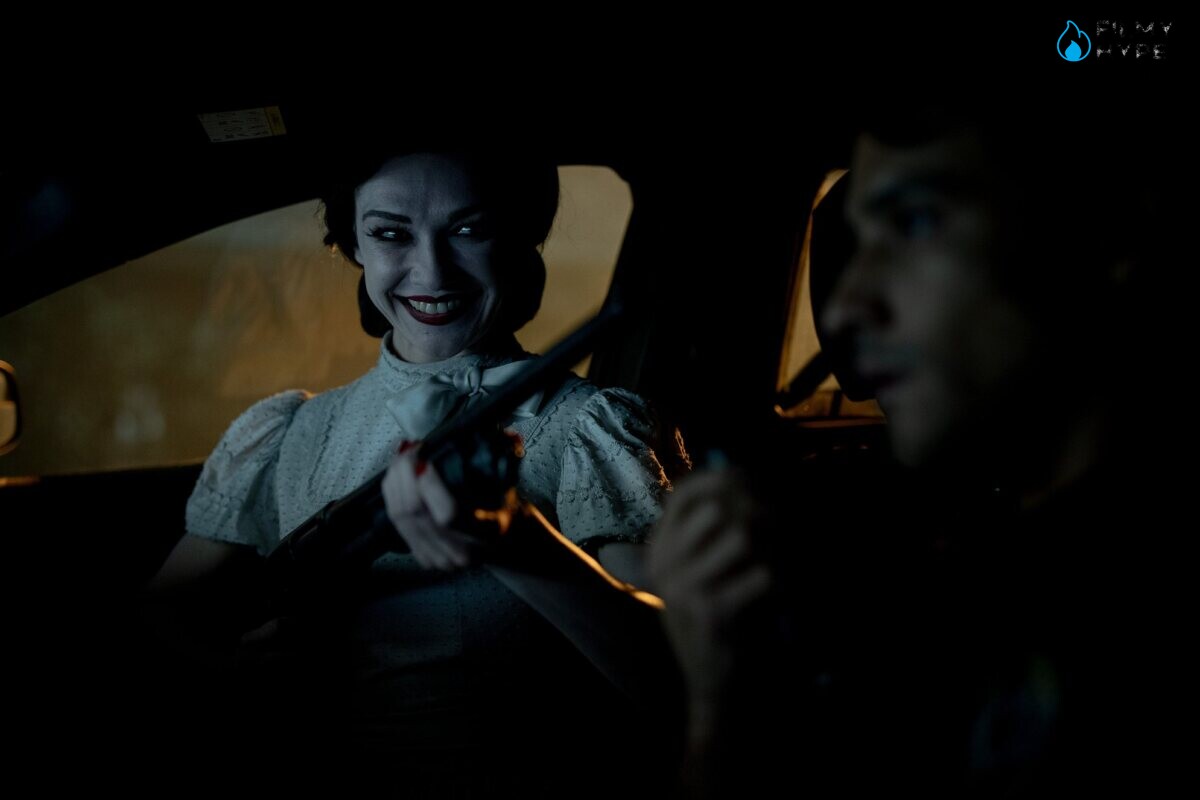
This isn’t how Dalton’s power worked. Dalton could leave his body, travel through the Further, and the danger was that something would take over his empty vessel. The entities needed a host. They needed his body as a way into the world of the living.
Gemma doesn’t have that limitation. Her presence in the Further creates a pathway that entities can follow back. She doesn’t need to be possessed. She doesn’t need to be tricked into staying too long. The simple act of using her power creates the risk. Every time she enters the Further, she risks bringing something back with her—not inside her, but alongside her, manifesting in the real world.
The New Threat
The entities of the Further quickly recognize what Gemma is. She’s not just another person who can visit their realm. She’s a door that opens from the inside. They begin manipulating her, stalking her, approaching her daughter. The house isn’t haunted in the traditional sense. Gemma herself is the haunting—a living passage that can carry the infestation wherever she goes.
Among the presences, Cyrus stands out. Played by Sam Spruell, he’s different from the mute, monstrous demons that defined earlier installments. He talks. He uses irony. He has a personality. And he has a goal: to use Gemma’s ability to erase the separation between the Further and the world of the living.
The original title, Out of the Further, is doing significant work here. Previous films were about going in. This one is about what comes out.
Elise’s Return?
Lin Shaye returns as Elise Rainier, the medium who’s been the emotional anchor of the franchise since the beginning. Elise died in the first Insidious, murdered by the Bride in Black. But her consciousness continues to exist in the Further, and she’s been working from the other side ever since.
Her presence in Out of the Further connects the new family to the established mythology. Elise recognizes Gemma’s power as both extraordinary and dangerous—a resource that could help the living, or destroy them. She functions as a guide, the same way she always has, even from beyond the grave.
Elise also represents something important about Gemma’s ability. If Elise can manifest through the same passage used by demons, then Gemma’s power isn’t inherently evil. It’s a tool. What matters is how it’s controlled, and who’s doing the controlling.
What the Ending Needs to Answer
The official materials for the film have been careful not to reveal the full details of the finale. What’s clear from the setup is that the central question involves control. Gemma has to figure out whether her power can be closed, repressed, or used in reverse—sending freed presences back to the Further.

Cyrus represents the worst possible outcome. He doesn’t want to possess Gemma. He wants to use her. If he succeeds, the boundary between dimensions collapses, and the Further becomes indistinguishable from the real world.
Elise represents the alternative. She’s proof that benevolent souls can also move through the passage Gemma creates. Her presence suggests that Gemma’s gift isn’t a curse. It’s something that can be understood, managed, and perhaps even used for good.
The film’s meaning depends on which path Gemma chooses.
The Themes
Out of the Further is, at its core, about inheritance. Gemma is raising her daughter in her childhood home—a space filled with memories, with the weight of the past pressing down on the present. The supernatural makes literal a common fear: that we’ll pass our traumas to our children, that the things we couldn’t face will eventually consume them too.
Gemma’s power is a metaphor for that process. She brings out what should remain buried. She gives the past a physical form. Protecting her daughter means learning to manage the things she’s inherited, rather than letting them control her.
Cyrus and Elise are opposing forces in this struggle. Both understand the Further. Both try to influence Gemma. But Cyrus sees her as a tool, while Elise tries to help her make her own choices. The conflict isn’t just good versus evil. It’s manipulation versus awareness.
The Future of the Franchise
Insidious: Out of the Further is positioned as both a continuation and a soft reboot. The familiar elements are present—the Further, Elise, the threat of supernatural entities crossing into the real world. But the central question has shifted. The saga has always been about what happens when the living and the dead get too close. Now it’s about what happens when someone can bring them together permanently.
The Lambert family’s story reached its conclusion with The Red Door. Gemma’s introduction allows the franchise to keep its mythology while exploring genuinely new territory. The Further is still there. Elise is still there. But the rules have changed. The dead don’t need a host anymore. They just need Gemma.
The question the film leaves hanging is whether that power can be controlled. If it can, the franchise has found a new direction. If it can’t, then the horror is just beginning. The Further has always been on the other side. With Gemma, the other side has found a way through.