


Insidious: Out of the Further Review and Ratings
Cast: Amelia Eve, Brandon Perea, Maisie Richardson-Sellers, Lin Shaye, Sam Spruell, Island Austin, Laura Gordon
Director: Jacob Chase
Where to Watch: In Theaters
Filmyhype.com Ratings: 3/5 (three stars)
The Insidious saga has always been about family relationships, bonds, and difficulties in such an area. Insidious: Out of the Further maintains this gaze, while shifting its attention to another side. The choice to frame a different home context connects with the darkest details of a cinematic story that wants to move forward, elsewhere, precisely, in small steps and without cutting cleanly with its past. We return, therefore, to the depths of a story with familiar and novel characteristics, in some ways, passing through a protagonist who is not too new to writing, with the arduous task of taking on a chapter with twists, jump scares, quotes and references. The famous Red Door that had acted as a glue to the events of the previous film returns as a tangible element, but also as a metaphor for a saga that looks first and foremost at the humanity of its own protagonists, at least in this specific narrative juncture, sublimating its limits and more hidden insecurities with horrifying elements that delve deep into their own spectators in the theater.
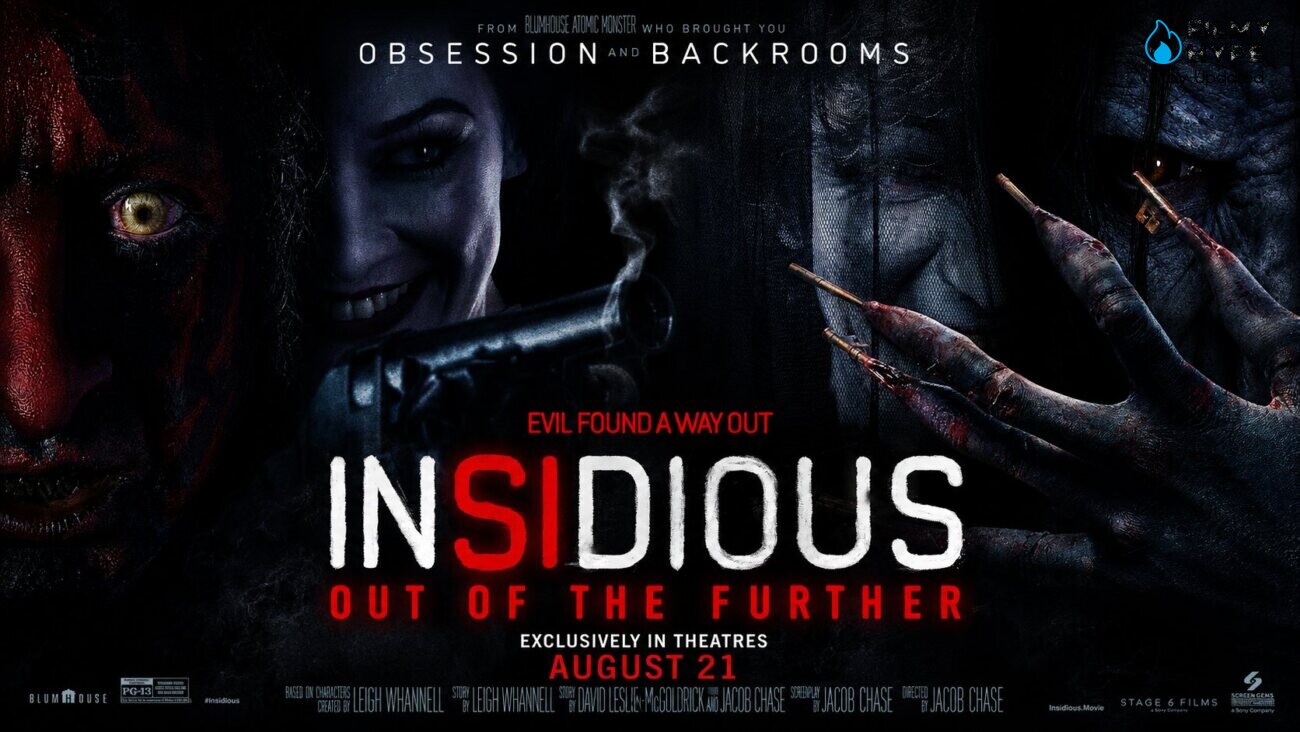
It’s a curious paradox that, on the same day in mid-August, two horror films arrive in Italian theaters that couldn’t be more radically distant from each other. Teenage Sex and Death at Camp Miasma, by Jane Schoenbrun, adopts as her narrative basis a fictional low-budget slasher, transformed into a franchise by initial fortune, followed by a progressive decline due to the inability to renew herself. A metatextual cue that, in some ways, fits effectively with Insidious: Out of the Further: the paradigmatic example of a formula replicated over and over again, with some appropriate variations, to meet the expectations of a loyal audience during a journey of sixteen years and six chapters (and with a further spin-off, Thread – An Insidious Tale, currently in production).
Insidious: Out of the Further Review: The Story Plot
Insidious: Out of the Further starts exactly from here, from the return to an imagery that over the last fifteen years has helped define an important part of mainstream horror. It was 2010 when James Wan directed the first Insidious, written by Leigh Whannell, starting a saga that, without ever achieving critical unanimity, was able to build an identity strong enough to reach the sixth chapter today. After Insidious: The Red Door, the Lambert story gives way to a new family, while Elsewhere remains the center of a universe once again trying to expand its rules. Taking over from James Wan and Leigh Whannell is Jacob Chase, former director of Come Play (who also wrote the screenplay here), while Wan, Whannell, Jason Blum and Oren Peli remain involved as producers.
It stars Amelia Eve, joined by Brandon Perea and the return of Lin Shaye as Elise Rainier. It was 1999 when Insidious: Out of the Further began its story. A mother and daughter, a home, and something that already seems to creep into the folds of a relationship destined to become the true thread of the story. That little girl is Gemma, and when the story takes a long time jump to the present day, we find her as an adult, who in turn became a mother and returned to live with her daughter in the house where she grew up. This is where the past inevitably begins to resurface. Gemma gradually discovers that she possesses an ability that binds her to Out of the Further, that purgatory of lost souls that has accompanied the saga since its origins.
He can enter it, pass through it, sense its presences. But above all, it can do something even more dangerous: bring back into the real world what lives within it. Thus, the threat becomes progressively concrete, while what Gemma had experienced as a daughter returns to reflect on her relationship with her own little girl. Past and present begin to overlap, trauma crosses generations, and Out of the Further returns to being the place where fears, memories, and family bonds take on physical form.
Insidious: Out of the Further Review and Analysis
There is something inevitably fascinating about the persistence of such avowedly classic horror. Over the past fifteen years, the genre has continued to shed its skin, moving through psychological horror, social horror, folk horror, and forms increasingly interested in atmosphere, sensation, and contamination. Authors such as Jordan Peele, Ari Aster, Robert Eggers and Ti West have contributed, in profoundly different ways, to redefining its possibilities and boundaries. Yet it still makes sense that there is also a cinema that is simply intent on inhabiting its own conventions.
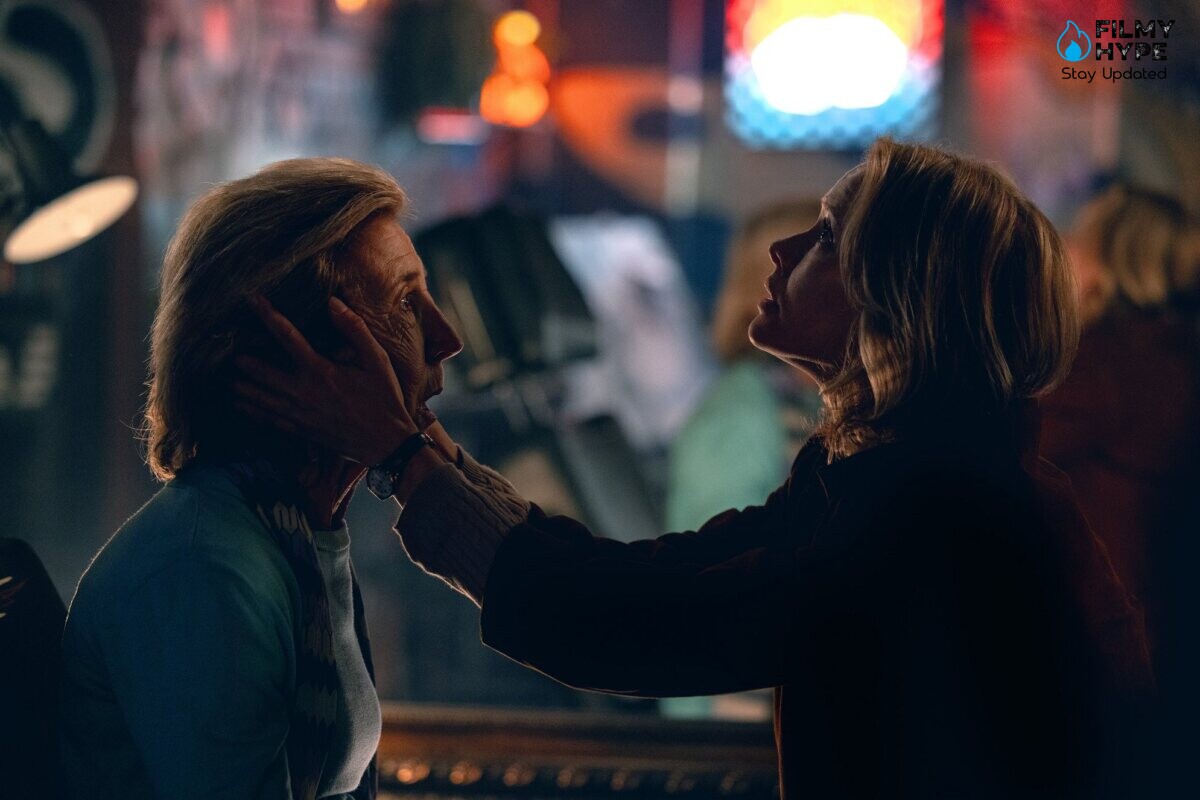
Insidious: Out of the Further is therefore not his classicism. It is what he can, or rather cannot, do with it. Because horror can be predictable, it can show the viewer the door through which the monster will arrive, and it can even openly prepare a jump scare. But in the end it must cause a sensation. It must enter the body before it even enters the head. It must be scary. The film’s first real scare, though widely announced, still achieves this result. It’s built according to known rules; you can feel it coming, and for this very reason it almost becomes a declaration of intent: we know what’s about to happen, but the film wants to see if it still manages to make you jump out of your seat. And he succeeds.
From that moment, however, something progressively goes out. Jacob Chase sometimes seems to want to put Insidious in front of his own reflection, playing with mechanisms and symbols sedimented in previous chapters with an almost swaggering confidence. The problem is that this awareness ends up subtracting pathos instead of adding to it. Gemma’s visions, dreams, apparitions and constant crossings of an increasingly familiar space begin to repeat themselves until they progressively lose strength. What should be disturbing becomes routine. The same happens on the emotional level.
The relationship between Gemma and her daughter reproduces and reworks what the film introduces in 1999 between Gemma and her mother, building a potentially interesting circularity about the trauma that passes from one generation to the next. However, it is such a recognizable trajectory that the first sequences are enough to guess where it will lead. Predictability, again, would not necessarily be an issue. It becomes so when the path to an already known destination fails to produce tension, surprise, or genuine engagement.
Even technically, in Insidious: Out of the Further, he remains trapped in the same feeling of familiarity. Chase’s direction is orderly, functional, aware of the aesthetic coordinates in which he must move, but he rarely finds an image capable of remaining imprinted. Photography, editing, and construction of spaces accompany the story without really managing to amplify its restlessness. The darkness returns, the sudden appearances, the smoke that invades the frame, and above all an antagonistic presence that, in its first manifestation, seems to possess everything needed to become truly disturbing. It is perhaps that very first encounter that makes what happens next even more evident: the more the film shows its threat, the more it loses strength. Terror is progressively replaced by habit, and the villain, instead of becoming increasingly oppressive, paradoxically becomes less and less frightening.
That leaves Amelia Eve, arguably one of the best insights of the operation. The British actress had already frequented the genre with The Haunting of Bly Manor, and here she has a presence perfectly compatible with this type of horror. In some shots, the face, the gaze, and even certain expressions seem surprisingly reminiscent of Naomi Watts, an interpreter who, with works like The Ring and Funny Games, has linked part of her cinematic image to fear. Eve possesses that same ability to make fragility credible without turning it into passivity and is often able to sustain sequences to which the construction of tension offers too little. The problem is that an effective protagonist, a now recognizable universe, and an established horror grammar are not enough. Out of the Further continues to have its own identity, but after six films it is no longer enough to simply return to it. We need to find something that can make him unknown again.
One of the most interesting traits of Insidious: Out of the Further lies precisely in the way it builds its protagonist. All the unresolved issues that Gemma drags within split the same narrative in two, which on the one hand feeds on the most suffocating and childish horror, while on the other hand speaks openly of domestic traumas and how fundamental it is to choose to face them directly, rather than deny their previous existence, suffocating their consequences in depth. It is precisely through a sensitivity of this kind that Insidious: Out of the Further places itself on its viewers, telling of pain in two opposed ways: the more tangible and direct one of horror, even inexplicable, and the more difficult and indirect one of the mind.
The film directed by Jacob Chace has no qualms about talking about mental illness and its acceptance, while terrorizing his audience with both classic and unexpected moments in horror. Insidious: The Red Door plays a lot with the most childish horror and chooses to suffocate his audience with a direction that is made, in several takes, close to detail, with no escape route. Formally, there are many interesting “games” in terms of scares, studied moments, and other less successful ones. But it is precisely in its “form” that the film manages to hit and leave its mark, moving between past and present, always keeping anchored to the family ties mentioned above (without making too many anticipations), albeit with some general forcing.
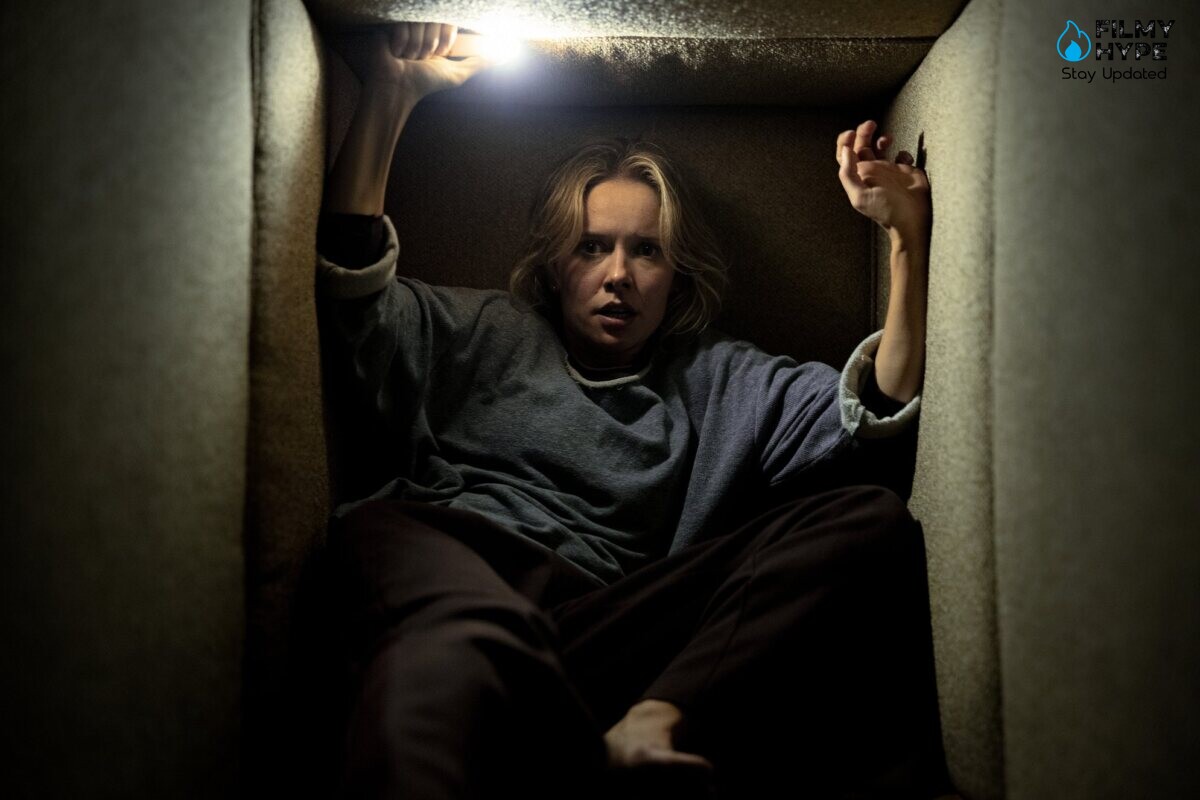
The work in terms of horror disturbs the right and is quite enjoyable in general. While Insidious: Out of the Further doesn‘t seem to bring anything new to the genre in its opening section, it’s in its final section that it changes the game with an interesting climax that finally makes its mark. Insidious: Out of the Further is a film of interesting ideas that remains consistent with a saga that must reinvent itself if it is to hope to continue in any way. Despite looking elsewhere, the film is inconsistent in some ways, convincing but at the same time hasty and simplistic. The result is a work that aims to reinvent and shift attention, proving interesting but not memorable. Insidious: Out of the Further has a voice of its own, and that’s fine too. It’s funny and scary and carries on a speech that perhaps deserved a little more explanation.
Those who understand its potential are certainly Cyrus (Sam Spruell), the entity that dominates this new portion of Out of the Further. He promised the dead that they would be able to return, that they would be returned to life. Even this apparent resurrection retains the external form of a religious promise, but empties it of any salvific content. There is no redemption, transfiguration, or new life. Rising simply means reappearing, regaining body, invading the space of the living. It’s a godless resurrection, a forced return, in short. The saga has always implicitly played with a religious anthropology, after all. Human beings do not coincide with their own bodies; consciousness can separate itself from them; the dead continue to exist, and some individuals are able to cross the frontier between worlds. But this anthropology never corresponds to true transcendence.
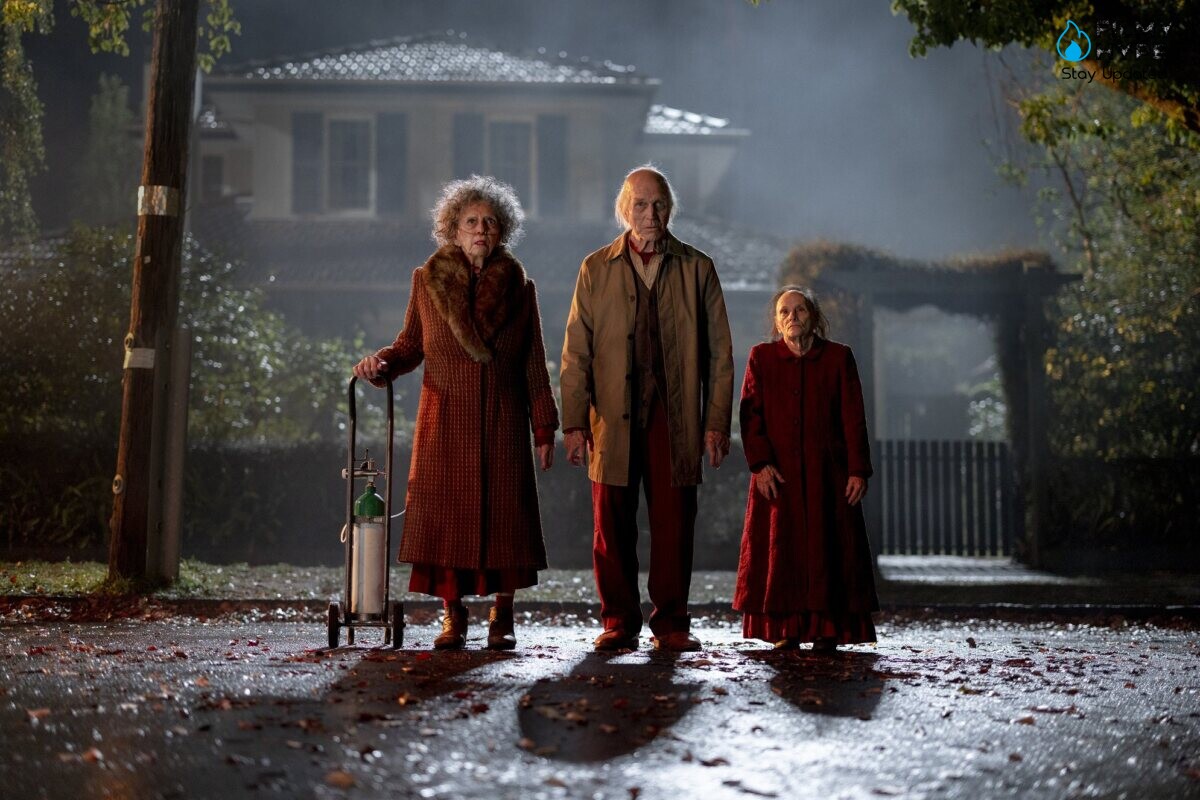
Out of the Further does not conceive of a numinous mystery; it does not open. The esoteric conception of the astral body is deprived of its vertical direction. The journey is downward, into the dark areas of the psyche, among memories, obsessions, and the dead who have found no peace. Cyrus needs accomplices in the real world. Insidious finds them in three creepy old men, motionless figures on whom the smile of possession seems to have been plastered. Here too, Insidious: The Red Door resorts to a now codified repertoire: old age transformed into a disturbing sign, the fixity of faces, the unnatural smile popularized by Smile and become one of the most exploited visual shortcuts in contemporary horror. They work because Jacob Chase knows how to place them in the frame and when to remove them from the gaze, but they belong to an inflated imaginary.
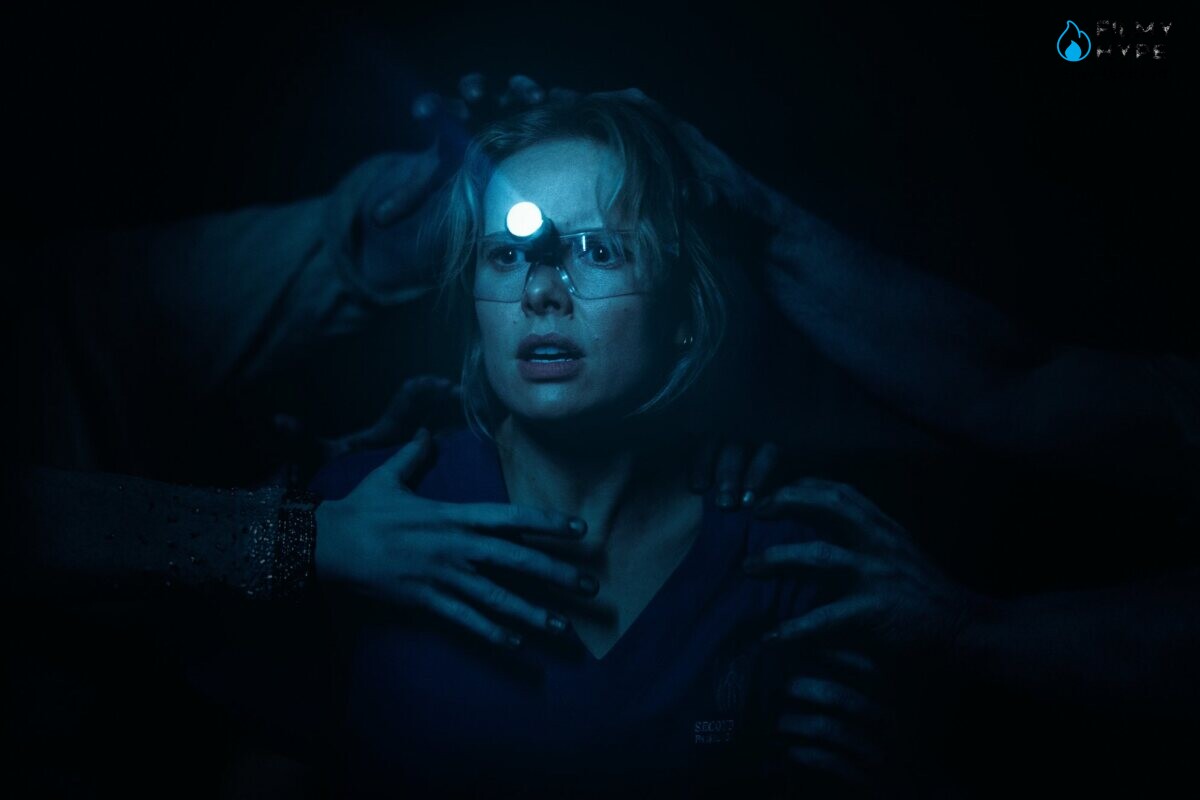
Elise Rainier (Lin Shaye) also returns, the medium who now serves to certify the film’s belonging to the saga, the memory and continuity between one family and another. His presence is no longer a surprise, and he doesn’t even have a real narrative need. In terms of staging, Jacob Chase builds the jumpscares precisely, exploits the silences, lets the threat surface in the depth of field, and works on the framing to push us to inspect the corners. In this, he takes up the baton of James Wan, the intuition that fear often arises before the apparition, from the simple possibility that something occupies the family space.
From this perspective, Insidious: Out of the Further is a deeply Freudian film. The house—a metaphor for the body and individual intimacy—becomes the physical vessel for what has been repressed. It embodies the Unheimlich, the uncanny. When her boyfriend, a police officer, urges Gemma to leave the house—as if the building itself were the source of her nightmares and apparitions—she replies: “It’s the only thing I have.” She cannot leave it because that house is not merely hers; it *is* her. To flee would mean losing the last link to her own identity. Instead, she must stay and agree to traverse its most secret rooms.
The choice to make Gemma a dentist was right then. The oral cavity is another internal space that opens outward, a threshold through which something can enter, exit, or be extracted. Teeth, gums, metal instruments, and wide-open mouths allow the film to rediscover a concretely physical horror. The sequences set in the dental office are among the most disturbing, disgusting, and at the same time funny of the entire saga. Here Chase truly manages to renew his imagination, working on the body as a violable cavity rather than simply re-proposing the dark corridors of Out of the Further.
In essence, Out of the Further confirms both the good and the bad of Insidious. The good lies in the ability to work on the trauma, removal, and architecture of the unconscious, orchestrating a demonological but not numinous, diabolical but not religious representation. Everything is resolved within the mind, memory, and psyche. It is a profoundly secular saga, even if in its best moments it had managed to maintain a margin of ambiguity between the psychic and the metaphysical. In this chapter, however, the psychopathological meaning imposes itself without any other possibility of interpretation. Furthermore, the technical expertise in the construction of fear remains intact. Framing, editing, sound, and decor are used with consummate effectiveness to produce tension and uneasiness. The production and acting level remains high; Amelia Eve carries the weight of the film, and Chase proves to know the grammar of the series.
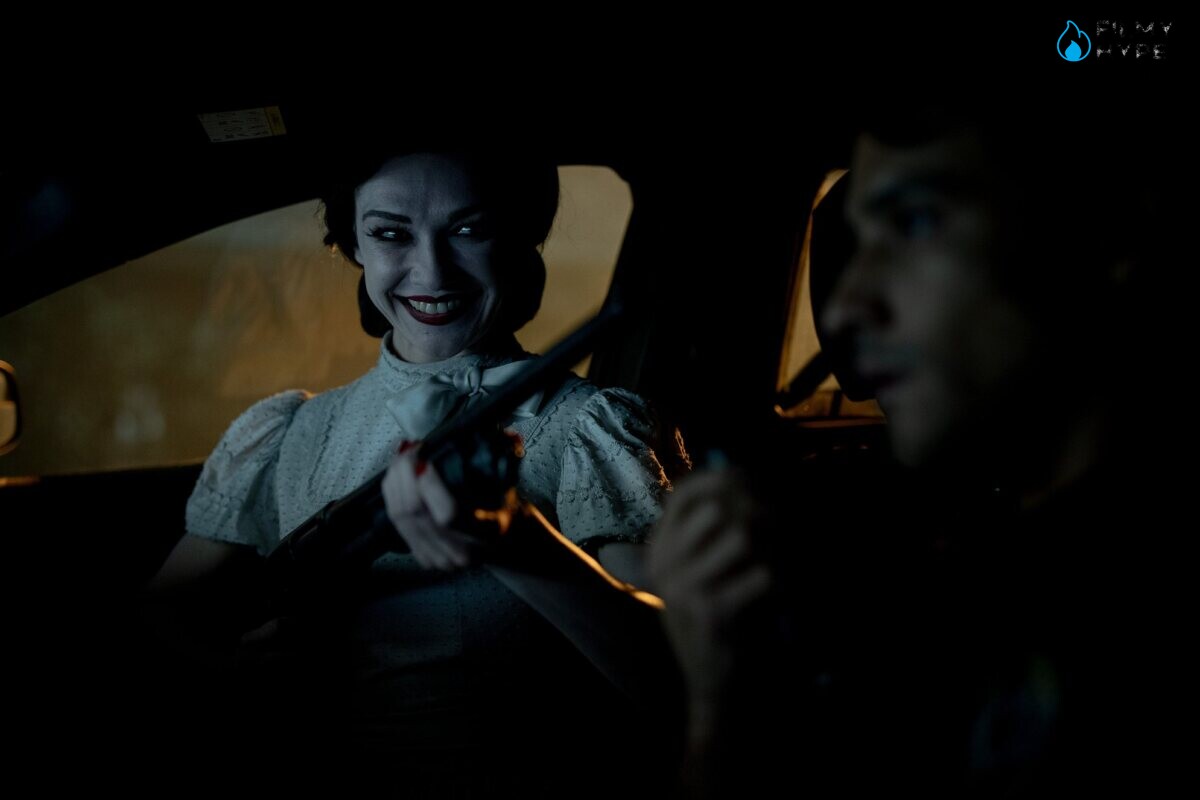
But this very knowledge ends up becoming its limit. The mechanism appears tired, the repetition increasingly evident. Even the great novelty of the courier is only partially used and leads to the usual sideshow finale, halfway between a macabre circus, a theater, and a house of horrors. The resolution comes too quickly and too easily: to defeat the invasion, Gemma must literally empty her removed one, rid herself of the accumulated ghosts, and drive them back to where they came from. Thus carrying out the therapeutic process with coherence but also with an almost didactic banality. Beyond the proclamations of renewal, in short, a chapter that adds little to what the series had already told. Out of the Further is here, certainly. The problem is, after six films, we now know all too well what it looks like.
Insidious: Out of the Further Review: The Last Words
Insidious: Out of the Further is a film that, while attempting to look forward, continues to talk about family ties, domestic trauma, and a past that once again demands the bill, with this horror serving as a tool to recount the pain, mental illness, and the need to face what one has tried to deny. The film juggles childhood fears, inexplicable presences, a direction that seeks detail, and a narrative suspended between past and present, tending to bring out its own identity with interesting ideas and less successful moments. The result is a funny and at times frightening chapter, which tries to “touch” a saga now in need of new stimuli, but at the same time seesawing and hasty in certain of its things.