

The Devil’s Mouth Ending Explained: Jeff Wadlow’s The Devil’s Mouth (2026) sticks to a formula horror fans know by heart — trap a group of people with a giant shark and pick them off one by one. What sets it apart is the setting: flooded cave systems where there’s no boat to swim to, no shore in sight, just narrow, disorienting tunnels that make every decision feel like it might be the last one you get to make. A body count that climbs steadily toward the final act. The familiar rhythms of a creature feature, executed with enough craft to keep you tense even when you know the beats by heart. But what’s interesting about this particular entry in the genre isn’t the shark. It’s what the shark reveals about the two women at the center of the story.
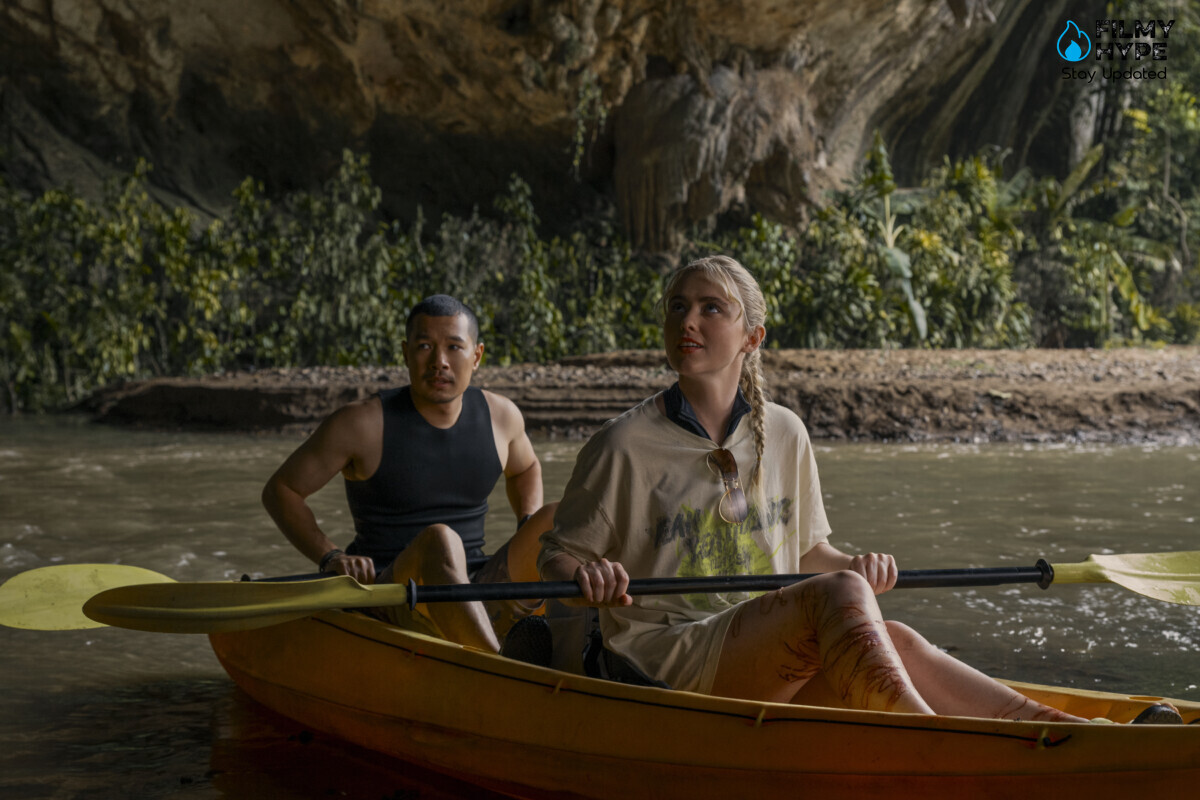
By the time the credits roll, The Devil’s Mouth has quietly become a film about a friendship that was never as equal as it looked from the outside. The flooded cave systems, with their narrow tunnels and disorienting darkness, don’t just kill people. They strip away pretense. They force confrontations that the surface world lets you avoid. And what gets exposed in those final, desperate minutes isn’t just who can survive. It’s what was wrong with Sara and Max’s relationship long before they ever entered the water. By the final act, it’s just Sara and Max left. And by then, the movie has quietly become less about the shark and more about them — specifically, about a friendship where one person always called the shots and the other just went along with it.
The Devil’s Mouth Ending Explained: The Cave Is a Character?
Before getting to the ending, it’s worth talking about the setting, because the film does something smart with its location. This isn’t open water. There’s no boat to swim toward, no shoreline visible in the distance. The characters are navigating flooded cave systems, where every tunnel looks the same, where the surface might be inches above your head or nowhere at all, where the sound of something moving through the water echoes off limestone walls in ways that make it impossible to tell how close it is or which direction it’s coming from.
The caves create a specific kind of horror that’s different from what you get in something like Jaws or The Shallows. In those films, the threat is visible. The shark is out there, in the water, and you can see it coming. In The Devil’s Mouth, the shark could be anywhere. Behind you. Beneath you. Waiting in the next chamber. The geography itself becomes an enemy, and the film uses that claustrophobia to ratchet up tension in ways that feel genuinely oppressive.
What Happens in the Final Act?
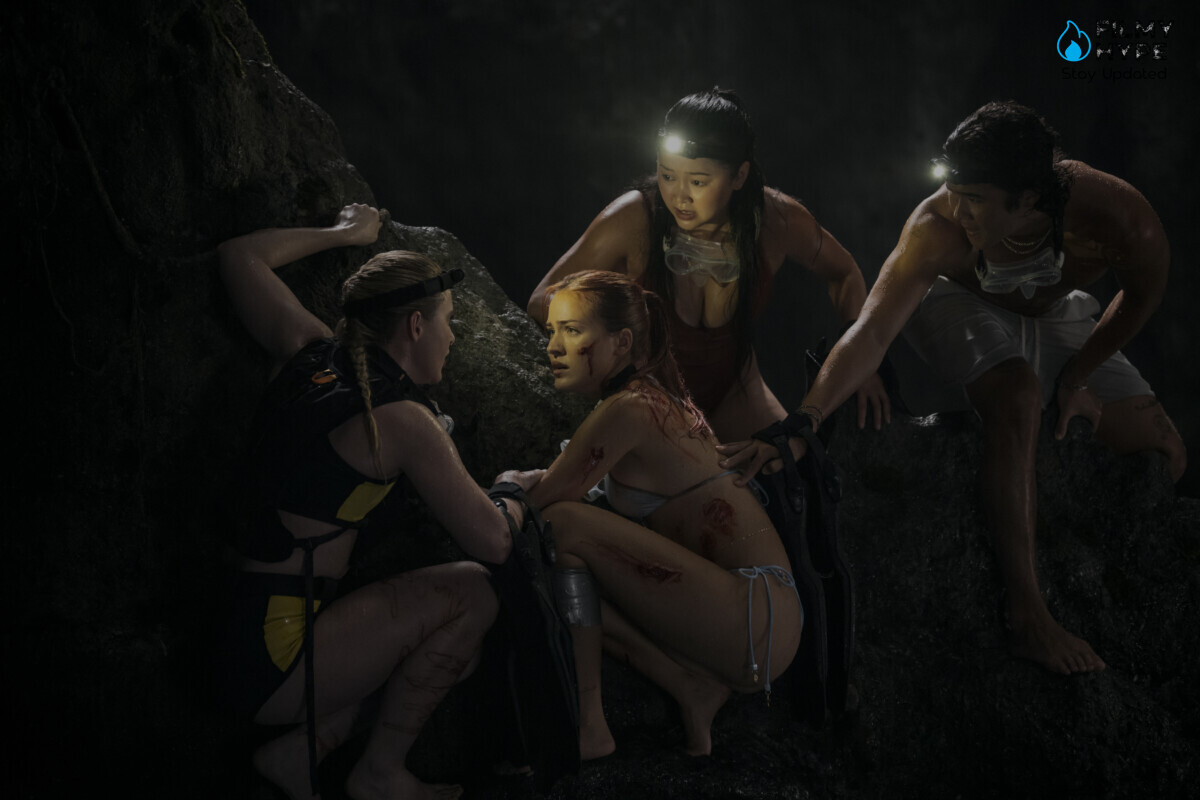
The group has been whittled down. The diver, Ryan, was dead before anyone even understood what they were dealing with. Wat, Greg, Adrienne, and James have all been claimed by the caves or the shark. By the time the film enters its final stretch, only Sara and Max are left, and the dynamic between them has been fraying for a while.
The central conflict between them comes down to a disagreement about which way to go. Sara wants to head back toward the opening that connects the caves to the open ocean. She’s been advocating for this route for a while, and the body count has proven her instincts correct. Max, however, wants to keep pushing deeper. She’s convinced there’s another exit, another way out, and she’s used to being the one whose plans get followed.
Sara’s plan eventually wins, but only because there’s no one left to argue with, and only when the margin for error has shrunk to almost nothing. The plan itself is straightforward. Sara swims for the exit first, gets out, and comes back with help. Max, who’s bleeding and exhausted, stays behind and waits.
Max doesn’t wait. She can’t. Watching Sara swim away triggers something in her, a refusal to be left behind, an inability to cede control even when it’s the only thing that makes sense. She starts climbing after Sara. Sara sees her and tosses a rope. They’re connected now, physically linked by the line between them, and that connection is about to become fatal.
The blood in the water from Max’s wounds pulls the shark straight to her. It grabs her, drags her under, and because they’re still tied together, Sara gets yanked down too. There’s only one option left. Cut the rope, or die together. Sara cuts it.
Max’s Death Isn’t Random?
It would be easy to read Max’s death as bad luck. She was bleeding. The shark was close. Wrong place, wrong time. But the film has been carefully laying the groundwork for this moment since the opening scenes, and Max’s fate is less about circumstance than it is about who she is.
Max has been the dominant personality in the friendship from the beginning. She made the decisions. She chose the route. She pushed the group off the safer path when it suited her. She dismissed Sara’s concerns, not because Sara was wrong, but because Max was accustomed to being the one who knew better. Every choice that led the group deeper into danger was a choice Max made, and Sara went along with because that was the pattern they’d established long before they entered the caves.
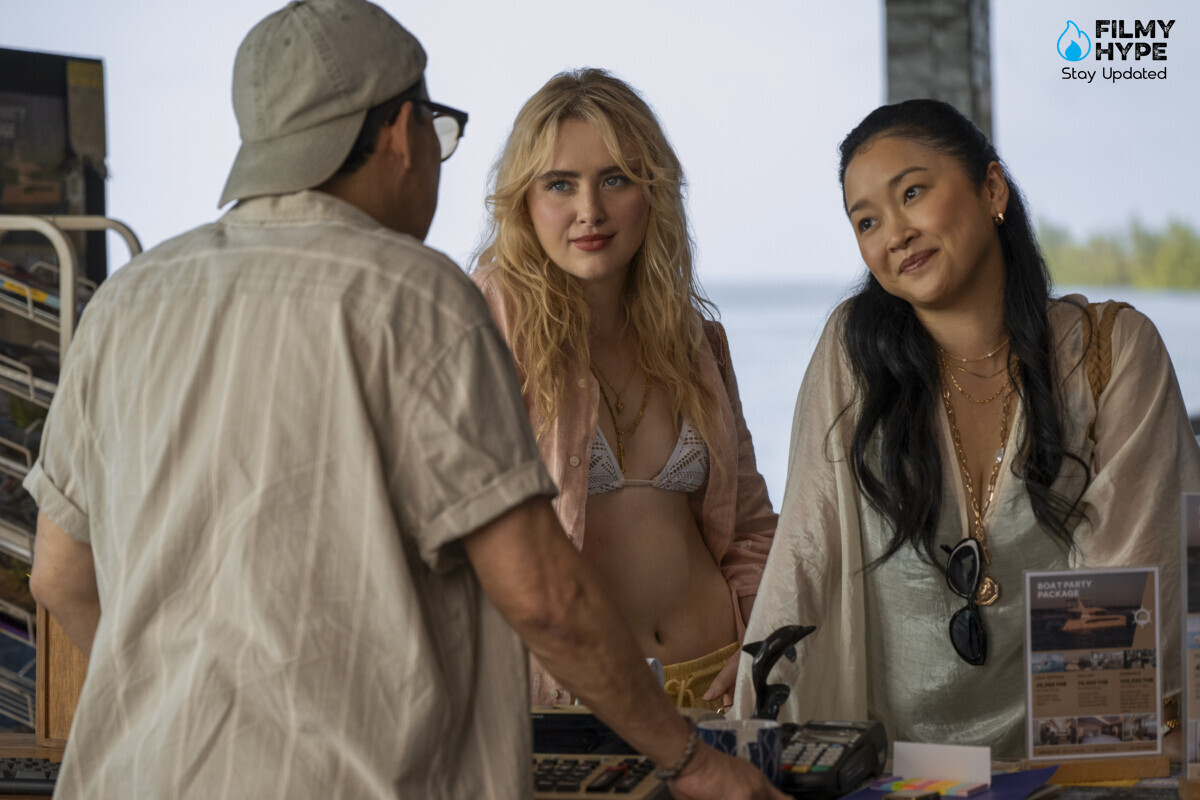
Even at the end, when Sara’s plan is clearly the right one, Max can’t bring herself to simply trust it and wait. She has to follow. She has to reassert herself. That final act of climbing after Sara, of refusing to stay put, is the same instinct that’s been getting people killed the entire film. It’s just that this time, there’s no one left to absorb the consequences except her.
The rope between them becomes a metaphor for the friendship itself. Sara has been tied to Max for years, connected in ways that pulled her under even when she wanted to swim free. Cutting the rope isn’t just survival. It’s separation. It’s the moment Sara stops being an extension of Max’s choices and starts being her own person.
Sara’s Survival Is Earned
Once Max is gone, something shifts in Sara. She’s been the follower for the entire film, deferring to Max’s judgment, going along with plans she didn’t fully believe in. But now there’s no one left to defer to. For the first time, she has to think for herself.
She also realizes that hiding isn’t going to work anymore. The shark is still in the water. Every time she’s tried to avoid it, it’s found her. So she does something she hasn’t done the whole movie. She goes on the offensive.
The cave’s limestone formations become her weapon. She positions herself near them and lets the shark charge. It’s a terrifying gamble. Each time the shark comes at her, it slams into rock instead of flesh. The impacts start breaking the ceiling down. Stalactites crack and fall. The cave itself is collapsing, and Sara is using that collapse as a trap.
When the moment is right, she drops into the water. The shark, committed to its charge, can’t correct course fast enough. It gets wedged in the falling rock, trapped and crushed by the same environment that’s been its hunting ground. The current sweeps Sara out through a gap in the cave and up to the surface. She breaks through, gasping, injured but alive. There’s a beach nearby. Boats in the distance. Rescue is possible.
The film doesn’t show what comes after. It doesn’t need to. The point isn’t whether Sara makes a full recovery or finds happiness or processes her trauma in healthy ways. The point is that she survived, and she survived by finally trusting herself instead of someone else.
The Friendship Was the Real Monster
This is where the film’s title starts to make a different kind of sense. The Devil’s Mouth refers literally to the cave system, the underwater labyrinth that swallows people whole. But by the end, it’s clear that the title is also pointing at something else. The real devouring force in the story isn’t the shark. It’s the dynamic between Sara and Max.
Their friendship was built on an imbalance. Max led. Sara followed. This pattern was so deeply ingrained that neither of them questioned it, even when Max’s leadership was actively putting people in danger. The caves don’t create this dynamic. They expose it. They strip away the social niceties and the surface-level excuses and show the relationship for what it’s always been. One person making choices, another person living with the consequences.
Max isn’t a villain. She’s not malicious. She genuinely cares about Sara, in her way. But caring about someone and controlling them can look very similar from the outside, and the film is clear-eyed about the damage that confusion can cause. Max’s dominance wasn’t born of cruelty. It was born of habit, of personality, of a friendship that settled into a pattern years ago and never found a reason to change. The caves provided the reason. The cost of the lesson was everyone’s life.
Sara as the Final Girl
Horror has a long tradition of the final girl, the last survivor who faces the monster and walks away. Sara fits the archetype, but not in the way you’d expect. She’s not the toughest. She’s not the most resourceful, at least not at the start. She spends most of the film in Max’s shadow, second-guessing herself, deferring to someone else’s judgment even when her instincts are screaming at her to do otherwise.
What makes her the final girl isn’t her ability to fight the shark. It’s her ability to recognize, finally, that the person she’s been following isn’t infallible. Max’s death forces a transformation. Sara has to become the decision-maker, has to trust her own instincts, and has to act instead of react. The shark is the external threat, but the internal threat was always the voice in her head telling her that someone else knew better.
When she cuts the rope, she’s not just saving herself from drowning. She’s severing the connection to a friendship that was pulling her under long before the shark showed up. The film doesn’t linger on this moment or underline it with dialogue. It doesn’t need to. The action speaks clearly enough.
What the Ending Means
The Devil’s Mouth ends on a note that’s both bleak and hopeful. Bleak because almost everyone is dead. Sara surfaces alone, injured, traumatized, carrying the weight of what happened in the caves. The friendships that brought the group together are gone, destroyed by pressure and panic and the unforgiving logic of survival. Whatever life Sara had before this trip, she’s not going back to it unchanged.
Hopeful because she’s alive. Because she made it out by trusting herself for the first time. Because the film suggests, without saying it outright, that surviving the cave means more than just not dying. It means escaping the dynamic that put her in danger in the first place.
The shark is dead. The cave has collapsed. Max is gone. Sara is still here, and for the first time in the story, her choices are entirely her own. What she does with that freedom is beyond the scope of the film. The ending doesn’t offer a neat resolution or a glimpse of a happy future. It offers something more honest. Survival. The possibility of starting over. The understanding that sometimes the most dangerous thing in your life isn’t the predator you can see. It’s the relationship you’ve never thought to question.