


One Night Only 2026 Movie Review and Analysis
Cast: Monica Barbaro, Callum Turner, Molly Ringwald, LeVar Burton, Julia Fox, Maya Hawke, King Princess, Ziwe, Ben Marshall
Directors: Will Gluck
Filmyhype.com Ratings: 3/5 (three stars)
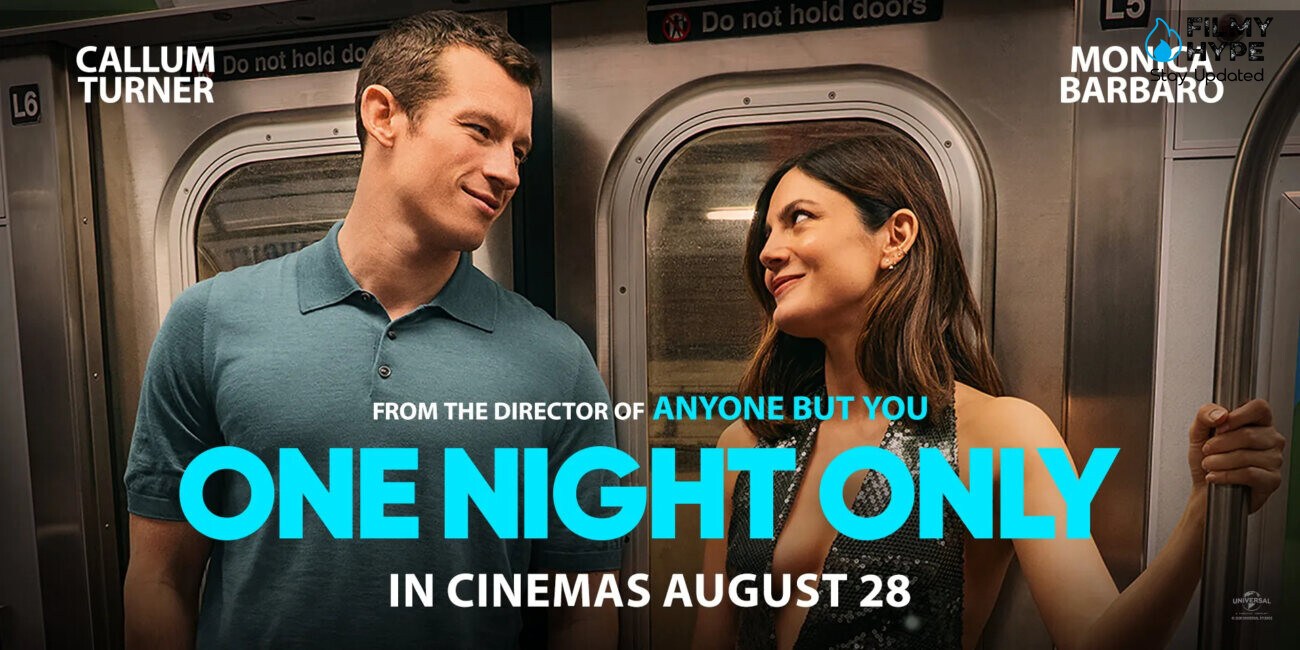
The premise of One Night Only is undoubtedly memorable: in an America where premarital sex has been banned, the government suspends the law for twelve hours a year and allows singles to have sex freely. A sort of The Purge applied to romantic comedy. On paper, it could be the starting point for a scathing satire on body control, political hypocrisy, and sexual repression. In Will Gluck’s film, however, it becomes above all the pretext to follow two strangers through a New York night of failed dates, absurd encounters, and missed opportunities. It is precisely this contradiction that defines the film. One Night Only is a bright, elegant, and energetic romcom, supported by two very pleasant protagonists like Monica Barbaro and Callum Turner.
But it is built on top of an idea so disturbing that it makes it almost impossible to ignore its implications. And the more the script tries to treat them as simple set design, the more evident they become. The absurdity of the premise is naturally intended. Gluck takes one of the most classic structures of romantic comedy, that of two strangers destined to meet, get lost, and find each other, and immerses it in an America barely warped from our own. Just, and that’s the point. In a present where Donald Trump’s US policies and, more generally, much of the Western world seem to have progressively lost some points of reference, even the idea of a government that claims to regulate the sex lives of its citizens becomes the grotesque starting point for talking about something very contemporary.
One Night Only 2026 Movie Review: The Story Plot
Sexual relations between unmarried people have been illegal in the United States for three years now. There is only one exception: one night a year during which the ban is suspended for twelve hours. In New York, Owen (Callum Turner), a pizzeria owner, thinks he’s already planned his evening: he wants to spend it with Malika (Maya Hawke), his girlfriend, and has even prepared the ring to propose to her. The plan collapses when she tells him that she intends to take advantage of the only night available to sleep with a neighbor. Owen thus suddenly finds himself single on the wildest night of the year.
Across town is Allie (Monica Barbaro), a singer who lends her voice to commercial jingles. She too participates in the big collective night, accompanied by her friend Jacinta (King Princess), but with intentions almost anachronistic compared to those around her: she is not just looking for someone to have sex with; she would like to meet someone to build something with. Owen and Allie end up crossing paths by chance. From that moment on, the film becomes a race through New York made up of encounters, detours, misunderstandings, and increasingly absurd characters. Owen and Allie continue to brush, reunite, and separate as an entire town around them seems busy capitalizing on the least romantic night of the year until the last second.
One Night Only Movie Review and Analysis
The good news is that the leading couple works. Barbaro brings a more down-to-earth, slightly pungent energy to Allie, while Turner possesses that natural melancholy that makes Owen more interesting than the script actually manages to write him. Together they have believable chemistry, enough to sustain much of the film even when the dialogue isn’t particularly brilliant. The problem is that One Night Only continues to postpone a relationship that seems inevitable practically from their first meeting, without finding strong enough narrative motivations to justify it. The structure thus becomes a succession of deviations. The two meet new characters, end up in increasingly absurd situations, and encounter a series of cameos, but it often feels like the film is piling up episodes rather than truly building the protagonists’ romantic journey.
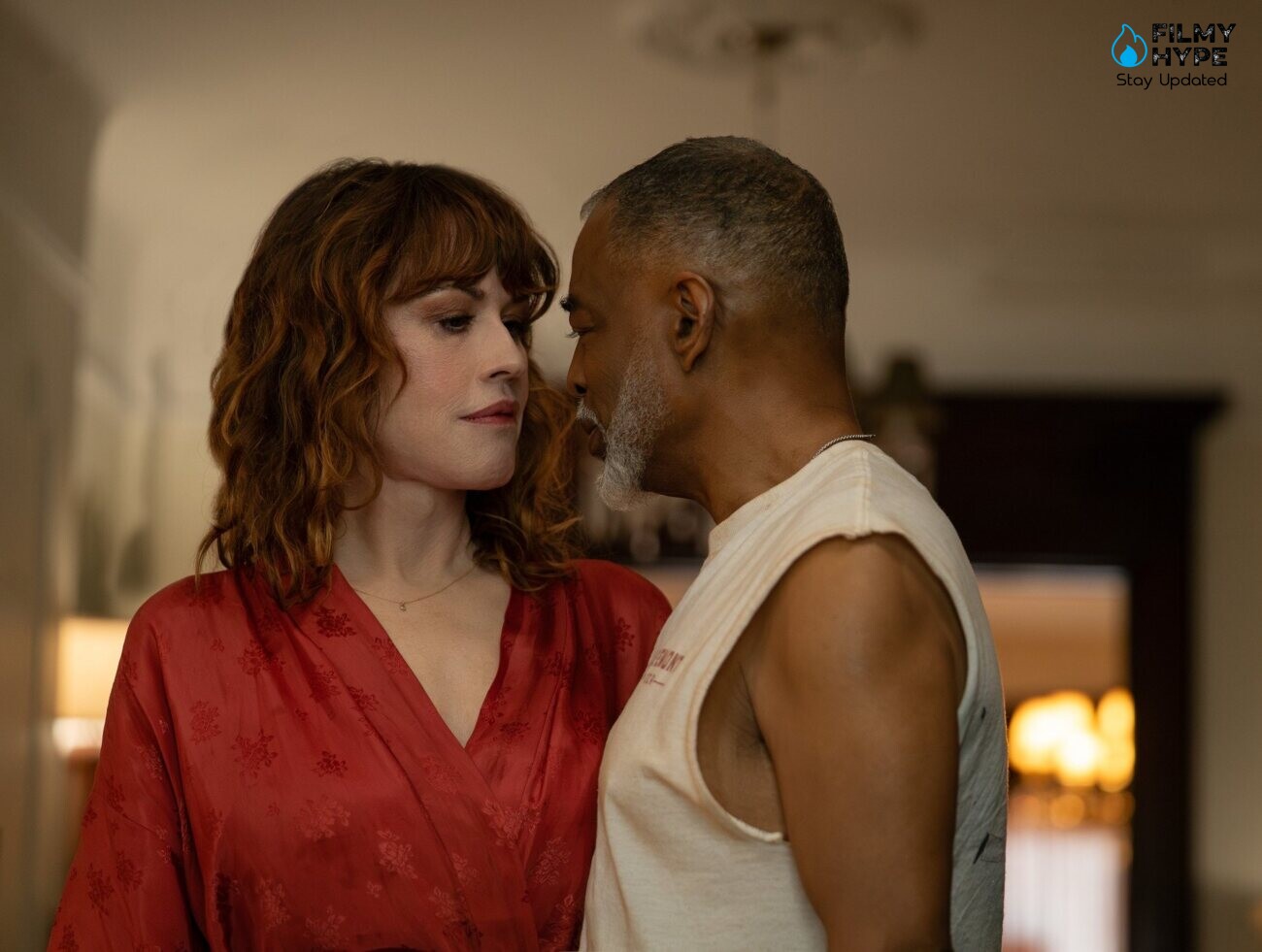
The main difficulty, however, remains the world that One Night Only has decided to create. You can’t introduce a society in which the state physically controls citizens’ sexuality and then behave as if it were just a funny variation on the rules of a romantic comedy. The film continually sheds interesting details: condoms sold at crazy prices overnight, government sensors, political propaganda, graffiti against the ban, arrests for breaking the law. The problem is that each element opens up questions that the script doesn’t seem interested in addressing.
How was such a law accepted? Why is there no real political opposition? How is sexuality handled within relationships? And above all, why do the protagonists seem to accept such a radical violation of their individual freedom almost as a normal nuisance? The premise is too extreme to stay in the background. Every time the film tries to return to the lightness of romcom, that dystopia inevitably continues to resurface. Then there is another obvious contradiction: One Night Only talks about sex all the time but seems to have very little interest in desire. The city is theoretically overwhelmed by twelve hours of sexual freedom, yet the film remains surprisingly chaste.
It wouldn’t necessarily be a problem if this were to tell the story of a particularly intense romantic relationship. But the script slowly ends up pitting casual sex against feeling, treating the latter as a morally superior choice. In this way, a story that could have been a sex-positive comedy instead takes on a curious, almost conservative, attitude toward its subject matter. The effect is even more alienating considering that sexual repression does not arise from a choice of characters, but from an authoritarian law. When the film turns Allie and Owen’s abstinence into something romantic without really questioning the system that imposes it, the satire almost completely loses its bite.
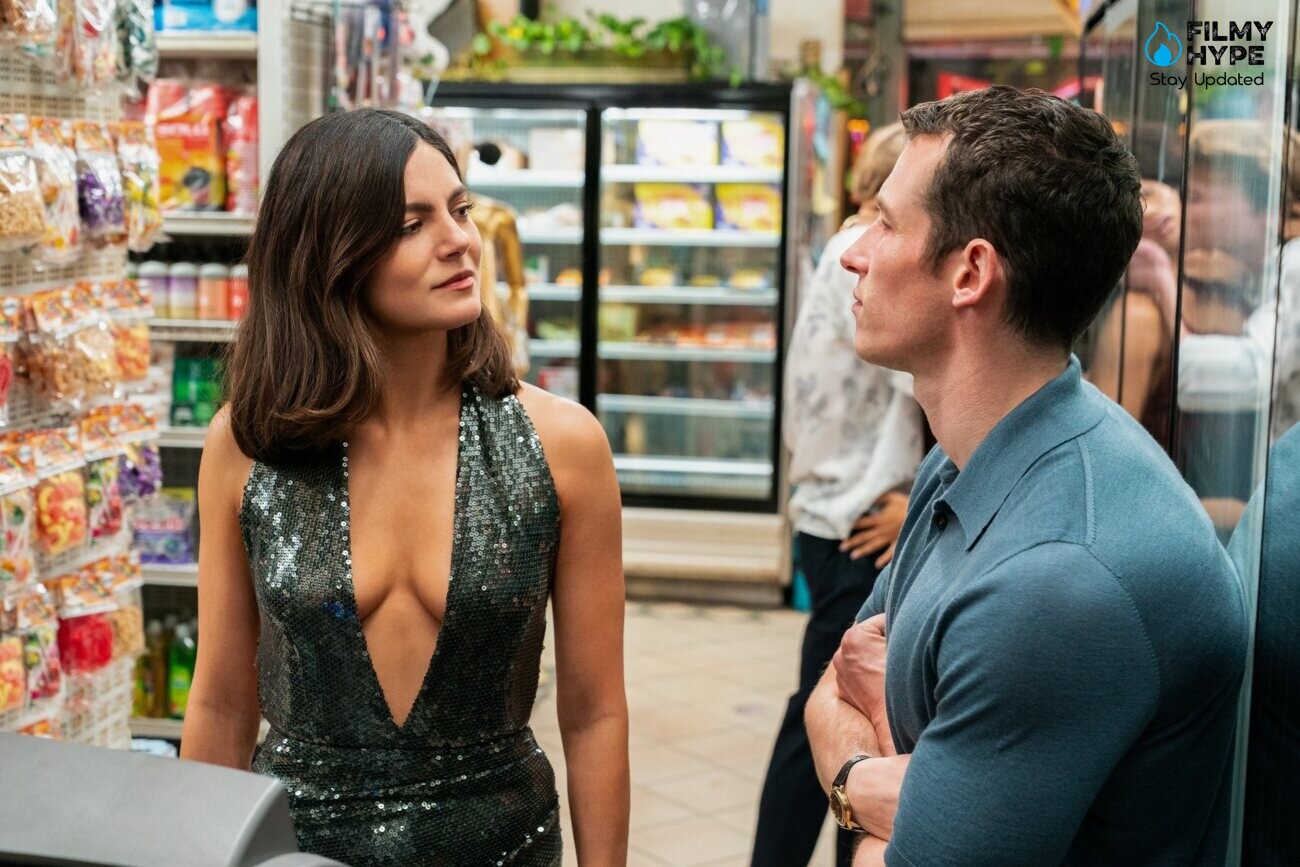
Where the film works much better is in the box. After Anyone But You, Will Gluck confirms that he knows how to give his romantic comedies an instantly cinematic look. New York is really used and not simply evoked through anonymous sets, becoming an integral part of the night experienced by the protagonists. The photography is bright, the direction keeps a steady pace, and the production design enjoys showing how the law has transformed everyday life. Even when the script struggles, One Night Only retains a visual energy that makes it more enjoyable than many contemporary romcoms intended directly for streaming. There are also some successful comedic ideas, particularly the pharmaceutical jingles sung by Allie, but too many gags seem designed to work individually and don’t really contribute to the story.
One Night Only could have been a simple romantic comedy and probably would have worked better. Monica Barbaro and Callum Turner are two sufficiently charismatic protagonists, New York offers the ideal context, and Will Gluck has the necessary craft to build brilliant and light entertainment. But the film chooses to set that story within a dystopia that involves surveillance, repression, and government control of bodies without really intending to face the consequences. The premise that should make it original thus becomes its main problem. It remains a romcom enjoyable to watch, at times funny and supported by a couple who deserved a better story. But behind color, music, and movement remains an impossible question to ignore: why tell the story of such a disturbing world if you don’t really want to talk about what it means?
When talking about One Night Only, we can’t help but start from the lyrics and the context, or in some way from the pretext that should make everything more original. The film’s nerve point is, however, also the most fragile and precarious one. Although it is mandatory to suspend disbelief in cinema, otherwise narrative would not exist, the basic concept that ignites the script is extremely complicated to swallow, as well as unstable with respect to the conception that would have a people-that of the United States of America-subjected to the puritanical, dogmatic, and ultra-conservative will of a government that has even slipped under the covers of its citizens.

And so yes, we struggle to think that the country has not yet been ravaged. Moreover, and not trivial, One Night Only is pervaded by a tinge of bitterness that is linked to modern evil: individualism. America’s singles, instead of disobeying the masses, train and crave the one night of steamy sex they’re allowed. Beyond the fine rom-com assumption, One Night Only takes on the traits (perhaps unknowingly) of a sociological work: we live in a crazy and unnerving era in which, out of exhaustion or disillusionment, we have agreed to submit to every rule imposed by the authorities. Even those that undermine inviolable personal freedom.
There could also be an additional, far from trivial, reading plan: never before has sex been within the reach of apps, so much so that desire itself has speeded up and, perhaps, become trivialized. Beyond dystopian repression, the rediscovery of desire could (better) illuminate the value of feeling. Opinionable, and terrifying if the authorities’ push is behind this value. Natural: without this cue, which occupies a substantial (but we would say non-central) part, there would be no One Night Only. So, putting it all together, Will Gluck tries to blend it all without the bulk of the context over-eating the overall alchemy (and it wasn’t an easy challenge).
An alchemy supported by the stage presence of Callum Turner and Monica Barbaro, in perfect inspiration, halfway between sensuality and sweetness. And the rest? The rest is what you expect from a good comedy: the right intonation (and the music plays a crucial role), several well-placed lines, and some particularly successful moments. A corollary that Gluck knows how to best manage (without sinking, however), managing to make coherent (if it cannot be plausible) a rom-com much more complex than it would like to appear.
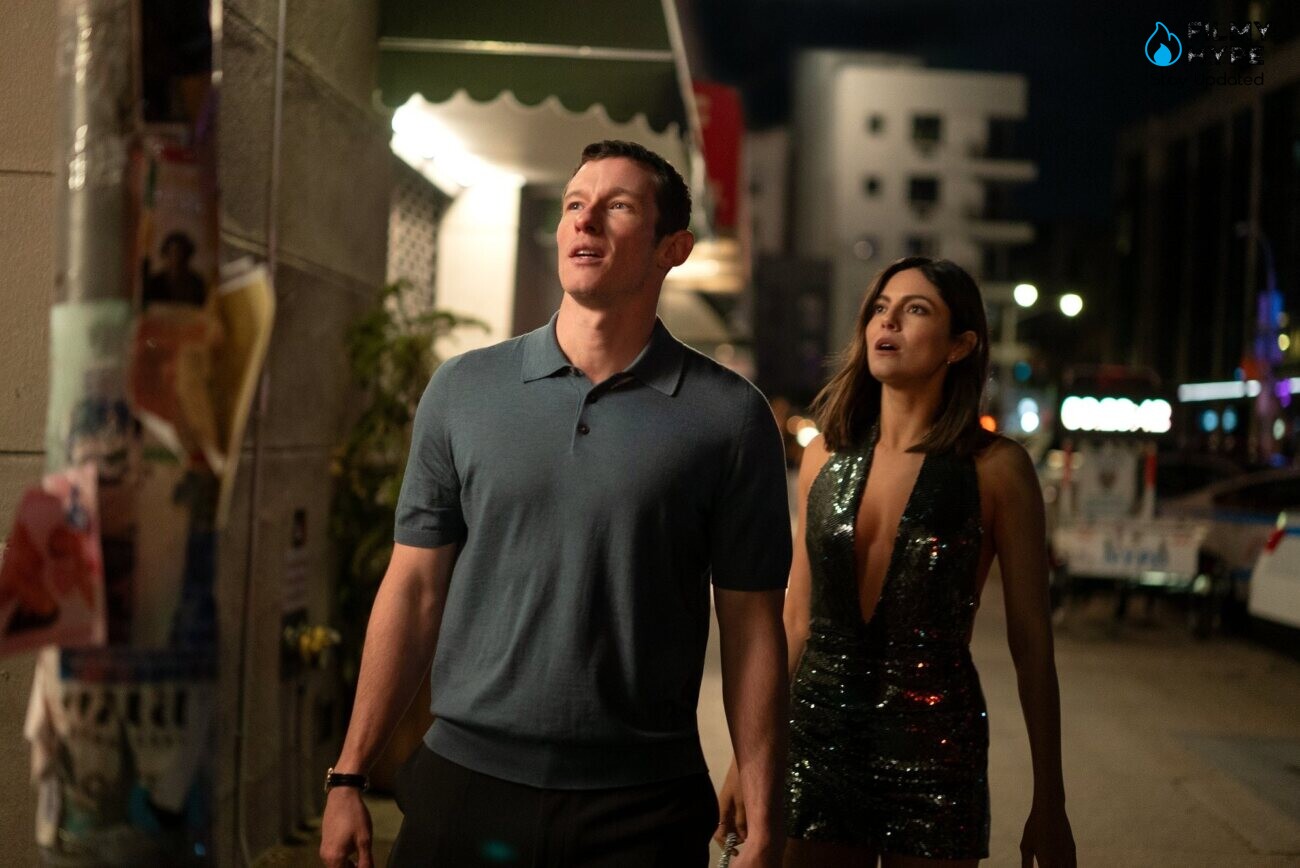
And in the end, One Night Only works mostly because they work: Callum Turner and Monica Barbaro. The two have great chemistry and manage to make credible a relationship built paradoxically more on missed opportunities than on time spent together. Turner brings Owen a clumsy and sincere romance; Barbaro (already seen as Joan Baez in A Complete Unknown) confirms his talent, finding Allie a brilliant and charismatic character. Around them, Will Gluck builds a small circus: a series of appearances and supporting characters contribute to the feeling that anything can happen before dawn.
Particularly funny are the cameos of Glen Powell and Sydney Sweeney, protagonists of Everybody But You, a self-quote with which Gluck ideally connects his last two romantic comedies. One Night Only doesn’t really revolutionize rom-com, but it finds enough ideas to play by its rules without destroying them. It’s funny, brilliant, well-acted, and above all, much smarter than its deliberately zany premise might suggest. The lack of success achieved in the United States risks making it go unnoticed, but it has exactly the character of those films that audiences might rediscover in a few years, when it will be too late to save it at the box office.
Will Gluck’s merit is above all that he doesn’t let the science fiction idea take over from the romantic comedy. The world constructed by the film is absurd, but it is told with such naturalness that it almost becomes a backdrop, an element that the characters simply have to deal with. The sci-fi component thus serves to question dynamics much closer to our reality, without transforming One Night Only into something overly serious or thoughtful. The film manages to constantly move between the absurdity of the premise and the lightness of the comedy, maintaining a balance that is not always easy to find. Fast and frenetic editing also helps sustain this pace, almost as fast as the city in which the story is set.
New York becomes an integral part of the story: streets, chance encounters, races, detours and misunderstandings follow one another without leaving too much room for static. The editing accompanies precisely this feeling of continuous movement, following Owen and Allie while they seem to touch each other several times without really being able to meet. It’s a race against time that captures the city’s energy well and, above all, the emotional turmoil of the two protagonists.
The use of music is also interesting, especially during the moments dedicated to Allie. The character is accompanied by real jingle comedies that help underline her energy, lightness, and that almost fairy-tale romantic streak that distinguishes her. The music in One Night Only is therefore not only an accompaniment to the images, but becomes part of the film’s comic language, playing with the situations and the viewer’s expectations. It is precisely these small tricks that make Allie even more recognisable and give the film a precise identity.

One Night Only, it finds its strength in the ability to never take itself too seriously, even starting from an idea that allows us to address topics that are anything but superficial. The chemistry between Callum Turner and Monica Barbaro, the brisk pace, and a direction that plays with the codes of romantic comedy make the film a light and entertaining product, but with something to say about the way we experience relationships today and the constant search for authentic connection. Deep down, on a night when anything seems possible, the hardest thing for Owen and Allie is actually finding the right person.
One Night Only Movie Review: The Last Words
One Night Only is possible; it finds its strength in the ability to never take itself too seriously, even starting from an idea that allows you to tackle topics that are anything but superficial. The chemistry between Callum Turner and Monica Barbaro, the brisk pace, and a direction that plays with the codes of romantic comedy make the film a light and entertaining product, but with something to say about the way we experience relationships today and the constant search for authentic connection. Deep down, on a night when anything seems possible, the hardest thing for Owen and Allie is actually finding the right person.