


The Dog Star Movie Ending Explained: With The Dog Star, Ridley Scott uses a post-apocalyptic backdrop to tell a story that’s far more intimate than a standard survival tale. The world Hig, played by Jacob Elordi, moves through has been devastated by an epidemic — but his real struggle was never really about what’s left of civilization. It’s about whether it’s even possible to keep living after losing everything that once gave his life meaning. His wife’s death, the guilt of having decided to end her life support, and finally the loss of his dog Jasper leave Hig suspended somewhere between simply surviving and quietly wanting to disappear.
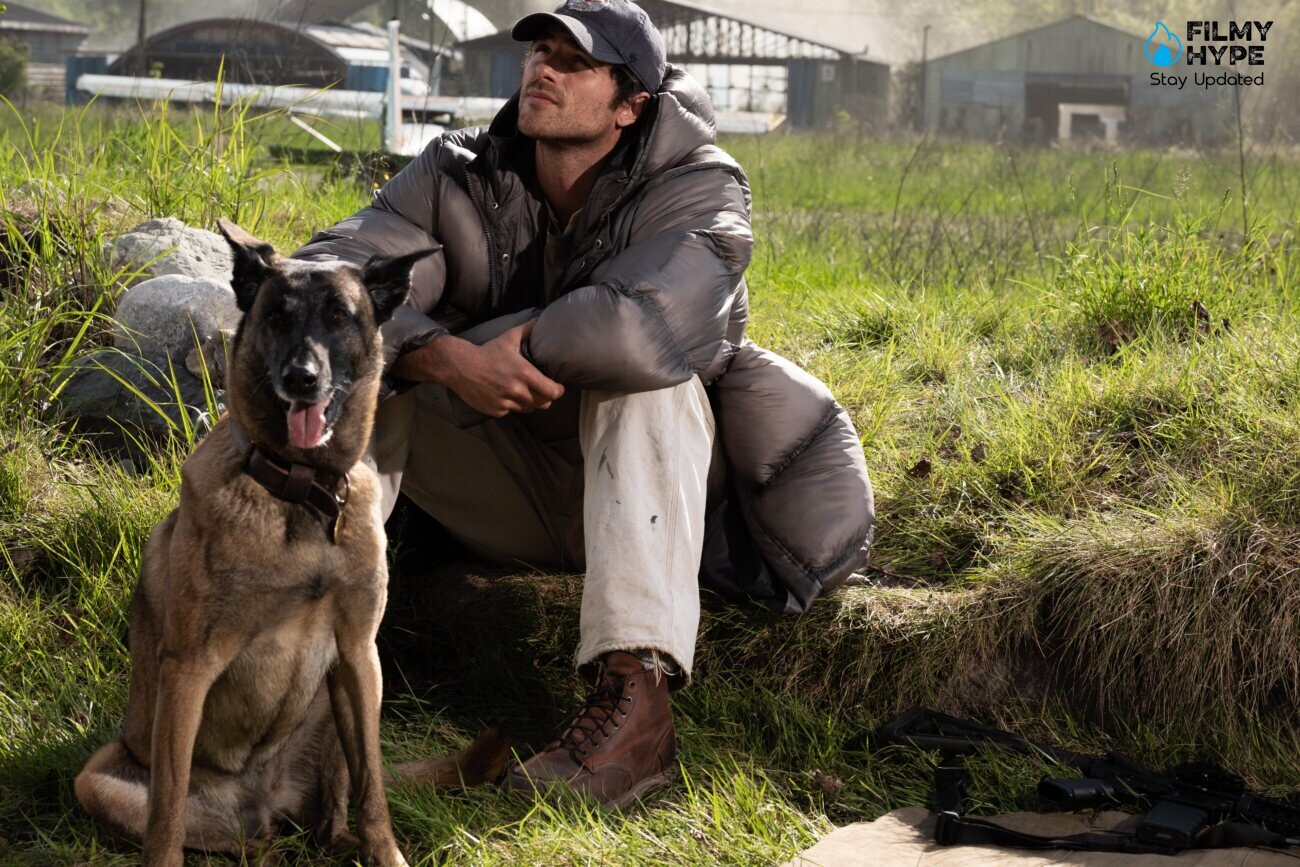
That’s exactly why the film’s ending shouldn’t be read as just the conclusion of Hig’s journey to Grand Junction. His encounters with Cima (Margaret Qualley) and Pops (Guy Pearce), his eventual return to Bangley (Josh Brolin), and his entry into the Mennonite community all gradually open up a possibility Hig had long stopped letting himself consider: having an actual life again, rather than merely enduring one. His final solitary journey is where that possibility gets tested. Hig has to return to the source of his own pain and consciously decide whether he stays tethered to the dead, or comes back to the living.
The Dog Star Ending Explained: Why Does Hig Go Home, and What Does His Final Choice Actually Mean?
In the film’s closing stretch, Hig leaves the Mennonite community without telling Cima or anyone else. At first, the gesture seems to be pulling him right back to where he started. He takes his plane up again, seemingly considering flying it straight into the mountain where he used to walk with his late wife. This isn’t just a moment of despair for its own sake — Ridley Scott is deliberately putting Hig back in front of the same possibility of death that’s shadowed him ever since the epidemic began. This time, though, something’s different. Hig chooses not to die, and instead returns to the old house he once shared with Bangley. He walks into his old bedroom, and the film gives us one last look back at his life with his wife.
That’s where the film’s real climax actually happens — not in any of the chases, illnesses, or confrontations along the way, but in this quiet act of accepting loss.
Hig is finally able to say goodbye to her because he’s come to understand that continuing to live isn’t the same as betraying her memory. Much of his guilt has been tied to his decision to end her life support, and up to this point, some part of him has treated any chance at future happiness as something he simply didn’t deserve. Cima is what shifts that perspective — she shows him that forming a new bond doesn’t erase the old one.
Going back to the house becomes less about revisiting the past and more about a final reckoning with himself: Hig isn’t actually looking for what he lost. He’s looking for permission to finally let it go. When he chooses to return to Cima afterward, the film closes out a psychological arc that really began long before his physical journey ever did. Hig hasn’t defeated death, and he hasn’t forgotten who he lost — he’s simply stopped treating his own survival as some kind of punishment.
What Do Hig, Cima and Pops Find in Grand Junction?
When they radio Grand Junction, a woman is initially reluctant to allow them to land. That caution makes Hig think he has found a community that is simply trying to protect itself from outside danger. Pops manages to convince them and the three enter the facility, but Hig soon realizes that something doesn’t add up. The community leader shows a special interest in Cima when she discovers that before the collapse he studied medicine.
The reason ends up being much more sinister. The inhabitants of Grand Junction have no intention of integrating the three newcomers: they want to stay only with Cima because his medical knowledge is useful. Hig and Pops are expendable. Then comes the real revelation: the community of Grand Junction practices cannibalism and murders many of the people who come there to use them for food. The shelter that Hig had imagined as a small survival of the old world thus becomes a trap.
How Do They Escape from Grand Junction?
When he understands what they intend to do with them, Hig reacts and sets fire to one of the men in the community, unleashing the chaos necessary to try to escape. Hig, Cima, and Pops finally manage to leave the facility and leave Grand Junction. The experience definitively destroys Hig’s hope of finding an organized society that preserves the values of the previous world.
His journey, however, has not been futile. Hig is no longer alone and has found a new family in Cima and Pops. That’s why he decides to return to the only place he still considers his: the home he shared with Bangley. But while Hig’s been away, things have changed there too.
Does Bangley Die During the Attack?
No. Although for much of the final stretch it seems possible that he died, Bangley manages to survive.
His main fear when Hig decided to leave was that he would be left alone to defend the settlement. The looters who had been approaching the area end up attacking, and Bangley has to face practically dozens of them. First, he takes advantage of stealth and then uses his weapons to kill numerous attackers. The situation changes when the looters find their own arsenal and manage to use a rocket launcher against the watchtower.
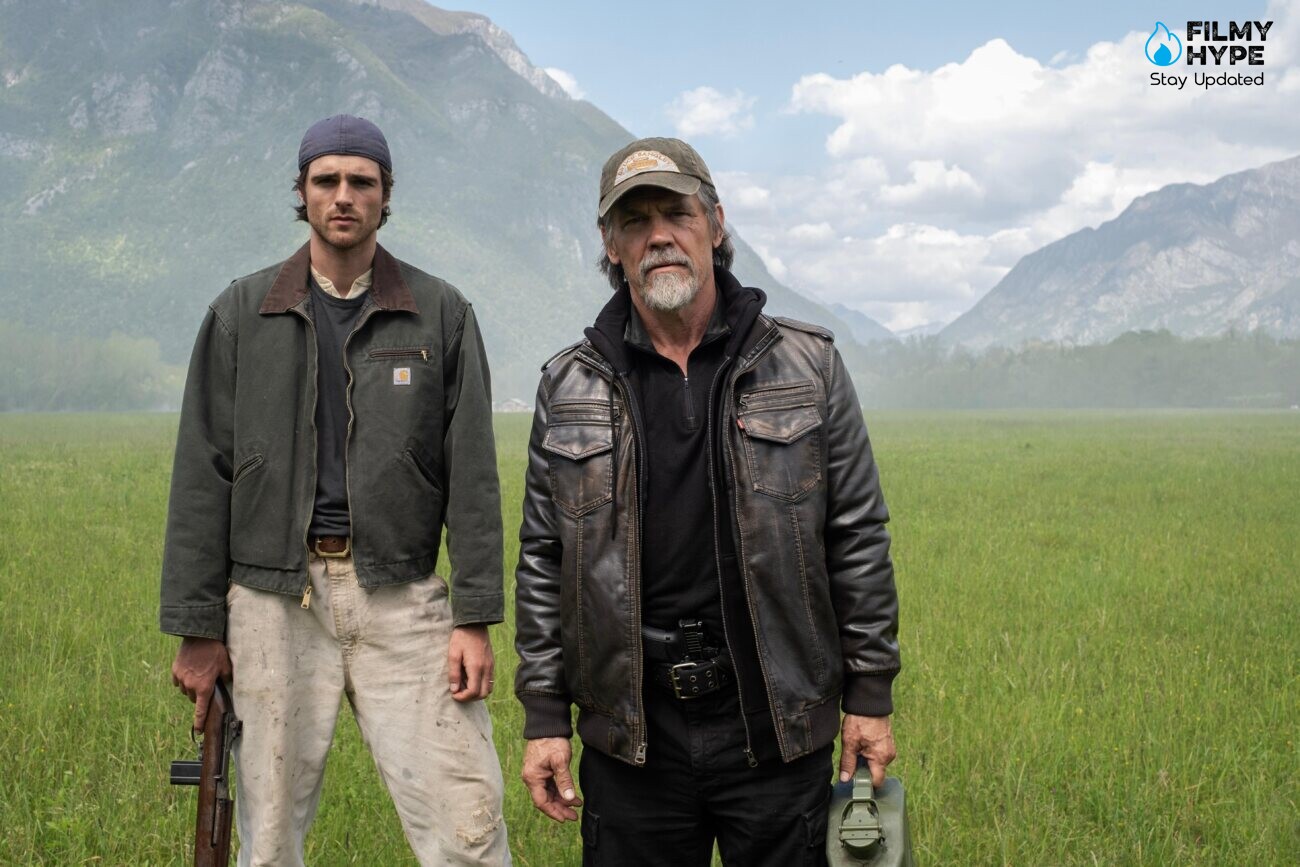
The explosion destroys the structure and causes Bangley to fall from a considerable height. The film leaves its fate up in the air for a while, but when Hig returns, he discovers that he is still alive, although he is seriously injured and covered in bandages. He has survived the attack, but the place where they both lived has been practically destroyed.
Where Do Hig and the Others End Up Living?
The destruction of their old refuge forces the group to find another place to settle. Hig then remembers a community of Mennonites to which he had previously brought supplies. Their settlement is protected by a wooded area and is difficult for looters to locate. After checking what happened in Grand Junction, he also represents a much more humane alternative to rebuild their lives.
Hig takes Cima and Pops there and also manages to convince Bangley to accompany them. The decision is especially important for the latter. Bangley had built his entire existence around mistrust, guns, and the need to constantly defend himself. However, he ends up adapting to the community much better than he himself expected.
Do Hig and Cima End Up Together?
Yeah. The epilogue confirms that Hig and Cima have started a relationship.
After losing Jasper and leaving home, Hig began the journey thinking that Grand Junction could give him back some of the world that had disappeared. In the end, he discovers what he needed was not in a large community or in the remains of ancient civilization.
He finds it precisely along the way.
Cima becomes the possibility of loving again and building something after years dedicated solely to surviving. Pops stays with them, and Bangley also finds his place within the new community, forming a peculiar family together.
Why Is the Film Called The Dog Star?
Jasper’s death is essential to understanding this shift in Hig. Early in the film, the dog represents the last real emotional connection Hig has left after losing his wife — a basic, uncomplicated form of relationship in a world where people have largely learned to see each other as threats. That’s actually the core difference between Hig and Bangley: Bangley believes survival requires distrusting every stranger, while Hig can’t help continuing to look for something worthwhile in other people. Jasper’s death seems, at first, like it might punish that openness. The ending proves the opposite is true. It’s specifically after losing Jasper that Hig keeps moving forward on the journey that eventually leads him to Cima, Pops, and ultimately a new community.
Jasper becomes a symbol of hope that survives loss, and the title The Dog Star takes on its full meaning in the film’s final act. When Hig looks up at the sky with Cima and tells her that one of the constellations is named Jasper, the dog stops being just a memory from the past — he becomes a symbolic presence woven into the new life Hig has chosen to build. The stars, distant and technically unreachable, keep existing even when the world beneath them looks like it’s ended.
In much the same way, the dead continue to exist in memory without stopping the living from forming new connections. The point was never to forget Jasper, or Hig’s wife — it’s learning to carry them forward without constantly wishing you could reach them again. In that sense, the title captures the film’s deeper argument: in a ruined world, hope doesn’t necessarily mean the survival of the species. It means being willing to need other people again.
How Cima’s Discovery About the Illness Reframes the Apocalypse?
The subplot involving the mysterious illness follows a similar logic. The film never lays out every detail of the epidemic that devastated the world, but it does introduce, through the children of the Mennonite community, what looks like a lingering consequence of that catastrophe. Their blood disorder feeds ongoing fear that the contagion might still be spreading, which is exactly why survivors like Bangley prefer to keep their distance from others. Cima eventually discovers that the condition is actually hereditary, not contagious. She doesn’t find a cure for the original epidemic that ended the world — but she does learn that what remains can be managed, and more importantly, that it was never the threat everyone assumed it to be.
It’s a detail that ties Hig’s arc together perfectly. The Dog Star builds a world where trauma keeps shaping people’s behavior long after the original danger that caused it has changed form. Bangley fears other people because the world taught him that strangers can get you killed. Hig fears happiness because losing his wife taught him that love just means exposing yourself to loss all over again. Cima’s discovery proves that not every fear inherited from the past has to keep governing the future. Knowing the children’s illness can’t spread makes real community possible again. It’s not a definitive fix for the apocalypse — but it might be something more important to the film’s overall point: that people can eventually stop isolating themselves long enough to actually start rebuilding something together.
Bangley and Hig: Two Different Ways of Surviving Loss?
Bangley’s character ultimately offers a different lens for understanding Hig’s journey. Before leaving the air base, Bangley tells a story about a supposed “old friend” — a Marine who had a family but was never really present for them. It gradually becomes clear he’s actually talking about himself. Framing that man as someone else is his way of symbolically separating from who he was before the apocalypse. Bangley hasn’t just lost his family — he’s living with the regret of never really being there for them while he had the chance. That’s a meaningful contrast with Hig, who actually has happy memories with his wife and Jasper, and is, for that exact reason, still trapped by the pain of their absence.

When Bangley finally picks up the guitar late in the film, it’s a small but genuine gesture toward the part of himself he’d tried to erase. The world doesn’t need to return to how it used to be in order for men like Bangley and Hig to recover some piece of their own humanity.
That’s where The Dog Star fits into Ridley Scott’s long-running interest in survival stories, while taking a noticeably more sentimental approach than much of his earlier work. The question the film is really asking isn’t just who manages to survive the end of the world — it’s what actually makes that survival worth holding onto. Hig, Cima, and even Bangley all arrive at roughly the same answer, just by very different paths: nobody rebuilds a life, let alone a civilization, entirely alone. The ending doesn’t promise the pain will ever fully disappear, and it doesn’t promise the world gets saved. It offers something smaller, and precisely because of that, something far more human: Hig finally chooses to have a future.
What Does the End of Mean The Dog Star?
Grand Junction represents the false hope that drives much of Hig’s journey. From the moment you listen to that radio broadcast, imagine that there may be a place where civilization has survived the disaster. When he finally arrives, he discovers that preserving an organized structure does not necessarily mean preserving humanity.
Its inhabitants have survived, but they have turned other survivors into resources.
The small community Hig finds at the end represents just the opposite. It doesn’t own the facilities or apparent organization of Grand Junction, but it does offer something much more important: a place where people can trust each other again. It also marks the closing of Hig’s duel. Jasper’s death was what pushed him to leave, and while nothing can replace his dog, the journey allows him to regain bonds he thought were lost forever. Hig doesn’t find the world he was looking for, but a new one that is still worth building.