

The Dog Stars Movie Review and Ratings
Cast: Jacob Elordi, Margaret Qualley, Josh Brolin, Allison Janney, Guy Pearce, Benedict Wong, Alara-Star Khan
Director: Ridley Scott
Where to Watch: In Theaters
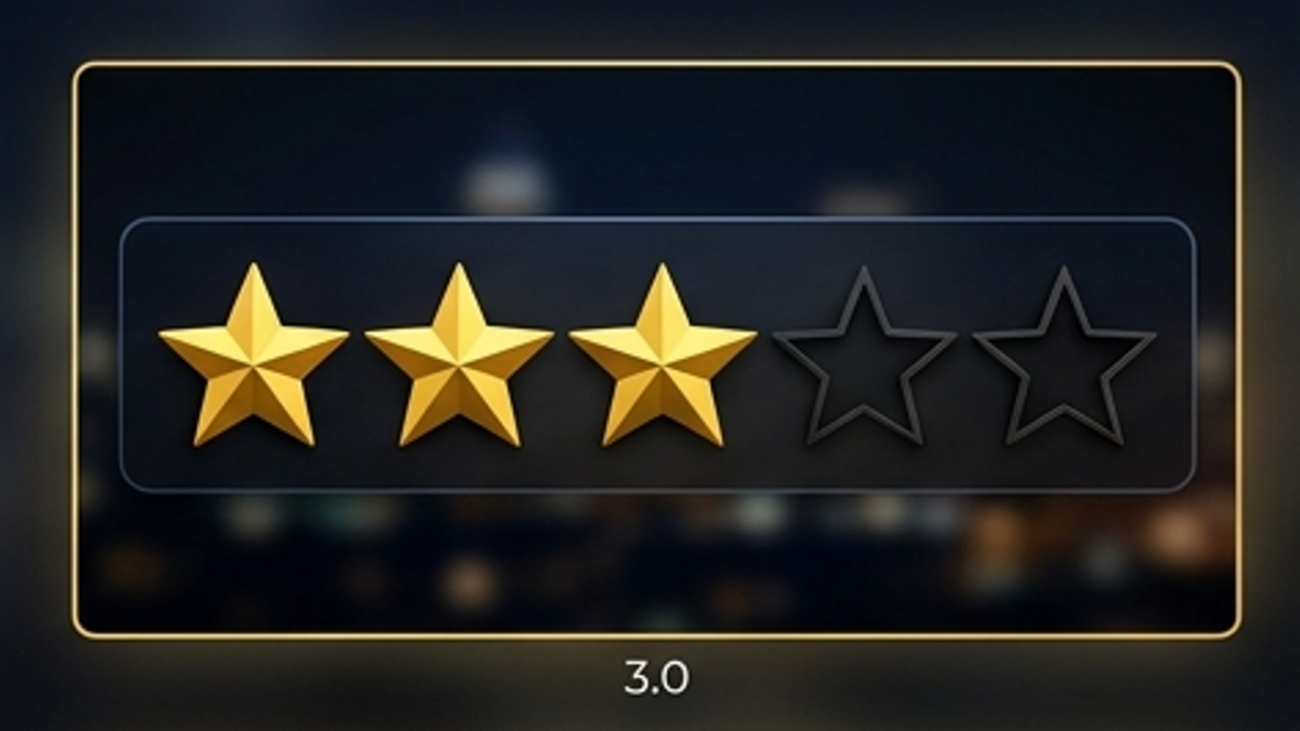
Filmyhype.com Ratings: 3/5 (three stars)
The Dog Stars works on a fascinating and visually majestic apocalypse, while still allowing classic and predictable writing to emerge. There are, and have been, stories set in post-apocalyptic settings, with epidemics and viruses galore in every area of contemporary entertainment. Whether it’s cinema, television series, or books, we’re talking about a narrative context that’s difficult to address precisely because of its “overused nature” by authors around the world. The only possible path to originality is to try to surprise the audience with seemingly classic stories in their approach, and then subvert their expectations perhaps from the beginning, or during the course of the work. Arduous undertaking, this one, but not entirely impossible. The Dog Stars, a new film directed by Ridley Scott, fits into a discussion like this, presenting something extremely familiar that, however, wants to leave something behind at the end.
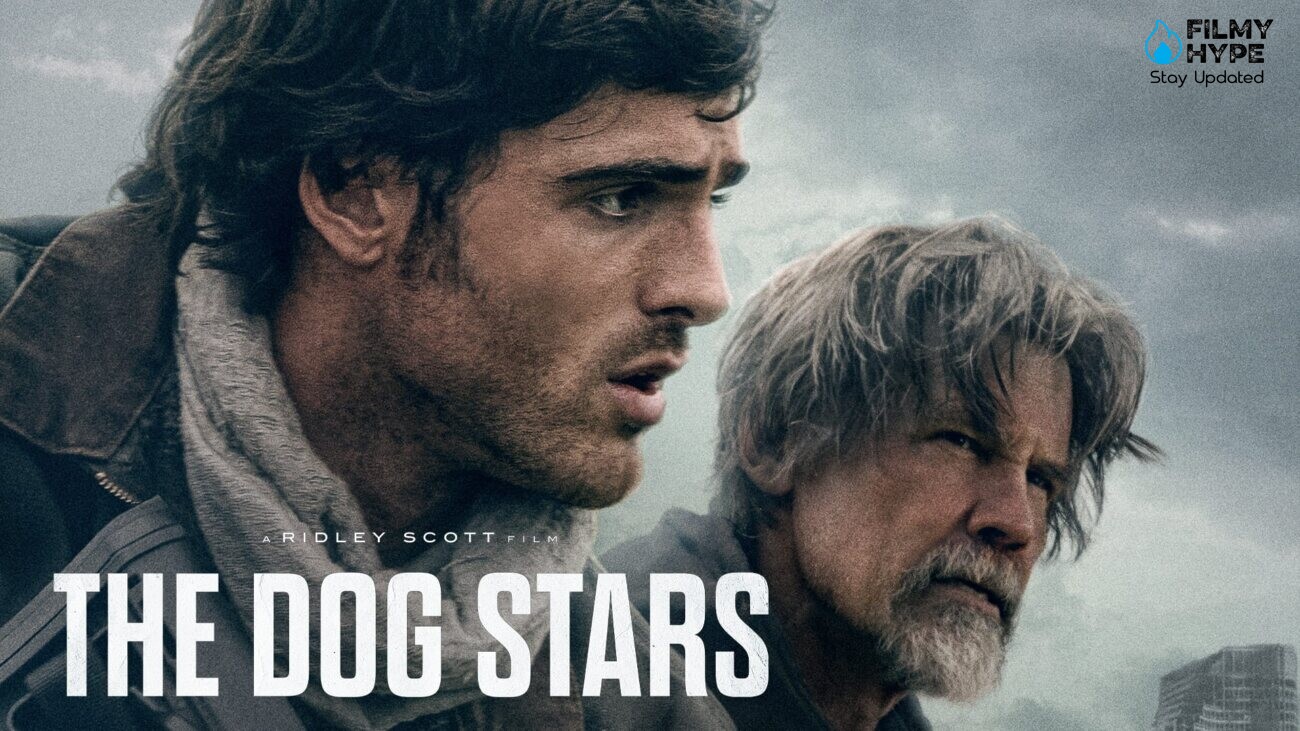
Once again, at least at the cinema, the world is over. And it is this recursion of theme that is the real problem with Ridley Scott’s The Dog Stars, because the imagery he draws on and reproduces, well, for goodness sake, in his latest work is constantly cloaked in an aura of what has already been seen. On the pitch, however, there is Scott’s usual technical mastery, the evocative environments of the locations, including our own, and a cast of beloved cinema faces such as Jacob Elordi, Josh Brolin, Margaret Qualley, Guy Pierce, capable of capturing the audience’s attention and leading them into the post-apocalyptic context of the story. The result? Between ups and downs, it’s a film that has its merits, but also just as many problems that we’ll explain, and which we struggled to summarize in the rating you read at the end of the page.
The Dog Stars Movie Review: The Story Plot
Based on the novel of the same name by Peter Heller, and available in Italian cinemas from August 26, 2026, The Dog Stars puts the human at the center of a discourse that concerns the lives of everyone, the dynamics of social adhesion, survival, the consequences of a ruined world and the gaze of those who would not only like to survive day by day, but to truly live their existence to the fullest. All this in contact in a speech that must necessarily become interesting precisely to mark the same big screen.
A pandemic, more extreme than the one we experienced a few years ago, has decimated the human race and left survivors without resources, with very little technology and the typical human hunger to impose themselves on others to mark their territory and ensure survival. Context in which we meet Hig, a young pilot with a past as a mechanic who has built himself an isolated and efficient refuge in which to hide with Bangley, a soldier expert in survival. Until a mysterious radio broadcast ignites his curiosity and, above all, his hope to find a community in which to feel welcomed. Pushing him to set out into the unknown, between constructive encounters and other very dangerous ones, to start living again and overcome the pain.
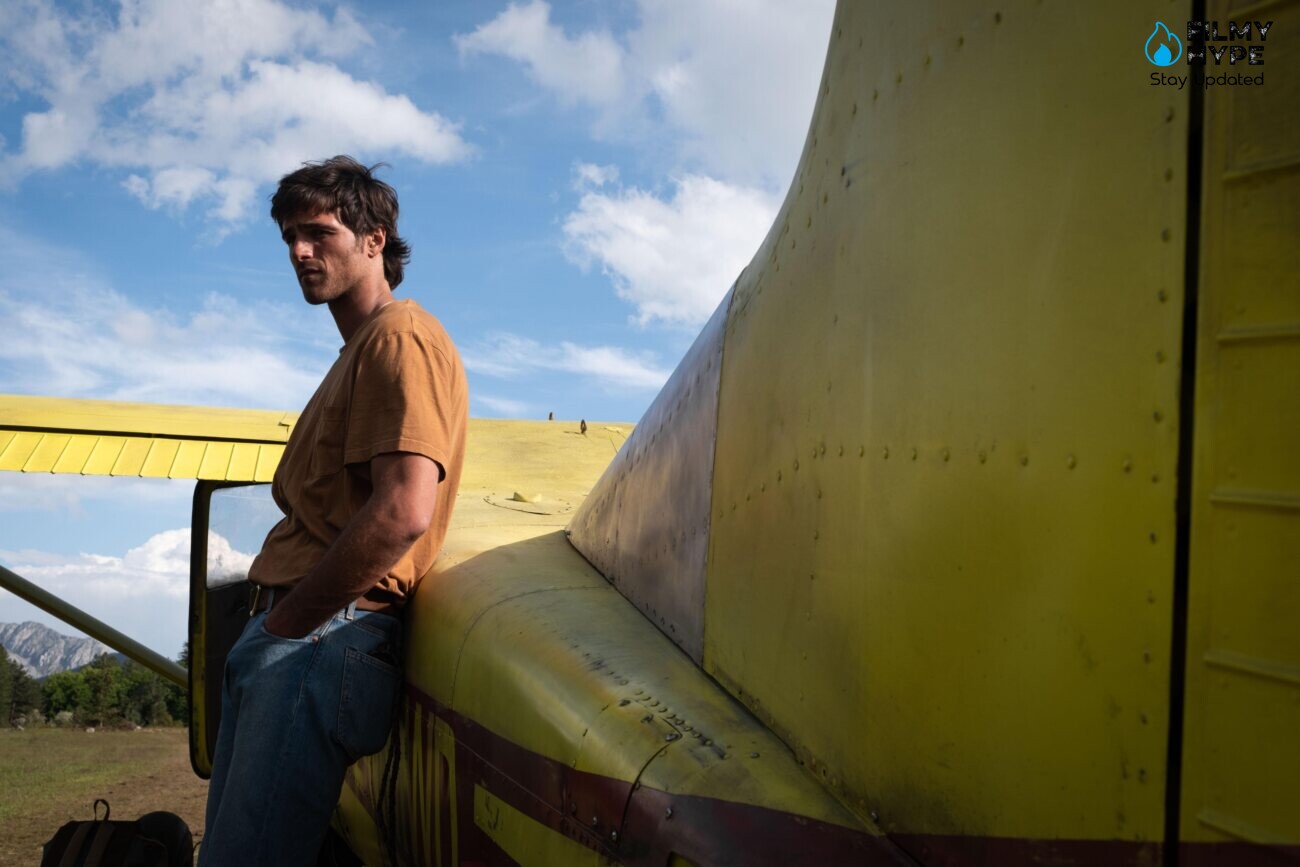
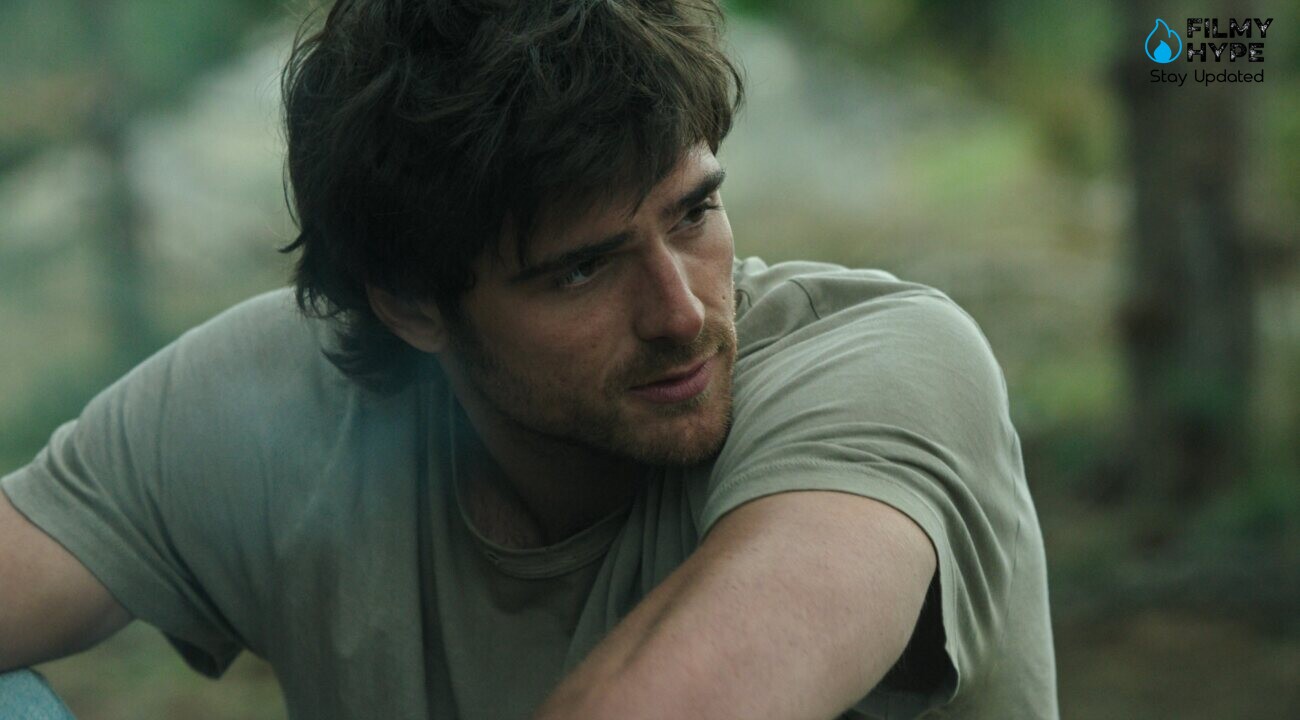
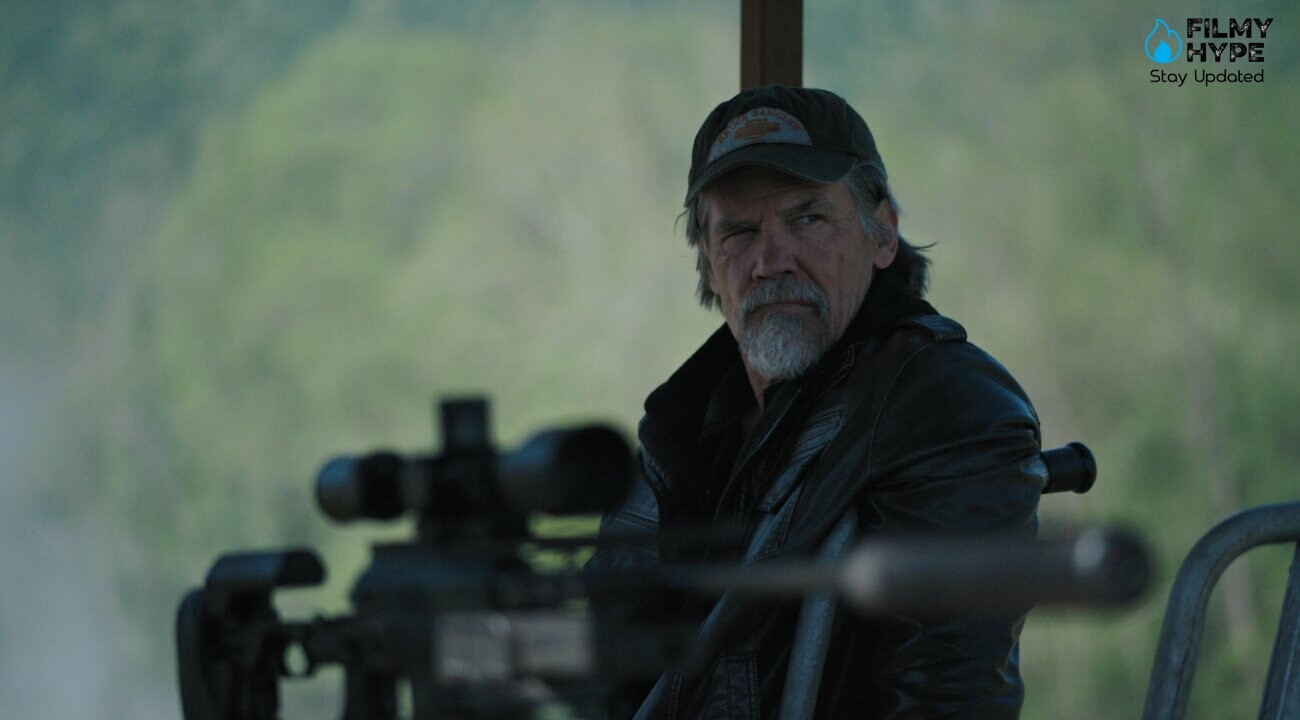
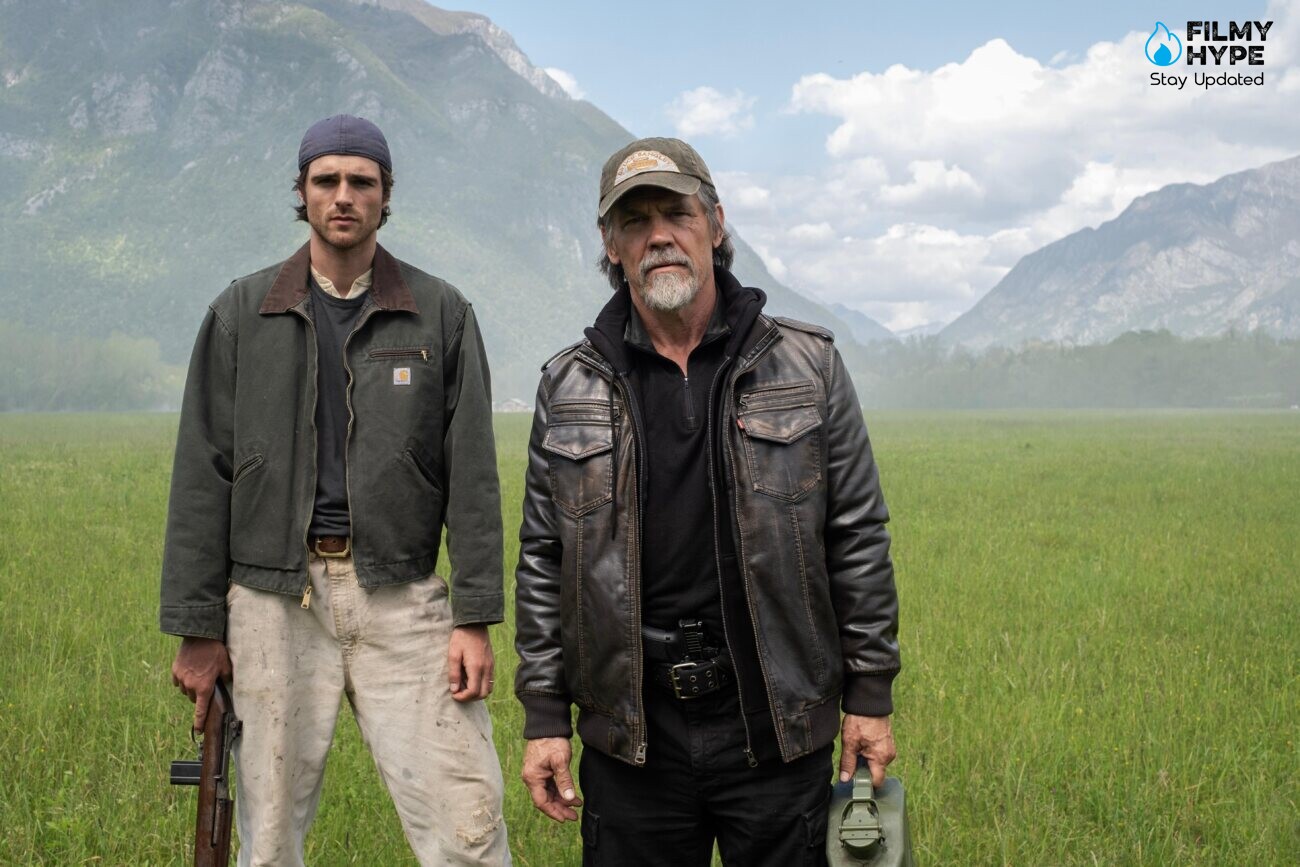
Hig (Elordi) is a mechanic and pilot who lives in an abandoned Colorado airport with his dog Jasper and Bangley (Josh Brolin), a heavily armed former soldier. The two have developed opposing strategies to address what remains of civilization. Bangley considers virtually every outsider a threat to be eliminated; Hig, however, continues to believe in the possibility of meeting someone, rebuilding something, and escaping the loneliness he fell into after his wife’s death.
With his little Cessna, Hig flies over overgrown towns, retrieves medicines and supplies, and maintains contact with a Mennonite community. Then a mysterious radio transmission from Grand Junction becomes the possibility of discovering if anything still exists beyond its tiny survival perimeter. The journey leads him to meet Pops (Guy Pearce) and his daughter Cima (Margaret Qualley), opening the film to a second romantic chance and, at least theoretically, to the question that runs through the entire story: does surviving simply mean staying alive or trusting others again?
It’s a simple dichotomy, embodied even too clearly by Hig and Bangley: community versus isolation, hope versus paranoia. The problem is that The Dog Stars enunciates it much more often than it can actually explore it. Scott scatters the landscape with abandoned cars, emptied hospitals, buildings overrun with nature, and remnants of a suddenly interrupted America. They are effective images, but they now belong to an instantly recognizable post-apocalyptic vocabulary. From The Road to The Walking Dead to The Last of Us, traumatized men, isolated communities, resources to defend, and vicious gangs have become almost automatic elements of the genre.
The Dog Stars Movie Review and Analysis
Everything, as mentioned, is well known to those who chew this genre and watch it with pleasure, and then the difference must be made by the humanity of the film, the characters who animate it: the push towards hope of Hig, who needs to overcome the pain in his past which is still the spectre of his present, to which Jacob Elordi gives intensity and body; Josh Brolin’s conviction and coolness of Bangley, solid and concrete; Margaret Qualley’s staid determination and wisdom of the Peak in opposition to her father Pops’s survival instinct to which Guy Pearce puts his face.
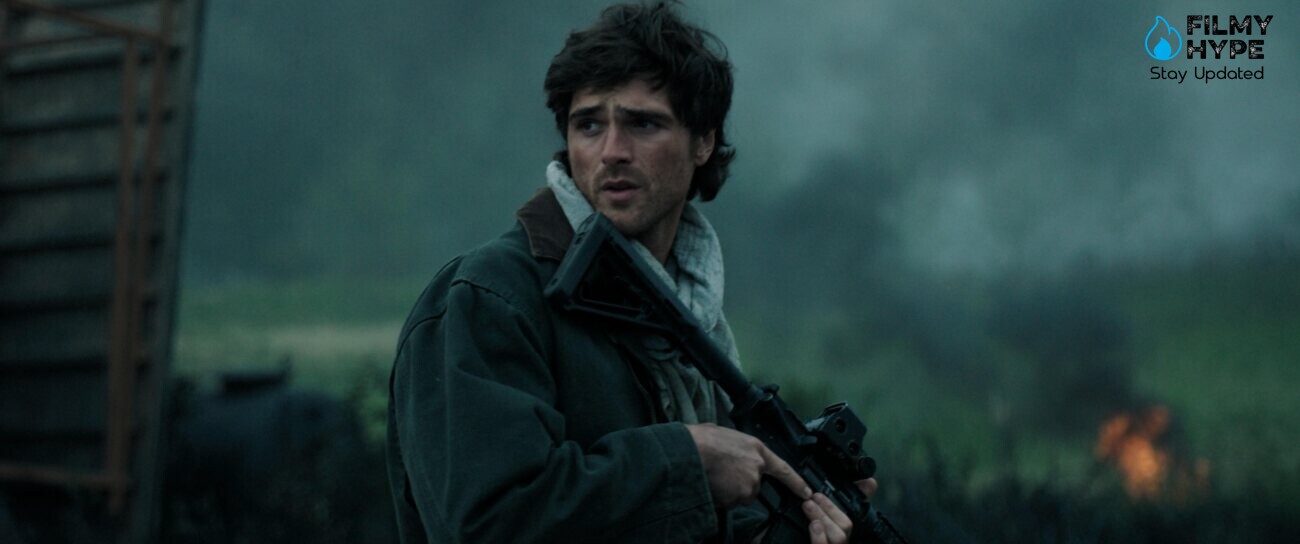
A main cast that embraces the narrative intent and the world imagined by Ridley Scott, effectively translating it on screen, assisted by supporting figures with mixed results, who at times indulge in rehearsals that are a bit too over the top in an attempt to convey the characteristics of their respective characters in the limited space available. With special mention for Jasper, Hig’s four-legged companion. The evidence, however, is sufficient to make the world in which the story moves, deriving from Heller’s text. But we would have preferred a little more courage in some choices, especially towards the end.
While The Dog Stars works relatively well in terms of character composition, it does so equally, and perhaps even more visually: the locations chosen are imposing and evocative, spanning long stretches between Rome, the Dolomites, and Abruzzo; the sets are equally successful and evocative… but as long as you are not a regular viewer of this type of story. Inevitable to think about The Last of Us (which we also find echoes of in the music), especially because it is one of the last productions of its kind, with glimpses of cities that seem to have come straight from the HBO series and, by extension, from the video game on which it is inspired. But even in terms of plot, there are some plot twists and solutions that have already been exploited by other post-apocalyptic titles, The Walking Dead above all.
The Dog Stars is a film well aware of the fact that it moves in a trite and hackneyed narrative context. To try to move the situation a little, Ridley Scott’s film focuses on the torments of its protagonists, their ghosts, their current and previous choices, and the consequences, albeit tragic, of these. In this, in such writing it also intrigues, without however being surprising to the core. The Dog Stars is a feature film that talks about so many different things. It brings to the table profound and important reflections such as loss, the desire for freedom in a suffocating and wild world, the importance of bonds, selfishness, and death. Except that it’s all quite classic and simple, at times.
Hig’s journey moves the situation a little, projecting all the action into this unknown and dark world inhabited by survivors who have done everything they can to stay alive. The man who becomes a monster in a context without social and moral rules is nothing new or unprecedented, and Scott‘s use of this reflection in The Dog Stars is uneven, resulting in a story that truly fails to find its own clear-cut voice. The Dog Stars wants us to reflect on what we have and everything we could lose because of our deep selfishness. The brutalization of the human, before and after his defeat, is always interesting to face in a story, especially where there is imagination and a desire to surprise. In this case, we come face to face with a film of fascinating scattered moments, alternating with rather simple script ideas.
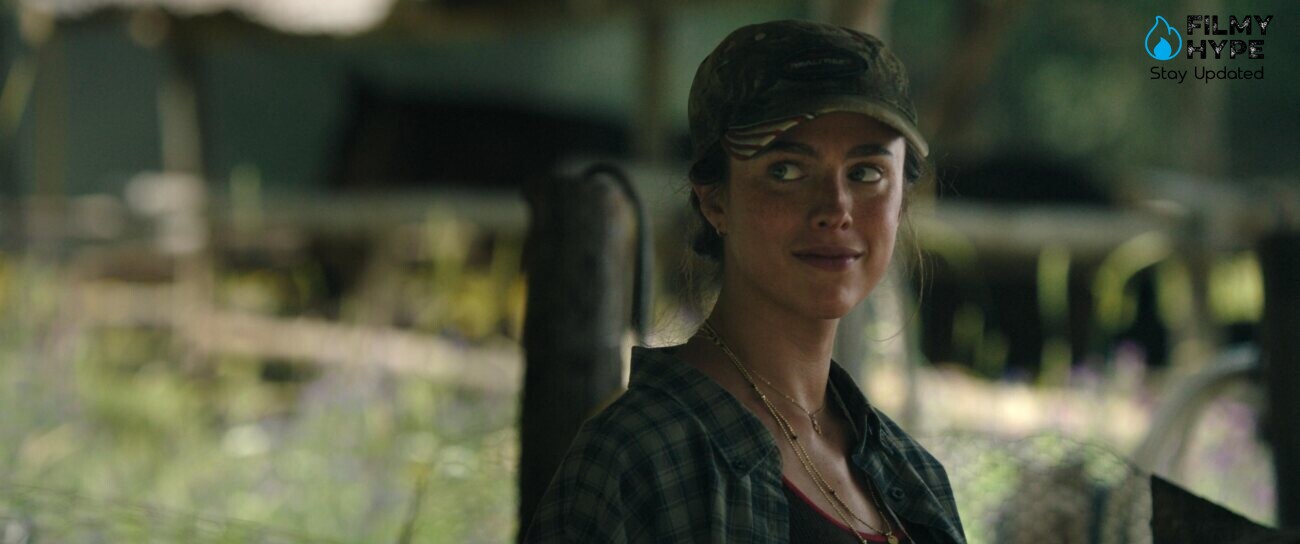
Some ideas also leave their mark, and you remain curious when the accelerator of excess is pushed to the maximum, but this isn’t enough to move an adventure that suffers from its duration. The direction and photography make the difference. These provide majestic moments and strong details, alternating a gaze that continually approaches and distances itself, always giving space to the actors’ work. Jacob Elordi and Margaret Qualley work on the big screen. The difficulty in constructing two people who have lost everything melts away in the smallest details of their interpretations, in the looks, in the way they speak.
The Dog Stars seeks to set itself apart by slowing down. For long stretches, it prefers to observe the daily acts of survival rather than turning the end of the world into a series of attacks. And it is precisely here that the best Scott emerges: Bangley salvaging and manufacturing ammunition, Hig tinkering with his plane, an improvised airstrip built in the woods. The materiality of the work, the tools, and the bodies briefly recaptures that procedural precision that made The Martian so compelling. Moreover, when the action kicks in, the director’s craftsmanship remains undiminished. An attack viewed through night-vision goggles, along with sudden bursts of violence, serves as a reminder of Scott’s enduring ability to stage space. Yet these are mere interludes—technically vigorous, certainly, but far less compelling from a dramatic standpoint, as the adversaries almost always remain anonymous masses to be mown down.
The most glaring issue, however, remains Hig. Elordi possesses a natural melancholy that is perfect for the character, yet the screenplay reduces much of his inner life to grief. Flashbacks involving his deceased wife are meant to illustrate his inability to move on, but they ultimately serve mostly to reiterate what we have already grasped. Even his encounter with Cima does not fully resolve the matter. Margaret Qualley brings energy and wit, but the relationship between the two progresses because the narrative requires it, rather than out of any genuine emotional tension. Brolin, by contrast, makes better use of Bangley’s pragmatic brutality, while Guy Pearce manages—with just a few details—to suggest a backstory that the script leaves almost entirely off-screen.
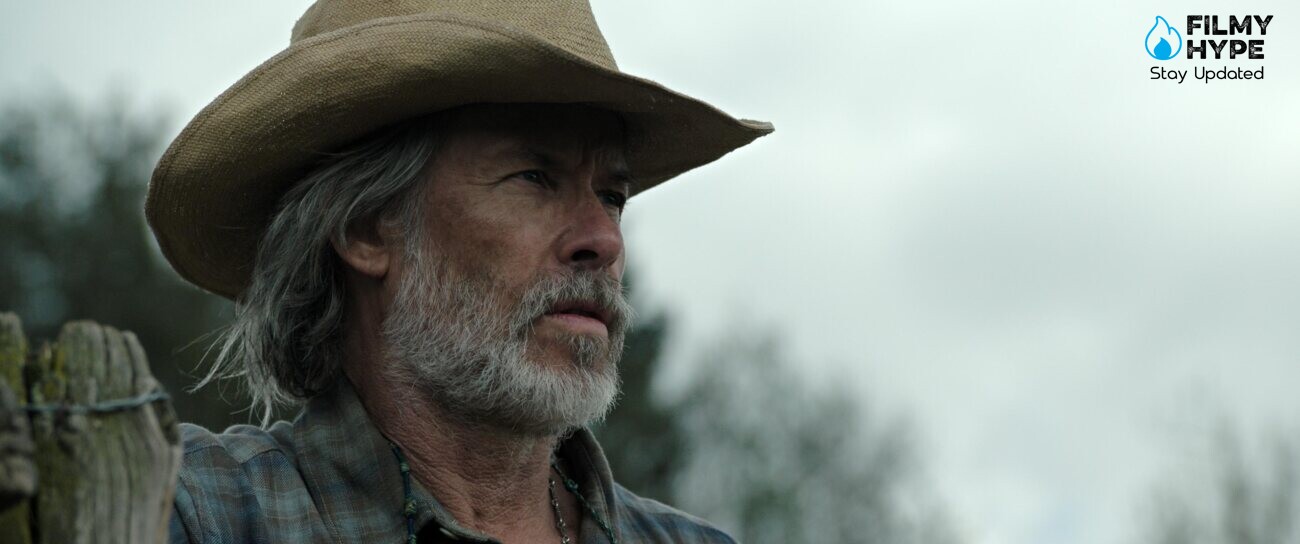
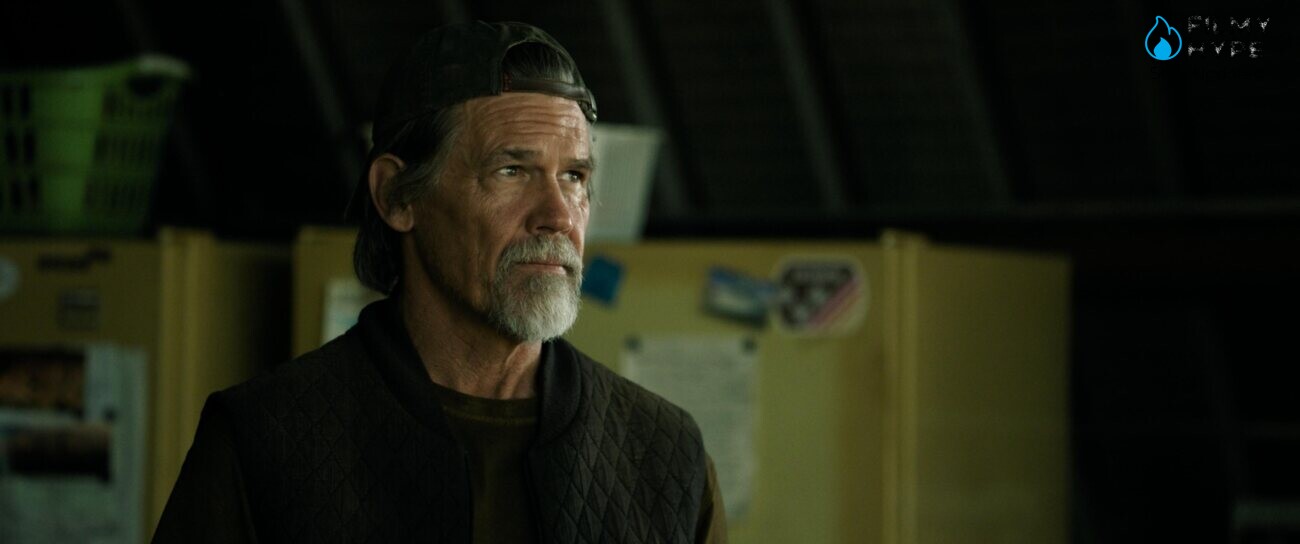
It is telling that the film truly comes alive when it briefly steps outside its established tone. In the final act, Scott introduces a grotesque, almost horror-like detour—one surprisingly reminiscent of the eccentricities found in *Fallout*. While this sudden tonal shift risks fracturing the film, it at least delivers a sense of unpredictability that was missing for much of the journey. Shot largely in Northern Italy—transformed here into Colorado—Scott’s vision of the apocalypse remains visually striking. Cinematographer Erik Messerschmidt captures mountains, plains, and deserted cities with a coldness that mirrors the protagonists’ isolation, while the director continues to demonstrate a remarkable ability to helm productions of this scale.
And that is precisely what makes The Dog Stars frustrating. It does not feel like the work of a filmmaker who has lost control of the medium, but rather that of a great director grappling with material that rarely seems to truly engage him. Underlying Hig’s survival are massive themes—trauma, xenophobia, the need for community, the desire to start over—that the film merely brushes against without transforming them into something genuinely personal. Ultimately, The Dog Stars is about men and women stubbornly seeking a reason to go on living. The film itself seems engaged in a similar struggle: technically solid, featuring a remarkable cast, and occasionally illuminated by flashes of Scott at his best, it keeps moving forward without finding an equally compelling reason to exist. In an already overcrowded genre, mere survival is no longer enough.
The Dog Stars Movie Review: The Last Words
Choosing to move within a post-apocalyptic context similar to so many others, The Dog Stars seeks to put survival, loss, freedom, bonds, selfishness, and the nature of humanity at the center when the social and moral rules we all know fail. Ridley Scott’s gaze is built on fascinating scattered moments, shaped by direction and photography capable of delivering majestic images and strong details, as well as the performances of Jacob Elordi and Margaret Qualley. Writing, on the other hand, cannot fully find its own clear voice, leading to a journey that oscillates between the known and the unknown. Ultimately, the film remains a well-packaged work, not bad and with something to say, but not original enough to really stand out from so many other products in the same mold.