

Sheep in the Box Movie Review and Ratings
Cast: Haruka Ayase, Daigo, Rimu Kuwaki, Nana Seino, Kanichiro, Hinata Hiiragi, Kayo Noro
Director: Hirokazu Kore-eda
Filmyhype.com Ratings: 3.5/5 (three and a half stars)
The idea behind Sheep in the Box is immediately disturbing and fascinating: a couple devastated by their son’s death decide to welcome into their home a humanoid replica of the child, created using artificial intelligence. It’s a premise that could open profound reflections on grief, memory, grief processing, and the desperate need to hold back those who are no longer with us. But the film’s main problem is precisely this: it never seems to really know what to do with its concept. Kore-eda almost completely avoids the story’s more disturbing implications and instead chooses a much softer, more reassuring, and sentimental path. The result is a film that continually touches on enormous themes without ever having the courage to truly sink into them.
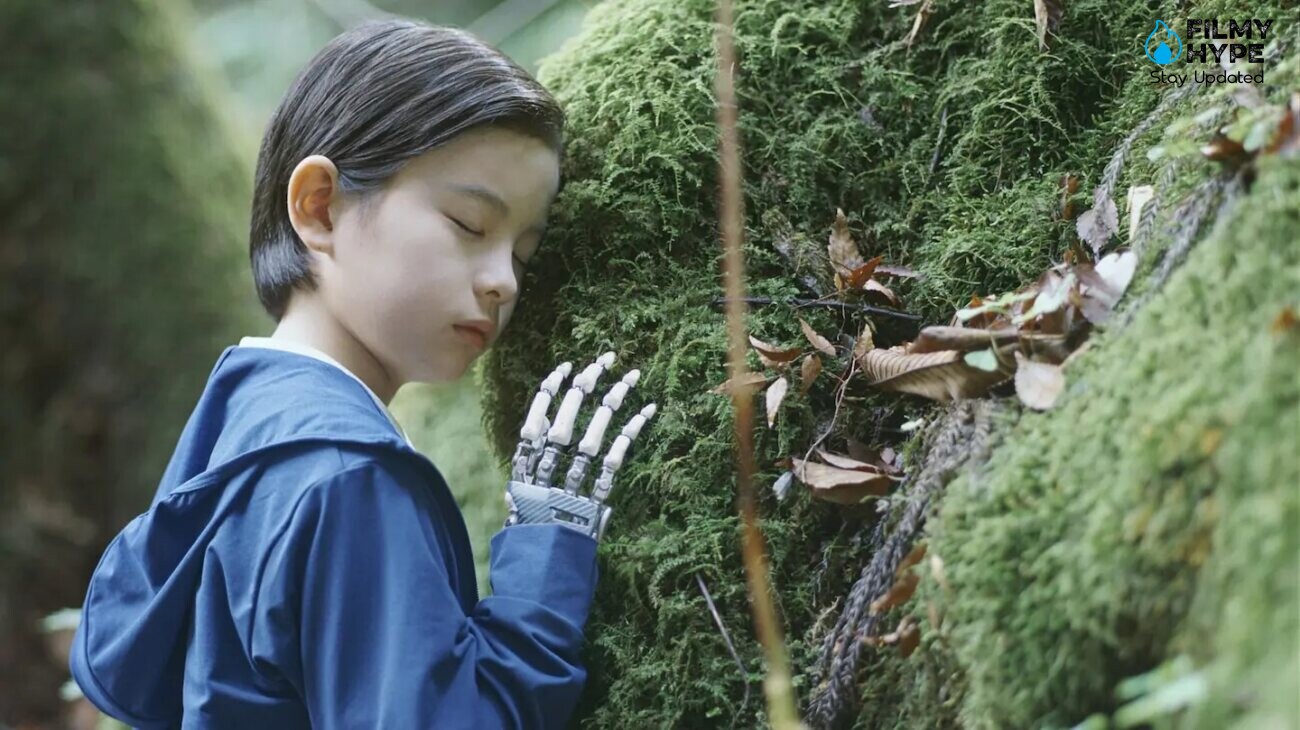
Impossible not to think about AI: Artificial Intelligence (2001) by Steven Spielberg, another great Pinocchio fairy tale about the artificial that asks to be recognized and loved. In the near future, a couple marked by their son’s death agree to welcome into their home a humanoid identical to the lost child, with the same voice, the same face, the same smile. The arrival of the robot, rather than encouraging the revival of an interrupted family life, ends up reopening old wounds. Furthermore, far from being just a copy of his missing son, the little humanoid begins to connect with other human beings, gradually learning what it means to build bonds.
Sheep in the Box Movie Review: The Story Plot
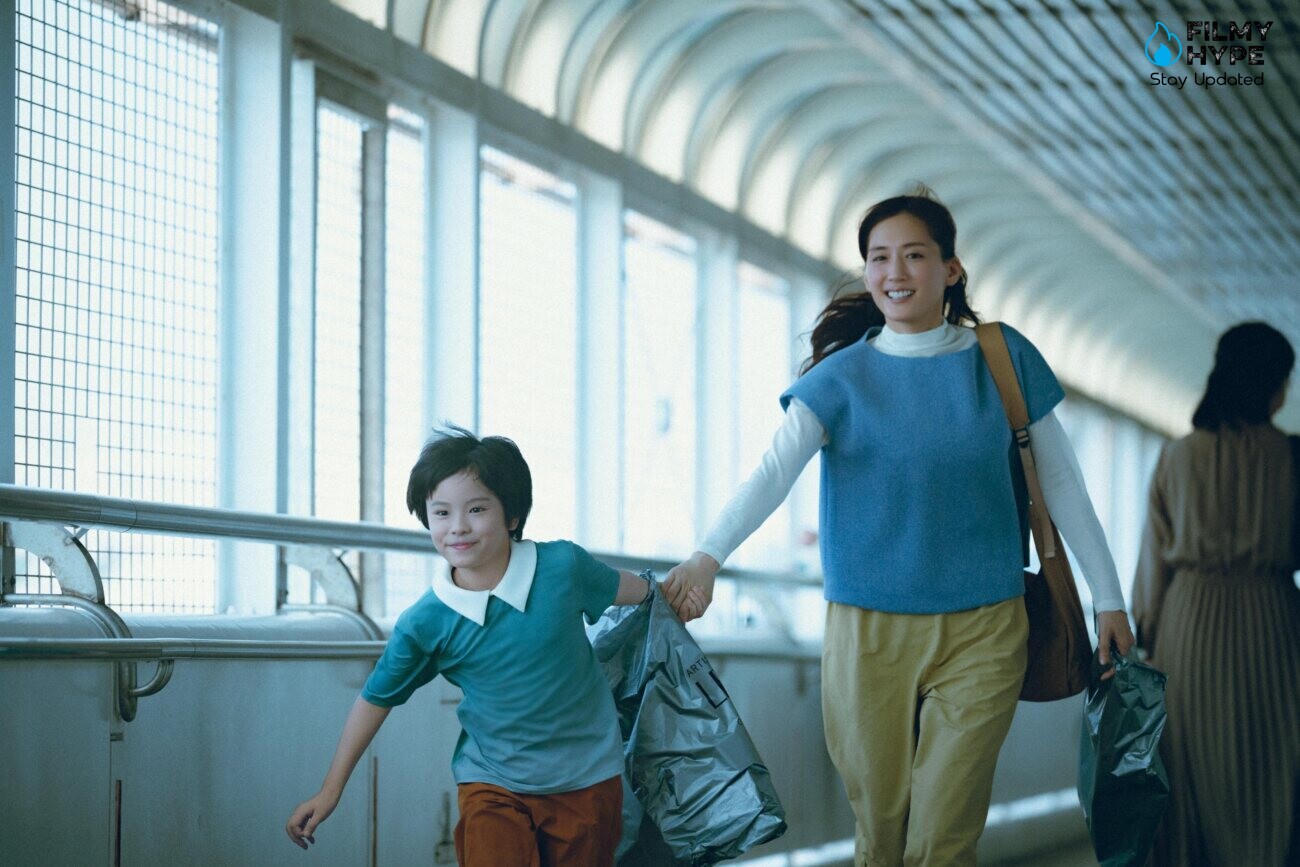
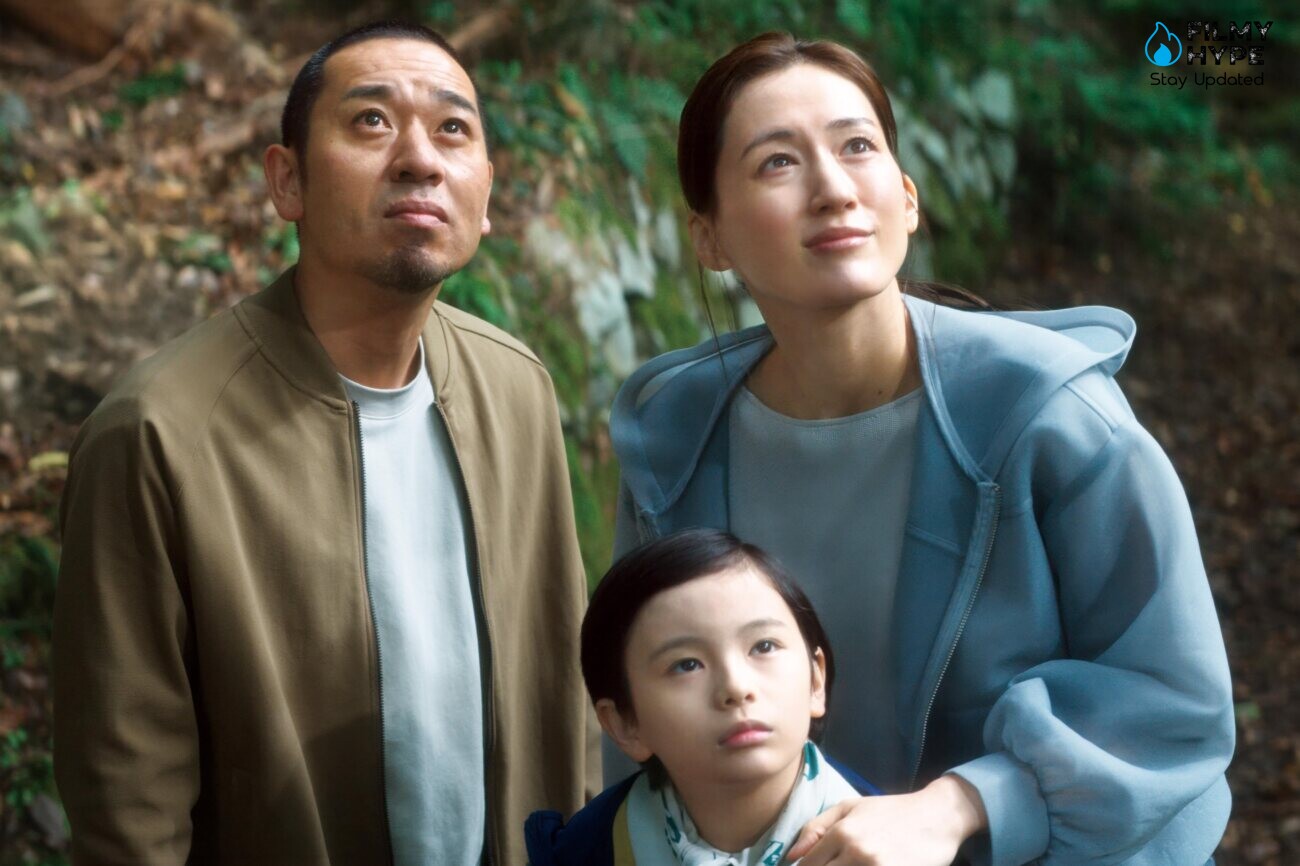
Two years after the death of his son Kakeru, Otho (Haruka Ayase) receives a message from the company via a drone, Rebirth, which is essentially concerned with bringing back to life the loved ones lost through latest generation technologies. The husband, Kensuke (Daigo Yamamoto), is reluctant, but agrees to proceed with the operation. So, the couple welcomes Kakeru 2.0 into the house, a practically identical clone of the son, with an embedded memory already based on his memories, who cannot eat or get wet and has a car seat/station with him charging. Things will start to get more complicated, though, when Kakeru shows more initiative and will also be attracted by mysterious figures.
Sheep in the Box Movie Review and Analysis
Kore-eda’s cinema has always depicted broken families, absences, and fragile relationships with great sensitivity. Here, however, that delicacy often ends up turning into something too controlled and artificial. Sheep in the Box almost seems like a collage of elements already seen in the director’s cinema: the mourning of After Life, the family dynamics of Like Father, Like Son, the reflection on artificial humanity of Air Doll. But this time there is really a lack of a new look. The film continually moves into territories already explored without adding any particular original ideas. Even the sci-fi component, which may have been the most interesting element, remains incredibly shy and harmless.
Everything is treated with extreme caution, as if Kore-eda were afraid of getting his hands dirty with the most disturbing implications of the story. One of the biggest problems with Sheep in the Box is its duration. The more than two hours end up greatly weighing down a story that, after the first half, seems to have exhausted most of its ideas. Kore-eda insists on contemplative scenes, silences, and small, everyday gestures that have often worked very well in his cinema, but here they continually risk turning into repetition. Many dynamics between characters are reiterated several times without real narrative or emotional evolution. The conflict between the two parents, the mother’s attachment to the robot child, the father’s initial mistrust: everything proceeds in an extremely predictable way. The film continually seeks emotion through sweetish images and moments constructed to be poetic, but in the long run the tone becomes almost suffocating in its insistence.
The most surprising thing is how unengaging Sheep in the Box manages to be despite its theme. There is talk of losing a child, grieving, and desperately needing love, but the film often remains emotionally distant. Kore-eda seems much more interested in the aesthetic grace of the images than in the psychological complexity of the characters. Suffering is continually softened, smoothed out, made elegant. Even the moments that should be most devastating are treated with an almost unreal lightness, and in the long run the film ends up appearing more sappy than truly touching. The insistent use of music and certain “fairytale” images further contributes to this feeling of emotional artificiality.
Haruka Ayase is the one who saves Sheep in the Box, at least in part. His performance manages to give a certain authenticity to a character who easily risked becoming merely symbolic. Ayase does very well the emotional emptiness of a mother unable to let go of her child and the way the robot becomes a desperate projection of her need to continue feeling like a mother. Daigo also works as the more skeptical and distant father, but the characters are still limited by writing that never really lets them explode.
Sheep in the Box is therefore not a film about Artificial Intelligence in the strict sense, and those expecting a work of pure science fiction may be disappointed. However, this approach to AI is perhaps one of the best possible at a time of constant technological upheaval. The direction remains consistent with the Japanese filmmaker’s stylistic signature. Delicate images accompany an intimate narrative, where the representation of spaces plays a fundamental role, supporting an almost philosophical narrative of architecture. Urban spaces merge with nature in a harmonious coexistence that translates into visions the heart of an inspired and intelligent film, capable of telling not the future, but everything that truly makes us human.
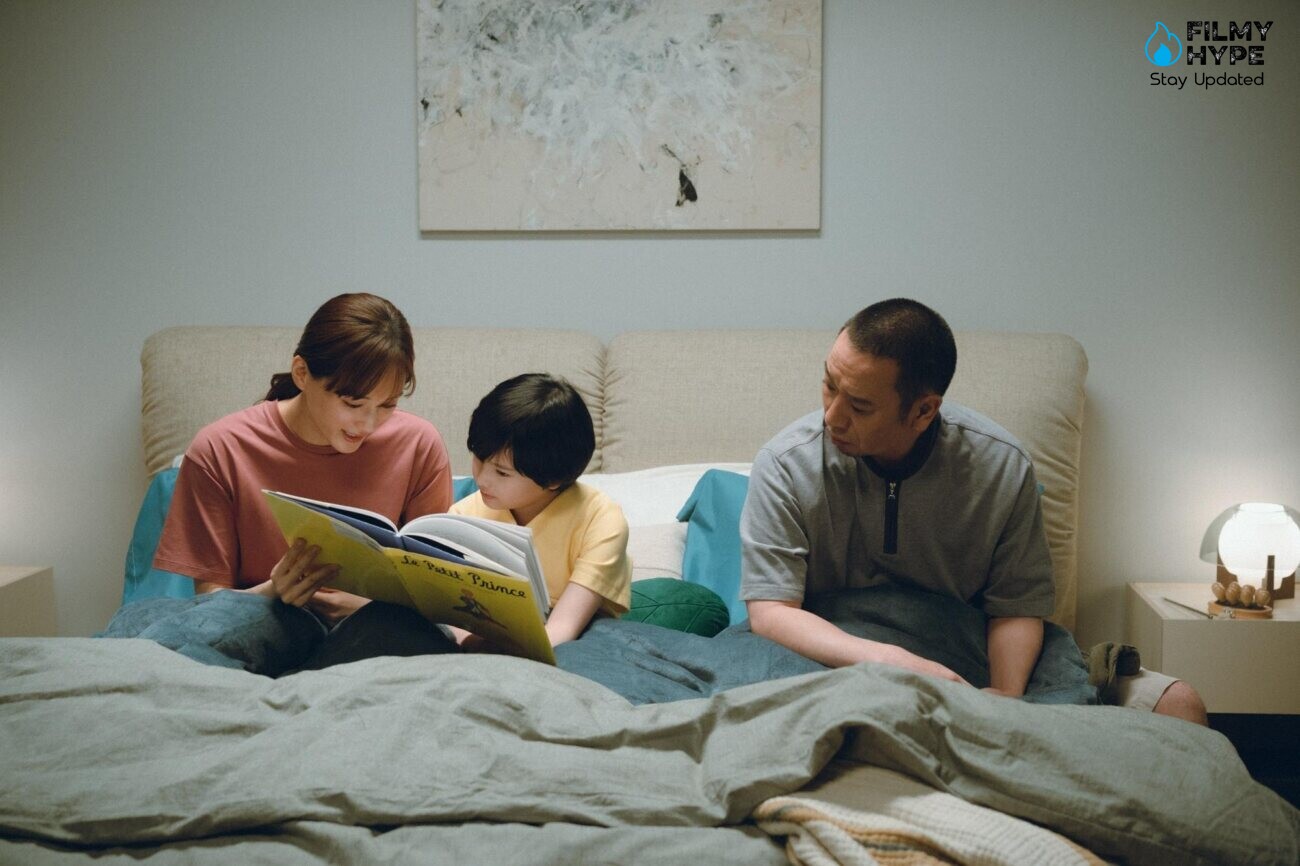
Visually, Sheep in the Box is very beautiful: the bright photography, minimalist spaces, futuristic design, and suspended tone work well. But formal elegance alone is not enough. The problem is that the film seems to constantly revolve around his insights without ever really delving into them. It never gets creepy, never really painful, never really provocative. In the end, the feeling of a missed opportunity remains above all: a film that starts from one of the strongest and most disturbing ideas seen at Cannes, but which continually chooses the simplest, most reassuring and predictable path. Sheep in the Box is a curated and refined work, but also surprisingly lacking in new ideas. A sci-fi melodrama that’s too long, too controlled, and too in love with its own delicacy to really make its mark.
Sheep in the Box certainly does not shine for originality – nor does the premise, nor is its execution particularly memorable – however, it finds brightness in a delicate but powerful turn of plot about children as a group and a new society, an aspect investigated at length in Koreeda’s filmography. There are echoes of various fairy tales for the little ones in this story that talks about abandonment, not wanted and sought, which also accompanies the fate of every family with children at the load. Certainly less surprising than the level he has accustomed us to, Hirokazu Koreeda’s Sheep in the Box is a film rather linear and which does not offer great surprises to the viewer, partly fomenting disappointment, because from a genius like the Japanese director you can expect much more.
Where Spielberg made little David a creature condemned to the impossible desire to become human, Kore-eda poses the question differently: what if the humanoid, in fact, did not want to become like us? What if his destiny was not to imitate man, but to inaugurate a different form of life? This is the real challenge that the Japanese master poses in Sheep in the Box, with which he returns to competition at Cannes three years after Monster (2023): the attempt, unfortunately not entirely successful, to confront science fiction by reworking the myth of Pinocchio in an AI key.
The most uncomfortable question in the film concerns the nature of love. Does the humanoid love because it is programmed, or does love, once triggered, free the robot from the function for which it was created? On the other hand, Kore-eda also focuses on the adult gaze. These creatures are artificial because they were created to respond to a need of adults. The little humanoid is, at least initially, the surrogate for an unprocessed bereavement. He blames something that isn’t his fault.
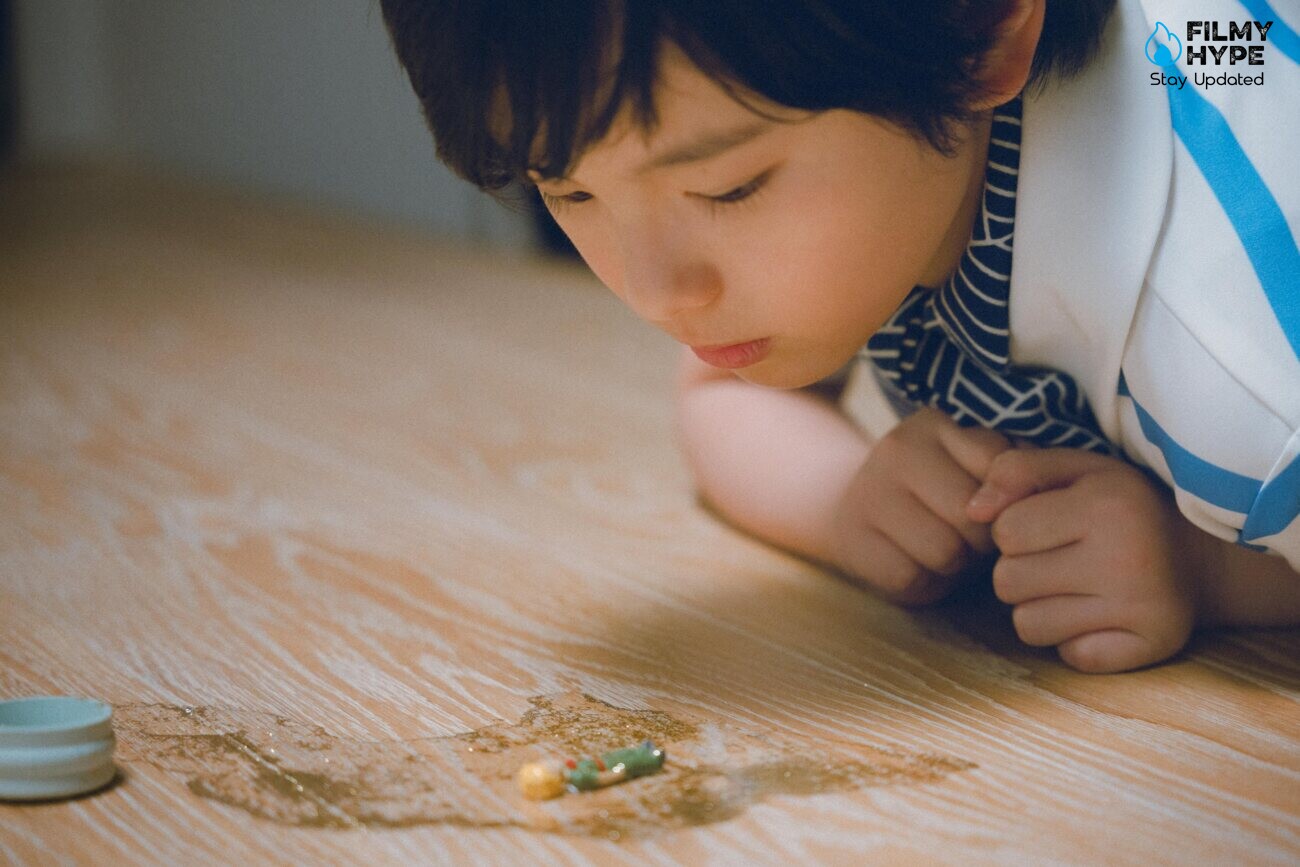
Even from here we understand how the Japanese director addresses very fashionable themes, such as AI and its limitations, our relationship with technology and the fear of substitution, with a truly alternative approach. An approach that abandons the traditional Christological-fairytale variant to open up to an ecological or post-human structure, in which humanoids can emancipate themselves from the pain that generated them. With a forest ending, à la Peter Pan, certifying the foundation of another community, childlike and post-human together.
In this, Kore-eda remains perfectly within the confines of its cinema: the film removes AI and science fiction from spectacularization, bringing them back to the most Koreedian place possible, the home. The director is once again interested in the family as a fragile, negotiated construction, not guaranteed by blood or by law. From Father and Son / Like Father, Like Son (2013) to A Family Affair (Palme d’Or in 2018), from Broker (2022) to Monster (2023), the question that resonates every time is: what is a family? In this sense, we are talking about a natural continuation and at the same time a mutation of Kore-eda’s cinema, because his ethic of reception is being pushed to the limit, to the point where the human can no longer be taken for granted.
Powerful idea, made disappointing. The usual elegance of interior scenes, the sensitivity towards family dynamics, this time fail to always capture the most secret movements of the characters’ souls. It’s as if the film, instead of descending to the depths of pain, remains on the surface. Hard to say why. Perhaps, in seeking a new alliance between the artificial and the organic, Kore-eda was attracted above all by the former. Or perhaps it is the conceptual system itself that devitalizes the story. The mourning, the replacement, the ambiguity of the artificial child, the birth of a post-human community: everything is shown, but without fears and tremors of any kind.
The obvious metaphorical structure further weighs down the story: the tree as a primordial home, an ark, a place where the artificial is reunited with the organic; the aquarium as a variant of nature in a box; the impossibility of bathing with one’s father as a denial of an impossible intimacy, and so on.
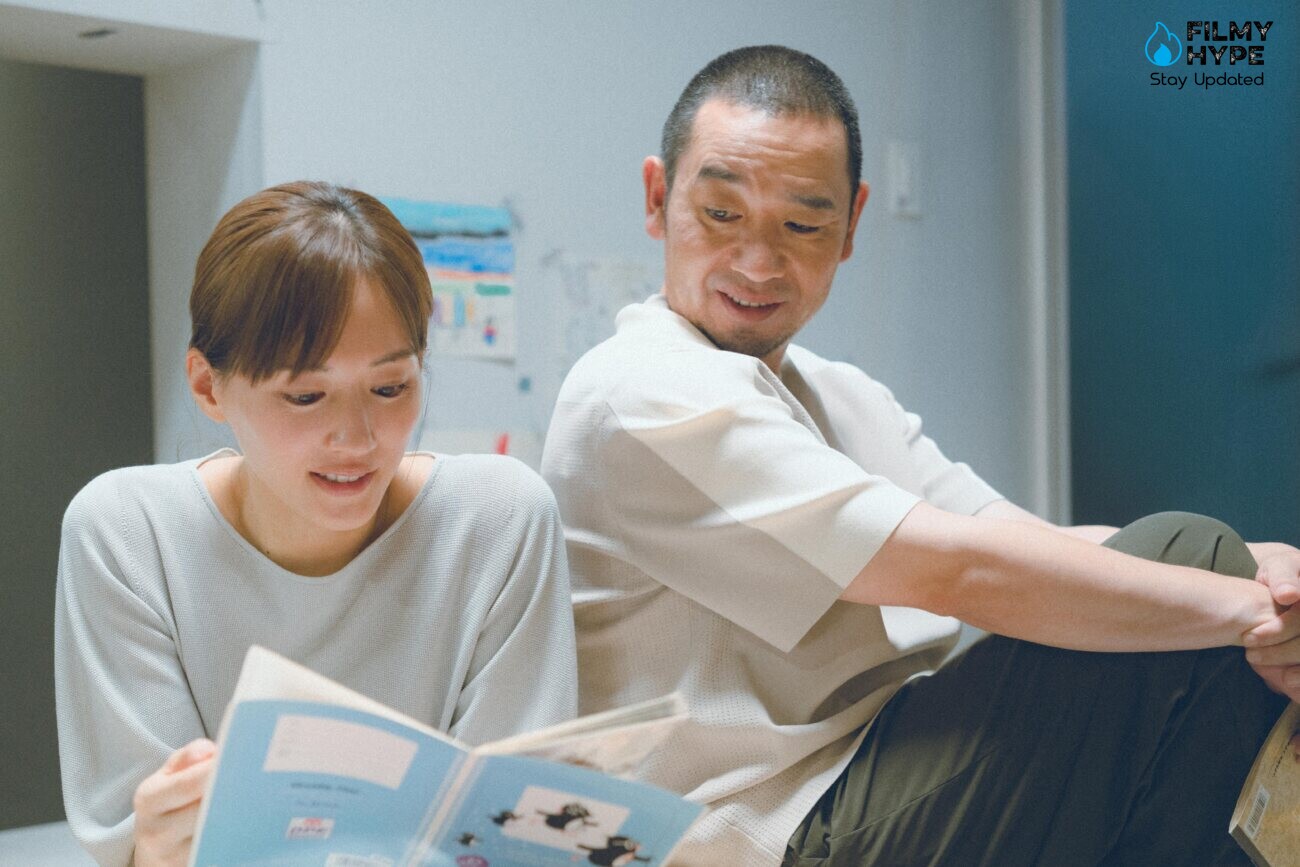
The title would refer to The Little Prince of Saint-Exupéry: the sheep drawn inside the box is invisible and, for this very reason, entrusted to the imagination. It’s another key to a film that questions the power of absent forms: the child who is no longer there, who returns as a simulacrum, who perhaps exists only in the projection of his parents. The “box” is then the house, the artificial body, the technological device. But also cinema itself: a container of presences that we know to be fake and which nevertheless ask to be loved. Sometimes, however, with all the goodwill, you can’t do it.
Sheep in the Box Movie Review: The Last Words
More than a science fiction story about artificial intelligence, Hirokazu Kore-eda’s work proves to be an intimate and timeless reflection on grieving and the profound meaning of family. Avoiding the pitfalls of a technology destined to age quickly, the director uses the artificial mind as a pretext to explore the nature of bonds and affectivity. Backed by delicate direction in which architecture and space become narrative elements, the film pushes the boundaries of the genre to focus on everything that makes us authentically human. Sheep in the Box is an elegant but surprisingly weak film for Hirokazu Kore-eda. Starting from a very powerful premise —a couple who “bring their dead son back to life” through a humanoid robot — the director constructs a story that is too long, predictable, and incapable of truly delving into the emotional and moral implications of his idea.