


A single image can tell you a lot about a movie’s intentions. The new shot from Street Fighter shows Andrew Koji as Ryu and Noah Centineo as Ken standing side by side, ready for a fight. They’re not facing each other—not yet. They’re facing whatever’s coming toward them, together. It’s a brief glimpse, but it signals something important about the adaptation: this version of the iconic Capcom duo isn’t starting as bitter rivals. They’re estranged friends who’ll have to rediscover what made them partners in the first place.
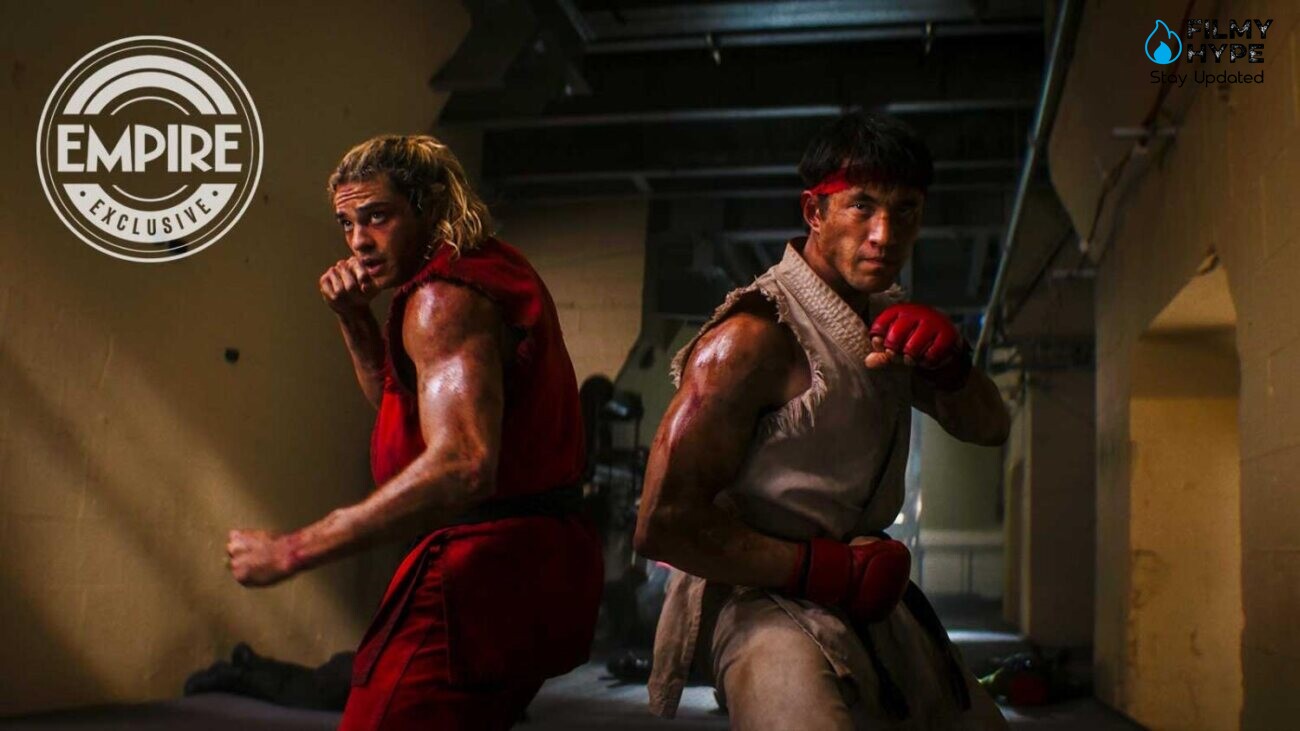
The film, directed by Kitao Sakurai from a script by Dalan Musson, arrives in theaters on October 16. It’s the latest attempt to translate the Street Fighter franchise to the big screen—a property that’s had a notoriously difficult history with adaptations. The 1994 film starring Jean-Claude Van Damme became a cult object for all the wrong reasons. Street Fighter: The Legend of Chun-Li in 2009 fared even worse. This new version, backed by Capcom and featuring a sprawling cast of characters from the games, is aiming for something different: a film that takes the source material seriously while still delivering the spectacle fans expect.
Street Fighter 2026 in Ryu and Ken: The Story
The film is set in 1993, a deliberate choice that allows the production to tap into the aesthetic of the era when Street Fighter II dominated arcades around the world. Ryu and Ken are presented as former training partners who’ve drifted apart over the years. They’re brought back together when Chun-Li recruits them for the World Warrior Tournament—the fighting competition that’s always been at the center of the franchise’s lore.
But there’s more to the tournament than martial arts. A conspiracy lurks beneath the surface, one that will force Ryu and Ken to confront not just new enemies but also each other. The unresolved tensions between them—whatever caused the estrangement—will come bubbling up as the stakes escalate. The relationship between the two fighters is being positioned as one of the film’s central axes, the emotional engine driving the action.
The Cast of Street Fighter
The roster of characters is extensive, and the casting choices are genuinely surprising. Callina Liang plays Chun-Li, the Interpol agent whose investigation pulls Ryu and Ken into the tournament. David Dastmalchian—one of the most reliable character actors in genre cinema—takes on M. Bison, the dictator whose shadow looms over everything. Jason Momoa transforms into Blanka, the feral beast-man whose appearance is one of the franchise’s most memorable.
Then there are the choices that suggest the filmmakers are having fun. Curtis “50 Cent” Jackson plays Balrog, the boxer. Roman Reigns, the WWE superstar, plays Akuma. Orville Peck, the masked country singer, plays Vega. Cody Rhodes, another WWE star, plays Guile. It’s a strange, eclectic mix of actors drawn from different corners of entertainment—wrestling, music, film—and the result is a cast that feels unpredictable in the best way.
The rest of the ensemble includes Mel Jarnson as Cammy, Vidyut Jammwal as Dhalsim, and Hirooki Goto as E. Honda. The variety of fighting styles represented—from the military precision of Guile to the stretchy limbs of Dhalsim—suggests the film will embrace the full weirdness of the source material rather than sanding it down for mainstream audiences.
The Approach
The PG-13 rating is interesting. The film received the classification for “violence and action, bloody images, strong language and sexual references.” That suggests a movie that’s pushing the boundaries of the rating without tipping into R-rated territory—the kind of action film that wants to appeal to a broad audience while still delivering real impact.
Kitao Sakurai, the director, has a background that spans comedy and genre. His work on The Eric Andre Show demonstrated a willingness to embrace chaos, while his film Bad Trip proved he could handle action and set pieces. Whether he can translate that energy to a major studio adaptation remains to be seen, but the casting choices suggest he’s not playing it safe.
The decision to set the film in 1993 is smart. It grounds the story in the era when Street Fighter became a cultural phenomenon, and it gives the production a specific visual identity. The costumes, the music, the general atmosphere of arcade culture—all of it can be drawn from a particular moment in time rather than existing in a generic present.
The Challenge
Street Fighter has always been a difficult property to adapt because the games aren’t really about story. They’re about the feeling of facing an opponent, the rush of landing a perfect combo, the specific thrill of arcade competition. Translating that into narrative requires building characters and relationships that the games only gesture at.
The new film seems to understand this. By focusing on the Ryu-Ken relationship—the friendship that soured, the partnership that needs to be rebuilt—it gives audiences an emotional entry point. By surrounding them with a roster of fighters pulled from the games, it satisfies the fan base. By setting the story in 1993, it creates a specific world rather than a generic one.
The image of Ryu and Ken standing together, facing the same direction, is a promise. They’re going to fight alongside each other. They’re going to remember what made them friends. And then, inevitably, the conspiracy will force them to fight each other—the match fans have been waiting decades to see done properly. October 16. The tournament begins. The hadouken is ready. Ken is ready. For the first time in a long time, it feels like a Street Fighter movie might actually work.