
Haiwaan Movie Trailer: There’s a moment in the new trailer for Haiwaan where Akshay Kumar smiles, and it’s genuinely unsettling. Not the easy charm he’s built a career on, but something colder, something predatory. The smile of a man who’s already decided what he’s going to do and is just enjoying the anticipation. It’s the kind of expression we’ve rarely seen from Kumar, and it signals immediately that this is not the Akshay Kumar audiences are used to.
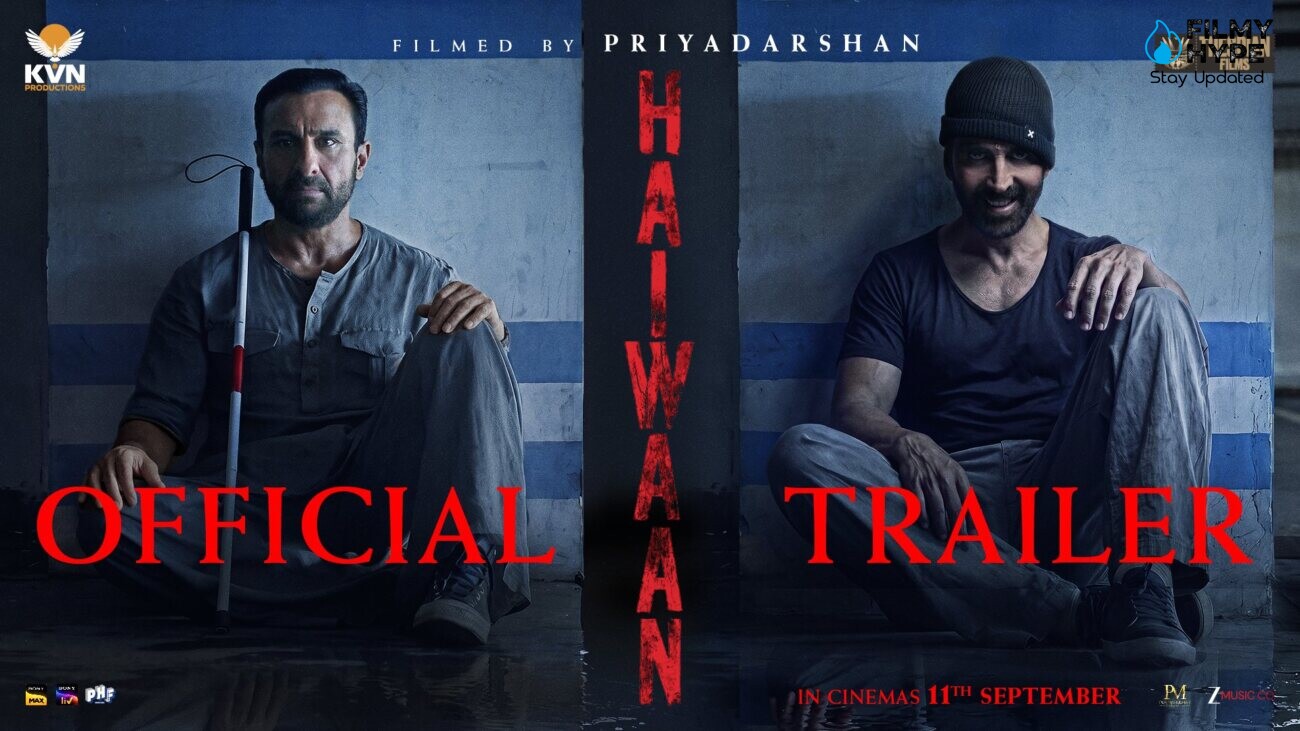
Haiwaan brings Akshay Kumar and Saif Ali Khan together on screen for the first time in nearly 18 years. Their last collaboration was Tashan in 2008, a film that famously underperformed despite its star power. This reunion is very different in tone. Where Tashan was glossy and stylized, Haiwaan is dark, violent, and built around a conflict that feels primal. Kumar plays the villain—a serial killer driven by revenge. Khan plays a blind martial artist trying to protect a young girl from him. It’s the kind of premise that could easily tip into melodrama, but the trailer suggests something leaner and meaner.
Haiwaan Trailer: What the Trailer Shows
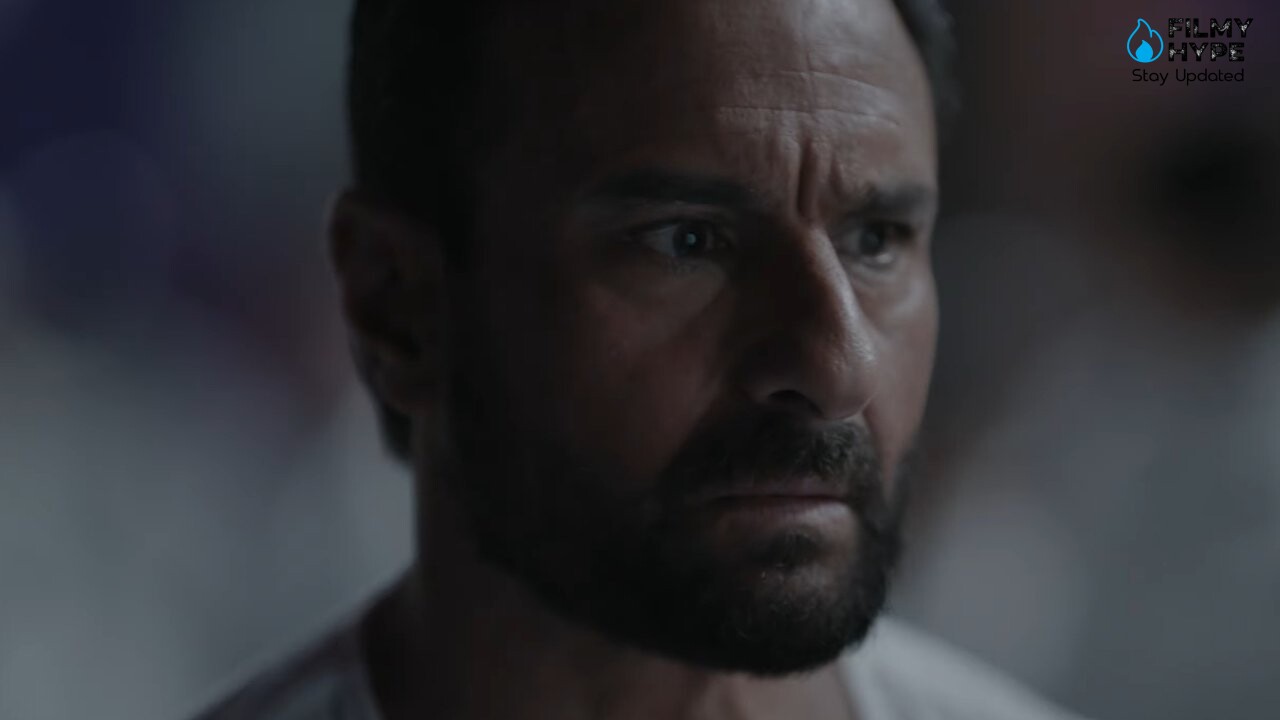
The trailer opens with a city in terror. Someone is killing people, methodically, brutally. The police are baffled. The body count keeps rising. And then Saif Ali Khan‘s character is arrested—a blind man, accused of crimes he couldn’t possibly have committed. His face registers fear, confusion, helplessness. It’s a striking image: a man who can’t see, surrounded by people who can’t see the truth.
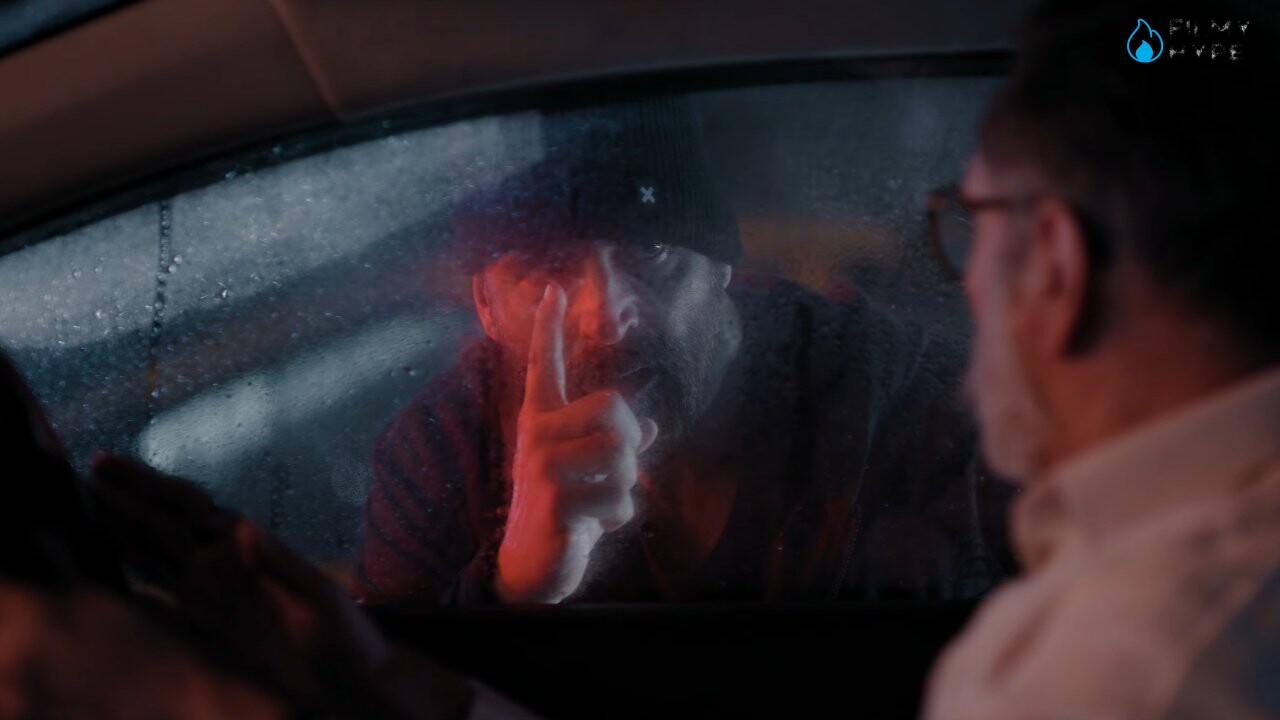
Then Akshay Kumar appears. The change in energy is immediate. He’s not hiding. He’s not pretending. He’s the monster the city is afraid of, and he knows it. The trailer cuts between the two men—one blind but perceptive, the other sighted but operating in the shadows. Their conflict seems inevitable, a collision between two men who understand each other in ways the rest of the world can’t.
The trailer doesn’t reveal the full story. It doesn’t explain why Kumar’s character is killing, or what connects him to the blind martial artist and the girl he’s protecting. That restraint is smart. The mystery is the hook. The title—Haiwaan, meaning “beast”—suggests the film is interested in the line between human and monster, between justice and revenge. The trailer leaves you asking the question it wants you to ask: what turns a man into an animal?
The Reunion
The pairing of Akshay Kumar and Saif Ali Khan is significant for reasons beyond nostalgia. Both actors have spent the past two decades evolving in very different directions. Kumar has become the most reliable action star in Hindi cinema, a man whose films carry the weight of their budgets on his shoulders. Khan has become the more adventurous performer, taking risks that sometimes pay off spectacularly and sometimes don’t. Seeing them together again, in roles that seem designed to test their range, is genuinely exciting.
Khan has described Haiwaan as the most challenging role of his career. Playing a blind character is difficult in any context, but playing a blind martial artist requires a specific physical discipline that most actors never have to develop. The trailer suggests he’s found a way to make the character’s blindness feel real without reducing him to a collection of tics. His face does a lot of the work—the tilt of his head when he’s listening, the way his hands move when he’s uncertain, the way fear and determination alternate across his features.
Kumar, meanwhile, seems to be relishing the chance to be the villain. He’s spent years playing heroes, and there’s a freedom in playing a character who doesn’t have to be likable. The trailer gives him moments of pure menace—the laugh, the smile, the way he moves through the world as he owns it. It’s the kind of role that could redefine how audiences see him.
The Priyadarshan Factor
Haiwaan is directed by Priyadarshan, who also directed the Malayalam film Oppam on which it’s based. Priyadarshan has a long history with both actors—he directed Kumar in some of his most successful comedies, and he’s worked with Khan on multiple projects. His involvement suggests a film that understands how to balance genre thrills with character depth.
But Haiwaan looks different from the typical Priyadarshan film. The darkness is more pronounced, the violence more visceral. The production companies’ logos are splattered with blood before the trailer even begins. This is Priyadarshan working in a register that’s closer to horror than comedy, and the early footage suggests he’s enjoying the change.
The Cast
Beyond the two leads, the film features Saiyami Kher, Boman Irani, and Shriya Pilgaonkar in important roles. Dayanand Shetty, known for his work in CID, also appears. The supporting cast is small enough to suggest a focused story—this isn’t an ensemble piece with subplots branching in every direction. It’s a tight thriller built around a central conflict.
The background music is one of the trailer’s strongest elements. It’s dark, atmospheric, and perfectly matched to the film’s tone. The cinematography is also notable, though some scenes are so dark that details get lost. On 3D screens, where audiences wear goggles, that could be a problem. But the overall visual identity is strong—gritty, textured, and appropriately menacing.
The Marketing Problem
The trailer’s release timing is a concern. It arrived on August 25, just one day before Yash’s Toxic hits theaters. Toxic is one of the most anticipated Indian films of the year, and it’s going to dominate the conversation for weeks. Releasing a trailer the day before means Haiwaan risks getting lost in the noise.
That’s a shame, because the trailer deserves attention. It’s well-crafted, atmospheric, and genuinely intriguing. But in a market where attention is the most valuable currency, timing matters. The makers might have been better served waiting a few days, letting Toxic have its moment, and then releasing their trailer when audiences were ready for something new.
Whether that hurts the film’s eventual box office remains to be seen. What’s clear is that Haiwaan has the pieces in place: two major stars in unexpected roles, a respected director working outside his comfort zone, and a premise that taps into something primal. The beast is coming. The question is whether audiences will be paying attention when it arrives.