

When not, even a month had passed since its premiere, Netflix canceled The Boroughs, the science fiction series produced by the Duffer brothers, which was originally intended to be the successor of Stranger Things. However, the reality is very different; after just eight episodes, the project has ended up on the dreaded list of series canceled by Netflix in 2026. The decision was surprising both because of the timing chosen and because of the context that surrounded the project. The production arrived on the platform in May as one of the most visible bets of the year: behind it were the Duffer brothers, the creators of Stranger Things, and in front of the camera a cast made up of Alfred Molina, Geena Davis, Alfre Woodard, Bill Pullman, Denis O’Hare, and Clarke Peters.
Netflix Cancels The Boroughs For Season 2: Here’s What Really Happened?
Released on May 21, The Boroughs came amid very good reviews —no less than 97% on Rotten Tomatoes— and with Netflix placing special emphasis on the fact that it was a series produced by the Duffer brothers. Endorsed by the creators of Stranger Things and after him empty left by the successful series, it was thought that this could be a successful production, to the point that, as he points out Deadline, there had even been talk of renewing it and a writers’ room had been opened for the second season.
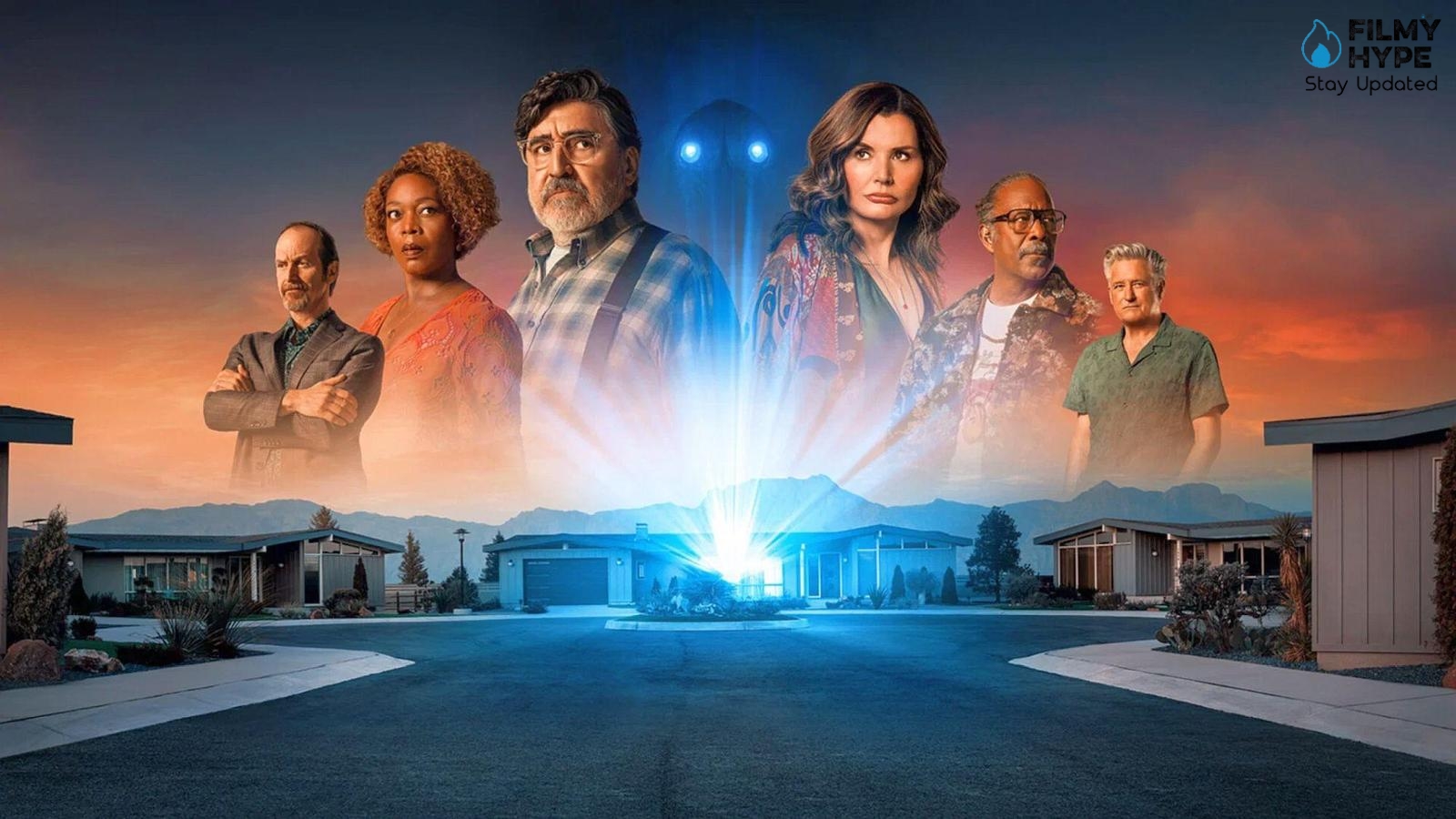
The news came when the audience data and analysis of its performance were still appearing. According to different American media, there was even a writers’ room working on ideas for a second season. Longer-term production plans had also been discussed. None of that was enough to prevent the early end. The cancellation of The Boroughs once again brings to the fore a recurring question within the streaming industry: how much room do series have to find an audience before being evaluated solely on their immediate performance?
Why Did Netflix Cancel ‘The Boroughs’? The Reasons Behind the Drastic Decision?
Well, the reason, as detailed by the media, is purely due to a low audience. No matter how good the reviews a series has, if it fails to capture the attention of viewers, in almost one hundred percent of cases, its destiny is sealed, as has happened to The Boroughs.
The entertainment industry is governed by the math; if the accounts are not enough, the studios and production companies do not hesitate for a moment to cut corners. In the case of fiction created by Jeffrey Addiss and Will Matthews, the project did not have the desired impact, even with the novelty factor. The hearing after the first weekend of The Boroughs in the catalog on Netflix ended up with a discreet 5.6 million views, a figure that increased to 9.5 million when it turned its first full week.
However, the most decisive thing may have been that in its second week, it only met 3.7 million views, falling from the first to fourth place in terms of audience. The downward trend has continued relentlessly. At the time of writing, The Boroughs is now the eighth most-watched series in the Netflix catalog, which indicates that the interest of the general public has plummeted.
Costs vs. Reward: The Cancellation of The Boroughs Makes Sense?
When a series is canceled, it is always negative news, especially for those who liked it and know that they will not have more chapters. But, in the case of The Boroughs, it is totally understandable why it has been struck down by Netflix.
Having a high-level cast composed of Alfred Molina, Geena Davis, Alfre Woodard, Denis O’Hare, Clarke Peters, and Bill Pullman, added to the presence of special effects and other great production values, converted The Boroughs into a high-cost series. An investment that the platform was not willing to assume again, to have so little return in terms of audience.
To make matters worse for viewers, the series was not conceived as a miniseries with a beginning and an end. As with the greatest mystery and science fiction hits, the first season of The Boroughs ends with an open ending and plots in the air which were designed to be resolved in that second batch of episodes that will never arrive. A decision that leaves the audience completely «orphaned» and with more questions than answers.
The Boroughs and the Figures Behind the Cancellation?
The official explanation for the cancellation points to an economic issue. Various industry sources noted that The Boroughs was an expensive production. The budget would be around $10 million per episode, although some estimates place the figure even above that amount. With that level of investment, Netflix expected results close to those obtained by its biggest hits.
The initial numbers were solid, although they fell far short of that threshold. In its first four days, the series racked up 5.6 million views. During the following week, it reached first place among English-speaking productions on the platform with 9.5 million. Then came a steep drop: 3.7 million in the third week and nearly 2 million in the fourth.
In absolute terms, these figures do not represent a failure. Many series would have considered such a journey successful. The problem appears when they are compared with the cost of production and the expectations that accompanied the project since its conception.
Netflix evaluates its renewals using a relatively simple equation: audience, duration in the catalog, and cost. When any of these factors loses balance with respect to the others, continuity becomes difficult to justify.
The decision to cancel The Boroughs also drew attention because it came while the series was still ranking in viewership rankings and when reviews were still largely positive. On Rotten Tomatoes, it achieved 97% critical approval and a 79% audience rating. Nielsen data for its premiere week also showed competitive performance within the streaming ecosystem.
The Boroughs and the Representation of the Elderly in Streaming?
Beyond its science fiction elements, The Boroughs was distinguished by an unusual characteristic in big-budget productions: its protagonists were older people.
The story took place in a seemingly idyllic retirement community. There, Sam Cooper, played by Alfred Molina, discovered the existence of a threat that the local authorities preferred to ignore. From that discovery, a group of residents was formed, willing to investigate what was happening behind the quiet facade of the place.
The premise inevitably referred to Stranger Things. There was mystery, hidden creatures, and a community facing unknown forces. However, the generational change completely modified the narrative dynamic. Instead of teenagers discovering the world, the series followed characters who accumulated decades of experiences, losses, and frustrations.
This approach allowed us to explore an underrepresented segment within contemporary television production. While much of streaming focuses its efforts on young audiences, The Boroughs built a story around characters who usually occupy secondary or decorative places within this type of story.
The Boroughs: The Relationship Between Netflix and the Duffer Brothers?
The cancellation of The Boroughs also coincides with a particular moment in the relationship between Netflix and the Duffer brothers.
For years, Matt and Ross Duffer were two of the most important creative figures on the platform thanks to the global phenomenon of Stranger Things. However, they recently signed a production deal with Paramount that expanded their activities outside of the Netflix ecosystem.
Some versions published in specialized media suggested that this movement generated internal tensions. Sources close to the company rejected this interpretation and maintained that the cancellation responded solely to commercial criteria. Still, the timing fueled speculation within the industry.
Another less visible factor also influenced. The executives who originally approved The Boroughs are no longer part of Netflix. Peter Friedlander and Blair Fetter, two of those responsible for the initial development of the project, currently work at Amazon MGM Studios. Leadership changes usually modify the internal priorities of any company, especially when it comes to expensive productions that have not yet consolidated a massive viewer base.
The final decision came when the main cast’s contractual options expired. Netflix chose not to renew them, a move that effectively closed off any immediate possibility of continuing the story. Given that the company owns one hundred percent of the rights to the series, it also seems unlikely that another platform will pick up the project.
The trajectory of The Boroughs thus ends up becoming another example of an increasingly frequent paradox: a series can receive good reviews, remain visible for several weeks, and still disappear before fully developing its narrative proposal.