
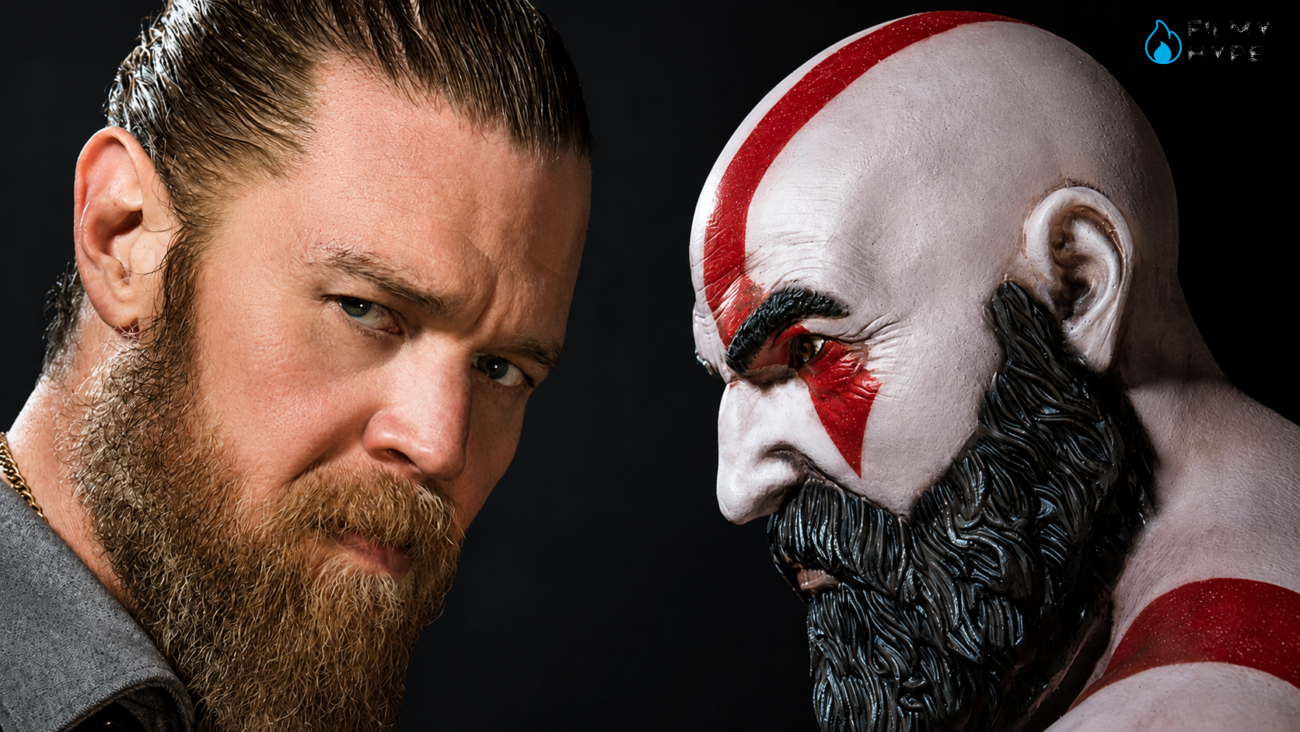
God of War Amazon Series: The news hit like a Leviathan axe to the chest. Ryan Hurst, the actor who had been meticulously preparing to embody Kratos in Amazon’s ambitious God of War television adaptation, is out. A torn bicep suffered during an action sequence has derailed not just his performance but the entire production timeline, forcing Sony Pictures Television and Amazon MGM Studios into a brutal decision: recast the Ghost of Sparta or risk delaying the series by years. The problem is not limited to the recast of the protagonist. At the time of the injury, four episodes had already been filmed, which will have to be entirely reshot with the new actor. A significant backlash that will inevitably push back the series’s yet-unofficially announced release date.
God of War Amazon Series: Ryan Hurst Out as Kratos After On-Set Injury—Everything We Know So Far
I’ve been following this adaptation since it was first announced, and like a lot of fans, I had mixed feelings when Hurst was initially cast. He’s got the physical presence—anyone who watched him as Opie in Sons of Anarchy or Beta in The Walking Dead knows the man can command a room through sheer size and intensity. But Kratos requires something more specific. The character, especially in the 2018 game and its sequel Ragnarök, is a study in contained fury, a man whose rage has calcified into something quieter but no less dangerous. Hurst seemed to understand that assignment. He reportedly packed on forty pounds of muscle for the role. He was all in. And now he’s out. Let’s break down what happened, why the production made this call, and what it means for one of the most anticipated video game adaptations in years.
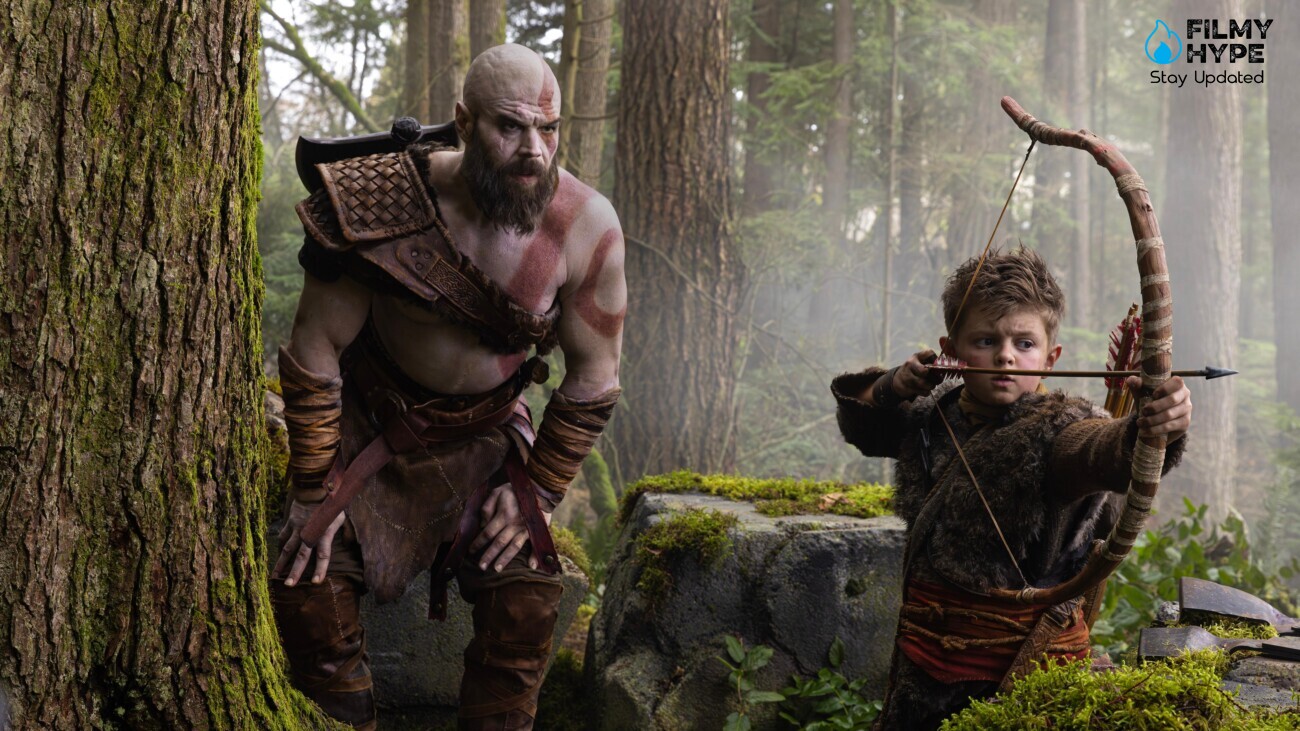
For Hurst, this is a particularly bitter setback. The actor, best known to Italian audiences for his role as Opie in Sons of Anarchy, was only confirmed in the role of Kratos in January this year. In the following weeks, a first image had also circulated that already portrayed him in costume: his body painted ash white — the distinctive feature of the god of war — while he was in a forest next to Callum Vinson, the young actor chosen to play Atreus, the son of Kratos. To prepare physically for the role, Hurst had embarked on an intensive training regimen, gaining approximately eighteen pounds of muscle mass to get closer to the character’s imposing build.
What Exactly Happened to Ryan Hurst?
The details, pieced together from Deadline’s reporting and earlier leaks to TMZ, paint a picture of a freak accident with massive consequences. Hurst was filming an action sequence—reports describe it as an acrobatic stunt—when he suffered a severe tear to his bicep. This isn’t a minor strain or something you can tape up and push through. A full bicep tear means the tendon has detached from the bone, and the repair requires surgery followed by months of rehabilitation.
The accident occurred in late June. Hurst underwent surgery shortly afterward, but the recovery timeline for this kind of injury is unforgiving. Even with optimal healing and aggressive physical therapy, we’re looking at a minimum of six months before someone can return to the kind of physical performance Kratos demands. Realistically, Hurst wouldn’t have been cleared for intense action work until early 2027 at the soonest.
That’s a timeline the production simply couldn’t absorb.
Why Didn’t Amazon Just Wait for Him to Recover?
This is the question I’ve seen floating around social media since the announcement, and it’s worth addressing directly because the frustration from fans is understandable. If Hurst was the right choice for Kratos—if he’d already transformed his body and filmed multiple episodes—why not pause production and let him heal?
The answer, frustrating as it is, comes down to the logistics of modern television production at this scale. God of War isn’t a small indie project. Amazon and Sony have commissioned two seasons to be filmed back-to-back, which means the production schedule is already a massive, interconnected machine. Sets have been built. Crews have been contracted. Other actors have their own schedules locked in. Post-production facilities, visual effects teams, and release windows are all planned years in advance. Pushing everything back by twelve to eighteen months isn’t just inconvenient—it’s financially catastrophic and contractually nightmarish.
There’s also the question of momentum. The series had reportedly completed four episodes before the accident. Those episodes now need to be reshot with whoever takes over the role, which is painful enough. But if production had waited for Hurst, those four episodes would have sat in limbo while the cast and crew dispersed to other projects. Reassembling everyone in 2027 would have been its own logistical nightmare.
Deadline reported that the decision to recast came “after careful consideration by the studio responsible for the series, Sony Pictures Television, and Amazon MGM Studios.” That language is corporate-speak for “we ran the numbers and waiting wasn’t viable.” It’s cold, but it’s also the reality of how these decisions get made. The show must go on, literally, because too much money and too many careers are attached to it stopping.
What Does This Mean for the Show’s Timeline?
The production is now targeting a restart in mid-October, with preparations—including the search for a new Kratos—beginning in mid-August. The four completed episodes will be reshot with the new lead. If everything goes smoothly, the series could still make its previously projected release window, though the exact date remains uncertain.
Originally, God of War was expected to debut in the first half of 2027. That estimate was already ambitious given the scale of the production and the back-to-back filming plan for two seasons. With the recasting and reshoots, a late 2027 release now seems more realistic, and a slip into early 2028 wouldn’t be shocking. Amazon hasn’t issued an official updated timeline, and they probably won’t until the new Kratos is announced and filming resumes in earnest.
The Long Road to Production
It’s worth stepping back and acknowledging that God of War has had a bumpy journey even before this setback. Development began in 2022, and adapting a game as visually ambitious and narratively complex as the 2018 God of War was never going to be straightforward. The story follows an older, wearier Kratos living in the Norse realm of Midgard with his son Atreus, embarking on a journey to scatter his wife Faye’s ashes from the highest peak in the realms. It’s a road movie wrapped in a father-son drama wrapped in a mythological epic, and the game tells it with a single, unbroken camera shot that was revolutionary for the medium.
Translating that to television requires serious resources. The casting of Hurst as Kratos and Ed Skrein as Baldur—the primary antagonist of the 2018 game—suggested the production was taking the material seriously. Skrein, in particular, felt like inspired casting; he’s played unsettling, physically formidable antagonists before, and Baldur’s combination of invulnerability and manic rage needs an actor who can be both threatening and tragic.
Then there was the promotional image controversy. When Amazon released the first official poster—showing Kratos and Atreus in silhouette—the fan response was brutal. Critics called it cheap, generic, and weirdly reminiscent of AI-generated art. David Jaffe, the original creator of the God of War franchise, publicly described it as “terrible.” For a production trying to win over a skeptical fanbase, it was an inauspicious start.
The Hurst injury is just the latest and most severe in a series of challenges. But the fact that Amazon and Sony are pushing forward rather than shelving the project suggests they believe in the material and the audience for it.
The Fan Response: Why This Recasting Stings
Here’s where things get emotionally complicated. Hurst hadn’t just been cast as Kratos—he’d been embraced by a significant portion of the fanbase. His physical transformation for the role was documented and discussed. Forty pounds of muscle isn’t something you achieve casually; it’s a commitment that signals respect for the character and the audience. Fans respond to that kind of dedication.
The God of War community is also particularly protective of Kratos as a character. The original Greek saga version of Kratos—a screaming engine of vengeance who murders his way through the entire pantheon—has a certain appeal, but the Norse version is something richer. He’s a father trying to raise a son better than he was raised. He’s a man carrying centuries of guilt and trying, imperfectly, to be something other than a monster. Christopher Judge’s performance in the games is widely considered definitive, and any actor stepping into the role on screen faces an almost impossible standard.
Hurst had started to clear that bar in fans’ minds. His physicality was right. His demeanor in interviews suggested he understood the character’s gravity. Now he’s gone, and whoever replaces him will have to win over an audience that had already begun to invest in someone else. That’s a tough position for any actor.
Some fans have argued that Amazon should have delayed the series rather than recast. The argument is that artistic integrity should trump scheduling convenience, and that waiting for Hurst would have shown respect for both the actor and the audience. It’s not an unreasonable position. But it also assumes that a delay would only affect the release date, when in reality it would ripple through every aspect of production in ways that might have killed the series entirely.
Who Could Replace Hurst as Kratos?
Amazon hasn’t indicated who’s on their shortlist, which hasn’t stopped the internet from speculating wildly. The requirements are specific. Kratos needs to be physically imposing in a way that reads as genuine, not padded. He needs to be able to convey emotional depth with minimal dialogue—the Norse Kratos speaks sparingly, and every word counts. He needs to be believable as both a warrior capable of killing gods and a father struggling to connect with his son.
The obvious names that come up in fan discussions include actors like Dave Bautista, who has the physical profile and has been campaigning for dramatic roles that stretch beyond his Drax persona. But Bautista is also in his mid-fifties, and a two-season commitment with intense physical demands might not align with where he wants to take his career. Others have suggested Gerard Butler, who played Leonidas in *300* and has the right combination of gravitas and physicality, though he may be a bit older than what the production wants for a long-term commitment.
The more likely scenario is that Amazon casts someone less famous—a character actor with the right physical tools who can grow into the role over multiple seasons. This is the model that worked for Game of Thrones, which built stars rather than hiring them. A relative unknown wouldn’t come with the baggage of existing fan expectations and could define the character on screen rather than competing with the game version.
What This Means for Video Game Adaptations
The God of War situation is part of a larger moment for video game adaptations. The Last of Us proved that these stories could work on television when treated with respect for the source material and genuine creative ambition. Fallout demonstrated that even games without linear narratives could be adapted successfully by capturing the tone and world rather than following a specific plot. Arcane showed that animation could expand a game’s universe in ways that enhanced rather than diminished the original.
God of War was supposed to be the next step in this evolution—a big-budget, effects-heavy fantasy series that could do for Norse mythology what Game of Thrones did for Westeros. The Hurst recasting is a setback, but it doesn’t have to be fatal. Television productions survive casting changes all the time. Shows lose leads during pilot season. Actors get injured, get pregnant, get offered other projects. The industry has mechanisms for handling this.
What matters now is who Amazon chooses and how quickly they can integrate the new Kratos into the existing production. The four episodes being reshot represent a high sunk cost, but they also give the new actor a chance to make the role his own from the beginning rather than taking over mid-stream. It’s a full reset, which is painful but also clean.
The Bottom Line
Ryan Hurst is out as Kratos. The injury he sustained—a torn bicep during an action sequence—requires a recovery timeline that the production can’t accommodate without delays that would jeopardize the entire two-season plan. Amazon and Sony have made the difficult decision to recast rather than wait, and filming is expected to resume in October with a new lead.
The fanbase is divided. Some understand the logistical reality; others feel the production is prioritizing schedule over artistic integrity. Both perspectives have merit, but the decision is made. The series will move forward.
The next few months will be critical. Whoever takes on the role of Kratos will be stepping into one of the most scrutinized casting situations in recent television history. The games have sold millions of copies and won countless awards. Christopher Judge’s performance is beloved. The expectations are sky-high.
But if the right actor steps into those ashes—someone who understands that Kratos isn’t just rage and muscle, that he’s a father, a widower, a man trying to be better than his past—then God of War could still be something special. The journey to the highest peak just got a little more complicated, but the destination hasn’t changed.
Bottom line: What’s Happening to the God of War Show?
- Who got injured: Lead actor Ryan Hurst (Kratos).
- The dynamics: Biceps injury/tear during a stunt (a stunt double/action scene).
- The consequence: Need for surgery and forced stop filming.
- New release window: The initial estimated release window for 2027 could slip significantly, with production only at risk of restarting in 2027.
When will the God of War TV Series Come Out?
Without official communication from Amazon, MGM Studios, and Sony Pictures, it is difficult to make precise estimates. However, if production were to sit out the rest of the year due to Hurst’s recovery, the God of War TV series’ release date —previously projected for the first half of 2027— could slip to late 2027 or even early 2028.

