


Let me start with a confession. When I first heard that Zendaya was cast as Athena in Nolan’s The Odyssey, I paused. Not because I doubted her ability—she’s proven her range across everything from Euphoria to Dune—but because Athena might be the single hardest role to get right in all of Greek mythology. She’s not a villain you can play with menace. She’s not a love interest you can play with warmth. She’s not even a typical mentor figure who dispenses wisdom and then steps aside. Athena is something stranger and more specific: a goddess whose relationship with Odysseus is practically a partnership, a meeting of minds across the divide between mortal and divine.
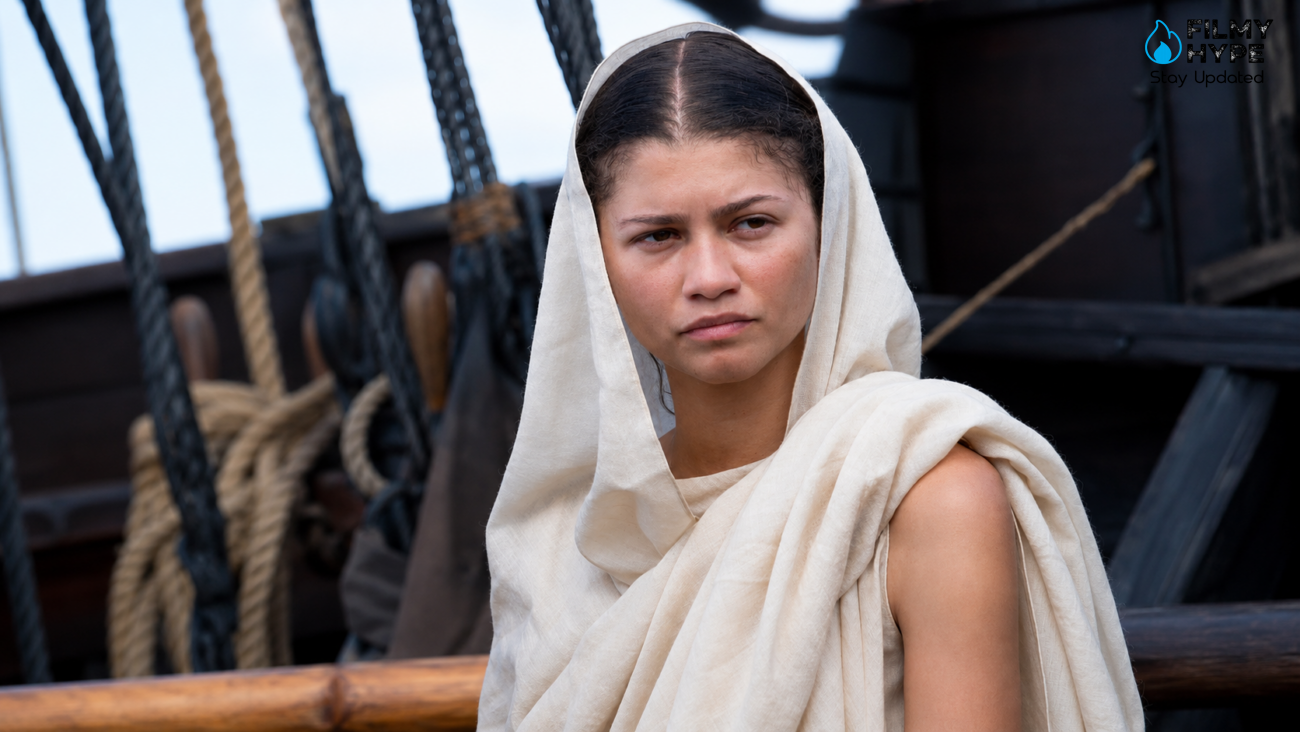
Get her wrong, and the entire story tilts off its axis.
So why does this casting actually make sense? And what does Athena represent in Homer’s poem that makes her so essential to understanding what the Odyssey is actually about? Let’s dig into the character, her function in the story, and what Nolan seems to be doing with her in this adaptation.
Who Is Athena in The Odyssey? Who Is Athena in Homer’s Poem?
Athena is the goddess of wisdom, but that word doesn’t quite capture what she represented to the ancient Greeks. “Wisdom” in English suggests something contemplative, maybe even passive—a sage sitting on a mountain, dispensing cryptic advice. Athena’s domain was closer to what the Greeks called mêtis: cunning intelligence, practical cleverness, the ability to assess a situation and figure out what to do. She was also the goddess of strategic warfare, as opposed to Ares, who represented war’s bloodlust and chaos. She didn’t love battle for its own sake. She loved battle when it was necessary and winnable through superior planning.
In the Odyssey, Athena is introduced as Odysseus’s divine patron, and she’s present from the very first book to the final reconciliation. Her intervention begins before Odysseus even leaves Calypso’s island. At the opening of the poem, Poseidon is temporarily distracted, and Athena seizes the window. She goes to Zeus and argues that Odysseus has suffered enough, that his continued imprisonment is unjust, that the gods have an obligation to let him go home. Zeus agrees, and the machinery of the return is set in motion.
But Athena doesn’t stop at celestial lobbying. She descends to Ithaca in disguise—as Mentes, an old family friend—and visits Telemachus, Odysseus’s son. Telemachus at this point is a young man paralyzed by the situation in his own home. The suitors are consuming his inheritance, disrespecting his mother, and treating him like a child. He wants to act but doesn’t know how. Athena, in her disguised form, tells him exactly what to do: call an assembly, demand that the suitors leave, and then set sail to seek news of his father. She doesn’t solve his problems for him. She gives him a push and a plan, then lets him figure out the rest.
This pattern repeats throughout the poem. Athena guides, suggests, disguises, protects—but she rarely solves things outright. She transforms Odysseus’s appearance so he can enter the palace unrecognized, but she doesn’t reveal him to Penelope. She helps him plan the slaughter of the suitors, but she doesn’t fight the battle for him. When the fighting does begin, she appears briefly as Mentor, an old friend of Odysseus, to encourage him—and then, in one of the poem’s most striking moments, she withdraws. She wants to see what Odysseus can do on his own.
The Counterweight to Poseidon
To understand Athena’s role, you need to understand what she opposes. The Odyssey is structured around a fundamental conflict between Athena and Poseidon, and that conflict represents something deeper than just two gods arguing over one mortal.
Poseidon is the god of the sea, earthquakes, and horses. In the Odyssey, he’s also the embodiment of raw, implacable force. He doesn’t hate Odysseus because Odysseus is evil or unjust. He hates him because Odysseus blinded his son, the Cyclops Polyphemus, and Poseidon’s pride demands vengeance. There’s no reasoning with him, no appeal to fairness or mercy. He is the chaos of the natural world, the storm that doesn’t care who it drowns.
Athena is his opposite. She represents the belief that intelligence can overcome force, that planning can defeat chaos, that the mind is more powerful than the storm. When Poseidon sends a tempest to destroy Odysseus’s raft, Athena calms the winds. When Poseidon turns the Phaeacian ship to stone for helping Odysseus, Athena doesn’t confront him directly—she works around him, through persuasion, timing, and strategy.
This opposition gives the Odyssey its philosophical backbone. Odysseus is not a conventional hero because he’s not the strongest or the fastest or the most fearsome warrior. Achilles is stronger. Ajax is more formidable in direct combat. What Odysseus has, uniquely, is mêtis—the quality that Athena herself embodies. He thinks his way through problems. He lies when necessary. He waits when waiting is smarter than attacking. He is, in a very real sense, Athena’s mortal mirror.
Divine Help and Human Responsibility
Here’s where Athena gets genuinely interesting as a character. She could solve everything. She’s a goddess. She could whisk Odysseus home in an instant, strike the suitors dead with a thought, and wrap up the story in five minutes. But she doesn’t. And the poem is very clear that she doesn’t because the point isn’t just for Odysseus to get home—it’s for him to become the person who deserves to be home.
Every intervention Athena makes is calibrated to leave room for human agency. She persuades Zeus to let Odysseus leave Calypso, but Odysseus has to build the raft himself and navigate the sea. She appears to Telemachus in disguise, but Telemachus has to choose to follow her advice and undertake the journey. She helps Odysseus plan the suitors’ destruction, but he has to execute the plan, endure their insults in disguise, and wield the bow.
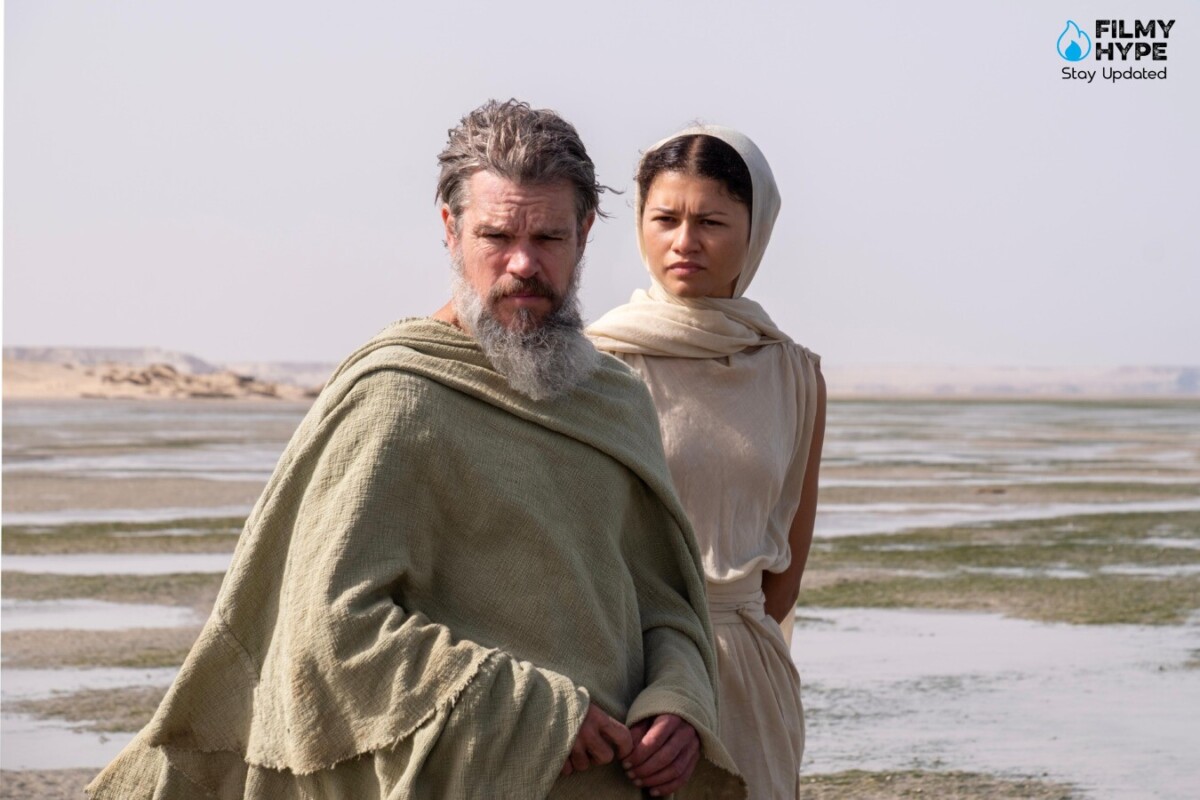
This relationship between divine aid and human effort is one of the poem’s most sophisticated ideas. The gods can help you, but they can’t do the work for you. Even Athena’s favor is conditional—not on sacrifice or worship, but on whether Odysseus continues to demonstrate the qualities that earned her respect in the first place. When Odysseus washes up on Phaeacia, naked and exhausted, he still has to use his wits to win over Nausicaa and the Phaeacian court. Athena smooths the path but never walks it for him.
Why Zendaya?
So what does Nolan’s casting tell us about his approach to the character?
First, Zendaya brings a specific kind of screen presence that aligns surprisingly well with Athena’s function in the poem. She’s capable of projecting authority without coldness, intelligence without arrogance, and a certain watchful quality that suggests someone who’s always thinking several moves ahead. Her performances in Dune and Dune: Part Two demonstrated that she can play characters who operate as guides and catalysts—people whose role is less about their own journey and more about how they shape the journey of others.
But there’s also something else at work. Zendaya is young. Traditional depictions of Athena often lean toward a matronly or regal image—the mature goddess, fully formed and distant. By casting someone younger, Nolan seems to be moving Athena closer to the human characters, making her less of a remote Olympian and more of an active presence within the story’s emotional landscape. This fits his broader approach to the material, which tends to reduce the gap between myth and recognizable human experience.
Athena in Nolan’s film, based on what we know, isn’t a goddess floating above the action dispensing blessings. She’s embedded in the narrative, a figure who walks alongside Odysseus and Telemachus, whose intelligence is expressed through presence rather than spectacle. The choice to cast Zendaya suggests a version of Athena that feels less like a divine abstraction and more like the smartest person in any room—which, for the goddess of wisdom, is exactly right.
Athena’s Relationship with Odysseus: More Than Protector and Protected
One of the most striking aspects of Athena’s role in the Odyssey is the genuine affection she seems to feel for Odysseus. This isn’t a distant patron-client relationship. There are moments in the poem where Athena speaks about Odysseus with something approaching fondness, even admiration. She recognizes herself in him.
When Odysseus finally reaches Ithaca and Athena reveals herself to him, their exchange is remarkably intimate for a conversation between a mortal and a god. She teases him gently about his habitual distrust and deception—even though she’s the goddess of wisdom and he’s been through twenty years of betrayal, he still doesn’t immediately trust that she’s actually helping him. She laughs, and in that laughter there’s a kind of warmth that’s rare in divine-human interactions.
“Only you,” she essentially tells him, “would be suspicious of your own patron goddess coming to help you. And that’s exactly why I love you.”
This moment reveals something crucial about their bond. Athena doesn’t just protect Odysseus out of obligation or because he’s particularly pious. She protects him because she sees in him a mortal reflection of her own nature. He’s curious, strategic, adaptable, and profoundly unwilling to accept situations at face value. Their relationship is less like a deity and a worshipper and more like a mentor and a student who have grown into something closer to equals—at least in the realm of the mind.
Nolan, whose films frequently explore relationships built on recognition and shared understanding rather than romance or duty, seems well-positioned to capture this dynamic. Zendaya’s Athena will likely be less a distant divine patron and more a partner in Odysseus’s journey, someone whose investment in him is personal as well as cosmic.
What Athena Represents Thematically?
If you zoom out from the plot mechanics, Athena stands for something that makes the Odyssey feel surprisingly modern even after nearly three thousand years. She represents the idea that intelligence is a form of heroism.
Greek mythology is full of strong men doing strong things. Heracles strangles lions. Achilles slaughters Trojans. Theseus lifts boulders and kills monsters. Physical might is the traditional currency of the hero. But the Odyssey offers a different model. Odysseus does fight when he has to—the suitor slaughter is brutal—but his defining trait is his mind. He survives the Cyclops by calling himself “Nobody.” He navigates Circe’s island by following divine advice and negotiating from a position of strength. He resists the Sirens by having his men tie him to the mast. He reclaims his household not by kicking down the door but by entering in disguise, gathering information, and striking at exactly the right moment.
Athena is the divine patron of this different kind of heroism. She’s not interested in raw strength. She’s interested in strategy, timing, adaptability, and the patience to wait for the right opening. Her presence in the story signals that the Odyssey values a different set of qualities than the Iliad does—qualities associated with survival, return, and rebuilding rather than conquest and glory.
This is also why she’s the goddess who presides over the poem’s ending. After the suitors are dead and their families come seeking vengeance, it’s Athena who intervenes to stop the cycle of violence. She doesn’t help Odysseus kill more people. She helps him make peace. The goddess of strategic war knows when war is no longer useful, and that’s part of her wisdom too.
The Goddess Who Lets Go
There’s one more aspect of Athena’s role that deserves attention, especially in the context of a film adaptation. At the end of the Odyssey, after Odysseus has reclaimed his home and reconciled with Penelope, Athena doesn’t stick around. Her work is done. The hero who needed her guidance has become the hero who can stand on his own.
This is the final, subtle dimension of her character. Athena’s goal isn’t to keep Odysseus dependent on her forever. It’s to help him become the person who no longer needs her help. Their partnership ends not because she abandons him but because he’s finally, fully capable. The man who lands on Ithaca in Book 13 is already changed from the man who left Troy. By the end of Book 24, he’s changed further still. Athena’s presence has been the catalyst for that transformation, but the transformation itself is his.
For a film, this offers a rich emotional arc. Zendaya’s Athena can be present throughout the story, guiding and challenging and occasionally withdrawing, only to step back at the end in a gesture that’s both proud and a little bittersweet. The goddess has done what she came to do. The mortal has become what she always knew he could be.
Conclusion
Athena is the Odyssey‘s secret protagonist. Odysseus gets the name in the title, but it’s Athena who drives the action from the first book to the last. She persuades Zeus, guides Telemachus, protects Odysseus, plans the suitors’ destruction, and finally brokers the peace that lets the story end without further bloodshed. Without her, there is no return. There’s just a man lost at sea and a household slowly consumed.
What makes her compelling isn’t her power—gods are powerful by definition—but her method. She doesn’t dominate. She persuades. She doesn’t solve problems directly. She gives mortals the tools to solve problems themselves. She represents a worldview in which intelligence matters more than strength, in which survival is a form of victory, and in which the right word at the right moment can accomplish what no weapon can.
Casting Zendaya suggests that Nolan understands this. He’s not giving us a remote, marble-statue Athena. He’s giving us an Athena who walks among the human characters, whose intelligence is active and present, whose relationship with Odysseus is a genuine partnership. The goddess of wisdom, in this version, isn’t just someone to be worshipped from a distance. She’s someone worth listening to—and someone who, against all odds, actually cares what happens to a single clever mortal trying to find his way home.