


Agent Kim Reactivated Ending Explained: If you just finished the finale of Agent Kim Reactivated and are sitting there with about six different questions running through your head, you’re not alone. The show ties off nearly every major thread by the end — Ju’s downfall, Ri Eung Ryeong’s fate, the truth behind Park Yeong Gwang’s death, and the long, complicated repair job between Kim and his daughter Min-Ji. But it also leaves one very deliberate crack in the door: Kim can change his name, his house, and his job all he wants, but he can never fully stop being who he is.
Let’s walk through exactly what happens in those final minutes, and what it all actually means.
The finale of Agent Kim Reactivated doesn’t pull its punches. It closes almost every thread it opened. Ju’s empire of corruption. Ri Eung Ryeong’s decades-long manipulation. The truth about Park Yeong Gwang’s death. And most importantly, the fractured relationship between Kim and his daughter, Min-Ji, has been the emotional engine of the entire series. But the final scene, set in a nondescript office with a man who knows exactly who Kim really is, makes it clear that some identities can’t be erased. Only managed. The secret agent had to die. The father gets to live. But Agent 66 isn’t gone. He’s just waiting.
Spoilers ahead, obviously.
Agent Kim Reactivated Ending Explained: How Do Kim, Park, and Sung Escape Ju’s Trap?
The endgame kicks off with the cruelest move Ju makes in the entire series. After kidnapping Park Jin-cheol and Sung Han-soo’s daughters, Ju corners the two men and gives them an impossible choice: kill Kim, or watch their daughters die.
Kim shows up right after pulling off the rescue of Ri Eung Ryeong, only to get thrown into the same cage as his two closest allies. Ju and his associate Nam are betting that they can weaponize the friendship between these three men — turn loyalty into the very thing that destroys them. And for a moment, it almost works. Park and Sung have faced down soldiers, criminals, and rival agents without flinching, but this is different. One wrong move here costs them their children.
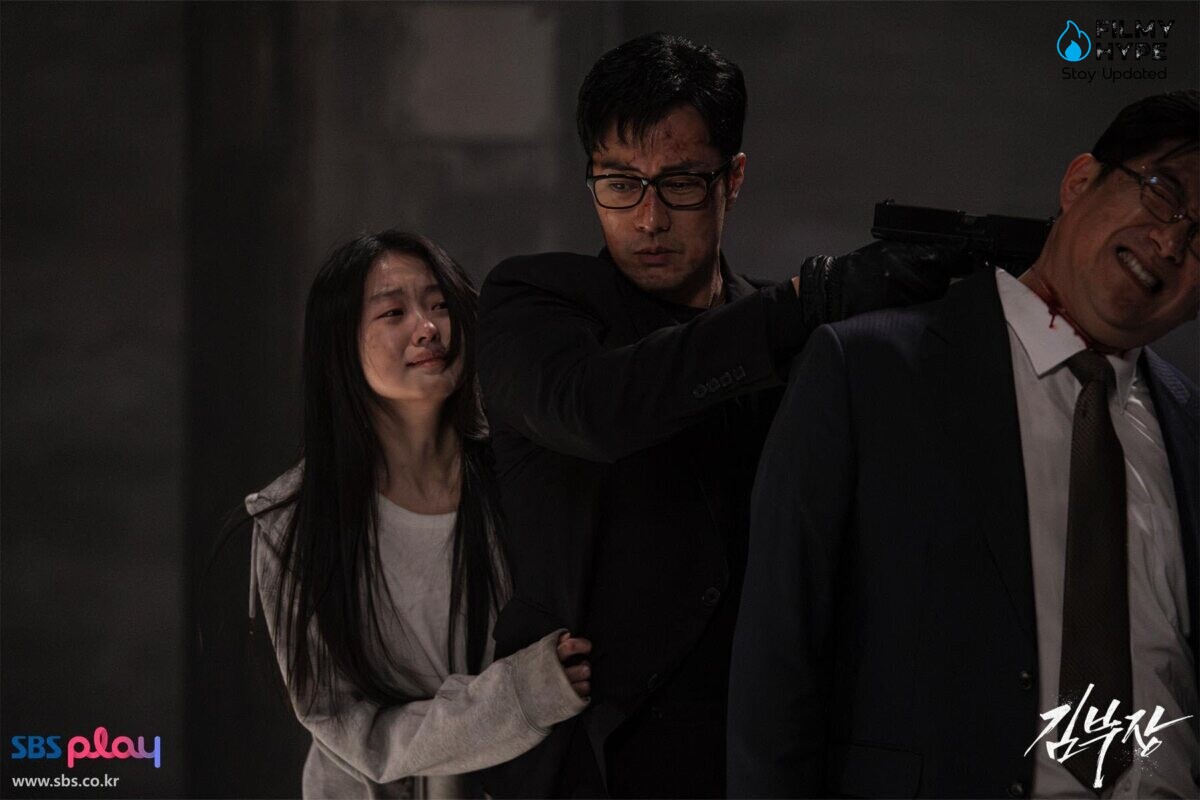
Kim reads the situation fast. He realizes that Park and Sung’s hesitation is actually the most dangerous thing in the room — it makes Ju doubt they’ll go through with it, which puts the girls in even more danger. So Kim does something that looks insane on the surface: he provokes his friends into actually hitting him, buying time while he studies Nam’s weapon and movements.
When Nam fires two rounds to prove he’s serious and starts a five-minute countdown, Park and Sung ramp up the beating. Kim takes hit after hit, falling and getting back up, all while quietly clocking something crucial — Nam’s gun takes about three seconds to reload between shots. He manages to pass that information along in fragments, timed between the blows. Then, appearing to finally break, he slumps against the cage. Ju, thinking he’s won, steps in to gloat one more time. Kim grabs him by the tie.
That’s the signal. Park and Sung slam the cage down and go straight for Nam, with Kim counting down the reload window in his head. The plan works because, even while it looked like three men were tearing each other apart, they never actually stopped working together. Ju’s whole scheme collapses because he misjudged the bond between them — he assumed fear would split them apart, when really it just sharpened their instincts and communication.
What Actually Happens to Ju?
Getting free of the cage is only step one. Ju’s power had never been physical. It was the power of decades spent buying officials, controlling criminals, and turning entire institutions into his tools. So taking him down for good means dismantling that network, not just beating him in a fight.
Nam reaches out to a contact inside the system and sets that demolition in motion. Once the digging starts, everything comes out: the bribes, the secret deals, and — perhaps most damning — Ju’s collaboration with North Korean intelligence, where he’d agreed to hand over Ri Eung Ryeong in exchange for a shot at killing Kim. Once that web of protection collapses, Ju is left exposed, surrounded by every enemy he’s made along the way.
His final reckoning comes outside a hospital, when he crosses paths with Jung-dae — a man with his own score to settle after everything Ju put him through. Jung-dae stabs him. The show is deliberately vague about whether that wound actually kills Ju, but the scene doesn’t really need a body count to land its point. The man who spent the whole series manipulating people gets taken down by someone he considered disposable. It’s not a grand political takedown — it’s a debt finally coming due.
Why Does Park Gang Seong Want Ri Eung Ryeong Dead?
For most of the series, Gang Seong believes Kim is the reason his brother Yeong Gwang died — that Agent 66 betrayed him. That belief is what turns Gang Seong into Kim’s enemy in the first place.
The truth is nothing like that. Kim and Yeong Gwang weren’t rivals; they were close friends and fellow agents. The mission that got Yeong Gwang killed was sabotaged from the inside by Ri Eung Ryeong, who was climbing his way toward control of North Korean intelligence and saw Yeong Gwang as an obstacle worth removing.
Once Gang Seong learns the real story, his anger shifts targets entirely. He no longer wants Kim — he wants Ri, the man who actually caused his brother’s death and then let an innocent person take the blame for years. When Gang Seong finally corners Ri after the hotel operation, ready to end it, Kim stops him — not to protect Ri, but because Ri needs to be interrogated first. Kim then makes a promise: once the mission’s finished, he’ll personally deliver Ri Eung Ryeong to Gang Seong himself.
That promise ends up being one of the most defining choices Kim makes in the whole series — he treats his word to Gang Seong as something that outweighs his obligations to South Korea’s official chain of command.
Why Does Kim Kidnap Ri Eung Ryeong From the Hospital?
Once rescued, Ri ends up in South Korean custody, recovering in a hospital while being interrogated. He’s sitting on valuable intelligence — the locations of North Korean missile sites and access to funds he’s stashed away in Macau — and true to form, he tries to leverage all of it. His asking price: freedom, and a quiet life in Macau near his hidden money.
Kim isn’t willing to let that happen. He believes official channels alone can’t guarantee real justice here — Ri could easily trade away just enough information to buy protection, then vanish with his fortune, essentially getting rewarded for everything he’s done. So Kim breaks into the hospital at night, without authorization from anyone, and takes Ri straight to Gang Seong. It’s not a sanctioned move. It’s personal.
What happens next is arguably the most fitting punishment in the entire finale. Gang Seong doesn’t kill Ri. Instead, he hands him over to North Korea — the exact government Ri betrayed and stole from. No escape to Macau. No quick death. Just a forced return to the system he spent years manipulating.
Did Kim Really Die?
No — his death is staged. South Korean authorities fake Agent 66’s death specifically so he can shed that identity for good and disappear into an ordinary life.
By the end of the series, Kim has become genuinely impossible to manage. He was raised inside the North Korean system, spent years working for the South, was presumed dead once already, resurfaced in the middle of a diplomatic crisis, and then went completely off-book to pull Ri out of official custody. To North Korea, he’s a traitor worth hunting. To South Korea, he’s simultaneously a valuable asset, an inconvenient loose end, and a liability who could trigger another international incident. Letting him live openly under his real identity would put a target on both him and Min-Ji permanently.
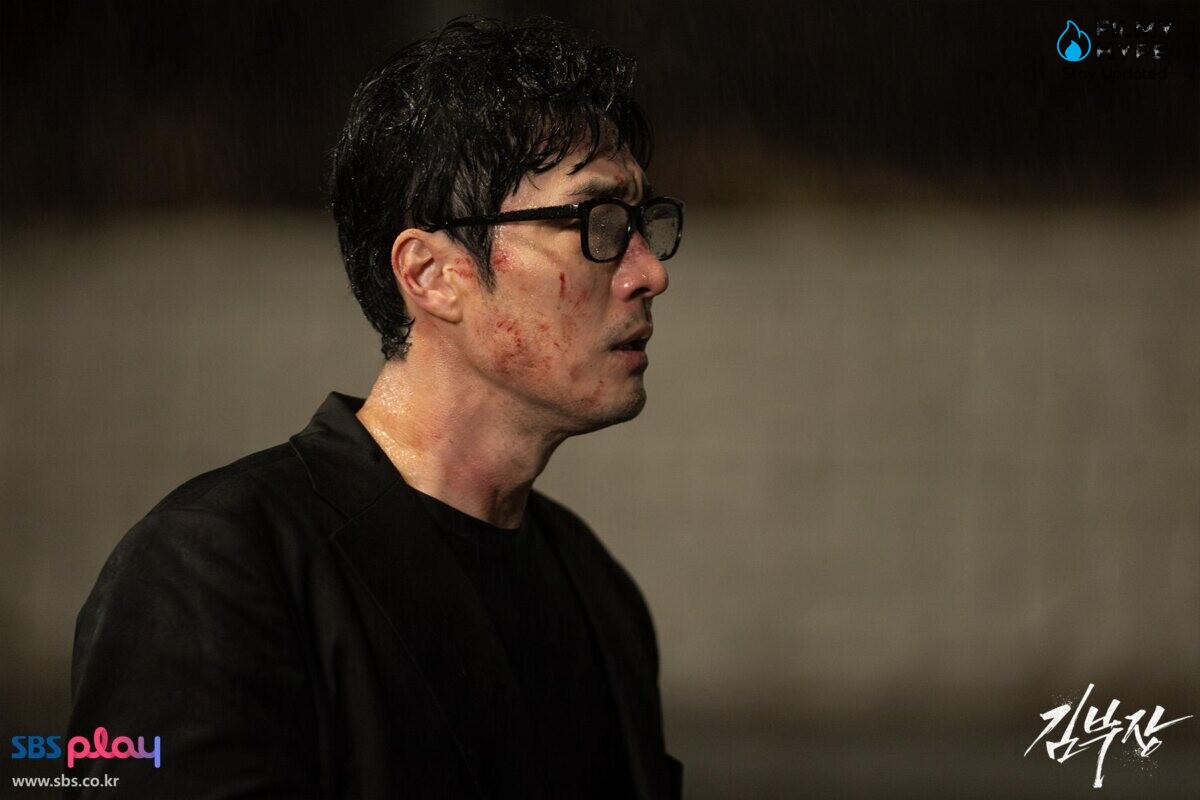
So the fix is to kill Agent 66 on paper. A contact known as Grillo Talpa stages the death and sets Kim up with new documents, effectively erasing the agent so the father can keep existing.
There’s a nice bit of symmetry buried in this ending, too. At the start of the series, Kim was already hiding — pretending to be an unremarkable office worker to protect a life built entirely on a lie he was terrified Min-Ji would eventually uncover. This new identity is different. Min-Ji already knows exactly who her father is, what he’s done, and why he disappeared in the first place. Their fresh start isn’t built on secrecy this time. It’s built on a truth they’ve already worked through together.
Why Does Min-Ji Forgive Her Father?
The relationship between Kim and Min-Ji is really the emotional spine holding the entire show together. Every other storyline — the two Koreas, the black-ops missions, Ju, Ri, the criminal underworld — exists because a daughter goes missing and a father decides to become the man he’d tried so hard to bury.
Early on, Min-Ji sees her dad as weak, even embarrassing — she’s humiliated watching him grovel in front of Ju, reading it as pure cowardice. What she doesn’t know yet is that he’s desperately trying to keep a promise he made to her late mother, Yu-Jin, who asked him before she died to walk away from life as an agent and raise their daughter instead.
As the series unfolds, Min-Ji slowly pieces together the truth. She learns her father is a spy, watches entire intelligence networks mobilize because of him, and comes to understand that the awkward man she grew up with is actually one of the most capable operatives alive. But that revelation alone isn’t what repairs their bond. What actually brings them back together is Kim choosing, once again, to walk away from that operational identity — this time for good — just to stay by her side.
In their new life, with Park and Sung showing up to help them move and Agent Sang becoming a genuine friend to Min-Ji, there’s a real sense of found family forming. It’s not just a tidy happy ending — it’s the family network neither of them ever really had.
What Does the Final Interview Scene Actually Mean?
In the closing moments, Kim walks into what looks like a routine job interview. Instead of small talk, he’s met by a stranger who clearly knows his real identity — and who challenges him to fight, right there.
The scene makes one thing very clear: Kim isn’t just going to blend into some quiet nine-to-five. Grillo Talpa may have given him a new name and a protected life, but his skill set is still far too valuable to just disappear. Whatever this new job actually is, it’s almost certainly tied to security, intelligence, or something operating well outside the law. And the fact that this stranger recognizes him at all proves something unsettling: erasing Agent 66 was never really complete. There are still people out there who know exactly who he used to be — and who might still want to use that.
The moment confirms, without much ambiguity, that Kim remains one of the most dangerous operatives in the world, even while he’s living as a father, a neighbor, a friend. It doesn’t undo the happy ending so much as complicate it slightly — Kim no longer has to choose between fatherhood and being an agent. He’s found some version of a balance that might let him protect Min-Ji without abandoning either identity. And, not for nothing, it leaves the door wide open for a sequel — the core story wraps up, but this final beat plants the seed for whatever comes next.
So What Is the Ending Actually About?
Strip away the spy-thriller mechanics, and the finale is really built around three ideas: identity, fatherhood, and loyalty.
Over the course of the story, Kim has worn a lot of different faces — a child raised inside the North Korean regime, an operative for the South, Agent 66, Yu-Jin’s husband, Min-Ji’s father, and eventually a deliberately unremarkable office worker. For most of the series, he treats these identities as mutually exclusive, convinced that being a good father requires completely burying the agent. What the story ultimately argues is that the real problem was never his capability — it was how much of himself he chose to hide. Every time he shuts Min-Ji out, their relationship suffers. The moment the truth comes out, they’re finally able to rebuild.
Family shows up as both a weapon and a source of strength throughout. Ju exploits it — first through Min-Ji, later through Park and Sung’s daughters — because he understands exactly how far these men will go to protect their kids. But that same devotion is what makes them unbreakable. Kim comes out of hiding for Min-Ji. Park and Sung endure Ju’s blackmail without ever actually turning on their friend. Gang Seong sets aside blind revenge to honor his brother in a way that actually means something.
Then there’s loyalty, which the show is careful to separate from obedience. Kim gets betrayed by South Korea, put through a staged interrogation, and used as a pawn in one final mission — yet he never gives anything up. But his loyalty was never unconditional either. In the end, he defies direct orders and kidnaps Ri because he decides that a personal promise to Gang Seong matters more than institutional command. Here, this series makes clear that Kim is not loyal to institutions for the sake of the institutions. He’s loyal to people and principles he actually believes in.
And lastly, there’s the theme of consequences catching up with everyone.
Ju is destroyed by the very network of corruption he built to protect himself. Ri is handed over to the country he betrayed. Gang Seong discovers his hatred was aimed at the wrong person the whole time. Kim, meanwhile, is the one character who gets something like a reward — but only because he’s willing to let his old identity die, symbolically, to earn it.
Will Kim Still Be Working for Grillo Talpa?
Here’s a theory worth sitting with: it’s possible Grillo Talpa didn’t just help Kim vanish — he may have set him up with something purpose-built for a man with his exact skill set. Under that reading, Kim’s new identity isn’t purely a retirement plan; it’s a cover for becoming an unofficial asset, someone South Korea can quietly call on without ever admitting Agent 66 is still alive. That would let Kim take on select missions while still coming home to Min-Ji each night — an imperfect setup, sure, but a massive step up from a life built entirely on lies.
There’s a real risk baked into that theory, though. The man who recognizes Kim at the interview might not be a friendly face at all. It could be a loyalty test from the agency. It could just as easily be the first sign that someone hostile has already found his new identity. The show doesn’t hand us enough to know for sure either way.
What it does leave us with is that final expression on Kim’s face. He doesn’t look afraid. He looks ready. His life has completely changed — but the instincts, the training, and the body of Agent 66 clearly haven’t gone anywhere.