


The Bombing of Pan Am 103 Ending Explained: Six episodes of scattered timer fragments, forged passports, dead-end leads, and testimony that keeps shifting under its own weight — and then the Netflix miniseries finally lands where it’s been building toward the whole time: the trial. But if you walked away from that finale expecting a clean, satisfying “case closed” moment, you probably noticed it doesn’t quite deliver one. And that’s on purpose.
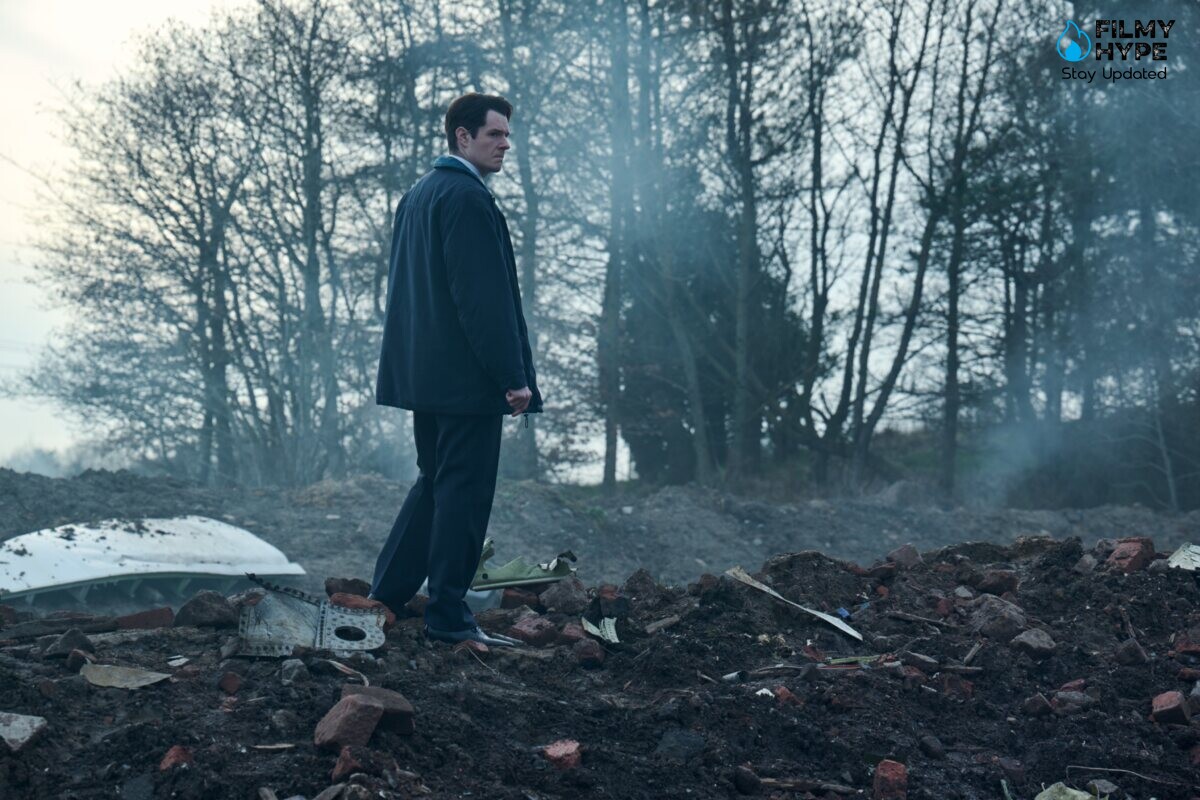
Directed by Michael Keillor, The Bombing of Pan Am 103 follows Connor Swindells as Scottish detective Ed McCusker, Patrick J. Adams as FBI agent Dick Marquise, and Merritt Wever as Kathryn Turman, tracking the years-long investigation into the Lockerbie bombing all the way to a Netherlands courtroom. The final episode puts the evidence gathered over more than a decade under a level of scrutiny it never faced during the actual manhunt — and a lot of it doesn’t hold up as cleanly as investigators hoped. Here’s what actually happens, and what it means.
The Bombing of Pan Am 103 Ending Explained: How Do Megrahi and Fhimah End Up on Trial in the First Place?
The case against Abdelbaset al-Megrahi is built entirely out of circumstantial pieces that only start to look meaningful once you line them all up side by side. There’s a timer fragment recovered from the wreckage, traced to the MST-13 model manufactured by a Swiss company called MEBO — a company that had, at some point, supplied similar devices to Libya. Al-Megrahi had connections to people and companies close to MEBO, and his professional background put him inside Libyan aviation intelligence and security circles.
Investigators also established that al-Megrahi was in Malta right before the bombing, arriving on December 20, 1988, under a false identity — a passport registered to a man named Ahmed Khalifa Abdusamad. It’s worth clearing something up here, because the show can make this murkier than it needs to be: Abdusamad isn’t a separate suspect. It’s simply the fake name al-Megrahi was traveling under.
The second man charged, Lamin Khalifah Fhimah, worked at the Libyan Arab Airlines desk at Luqa airport in Malta, which meant he had hands-on familiarity with baggage tags and airport logistics. Investigators find notes referencing Air Malta luggage labels in his diary. Fhimah doesn’t deny writing them — he just denies that they had anything to do with the attack. The prosecution reads those notes as early groundwork for smuggling the bomb aboard; the defense argues they could just as easily reflect ordinary work notes from his job.
Formal charges against both men were filed in November 1991. At that point, Libya’s government hadn’t officially been tied to the attack — but by 1992, the UN Security Council was pressuring Tripoli to cooperate, eventually escalating to sanctions when Libya refused to hand the two men over.
Why Does the Trial Happen in the Netherlands, of All Places?
For years, Libya has refused to extradite al-Megrahi and Fhimah to either Scotland or the United States. Muammar Gaddafi insists his government had nothing to do with the bombing and argues — not entirely without reason, from a diplomatic standpoint — that a trial held in either accusing country couldn’t possibly be seen as neutral.
The workaround is a genuinely unusual legal arrangement: a special court set up at Camp Zeist, a former U.S. military base sitting on Dutch soil. The location is the Netherlands, but the law being applied, the judges presiding, and the entire legal framework are Scottish through and through.
The two men are finally handed over in April 1999. The trial itself opens on May 3, 2000, and stretches on for more than eight months. One detail the show’s dialogue can blur if you’re not paying close attention: there’s no jury here. Three Scottish judges hear the case and decide the verdict alone. The whole setup exists to break a years-long diplomatic standoff and give Libya some assurance of geographic neutrality — without actually changing whose legal system is running the show.
What Evidence Does the Prosecution Actually Have?
Here’s the uncomfortable truth at the center of the finale: there’s no photo, no recording, no eyewitness who watched al-Megrahi load the bomb into the cargo hold. The entire case rests on connecting a chain of indirect evidence.
The first piece involves clothing recovered from the suitcase that housed the explosive device — clothes that were traced back to a shop called Mary’s House in Sliema, Malta, run by a man named Tony Gauci. Gauci recalls a Libyan customer and says al-Megrahi resembles him.
The second piece is al-Megrahi’s presence on Malta itself, timed to overlap with when that clothing was purchased, followed by his return to the island the day before the bombing under his fake identity.
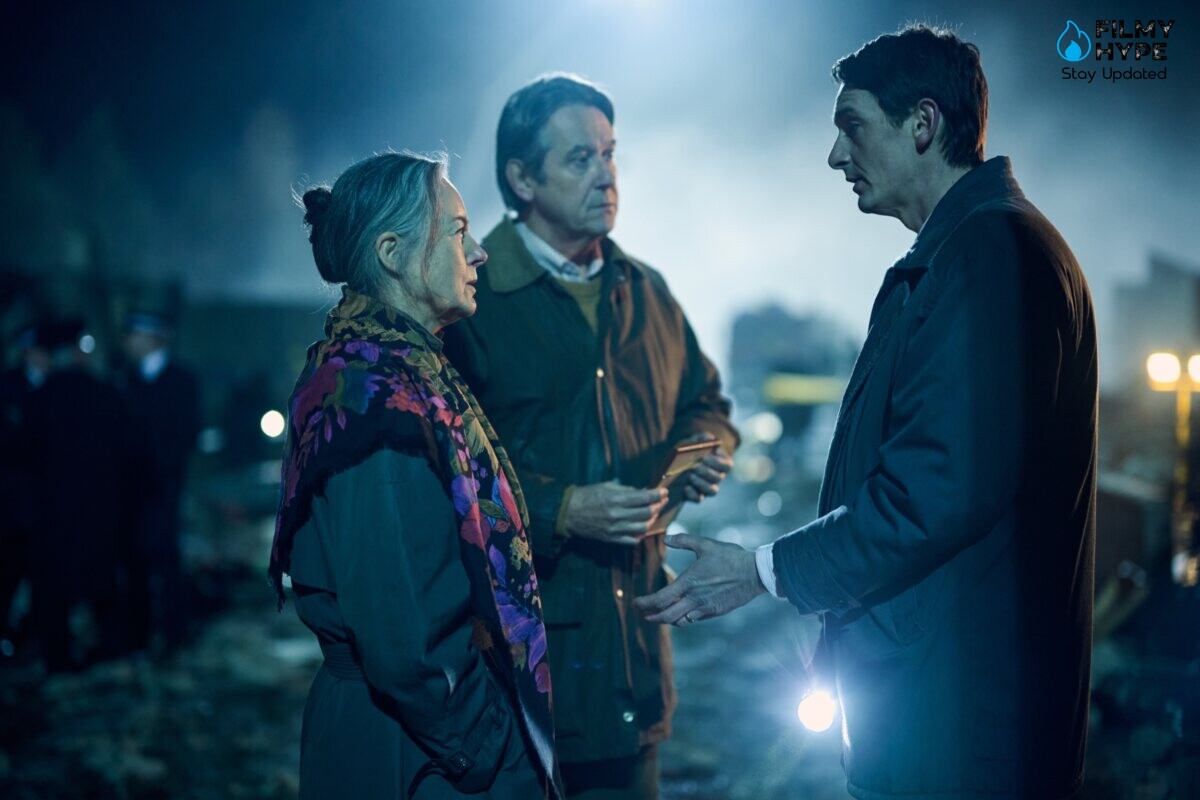
The third piece loops back to the MST-13 timer — the same model MEBO had supplied to Libya, and the same company al-Megrahi had ties to through people who frequented its offices.
Put together, the prosecution’s theory is that al-Megrahi bought the clothes, helped assemble the device inside the suitcase, and traveled to Malta to oversee the final stage of the operation, while Fhimah used his airport access to help slip the case into the baggage system. And this is really the crux of the whole finale: none of these three elements proves anything on its own. The judges convict al-Megrahi because the combination, taken as a whole, convinces them beyond a reasonable doubt — not because any single fact closes the case by itself.
Why Don’t Bollier and Giaka Deliver the Knockout Testimony Everyone Expects?
Throughout the series, Edwin Bollier and Abdul Majid Giaka are set up as the two witnesses who might finally nail the case shut. In the courtroom, neither one comes through the way the investigation seemed to promise.
Bollier does confirm that his company, MEBO, manufactured the MST-13 timers and had sold some to Libya. Beyond that, though, his testimony gets shaky — he grows confused on the stand, changes details, and offers reconstructions that are hard to substantiate. The court doesn’t throw out everything he says, but it only accepts the portions backed up by documentation or corroborating evidence. Net result: Bollier confirms a business relationship between MEBO and Libya, but doesn’t offer anything solid enough to say who actually used the timer.
Giaka’s collapse on the stand is even more consequential. A former member of Libya’s intelligence apparatus turned CIA informant, Giaka had claimed during the investigation to have personally seen al-Megrahi, Fhimah, Abu Agila Masud, and a brown Samsonite suitcase together — seemingly the single piece of testimony capable of tying the entire case into one coherent story. But under cross-examination, it comes out that his earliest reports to his CIA handlers never mentioned that scene at all. The most damning details only surfaced much later, long after his initial statements.
The court ultimately finds Giaka unreliable on the points that matter most and doesn’t rely on his suitcase account to convict either man. This is genuinely one of the most important corrections the finale makes to how the earlier episodes frame the investigation: al-Megrahi isn’t convicted because of Giaka. If anything, the strongest-sounding piece of his testimony gets essentially thrown out.
Why Does Tony Gauci Matter So Much?
Tony Gauci is the shopkeeper who identifies the recovered clothing as items he sold. Without him, investigators could still connect the clothes to Malta geographically, but they’d have no firsthand account of who actually bought them.
By the finale, Tony is reluctant to testify — he’s worried about what it could mean for his safety and doesn’t want his family pulled any further into the case. Ed McCusker talks him into it, reminding him that his role isn’t to decide guilt, only to describe what he remembers seeing.
On the stand, Gauci points to al-Megrahi as someone who resembles the customer, but he stops well short of certainty. His description has shifted over the years on details like age, height, and general appearance. The court openly acknowledges the identification isn’t airtight — but the judges find Gauci credible as a witness, and they treat that resemblance as meaningful once it’s weighed alongside al-Megrahi’s presence in Malta and the rest of the circumstantial picture.
So it’s worth being precise here: Gauci never flatly identifies al-Megrahi with total certainty, no matter how a quick recap might make it sound. He says the man looks like his customer. It’s the judges who ultimately decide that resemblance carries real evidentiary weight in context. The show also gestures toward a fear that Tony’s father’s death might somehow connect to the case — a detail that ramps up the tension, but isn’t something the story treats as a legal fact.
Who Actually Gets Convicted?
On January 31, 2001, the three judges handed down two very different verdicts.
Lamin Khalifah Fhimah is acquitted outright. The court finds some elements of his conduct suspicious — his relationship with al-Megrahi, the notes about baggage labels — but ultimately decides there isn’t enough evidence to prove he knowingly helped load the bomb. He isn’t found “partially responsible” or convicted of some lesser charge. He’s found not guilty, full stop, and released.
Abdelbaset al-Megrahi is convicted of killing all 270 people who died in the bombing — 259 passengers and crew aboard the flight, plus 11 residents of Lockerbie on the ground. The judges conclude that the combined weight of the evidence establishes his guilt beyond a reasonable doubt. He’s sentenced to life in prison, with a minimum term of 27 years set before he’d even be eligible to apply for parole — not the twenty-year figure that sometimes gets repeated in casual retellings of the case, however grimly appropriate that number might feel to grieving families.
Al-Megrahi appeals the conviction; the appeal is rejected in 2002. In 2009, he was released on compassionate grounds after being diagnosed with terminal cancer and returned to Libya, where he died in 2012. His conviction, notably, is never overturned.
Did Libya Ever Actually Admit Responsibility?
Following the UN’s 1992 sanctions push, Libya finally handed over al-Megrahi and Fhimah in 1999. Then, in 2003, the Libyan government formally accepted responsibility for the actions of its officials, renounced terrorism, and agreed to compensate victims’ families — a declaration that led directly to the lifting of international sanctions.
That’s a meaningfully different thing from Gaddafi personally admitting he ordered the bombing. The 2003 statement accepts state responsibility for officials acting under Libya’s authority; Gaddafi himself never publicly admits to personally directing the attack. It might sound like a technicality, but it matters: the series traces responsibility to men connected to the Libyan intelligence apparatus. It never produces direct evidence of a signed order or personal instruction from Gaddafi himself.
So Does the Lockerbie Case Actually End in 2001?
No — the trial ends. The broader investigation doesn’t.
Fhimah’s acquittal leaves the man accused of smuggling the suitcase through the airport system with no conviction attached to his name. The court discards the most damning parts of Giaka’s account, and Gauci’s identification, while credible, is never absolute. There’s also the matter of who physically built the bomb. American authorities later charged Abu Agila Mohammad Masud, a former Libyan intelligence officer, with constructing the device — he was transferred into U.S. custody in 2022, and as of July 30, 2026, the federal case against him is still active, with new filings entered as recently as June and July 2026. He’s legally presumed innocent unless and until that case produces a verdict.
All of which is to say: “the case is finally closed” works as an emotionally satisfying way to end a television series, but it doesn’t hold up as a precise account of history. The 2001 verdict delivers Lockerbie’s first conviction. It doesn’t establish that al-Megrahi acted entirely alone, and it doesn’t legally identify everyone who may have played a role.
What Is the Finale Actually Trying to Say?
At its core, the ending is about the gap between securing a conviction and actually knowing the full truth.
For the investigators, the verdict caps twelve years of relentless work. For the victims’ families, it’s the first time a court has assigned concrete responsibility for their loved ones’ deaths. For the town of Lockerbie itself, it’s a chance to bring people from different countries back together around the memory of 270 lives lost.
But the outcome stays incomplete by design. One defendant walks free. Key witnesses fall apart under cross-examination. And the roles other potential participants may have played are left unresolved. The show seems to make a deliberate choice not to end on a note of triumph — even when the word “guilty” is finally spoken, there’s no real sense of victory in the room. The dead don’t come back. The years lost to the investigation don’t return either. And a single conviction, on its own, was never going to fully explain an operation this layered and international in scope.
If there’s a real weakness in how the finale is constructed, it’s that compressing years of trial testimony into a single episode can make the path to al-Megrahi’s conviction look more straightforward than it actually was. In reality, several pieces of evidence that looked decisive earlier in the investigation get significantly weakened once they reach the courtroom — Giaka’s testimony falls apart, Bollier only partially holds up, and Gauci never offers the kind of ironclad certainty the earlier episodes might lead you to expect.
The bottom line: al-Megrahi is sentenced to life in prison, Fhimah walks free, and the Camp Zeist trial reaches its conclusion. The Lockerbie case as a whole, though, never really gets the clean, definitive ending its scale seems to demand.