


There’s a moment in every traditional wedding narrative where the bride leaves her family home, often in tears, to start a new life under her husband’s roof. It’s a scene so familiar it barely registers as a choice—just the way things are done, the natural order of how marriage is supposed to work. Pyaar Prema Kalyanam, Netflix’s new Tamil romantic comedy arriving on August 21, 2026, takes that assumption and politely but firmly turns it on its head. What if the groom moved in instead? What if the bride refused to leave? What if the biggest tradition worth challenging is the idea that someone else gets to define your happily ever after?
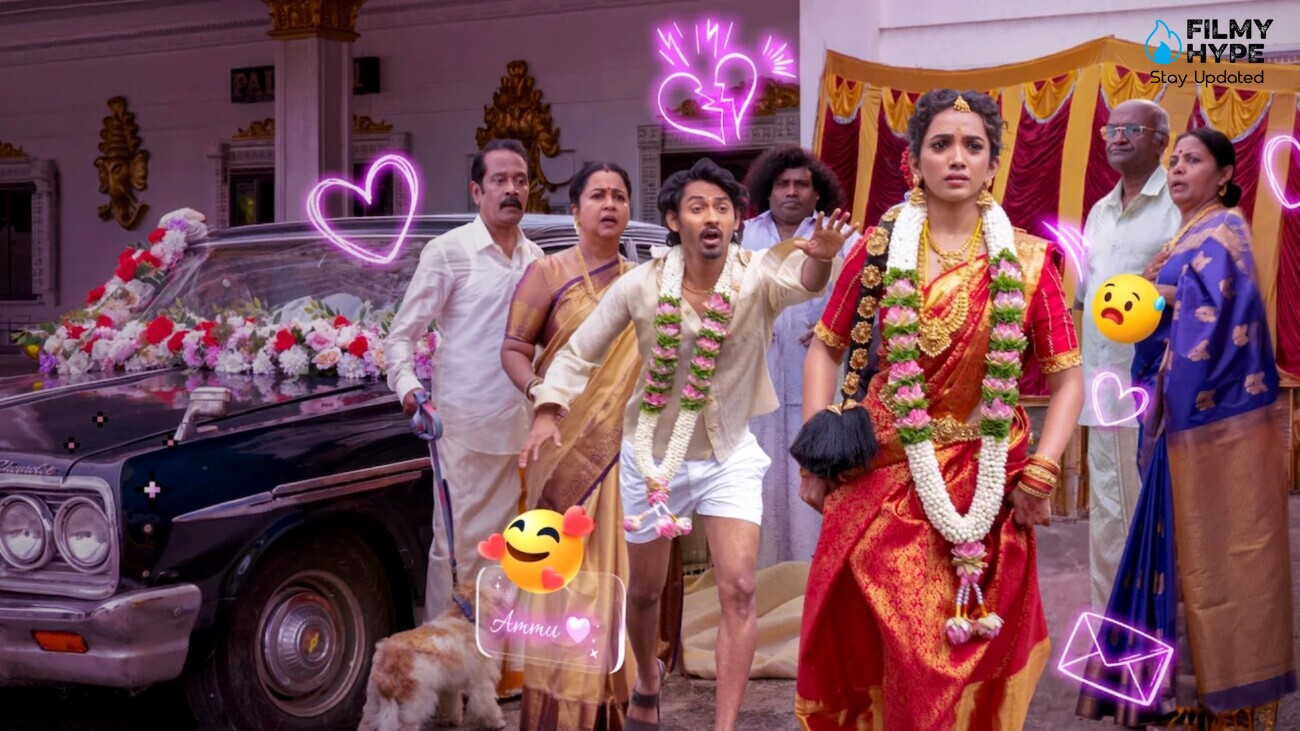
The film marks the acting debut of director Elan, who also helms the project, stepping in front of the camera for the first time as the male lead. Opposite him is Saanvee Meghana as Pavi, a popular influencer who makes an unconventional demand after marriage: she’s not leaving her family home. If her husband wants to build a life with her, he’ll have to build it under her roof. The premise is simple enough to explain in a sentence, but the trailer suggests it opens up a cascade of culture clashes, family chaos, and the kind of heartfelt self-discovery that happens when you stop following the script and start figuring things out for yourself.
Pyaar Prema Kalyanam: The Story
Pavi is a social media influencer with a following, a voice, and a clear sense of who she is. She’s not interested in the traditional bargain that marriage often demands from women—the expectation that they’ll uproot themselves, adapt to a new household, and quietly absorb the weight of other people’s expectations. When she marries Elan, she makes her terms clear. She’s staying in her family home. If he wants to be with her, he’s welcome to join.
What follows is the kind of comedy that grows out of genuine cultural tension. Elan moves into a household that isn’t his, surrounded by in-laws who have opinions about everything, trying to navigate a dynamic that doesn’t come with a rulebook. The film mines this setup for both laughs and something more substantial—questions about what marriage actually means when you strip away the conventions that have defined it for generations.
The newlyweds find themselves in the middle of shifting expectations. Pavi’s family has to adjust to a son-in-law living under their roof, a concept that challenges their own assumptions about how families are supposed to work. Elan has to figure out who he is in a marriage where the traditional role of “husband” doesn’t come with a pre-written script. And both of them have to confront the possibility that the rules they grew up with might not be the rules they want to live by.
The Talent Behind the Camera
Elan is making an unusual double debut here—first time as a lead actor, while simultaneously directing the film. It’s the kind of creative swing that could easily go wrong, but the early footage suggests someone who understands tone deeply. The comedy feels grounded rather than broad, the family dynamics recognizable rather than caricatured. Elan’s background as a director seems to inform his performance; there’s an ease to his screen presence that suggests he knows exactly what the scene needs because he’s the one who designed it.
The supporting cast is stacked with Tamil cinema veterans who know how to balance humor with heart. Radhika Sarathkumar brings decades of experience to the ensemble. Yogi Babu, one of the most reliable comedic performers working today, is perfectly cast for the kind of film that needs laughs without losing its emotional center. M.S. Bhaskar, Geetha Kailasam, Elango Kumaravel, Senthil, and Maran round out a cast that promises to deliver the kind of lived-in family chemistry that makes or breaks a domestic comedy.
The music comes from Yuvan Shankar Raja, a composer whose work has defined the sound of Tamil cinema for a generation. His involvement suggests the film takes its emotional beats seriously—Raja doesn’t do throwaway scores, and his presence indicates that the quieter moments between the laughs will be given room to breathe.
Why Netflix Is Betting on This Story
The film arrives at an interesting moment for Tamil content on global streaming platforms. Made in Korea, another Rise East Entertainment production, proved that authentic Tamil stories could find audiences far beyond their home territory. Netflix clearly sees Pyaar Prema Kalyanam as following a similar path—a story rooted in specific cultural dynamics that nonetheless speaks to universal questions about marriage, family, and the courage to live differently.
Monika Shergill, Netflix India’s Vice-President of Content, framed the film in exactly these terms. “The most interesting love stories aren’t the ones that follow the rules,” she said in the announcement. “They are the ones that dare to rewrite them.” The film begins, she noted, with a “wonderfully simple but bold question” and unfolds into something that celebrates “modern relationships, family, and finding the courage to choose your own happily ever after.”
Producer Sreenidhi Sagar echoed that sentiment, describing the search for a story with “universal appeal” after the success of Made in Korea. The moment the team heard the premise, they recognized its potential—a blend of heart, humor, and relatability that could cross cultural boundaries without losing its Tamil specificity.
The Larger Context
There’s something quietly radical about a mainstream romantic comedy that questions the fundamental architecture of marriage. Bollywood and regional Indian cinema have produced countless films about couples fighting for the right to marry—defying caste, class, religion, and parental opposition. But relatively few films have asked what happens after the wedding, when the couple has to actually build a life together and discover that “happily ever after” is less a destination than a negotiation.
Pyaar Prema Kalyanam seems to understand that the real conflict in modern relationships often isn’t about whether two people can be together. It’s about what “together” actually means. Whose family takes precedence? Whose career gets prioritized? Whose domestic rhythms become the default? These are the questions that real couples wrestle with, and they’re rarely addressed in mainstream Indian cinema, which tends to treat the wedding as the finish line rather than the starting point.
The film also engages with the changing dynamics of Tamil households, where women are increasingly reluctant to accept the traditional bargain of marriage—leaving their homes, adapting to their in-laws, subsuming their identities into their husband’s family. Pavi’s insistence on staying in her own home isn’t just a plot device. It’s a reflection of a genuine cultural shift, and the comedy that emerges from it is rooted in tensions that many viewers will recognize from their own lives.
What to Expect
The trailer promises the kind of warm, family-centered comedy that travels well—broad enough to draw laughs, specific enough to feel grounded. Elan’s double role as director and star gives the film a unified creative vision. The supporting cast provides the depth and experience to make the family dynamics feel textured rather than functional. And the premise, simple as it is, opens up territory that hasn’t been explored much in Tamil cinema.
Pyaar Prema Kalyanam arrives on Netflix on August 21, 2026. It’s being positioned as a direct-to-digital premiere, part of the platform’s ongoing investment in original Tamil content. For audiences who’ve been waiting for a romantic comedy that asks what happens when the groom is the one who has to adapt, the answer is almost here. The wedding is over. The real story is just beginning.