


A Requiem for Criston Cole: Before the arrows strike him down, Ser Criston Cole is already defeated. He just doesn’t know it yet. The Riverlands army surrounding him at Godseye, the Northern Wolves closing in, Alysanne Blackwood drawing her bow—these are merely the instruments of an end that was set in motion years ago, in a bedroom in the Red Keep, when a young knight broke his vows and discovered that honor, once shattered, cannot be pieced back together, no matter how much blood you spill trying.
A Requiem for Criston Cole: The Most Human Monster in House of the Dragon
When Cole ties Alicent Hightower’s handkerchief to the hilt of his sword, the gesture carries the weight of a farewell. The former Lord Commander of the Kingsguard knows his journey has reached its terminus. In his final moments, he reaches not for a weapon but for a memory—the only thing he still believes truly belongs to him. It’s a small, almost tender gesture from a man who has been many things over three seasons of House of the Dragon—champion, lover, betrayer, zealot, murderer, strategist, fool—but never, until perhaps this final instant, fully human.
The death of Criston Cole in Episode 6 of Season 3 closes one of the longest and most contradictory arcs in the series. While the story revolved around House Targaryen and its dragons, Cole represented something else entirely: a man without a surname who rose to the heart of power in Westeros through sheer talent and force of will. That humble origin always set him apart. The Targaryens, the Hightowers, the Velaryons, the Lannisters—they inherited their privileges. Criston Cole had to earn every promotion, every title, every scrap of respect. Perhaps that’s why he embraced the code of chivalry so intensely. It was the only inheritance available to a steward’s son.
The Rise: A Man Born Far From Power
The first season of House of the Dragon built Cole’s image with patience and care. The young knight who defeats Daemon Targaryen during a tournament seems destined to become one of the few figures of genuine moral integrity at court. He’s handsome, skilled, and carries himself with the quiet confidence of someone who believes in the rules he’s sworn to uphold. When Rhaenyra chooses him for the Kingsguard, it feels like a reward for merit in a world that usually rewards only blood.
But his relationship with the young princess was always more complicated than either of them wanted to admit. It was a thwarted love story, yes, but it was also a crisis of identity. Breaking his vows didn’t just mean disappointing Rhaenyra or angering the gods. For Criston Cole, it meant destroying the very thing that gave his existence meaning. He had built his entire sense of self on the foundation of his honor. When that foundation cracked, the man who emerged from the rubble was someone else entirely.
From that moment on, Cole stopped acting out of conviction and started acting out of resentment. The transformation wasn’t sudden. It was a slow, grinding process, and Fabien Frankel was smart enough to play it without melodrama. His performance always worked on more subtle tensions: the physical rigidity, the restrained responses, the inability to express what was consuming him from within. Criston Cole rarely raised his voice. The hatred appeared compressed, like a spring held under tension, until it found a violent outlet.
The murder of Lyman Beesbury at the Green Council was that outlet. A man who had once dedicated his life to protection killed an elderly lord with his bare hands in a moment of uncontrolled fury. It was the act that ignited the Dance of the Dragons, and it was also the moment Cole’s transformation was complete. The idealistic knight who believed in honor was gone. In his place stood something harder, crueler, and infinitely more dangerous: a man who had given up on being good and decided to be useful instead.
The Bond With Alicent
This is where Alicent Hightower enters the equation, and their relationship has always been more complicated than the show’s critics sometimes acknowledge. It’s easy to reduce it to a secret romance, to see it as two lonely people finding comfort in each other’s arms while the world burns around them. But the bond between Criston and Alicent was never primarily physical. It was about belonging.
Alicent offered him something he had been searching for since Rhaenyra’s rejection: recognition, trust, a mission. She looked at the disgraced knight and saw not a broken vow but a loyal soldier. She gave him purpose when purpose was the only thing keeping him upright. In return, he offered absolute devotion. His loyalty shifted from being directed toward an institution—the Kingsguard, the crown, the abstract ideal of knighthood—to being focused on a single person.
The handkerchief he ties to his sword in his final moments is the symbol of that devotion. It’s a small, private object, carried through campaigns and battles, preserved while everything else fell apart. The war destroyed cities, alliances, and families. Cole kept that handkerchief as if it could still protect some essential part of himself. When he wraps it around the hilt, he’s not just preparing for a final stand. He’s reaching for the only meaning he has left.
The Long Decline
Season 3 has been, for Cole, a season of exhaustion. The confidence of the strategist who believed he could control the course of the war vanished after Rook’s Rest. In its place remained a commander who understood, perhaps better than anyone, that the conflict had reached an unmanageable scale. The dragons changed the rules. Armies marched for weeks only to discover that a single creature could render all their calculations meaningless. The war Cole helped start had outgrown him, and he knew it.
Every appearance in this final season has conveyed weariness. He no longer speaks like someone convinced of victory. He speaks like a soldier who keeps advancing because retreating solves nothing, because stopping would mean facing what he’s done, because the only way to outrun the consequences of his choices is to keep moving forward until something finally stops him.
In Episode 6, he and the few men who still accompany him trek through the woods following an enemy that always seems one step ahead. They walk as if the journey matters less than the destination they all know is waiting. When the Butcher’s Ball springs its trap, Cole fights with the ferocity of his younger self. For a few seconds, he seems to recapture the warrior who dominated tournaments and battlefields alike. He moves from flail to sword to dagger, cutting down attackers in a whirl of blood and steel. It’s magnificent. It’s also futile.
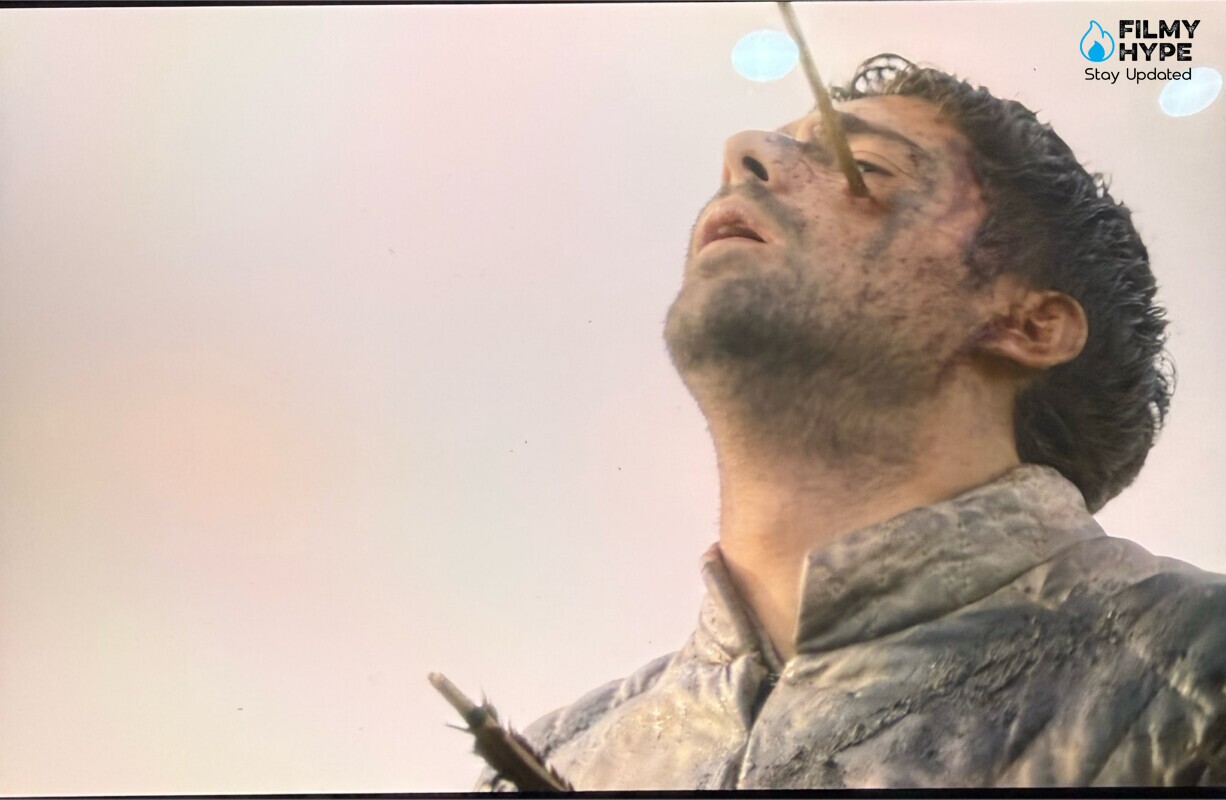
When he looks up, two entire armies have surrounded him. He tries to negotiate for the lives of his men and fails. He challenges his enemies, expecting a duel—the kind of honorable combat that would give his death meaning, that would let him die as the knight he once believed he could be. Alysanne Blackwood answers with three arrows.
The Death
In Fire and Blood, Cole is killed by Robb Rivers and two other archers. The show condenses this to Blackwood alone, played by Annie Shapero, with a cold precision that makes the moment land harder. She doesn’t give him a speech. She doesn’t grant him the dignity of a final exchange. She just draws and releases, and the greatest warrior of his generation crumples to the ground like everyone else.
This is not an epic death. It’s not the death Cole wanted, the death he spent his life believing he deserved. He wanted songs. He wanted ballads. He wanted to be remembered as a hero, as someone whose name would echo through the ages. Instead, he got an arrow in the gut and another in the face, and he died clutching a handkerchief in the mud.
The scene conveys exhaustion rather than grandeur because that’s what war actually delivers. There are no honorable ends. There are just bodies and the things they held onto. Cole doesn’t even have time to comprehend what’s happened. One moment, he’s preparing for a duel, and the next, he’s gone.
What He Leaves Behind
Criston Cole was brave, disciplined, and a genuinely gifted warrior. He was also vengeful, intolerant, and responsible for decisions that multiplied the suffering of thousands. Both dimensions coexisted until the very end. His complexity is what makes his death impossible to reduce to a simple moral. You can’t celebrate the fall of a villain because he wasn’t only a villain. You can’t mourn a martyr because he wasn’t a martyr either. You can only remember who he was before he became what he ultimately became.
That young knight who defeated Daemon Targaryen in a tournament—the one who believed in honor and vows and the possibility of a life lived by a code—that man died long before the arrows found him. What remained was a shell animated by resentment and loyalty, fighting a war he no longer understood for a cause he could no longer fully believe in.
In the end, Criston Cole dies as he lived during his final years: serving a mission that had lost its meaning, clinging to a devotion that survived even as everything else crumbled. Among the many victims left by the Dance of the Dragons, he embodies one of the show’s most persistent and unsettling ideas. Wars often destroy first those who believe in them the most. Cole believed. In honor, in chivalry, in the possibility of being a good man in a corrupt world. When that belief was taken from him, he replaced it with something darker, and that darkness consumed him long before any archer drew her bow.
The handkerchief around the sword hilt is the final, futile gesture of a man who never stopped wanting to be more than what he became. It’s a detail the show invented, absent from Martin’s text, and it’s one of the best choices the writers have made. It gives Cole’s death an intimate dimension that the books never provided. It reminds us that even the monsters in this story were once people, and that the distance between the knight and the killer is shorter than anyone wants to admit.