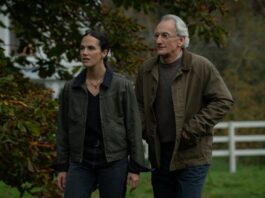
The Truthers Ending Explained: I put on The Truthers expecting a murder mystery. The setup is practically designed to trigger that expectation: a woman dies under strange circumstances, her husband acts increasingly unhinged, and their daughter comes home convinced that her own father is hiding something terrible. The pieces seem to be in place for a dark family thriller where the question is less “who did it” than “how long until the proof surfaces.”
The Truthers Ending Explained: What Happened to Ruth and Her Father Martín?
But Roger Gual’s Spanish thriller, which just arrived on Netflix as The Truthers, isn’t really interested in giving you the satisfaction of a clear villain. What it wants to do instead is something trickier and more uncomfortable. It wants to show you how easy it is to mistake suspicion for truth, and how the need for answers can become its own kind of delusion. By the time the credits rolled, I wasn’t thinking about who killed whom. I was thinking about how much damage a person can do to the people they love without ever lifting a hand.
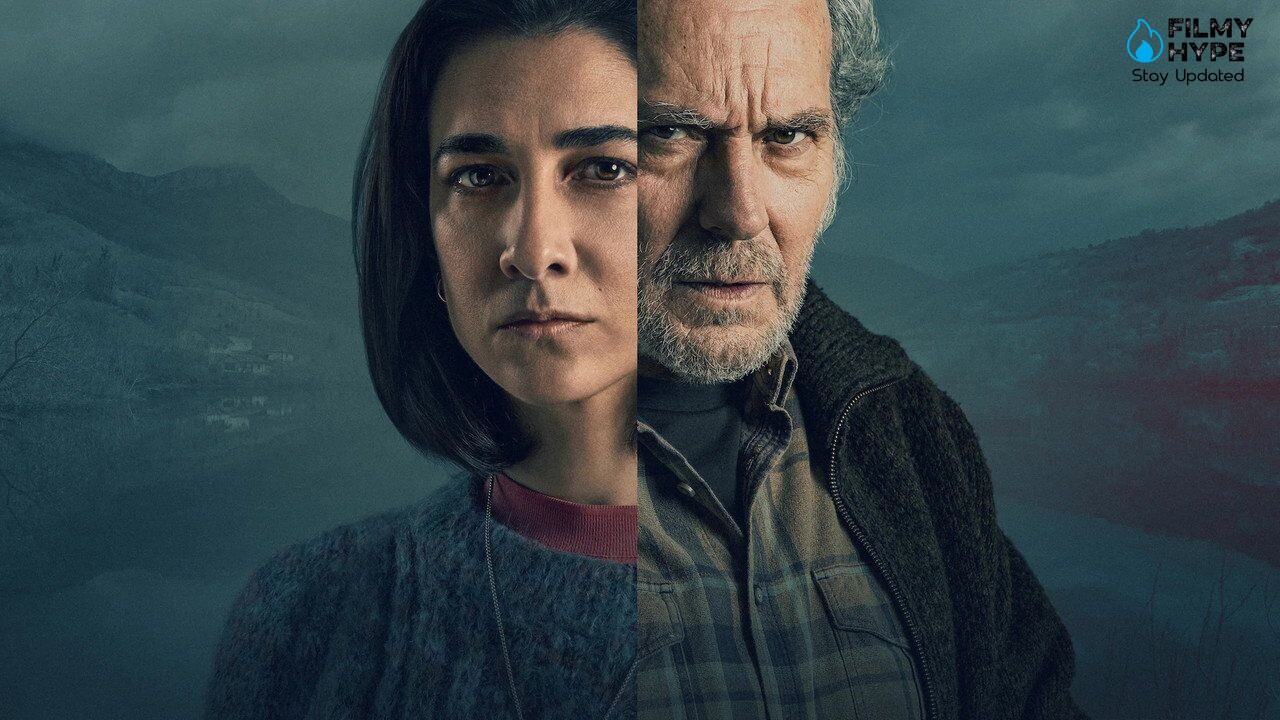
The Truthers begins as a thriller full of mystery. Ruth returns to the family home after the death of her mother and discovers that her father, Martín, is completely obsessed with conspiracy theories. Surveillance cameras, maps, documents, and annotated walls suggest that you are investigating a secret organization… or trying to hide a murder. The film constantly plays with that doubt, leading the viewer to wonder if Martín is a dangerous man or simply a victim of his own mind.
Why Does Ruth Think Her Father Killed Her Mother?
The film works hard to put you in Ruth’s shoes from the first scene. Her mother’s death doesn’t add up. There’s a voicemail the woman left before she died—fragmented, anxious, the kind of message someone leaves when they’re scared and trying not to show it. Ruth plays it over and over, mining the pauses for clues.
Then there’s Martín, her father. José Coronado plays him with a jittery intensity that keeps you off-balance. He’s deep into conspiracy theories. Pharmaceutical companies. Secret organizations. Disappearances that no one else believes are real. He talks about hidden truths the way other people talk about the weather, and that fervor reads as dangerous. When Ruth looks at him, she doesn’t see a grieving husband. She sees a man whose paranoia might have finally tipped into violence.
The film is clever about how it locks you into Ruth’s perspective. Almost everything we see is filtered through her growing certainty. Martín’s denials sound like the evasions of a guilty man. His obsession with conspiracy theories looks like the kind of mental deterioration that could end in bloodshed. By the time Ruth is actively investigating her father, the audience is right there with her, convinced the mystery isn’t whether he did it, but when the truth will come out.
That’s the trap. And the film springs it on you slowly.
Was Martín Actually Innocent?
Here’s where things get complicated. Martín insists, over and over, that he didn’t kill his wife. He says it to Ruth. He says it to the police. He says it to anyone who will listen. But his credibility is shot. He’s the boy who cried wolf, except the wolf is a global conspiracy involving missing children and corporate cover-ups, and no one believes the wolf exists.
Then Martín does something that shifts the ground. He doesn’t just defend himself. He accuses Ruth. He suggests she might bear some responsibility for her mother’s death. The accusation lands like a slap—not because it seems true, but because it reveals how thoroughly this family has been poisoned by suspicion. Everyone is pointing fingers. No one trusts anyone.
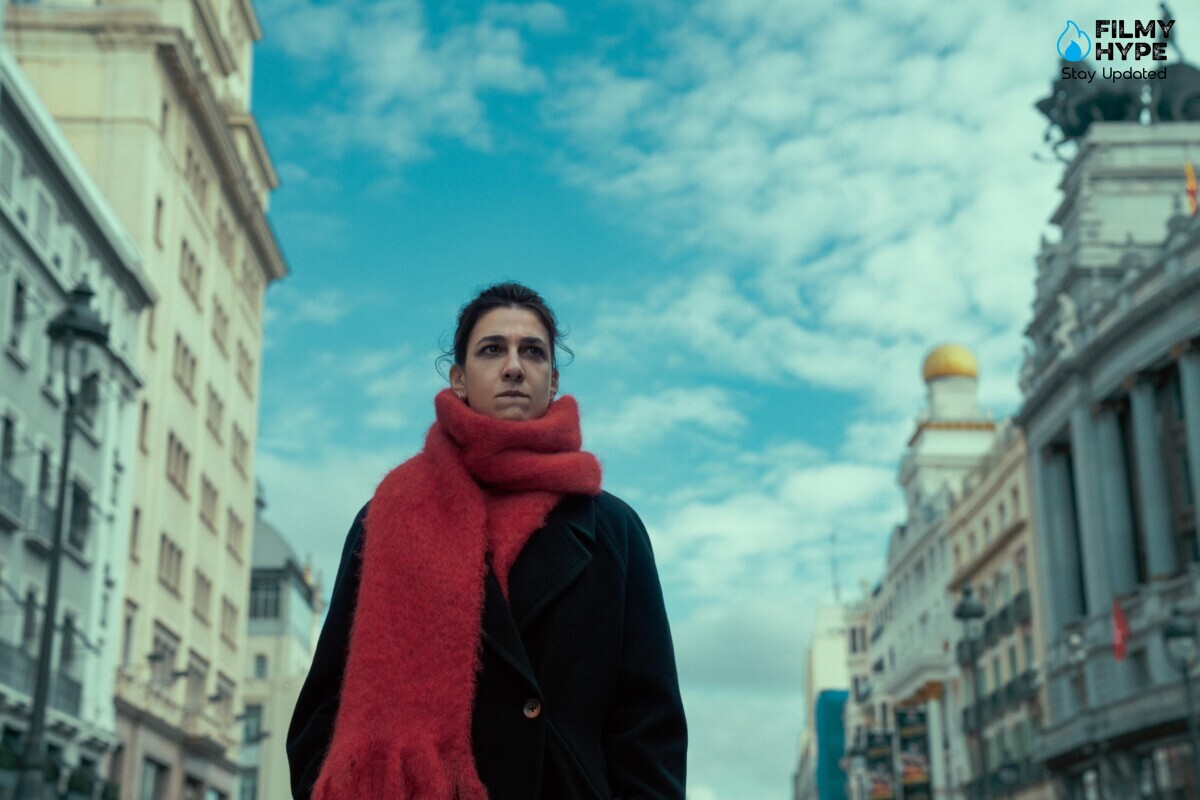
The film eventually confirms that Martín was telling the truth about one thing: he didn’t kill his wife. There was no murder. No violent confrontation. No premeditated plan to silence her. He’s innocent of the crime that Ruth spent the whole movie trying to pin on him.
But here’s the harder truth the film insists on. Innocence isn’t the same as blamelessness. Martín didn’t pull a trigger or mix poison into a drink. He did something slower and in some ways more destructive. He created an environment so toxic, so consumed by paranoia and fear, that his wife couldn’t survive it.
Who Actually Killed Ruth’s Mother?
No one killed her. That’s the answer, and it’s more devastating than if someone had.
Martín had spent months planning an attack on a pharmaceutical company. He was convinced—truly, unshakably convinced—that the company was hiding missing children in its facilities. He intended to expose the conspiracy by blowing the building up. The plan consumed him. It was all he thought about, all he talked about, the organizing principle of his entire existence.
His wife discovered what he was planning. She tried to pull him back. She begged him to see reality, to choose his family over the fantasy, to recognize that the man she married was still in there somewhere. He wouldn’t. He couldn’t. The conspiracy theory had become more real to him than the woman standing in front of him.
She broke. The desperation of watching her husband disappear into a world of paranoia, combined with the terror of what he was planning to do, pushed her into a deep emotional crisis. She started drinking. Heavily. One night, in a bout of acute alcohol poisoning, she passed out in the bathroom and never woke up.
It was an accident. But accidents have causes. And the cause of this one was the psychological environment Martín created—the isolation, the fear, the relentless erosion of any shared reality she could hold onto. His conspiracy theories didn’t just damage his own mind. They poisoned the household. His wife was collateral damage.
Why Does Ruth Change Her Mind About Her Father?
The turning point doesn’t come from a piece of evidence. It comes from a moment of self-recognition, and it’s the most important scene in the film.
Martín goes to the police and suggests Ruth might be connected to her mother’s death. The accusation forces investigators to bring Ruth in, and during their conversation, one officer says something that isn’t really about Martín at all. He says that people consumed by extreme beliefs turn their convictions into absolute truths. They stop being able to see evidence that contradicts what they’ve already decided. Reality becomes whatever supports the story they’re committed to.
Ruth hears this, and something clicks. She’s been doing exactly that. Since her mother died, she’s been constructing a narrative in which her father is the villain. Every ambiguous detail became proof of his guilt. Every denial became evidence of deception. She built a case against him not on facts but on the same kind of emotional logic that drives his conspiracy theories. She started with the conclusion and worked backward.
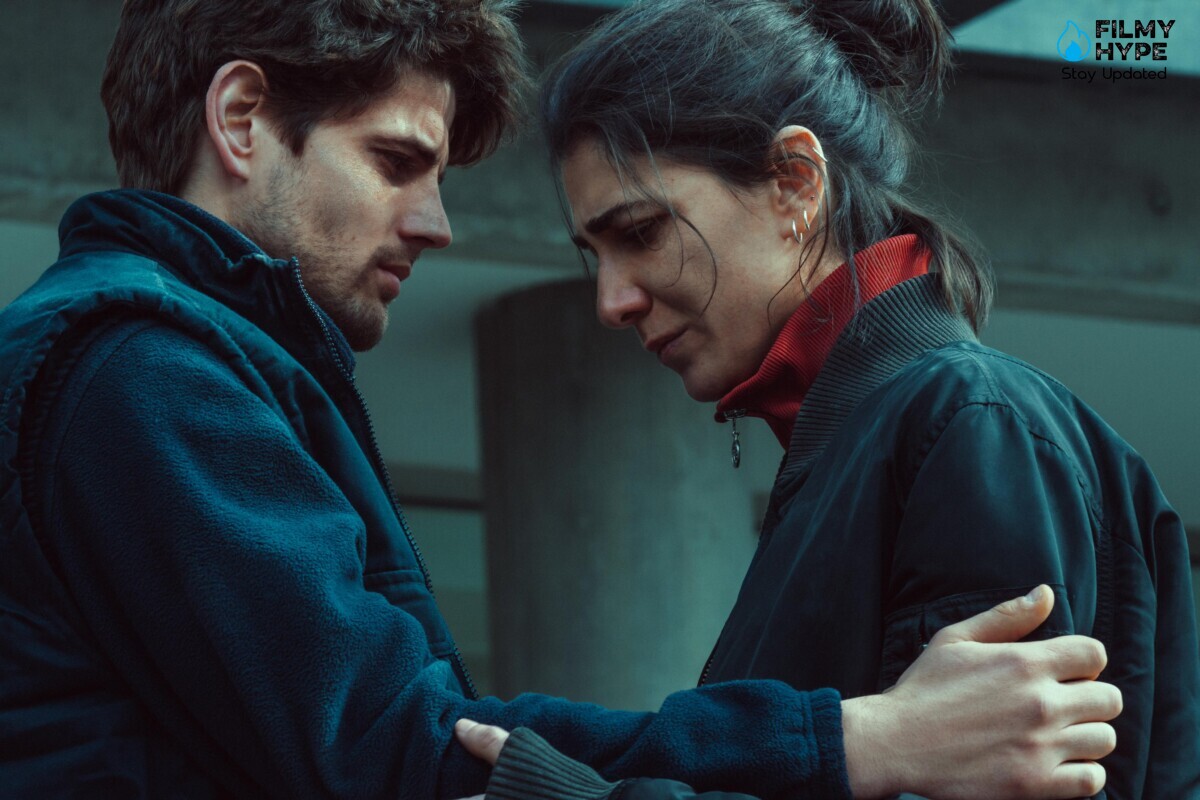
She attacked him at one point. She was so certain, so consumed by pain and rage, that she physically tried to force a confession out of him for a crime he didn’t commit. The realization of what she’s become—a mirror of her father, substituting certainty for truth—is the emotional climax of the film.
She goes to find him. She asks for forgiveness. She tries, in the wreckage of everything, to salvage something.
What Happens to Martín?
Martín never escapes the world he built. He attacks the pharmaceutical company, alongside a woman named Berta who shares his beliefs. The plan that killed his wife, indirectly, ends up killing him too. He dies in the explosion, a martyr to a cause that existed only in his mind.
His death doesn’t end the story. It just changes its shape.
What Does the Final Scene Mean?
After Martín’s death, Ruth returns to Berlin. She’s trying to move on. She’s trying to believe the nightmare is over.
And then she sees it. On the streets, people are spreading a new conspiracy theory. Martín didn’t really die, they say. He’s in hiding. He’s preparing for the next action. The explosion was just the beginning. Even in the face of documented facts—a body, a death certificate, a funeral—people prefer the story that aligns with what they already believe.
This is where The Truthers delivers its real message, and it’s not a comfortable one. The film isn’t just a family drama about a man who fell down a rabbit hole of misinformation. It’s about how the need for emotionally satisfying explanations can override objective reality, and how that need isn’t limited to the people we dismiss as crazy.
Ruth spent most of the film convinced she was the rational one. She was the skeptic, the truth-seeker, the person who dealt in facts. But her investigation into her mother’s death was driven by the same mechanisms that drove her father’s conspiracy theories. She started with a conclusion and worked backward, fitting every ambiguous detail into the story she wanted to tell. The difference between her and Martín wasn’t that she was rational and he was delusional. It was that her delusion was smaller and more personal. The structure was identical.
The ending refuses to offer comfort. The conspiracy theories survive Martín. They evolve. They find new believers. And Ruth, standing on a Berlin street watching strangers mythologize her dead father, understands that the fight against misinformation isn’t something you win once. It’s something you have to keep fighting, in the world and in yourself, every day.
The real danger, the film argues, isn’t just the people who create conspiracy theories. It’s the human tendency to replace evidence with conviction, to choose stories that feel true over facts. That tendency lives in everyone. It’s what destroyed Ruth’s family. And the final scene suggests it’s not going anywhere.