
The Body Netflix Series Review (2026): Friendship, Desire, and Manipulation! The True Horror of The Body
The Body Netflix Series Review and Ratings
Cast: Kristina Bogic, Geena Meszaros, Sara Boustany, Jackson Kelly, Sofia Wylie, Shirley Chen, Louisa Krause, Nnamdi Asomugha, Sarah Abbott, Bella Neuspiel, Emily Roman, Michela Luci, Phallon Pierce, Kyra Pierce
Directed by: Quinn Shephard, Kevin Phillips, Gina Gammell
Streaming Platform: Netflix
Filmyhype.com Ratings: 3.5/5 (three and a half stars)
What happens when the desire to be accepted becomes stronger than the guilt? This is the question around which The Body, the new Netflix series created by Quinn Shephard, revolves, which mixes psychological thrillers, horror elements, and teen dramas to tell the contradictions of female adolescence. Set in 2004, inside an American Catholic school, the series explores the relationship between friendship, sexuality, and religious repression, showing how fear of judgment can turn into a tool of control. Through eight episodes, Shephard constructs a provocative and disturbing tale, supported by a convincing young cast and a particularly carefully crafted reconstruction of the 2000s. Not all insights, however, find satisfactory development, and the central mystery sometimes struggles to maintain tension, allowing a certain narrative discontinuity to emerge.
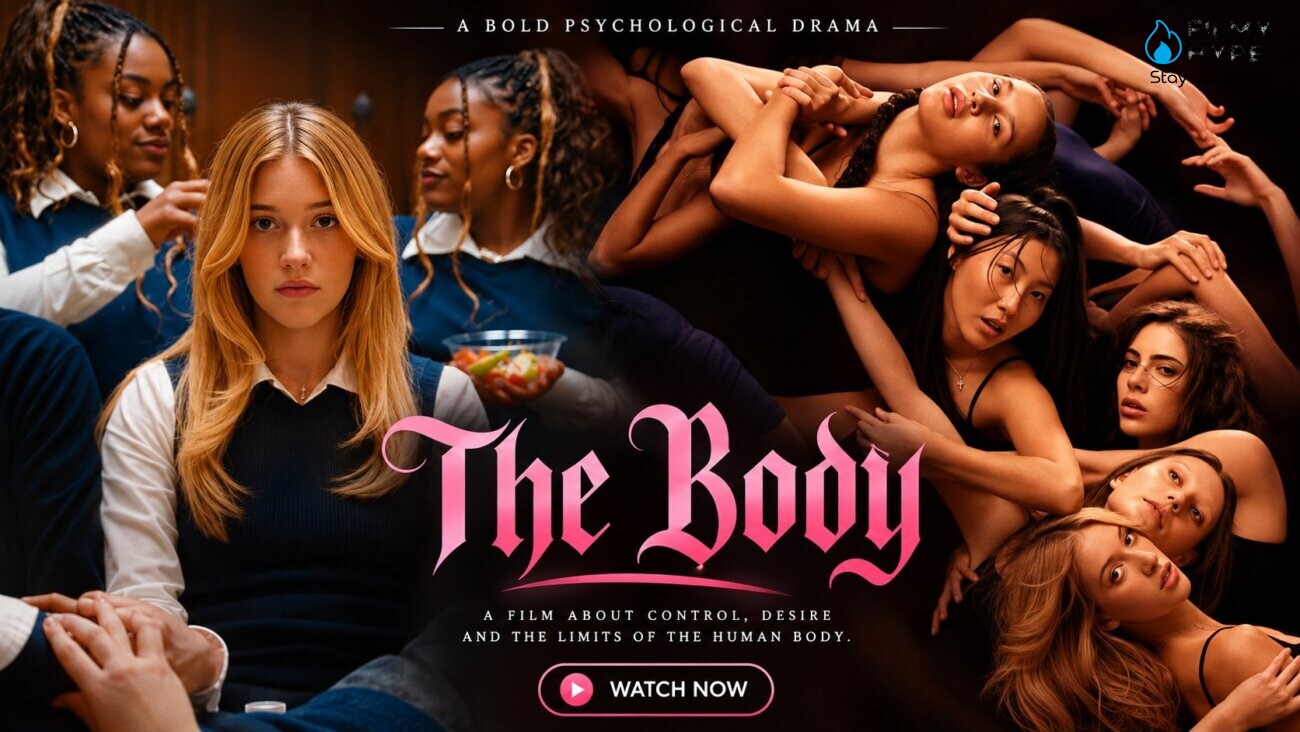
Telling about adolescence is never easy. That complex period of life hides many narrative pitfalls and so many points of view that capturing its turmoil and contradictions quickly becomes a daunting task for any screenwriter. From lighthearted teen dramas to generational cults like Euphoria, it seems like every dynamic has already been explored, including troubled loves and transgressions. It is precisely in this panorama that The Body fits in, a Netflix series written and directed by Quinn Shephard, which brings to the screen the conflicts and subterfuge of a group of girls from a Catholic school in a context in which thirst for freedom, faith, dogma, and narcotics mix in a lethal mixture.
The Body Netflix Series Review: The Story Plot
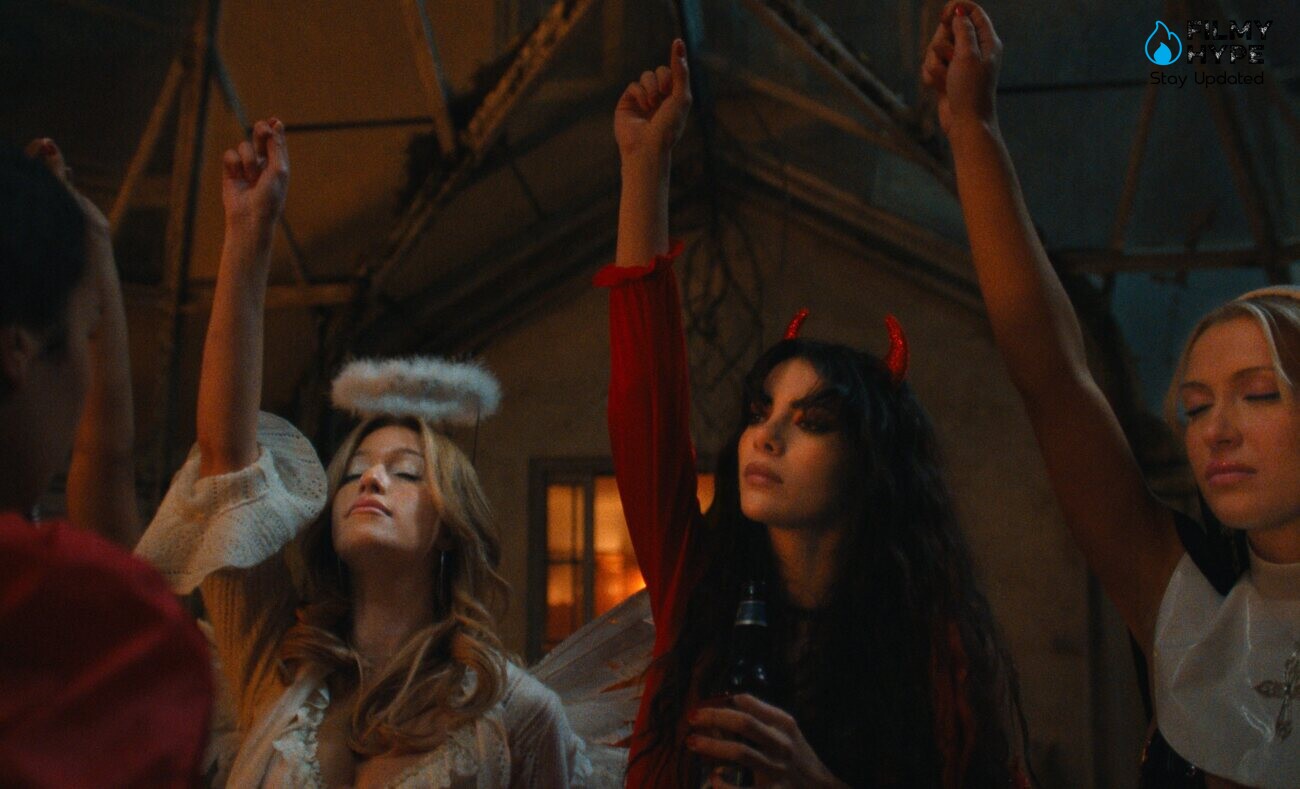
It’s Halloween night, and the dance team at a Catholic school is organizing the usual initiation rite for their new partner, Grace, who recently joined the group ahead of the regional competitions. Between playful invocations to the devil, substances, glasses of excess, and winking speeches around the fire, the evening seems to go smoothly. However, the situation escalates when team leader Anya (the party’s creator and drug supplier) finds Grace on the ground, convulsing. With the help of Lisbeth, a recently arrived girl with a hazy past, the two decide to accompany her to the hospital with the intention of leaving her at the entrance without being identified. However, the plan falls apart when, during the car ride, Grace suddenly stops breathing. Panicked and fearing serious repercussions, Anya and Lisbeth take her home and place her in her bed to erase all traces of her presence at the party; a plan that threatens to collapse when Lisbeth’s brother Leo breaks into the house and finds his partner unconscious.

In the fall of 2004, Anya Butler (Kristina Bogic) and Elise Zakaria (Sara Boustany) are the captains of the Lions, the women’s dance team at a Catholic school. When one of the dancers is injured, the girls hold auditions to find a replacement and choose Grace Franklin (Sofia Wylie), a deeply religious student. Among the excluded candidates is Lisbeth Anderson (Geena Meszaros), a girl who has just arrived in the city and desperately wants to join the group. When Anya invites her to a Halloween party at an abandoned convent, Lisbeth finally sees a chance to gain the popularity she has always been denied. During the evening, amidst alcohol, drugs, and religious provocations, the Lions organize an initiation ritual that is supposed to be just a joke, but the next morning Grace is found unconscious and ends up in a coma. Frightened by the aftermath, the girls decide to hide what happened, while rumors of mysterious apparitions and possible supernatural manifestations begin to spread through the community.
The Body Netflix Series Review and Analysis
The most interesting element of the series is not so much the mystery surrounding Grace’s coma but how what happened changes the balance within the team. The Lions constitute a rigidly hierarchical group, in which popularity determines the social value of girls and exclusion represents one of the most feared punishments. It is especially through Lisbeth that The Body explores these dynamics. Raised by an authoritarian mother obsessed with religion, the girl sees friendship with Anya as a possibility for emancipation, but her desire to belong progressively takes on disturbing contours. Geena Meszaros plays this transformation with remarkable effectiveness, making Lisbeth a manipulative and unpredictable character, even when the script struggles to fully justify her choices.
Equally important is the relationship between Anya and Elise, best friends linked by feelings that both live profoundly differently. Elise is aware of her attraction, while Anya tries to repress her feelings to conform to the expectations of an environment where homosexuality is considered unacceptable. Kristina Bogic and Sara Boustany sensitively convey this complicated relationship, showing how the fear of recognizing one’s identity can compromise even the deepest bonds. The choice to set The Body in 2004 does not only respond to an aesthetic need. Shell cell phones, velvet tracksuits, and pop hits reconstruct an era in which teenage girls were subjected to particularly contradictory models of femininity, which required them to be desirable without appearing too uninhibited and to gain popularity without compromising their reputations.
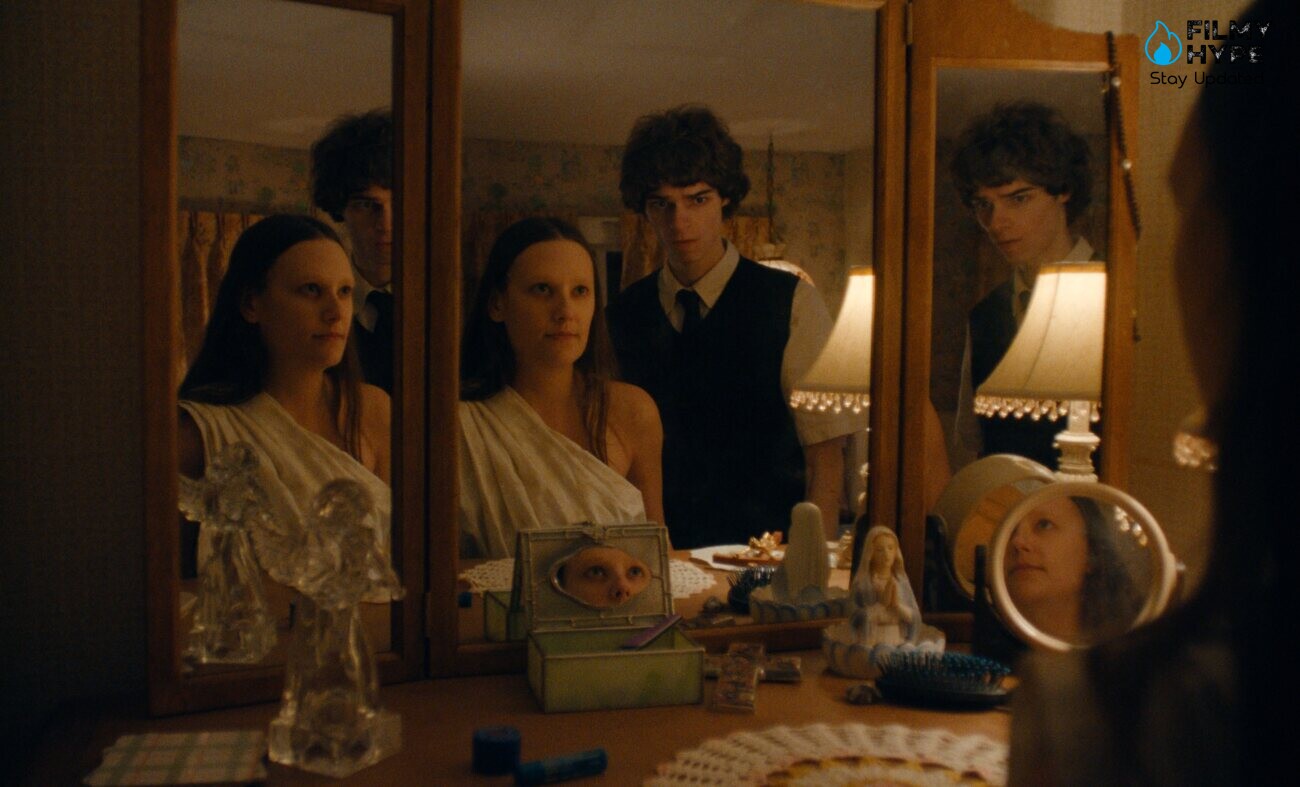
Within Catholic schools, these expectations are intertwined with a religious education that continually associates desire with shame and sin. After Grace’s coma, the girls’ guilt fuels a collective hysteria in which it becomes increasingly difficult to distinguish between psychological suggestion and authentic supernatural phenomena. Shephard uses this ambiguity to question the power of religious beliefs and how easily a community can transform fear into a form of control. The series also suggests a parallel between the pressure exerted by religion and that which regulates relationships between adolescents, although some of these reflections remain more interesting in their intentions than in their actual development.
The main limitation of The Body is a narrative that, despite addressing numerous themes, fails to always develop them with the necessary depth. The central mystery moves slowly and some subplots are abandoned before reaching a satisfying conclusion, while the ongoing ambiguity between supernatural horror and psychological drama sometimes ends up weakening the tension. The series, however, finds its strength in its performances, especially those of Geena Meszaros, Kristina Bogic and Sara Boustany, capable of making engaging characters who are often selfish and difficult to understand. The reconstruction of the 2000s also helps define a recognizable visual identity, although the photograph is occasionally too dark.
The Body works best when it abandons the search for supernatural answers to focus on the cruelty of teenage relationships, showing how much the need to be loved and accepted can fuel destructive behavior. Despite a choppy script and a few missed opportunities, the Netflix series manages to distinguish itself from more conventional teen thrillers thanks to the complexity of its protagonists and a look at adolescence that does not try to soften its more unpleasant aspects. Adolescence is hell, literally, and telling it on screen can be even more insidious. You can choose to focus on its brightest aspects (new loves, hopes for the future) or explore its darkest folds (emotional shocks, unconfessable desires, sex, and fear); in the latter case, however, the risk of slipping into morbid complacency and sensationalism is just around the corner.
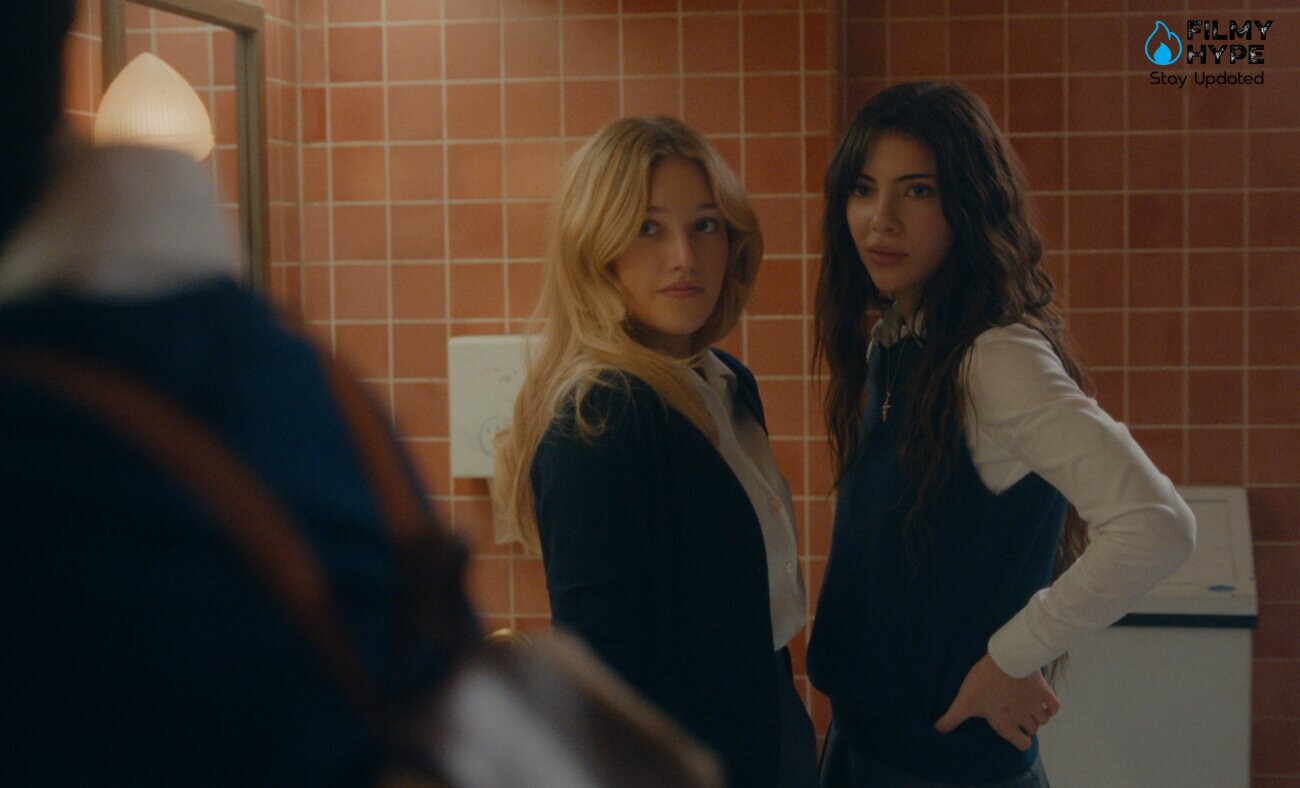
It’s a trap. The Body can’t quite escape: in its eight episodes of about fifty minutes each, the series crams all sorts of excesses—including transgressions, sexual discoveries, repressed drives, and intrusive thoughts—relying on characters who are constantly on the edge. Two critical issues stand out in particular: on the one hand, an overly dilated pace, weighing down a story already built on minimal clues; on the other, a directorial perspective that lingers with a somewhat artificial focus on the murkiest situations, while still having the merit of accurately describing the birth of psychosis and collective suggestion.
The visual system is decidedly more convincing. Quinn Shephard imbues the series with a clear and fascinating stylistic identity, playing with the contrast between secular iconography and sacred symbols, until each shot is composed almost like a religious-themed painting. The images thus transform into the main vehicle of archetypes and a distorted and manipulative vision, which constantly remains at the heart of the plot. The Body thus proves to be a work intended for patient spectators: a title that renounces dynamism and tight turns to compose a mosaic made up of tiny fragments, allowing the tension to settle until a more pressing final escalation.
While the setting in The Body is important, and architecture (including aesthetics) plays a crucial role, the pursuit of certain religious symbolism (fire, the cross, the serpent, and the apple) makes the show have a refined narrative impact. Spaces, characters, writing. It’s all there: a raw camp, but also an emotional psychodrama. A little Jennifer’s Body, a little Mean Girls, a little Gossip Girl, and a little The Salem Witches. With intelligence, fun, and flair, Shephard ridicules and destroys Catholic dogmas, bringing to light the most controversial and contradictory aspects (which only harm if imposed in a crucial age like adolescence), inserting himself between different genres without ever choosing one, and remaining below the threshold of supernatural horror. Applause.
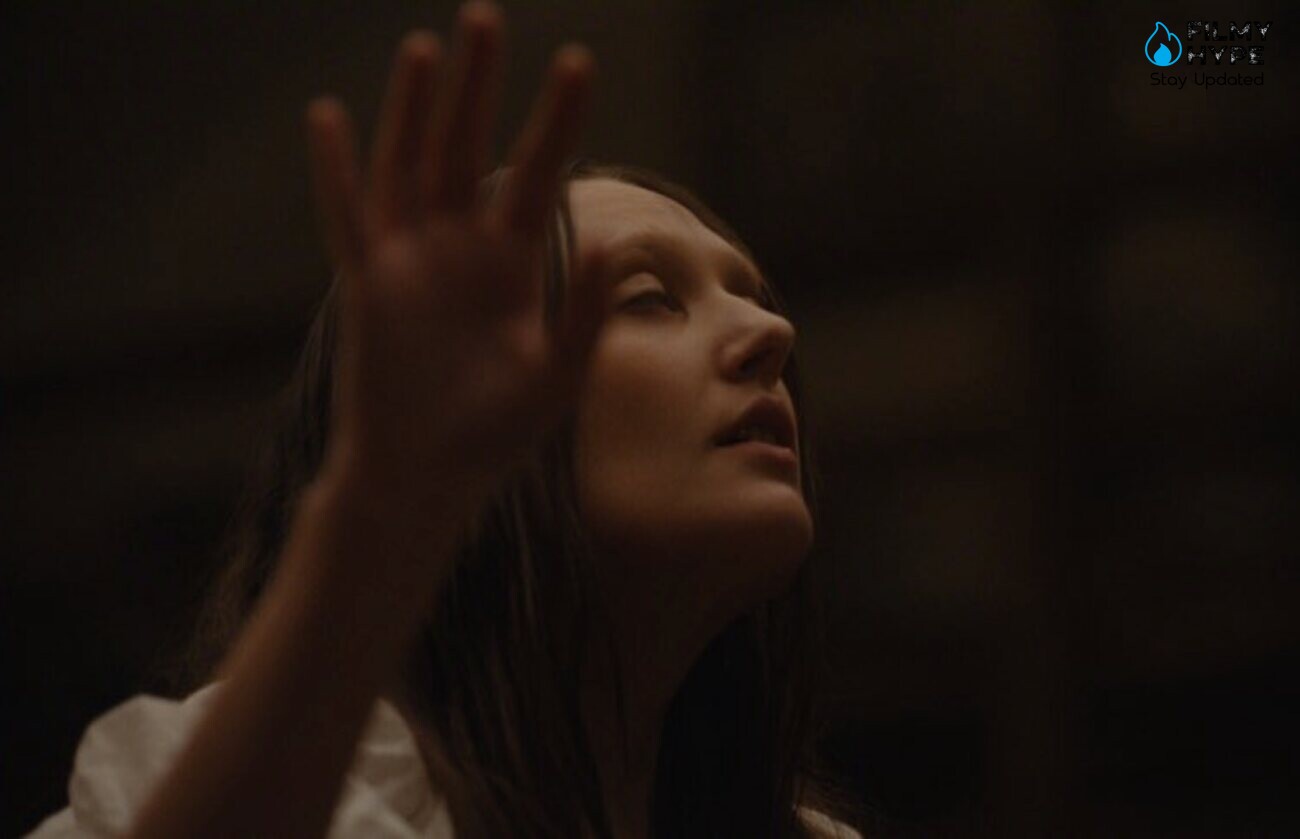
For this reason, The Body, which speaks of freedom, identity and fear (the key themes that have marked the collective imagination, from 2001 to today), looks closely at the playful reflection (and a restless thread) of female adolescence reinterpreted as “religious experience”. Behind it, episode after episode, to be gulped down like a bowl of freshly baked popcorn, an amused, sexy, and distressing crescendo to be taken for what it is: a love letter to a certain cinema, to sleepovers, and to the trauma of a maturity never quite fulfilled. Because, says The Body, there’s nothing better than continuing to grow, choosing the best perspective day by day to look at this strange and inhospitable world.
The Body Netflix Series Review: The Last Words
Set in 2004, The Body chronicles the aftermath of a Halloween ritual that leaves a student in a coma and shocks a Catholic community. Quinn Shephard’s Netflix series blends thriller, horror, and teen drama to explore desire, religious repression, and the toxic dynamics of female friendship. A compelling young cast and a disturbing atmosphere only partially make up for a slow narrative and some shallow ideas. The Body aims to explore the darker and more tormented sides of adolescence, relying above all on the strength of its visual system: Quinn Shephard’s direction skillfully exploits the contrast between sacred iconography and profane suggestions, effectively conveying the guilt and contagion of collective psychosis. However, the series is hampered by an overly dilated narrative pace and a marked complacency towards morbid and sensationalistic implications, which risk weighing down the plot.