


The Marvel Cinematic Universe has been waiting for the X-Men for a long time. Not the whispered references or the multiversal cameos, but the real thing—a fully integrated team of mutants living in the same world as the Avengers, with their own stories and their own stakes. That wait is getting shorter, and the first major piece of casting is finally talking about it. Sadie Sink, the Stranger Things star whose name has been attached to Jean Grey in rumors for months, has confirmed in an interview with Variety that she’ll play the character in the upcoming X-Men film. More importantly, she’s revealed how she and director Destin Daniel Cretton plan to approach one of the most complex figures in Marvel’s entire catalog.

Sadie Sink Confirms She’ll Play Jean Grey in the MCU’s X-Men
The confirmation itself isn’t surprising. Sink’s casting has been an open secret in industry circles for a while. What’s striking is the vision she’s describing. This isn’t going to be the Jean Grey of the Fox films—the one who was either a love interest, a hostage to her own powers, or a cosmic force of destruction, depending on which installment you were watching. Sink’s Jean, by her own account, is something different: a young woman whose actions are driven by trauma rather than villainy, whose darkness comes from pain rather than possession.
The Meeting That Sealed It
Sink admits she barely knew the character when Marvel first called. She wasn’t a comic book reader growing up, and the X-Men films of the 2000s weren’t a formative part of her cinematic education the way they were for a generation of fans. What changed her mind was a meeting with Kevin Feige and Louis D’Esposito, the architects of the MCU, who laid out what they wanted to do with the character.
The pitch apparently wasn’t about powers or spectacle. It was about psychology. Jean Grey, in the MCU’s telling, isn’t going to be defined by the Phoenix Force—at least not initially. She’s going to be defined by what happened to her before she ever put on a costume. Sink described a character who is “deeply marked by pain and loss,” someone whose relationship with her own abilities is tangled up with experiences she never asked for and can’t fully control.
This is a significant shift from previous adaptations. The Fox films, for all their successes, tended to treat Jean as a problem to be solved. In the original trilogy, she was the object of a love triangle whose powers eventually consumed her. In the prequel films, Sophie Turner’s version was given more interiority but was still ultimately defined by the Phoenix as an external force that acted upon her. Sink’s description suggests the MCU is taking a different approach entirely. Jean’s darkness isn’t going to come from outer space. It’s going to come from her own history.
“She’s Not a Villain, She’s a Hurt Girl”
The quote that’s going to define the pre-release conversation around this film is Sink’s simple, direct characterization of Jean Grey: “She’s not a villain, she’s a hurt girl.” It’s the kind of statement that sounds reductive out of context and revelatory in context. What Sink is describing is a Jean Grey whose actions, even when catastrophic, feel justified to her. “In her head, everything he does is completely justified,” she told Variety. The moral framework isn’t good versus evil. It’s trauma versus coping, and the coping mechanisms Jean has developed are dangerous to everyone around her.
This aligns with what we know about Destin Daniel Cretton as a filmmaker. His work on Short Term 12 demonstrated a rare ability to portray people in extreme psychological states without judgment. His Shang-Chi balanced spectacle with a family drama rooted in abuse and its long-term consequences. Cretton doesn’t do one-dimensional villains. He does people who’ve been broken by circumstances and who make choices that reflect that brokenness. Jean Grey, in his hands, seems likely to be less of a threat to be neutralized and more a person to be understood—even when understanding her doesn’t make her any less dangerous.
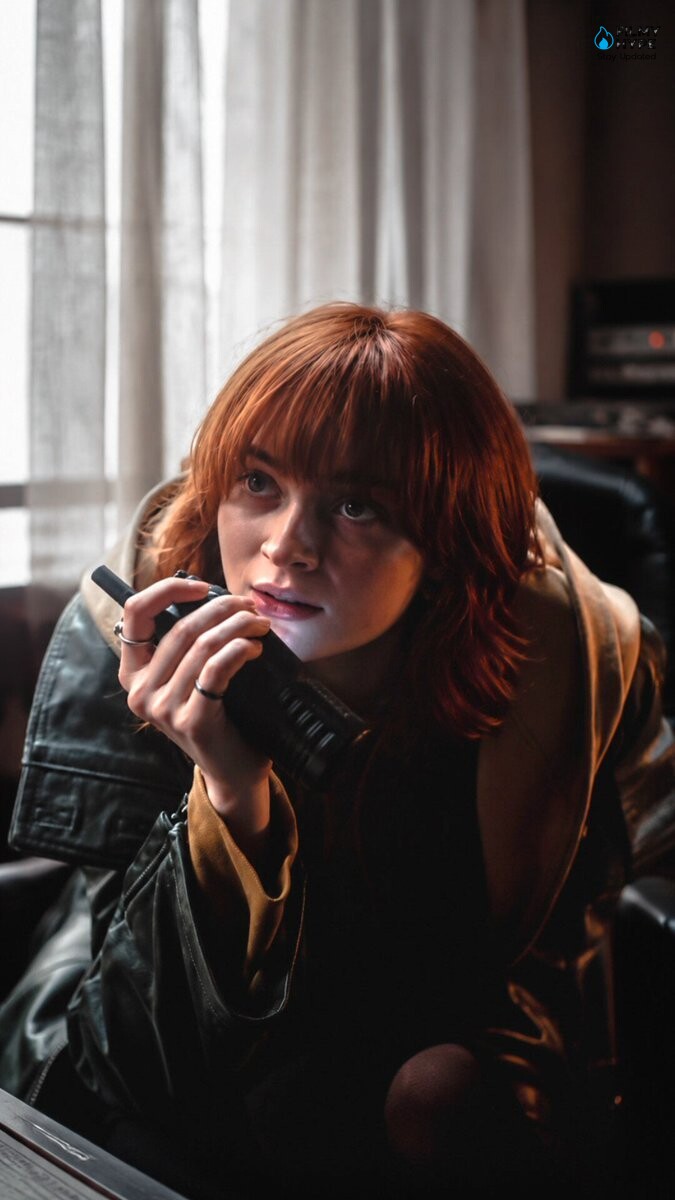




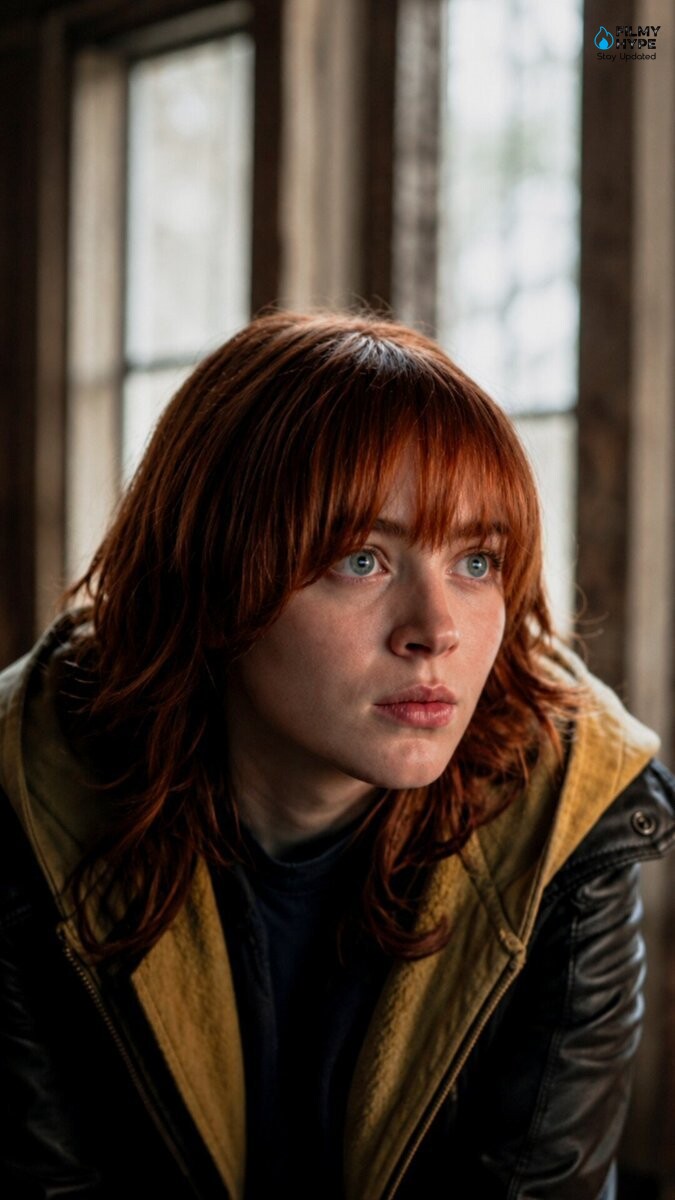
The implication is that the MCU’s X-Men are going to be built around characters who are fundamentally damaged. Sink herself highlighted this as what drew her to the project: “One of the aspects that attracts her most about the X-Men is that their protagonists are characters full of defects, conflicts and mistakes, very far from the perfect hero.” That’s the X-Men’s whole deal, of course. They’ve always been Marvel’s team of outcasts and screw-ups, people whose powers are as much a burden as a gift. But it’s one thing to know that intellectually and another to build a franchise around it. Sink’s comments suggest the MCU is committing to the latter.
What This Means for the Phoenix
Every conversation about Jean Grey eventually arrives at the Phoenix. The cosmic entity that possesses her, amplifies her powers to godlike levels, and eventually consumes her is too central to the character’s mythology to ignore. But Sink’s comments suggest the MCU isn’t in a hurry to get there.
The Fox films made the Phoenix the defining feature of Jean’s story, and it didn’t entirely work either time. The original trilogy rushed into the Dark Phoenix saga without establishing Jean as a character independent of the force that destroys her. The prequel films tried again with Dark Phoenix and stumbled for similar reasons—the audience never had a chance to care about Jean before she became a vessel for something larger than herself.
The MCU appears to be learning from those mistakes. By grounding Jean’s first appearance in her psychological reality rather than her cosmic potential, Cretton and Sink are building a foundation that the Phoenix can eventually threaten. The tragedy of the Phoenix, when it arrives, will hit harder because we’ll have seen who Jean is without it. The loss won’t just be a plot point. It’ll be a person.
The New Mutant Generation
Sink confirmed she’s already had conversations with Jake Schreier, who’s directing the X-Men film that will follow her debut, about the longer arc of the character. She wouldn’t say how many films she’s signed for—”I can’t say it,” she told Variety with a laugh—but the implication is that Marvel has locked her down for a significant run. This isn’t a one-off appearance. It’s the beginning of a new mutant era.
That era is going to look different from what came before. The Fox X-Men films were built around a core cast that stayed largely consistent across multiple installments, with Patrick Stewart’s Professor X and Ian McKellen’s Magneto anchoring the franchise even as younger actors cycled through. The MCU’s approach, based on Sink’s comments, seems likely to be more fluid—a larger ensemble of mutants whose stories intersect without necessarily following the same linear path. Jean Grey will be a central figure, but she won’t be the only one. The “new generation of mutants” Sink references suggest a team built from the ground up, with actors who can grow into their roles over the years rather than being introduced fully formed.
Sink herself is a significant get for Marvel. She’s spent the better part of a decade on Stranger Things, one of the most-watched shows in the world, and she’s used that platform to build a career that’s been notably selective. She doesn’t do franchise work by default. The fact that she signed on for this—and that she’s talking about it with genuine enthusiasm rather than contractual obligation—suggests the material is strong enough to warrant the commitment.
The Larger Picture
The X-Men have always been Marvel’s most explicitly political property. They’re a metaphor for marginalization, for the experience of being feared and hated for something you never chose. The Fox films touched on this but rarely centered on it. The MCU, with its greater willingness to let character drama drive plot rather than the other way around, has the opportunity to tell X-Men stories that are actually about what the X-Men are supposed to be about.
Sadie Sink’s Jean Grey sounds like a step in that direction. A young woman whose powers isolate her. A person whose trauma has shaped her in ways she’s still trying to understand. Someone who isn’t a hero yet, and who might not become one for a while, but whose journey is going to be the spine of whatever mutant stories Marvel tells next. The Phoenix is out there, waiting. But first, we’re going to get to know Jean Grey. And based on what Sink is saying, that might be the more interesting story anyway.