

Trial By Fire Ending Explained: Trial By Fire, which is currently released on Netflix, has blown away the sleep of the audience. This highly disturbing series is based on a true incident. The heartbreaking incident of the Uphaar Theater fire in Delhi on 13 June 1997, in which 59 spectators lost their lives. It’s all numbing. This series has tracked these incidents. But one has to be cautious while watching it. That’s for sure. Perhaps not many people remember that time as JP Dutt’s border. That movie came out, and it made the Indian audience go crazy. The theaters in the cities and villages filled the house with this movie. The Border was welcomed with great fanfare and fanfare.
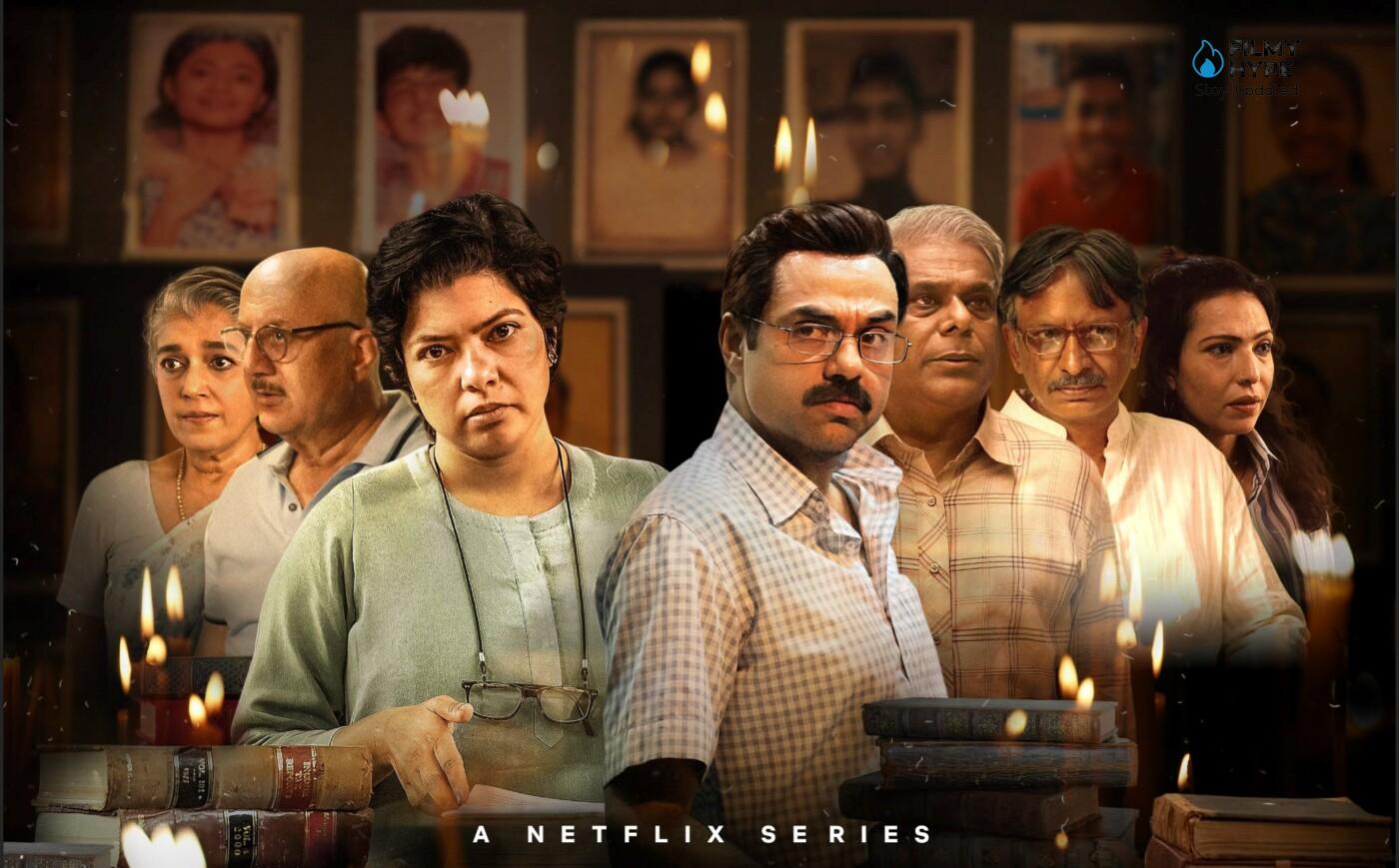
Productions based on real facts are quite interesting, mainly because they help us understand and observe the approach used by the screenwriter and director, which can significantly influence our perception of the real story. One of the most recent productions of the genre released is Trial By Fire, a Netflix series created by Kevin Luperchio and Prashant Nair that tells, in seven episodes, the saga of the couple Krishnamoorthy, Shekhar (Rajshri Deshpande), and Neelam (Abhay Deol)—in the quest for justice after losing his children in the tragic Uphaar theater fire.
The incident occurred on June 13, 1997, at Uphaar Green Park Cinema, located in the south of Delhi (India), at 3 pm. The incident began with a short circuit, which escalated significantly, resulting in over 100 injuries and 59 fatalities due to suffocation. In this special post, we’ll see how the series tells the story from the perspective of the grieving couple, while at the same time delving into the many acts of negligence by theater owners. We will explain the end of the production to dispel any doubts you may have acquired when watching it.
Trial By Fire Ending Explained: Summary
On a fateful day, the protagonist couple allowed their two teenage children, Unnati and Ujjwal to go to the cinema to watch the popular movie “Border”, accompanied by a friend, Arjun. The film, released on the same day, featured a star-studded cast and an overly patriotic tenor, designed to showcase a vainglorious view of India. A faulty theater transformer, however, ended up catching fire and spreading its flames throughout the venue. When they reached the crowd, it was too late to control them—which made the Uphaar Cinema Hall become a real death chamber for 59 people, who could not leave the place and died of asphyxiation. Unnati and Ujjwal are among those statistics, their tragic deaths having resulted in unbearable grief and an immense desire to bring justice to the Krishnamoorthy couple. Both struggled to find out who was responsible for their children’s deaths while also dealing with grief.
Trial By Fire Ending Explained: The Reasons For The Fire?
Even with the extreme difficulty of bearing the loss, Neelam has always had a strong desire to know more about the incident and understand what happened. Her first step was to visit the home of Arjun, her son’s friend who somehow survived the tragedy. The reason: he arrived late at the cinema on the day of the incident. Unnati and Ujjwal had already entered the hall and left their friend’s ticket on the counter. As he arrived only when the film had already started, the boy was prevented from entering the hall, since all the gates had already been locked from the outside and he could not find anyone with the keys.
When the fire started, Arjun was one of the first to know, which gave him enough time to flee the scene. The account of the boy miraculously saved is important to Neelam for one detail: the gates were locked from the outside, which means that people could not leave the place when the fire started. Neelam soon started visiting friends and journalists and eventually came across the name of Arora, the cinema hall manager. The images widely released by the media caught him leaving the place with a bag, which was probably full of money. With her husband already involved in the investigation, she was now convinced that there had been massive negligence on the part of the cinema staff. The two were willing to remain firm in their endeavor, but they soon realized that it would be difficult to overcome the corrupt system that criminalizes the culprits.
The Guys Upstairs
The Ansal Brothers, large industrialists with enormous influence in the region, owned the Uphaar cinema. On top of that, they were building a giant mall in Delhi, which made any incriminating advances against the two difficult. They took no responsibility, expressed no regret, and offered no apology, yet published an official statement in all the newspapers denying any connection to the fire and blaming every other organization.
Time, however, has shown that cinema owners have aimed at a profit above all else and ended up forgetting the safety and emergency protocols for the establishment. The security announcement system was not working that day, so those at the fire scene could not be notified. Additionally, unauthorized seating and stores blocked emergency routes. There were also no emergency, standing, or exit lights on site, and only two fire extinguishers were in working condition.
Profit Above All?
All of these details were impediments to victims getting out of the venue in time before a brutal outcome, but the thing that weighed most heavily against the cinema was the fact that the owners wanted to ensure that no one could see a popular film like “Border” without a ticket. For this reason, most of the cinema doors were closed as soon as the film started — an unusual action in the place that prevented, for example, Arjun from entering. Despite the owners’ negligence, they claimed they were not at fault.
They even claimed that they had left the theater’s operations board before the accident – which was later found to be false. Also, instead of informing the fire department about the fire, manager Arora spent long minutes gathering the cash that was on the premises to hand it over to the owners without issue. The defective transformer was also a reason to blame the owners since it had already caught fire the same morning, and the company responsible for its installation and maintenance admitted that the engineer responsible for the repair removed a fuse that could have prevented the fire. to spread.
The Importance of AVUTs?
After realizing the size of the power of those most responsible for the fire that killed their children, the Krishnamoorthy couple decided to join the families of the other victims, which resulted in the formation of a group that, while offering mutual emotional support, fought for justice. Named the Uphaar Fire Tragedy Victims Association (AVUT), the group was instrumental in the court case that lasted nearly two decades. The main objective was to punish the Ansal brothers for negligence and for the accident in the movie theater they owned.
During the process, members of the group were repeatedly harassed and even injured. A henchman of the Ansals brothers even dressed up as a dried fruit dealer to offer money to AVUT members in exchange for their silence about what happened. Threats to the group members were constant, such as evicting them from work and their children from school. Even physical aggression was used to frighten the victims’ families. Even so, our protagonists remained firm in the objective of bringing to light the evidence and proof necessary for the case.
The Court’s Decision?
Despite all their efforts, it seemed impossible to get the Ansal Brothers to take the blame for the fire. They continued to use whatever money and influence they could to avoid punishment, which led to a succession of court rulings against and in favor of each new higher court. While we would prefer to conclude the story on a positive note, the brothers were convicted almost 25 years after the tragedy for tampering with evidence. However, as on several previous occasions, they were again released just six months after their arrest.
This does not mean, however, that the fight is over. The Krishnamoorthy couple continues to seek punishment for the culprits, and the Trial By Fire series gives us a certain sense of how the case is currently standing, with Neelam preparing for the next court sessions to do justice. She and her husband have always denied interest in any monetary compensation, stating that they only intend to punish offenders. Despite numerous attempts by defense attorneys to discredit the couple in court, they stuck to their principles to the end. Both became major activists in the fight for more fire safety, which ensured that the municipal government took the matter seriously. The series helps us comprehend that the efforts stemming from this tragedy have significantly contributed to the progress surrounding the subject in India today.
