


The Other Bennet Sister Series Review and Ratings
Cast: Ella Bruccoleri, Richard E. Grant, Indira Varma, Ryan Sampson, Poppy Gilbert, Tanya Reynolds, Varada Sethu, Richard Coyle, Laurie Davidson, Ruth Jones, Grace Hogg-Robinson, Molly Wright, Dónal Finn, Reggie Absolom
Director: Jennifer Sheridan
Streaming Platforms: BBC One and Prime Video
Filmyhype.com Ratings: 3.5/5 (three and a half stars)
What happens to Mary Bennet when her sisters find their place in the world? It is from this question that The Other Bennet Sister, a new ten-episode series available from September 26th, comes. Based on the novel of the same name by Janice Hadlow, the series, created by Sarah Quintrell and Maddie, comes to the Jane Austen universe from a sideways perspective, choosing the five o’clock one as the protagonist, Bennet’s sister, who, in Pride and Prejudice, remains more often in the background. Pride and Prejudice delivered Elizabeth and Darcy to literature, found a happy ending for Jane and Bingley, and made even Lydia’s misadventures unforgettable. Mary, on the other hand, remained on the sidelines: serious, awkward, and too inclined to cite books and dispense observations that no one wants to hear.
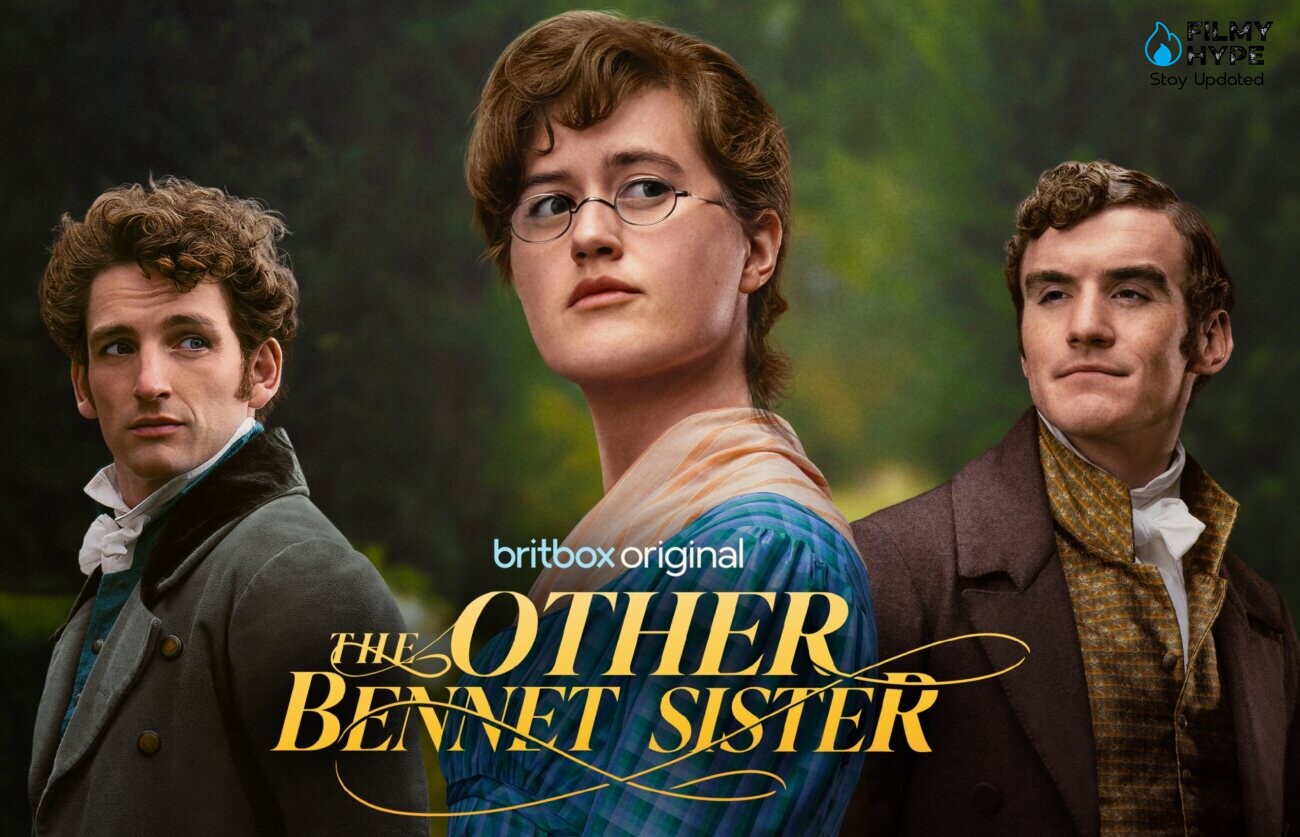
The Other Bennet Sister starts with her and a simple but far from banal question: what happens when the girl who has spent her whole life as a secondary character finally has the chance to become the protagonist? Based on the novel by Jane Hadlow and adapted for television by Sarah Quintrell, the ten-episode series initially retraces some of the most famous events of Pride and Prejudice, but observes them from Mary (Ella Bruccoleri’s) perspective. While Jane (Maddie Close) is admired for her beauty and Elizabeth (Poppy Gilbert) wins everyone over with her intelligence, Mary struggles even to find anyone willing to listen. His mother (Ruth Jones) considers his chances of marriage virtually non-existent, while his father (Richard E. Grant) observes the family with his usual detachment.
But when the sisters’ lives begin to take them away from Longbourn, an unexpected possibility opens up for Mary too: to leave the home where she has always been defined by comparison and discover who she can be without them. And it is precisely when he distances himself from the story we already know that The Other Bennet Sister truly finds its own identity. More than just a spin-off of Pride and Prejudice, the series thus becomes the story of a young woman who must learn something no one has ever taught her: to consider herself worthy of being seen, heard, and loved.
The Other Bennet Sister Series Review: The Story Plot
The series takes the leap when Mary leaves Longbourn and joins her uncle Gardiner in London, where she is welcomed into a very different home than the one she grew up in. Mrs. Gardiner, played with great warmth by Indira Varma, becomes a fundamental figure because she is among the first to look at Mary without assuming there is something in her that needs to be corrected. This is where The Other Bennet Sister stops living, especially in the shadow of Pride and Prejudice. Regency London offers Mary new friendships, new experiences, and inevitably new potential loves, but above all, a space in which to build an identity that does not continually depend on Jane, Elizabeth, Kitty, or Lydia.
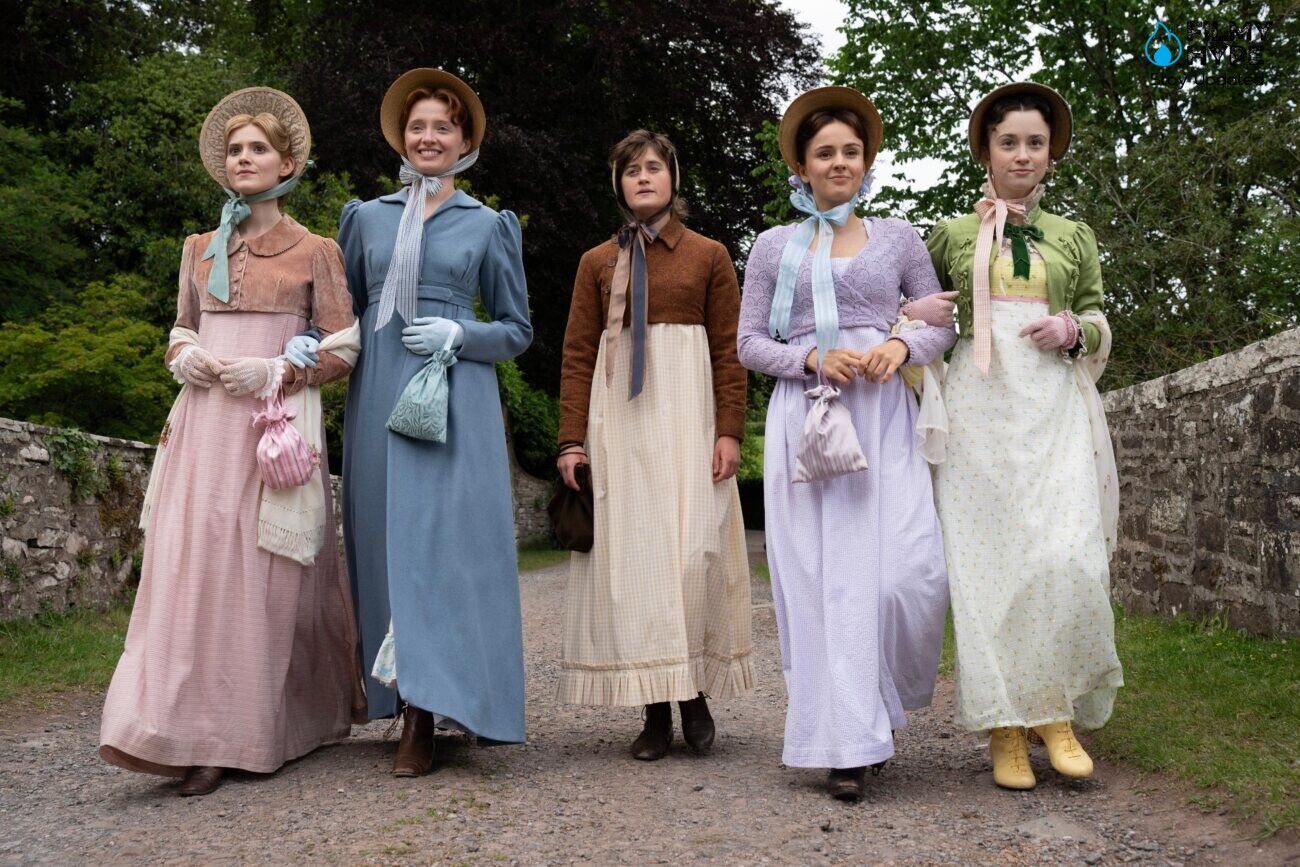
The path is gradual and for this very reason convincing. Mary does not arrive in London suddenly, transforming into a confident woman. He keeps making mistakes, feeling out of place and seeking approval. Even the changes in clothing, increasingly bold as she gains confidence, speak well of a girl who is experiencing a new freedom without yet knowing exactly how to use it. The series thus manages to give her emancipation a concrete dimension: Mary must not become someone else, but understand that many of the characteristics she has learned to consider flaws can simply be parts of herself that deserve to be accepted.
The Other Bennet Sister Series Review and Analysis
After the first two episodes, which constitute a real retelling of the events of Pride and Prejudice, The Other Bennet Sister finally collapses starting from the third episode. While the beginning retains some interest in investigating familiar dynamics in a different light, it is what happens after The Other Bennet Sisters’ wedding that is decidedly more compelling, placing Mary at the center. While not departing from a narrative style that recalls the typical elements of the Austenian universe and Regency tales, the screenplay depicts the doubts and uncertainties of a young woman who is still unsure what to ask of life. After unsuccessfully and with humiliating results pursuing other people’s dreams of marriage, Mary gradually understands that, unable to adapt to someone else’s life, she must find a path that truly belongs to her.
In this context, the characterization of herself and those around her becomes more modern, less stereotypical, and more authentic, offering a variety of characters and interests that help open the protagonist’s mind, helping her free herself from the narrow provincial mentality that had penalized her until then. The quality of the writing is further enhanced by the performances of an excellent cast, among which Ella Bruccoleri shines as Mary and Dónal Finn (recently appreciated in Young Sherlock) as Mr. Hayward. The romantic component is a must-have to give the series its inevitable period novel tone: a central but happily never predominant element. In fact, Mary’s maturation remains at the center of the story, with her mistakes and personal successes, demonstrating how, in order to live a conscious relationship with another person, it is necessary first of all to learn to love oneself.

A truly remarkable work has been done on the color choices and costumes: the stages of the protagonist’s journey are coherently reflected in the colors of her clothes and the environments that surround her, creating a strong synergy between narrative and visual system. The direction, entrusted to Asim Abbasi and Jennifer Sheridan, draws inspiration from the most classic period dramas to recreate a rigorous and characteristic style, free of superfluous virtuosity but entirely functional to the needs of the story. The Other Bennet Sister thus turns out to be an extremely interesting series, which, just like its protagonist, takes a while to get going, but which, once it finds its way, demonstrates how, in a world that would require us all to conform to unattainable standards, going off predetermined tracks is not only desirable but necessary.
Of course, we are still in Jane Austen’s universe, and marriage continues to be a central issue. The Other Bennet Sister, therefore, does not give up the sentimental component, building various romantic possibilities around Mary, from her first meeting with the kind Mr. Sparrow to the relationships that will later arise with William Ryder (Laurie Davidson) and Mr. Hayward (Dónal Finn). The difference is that love is not presented as the reward meant to prove that Mary had a value that others could not see. Real change must happen within her first. The series thus uses romance to put Mary in front of different versions of the life she might choose. Attraction, confidence, independence, and desire don’t necessarily coincide, and understanding what she wants becomes as important as finding someone who wants it. In a society where marriage and economic stability are closely linked for a woman, imagining that she can build a satisfying existence without entrusting her future entirely to a husband already becomes a form of rebellion.
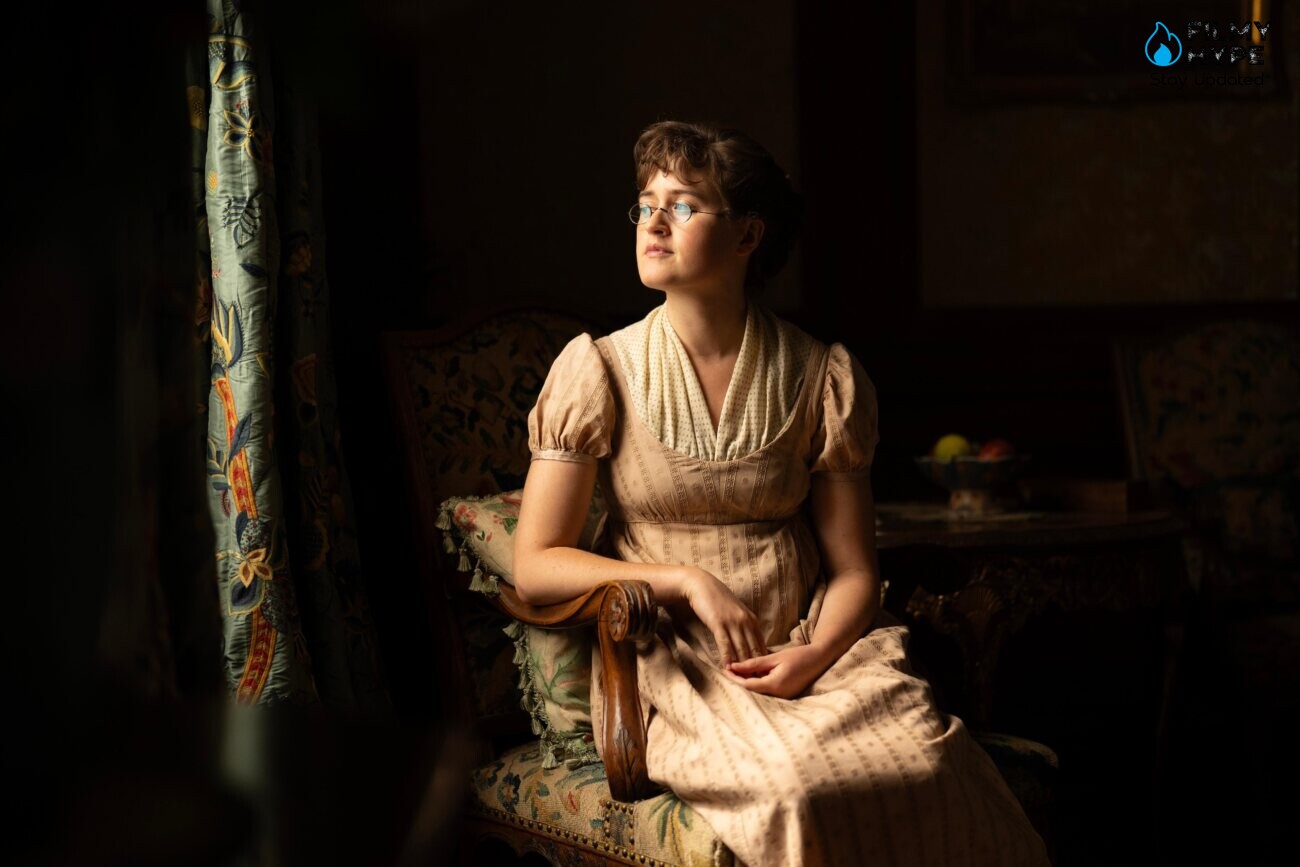
It’s also what allows the series to speak to the present without turning Mary into a 21st-century woman who accidentally ended up in the Regency. The possibilities before him remain those of his time, but the need to separate the expectations of others from his own desires makes his path instantly recognizable. Much of the result inevitably rests on Ella Bruccoleri, who finds the difficult balance necessary to make Mary vulnerable without making her a victim and funny without turning her into a caricature.
His is above all an interpretation made of small gestures. Mary looks down, adjusts her glasses, holds back a reaction, or desperately tries to figure out what is expected of her. Bruccoleri manages to show the protagonist’s change without the need for sudden transformations: the Mary of the last episodes is still perfectly recognizable as the girl she met in Longbourn, but she occupies the space around her in a completely different way. And this must be the case. It would have been much easier to construct the classic story of the neglected girl who, once away from home, suddenly turns out to be extraordinary. The Other Bennet Sister chooses a more delicate path instead. Mary doesn’t need to become Elizabeth or even prove the family wrong about everything. She needs to stop listening to that voice telling her she’s not enough, even when her mother is no longer in the room.
Not everything works with the same precision. The first part dwells excessively on Mary’s unhappiness, and some scenes insist more than necessary on the same concepts. Mrs. Bennet’s characterization is often too exasperated, and a few moments of pure homage to the romantic period drama risk appearing purpose-built to please the audience. However, these are limitations that become less evident when Mary leaves Longbourn, and the story can finally move into territories less tied to the original story. From that moment on, the series gains greater confidence, just like its protagonist.
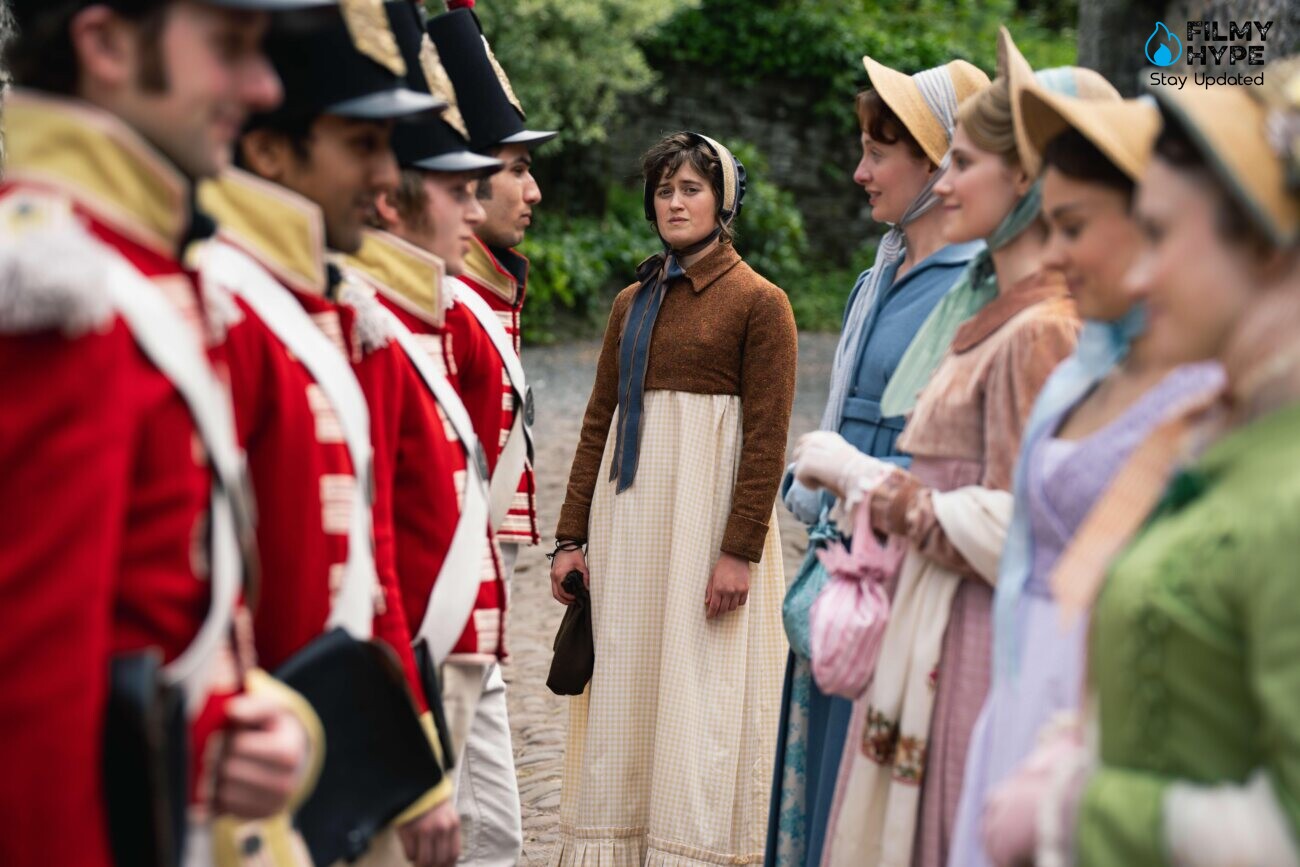
The result is a romantic, ironic, and above all very affectionate period drama about a girl who remained for over two centuries “her other sister Bennet”. The most successful choice of The Other Bennet Sister is to finallyThe Other Bennet Sister Series Review give her a story without pretending that Jane Austen had simply forgotten to tell us how exceptional it was. Mary is interesting precisely because she is not Elizabeth Bennet. She is insecure, clumsy, curious, sometimes naive, and often too serious, but slowly learns not to apologize for being so. And this is where the series finds its most compelling happy ending: not simply in the possibility of someone choosing Mary, but in the moment Mary finally begins to choose herself.
The Other Bennet Sister Series Review: The Last Words
The Other Bennet Sister is an elegant and profound coming-of-age story that, after the first episodes of adjustment, transforms the figure of Mary Bennet from a neglected sidekick to the protagonist of a strong path of emancipation. Supported by Ella Bruccoleri’s excellent acting and careful attention to costumes and color palettes, the series blends the measure of classic period drama with a modern sensibility. The result is an engaging work that celebrates the search for one’s identity and self-love well before social or romantic conventions.