

Neagley Season 1 Review and Ratings
Cast: Maria Sten, Greyston Holt, Adeline Rudolph, Jasper Jones, Matthew Del Negro, Damon Herriman, Rebecca Liddiard, Tyrone Benskin, John Bregar, Jessica Clement
Director: Sam Hill, Gary Fleder, Phil Abraham, M.J. Bassett
Streaming Platform: Prime Video
Filmyhype.com Ratings: 3/5 (three stars)
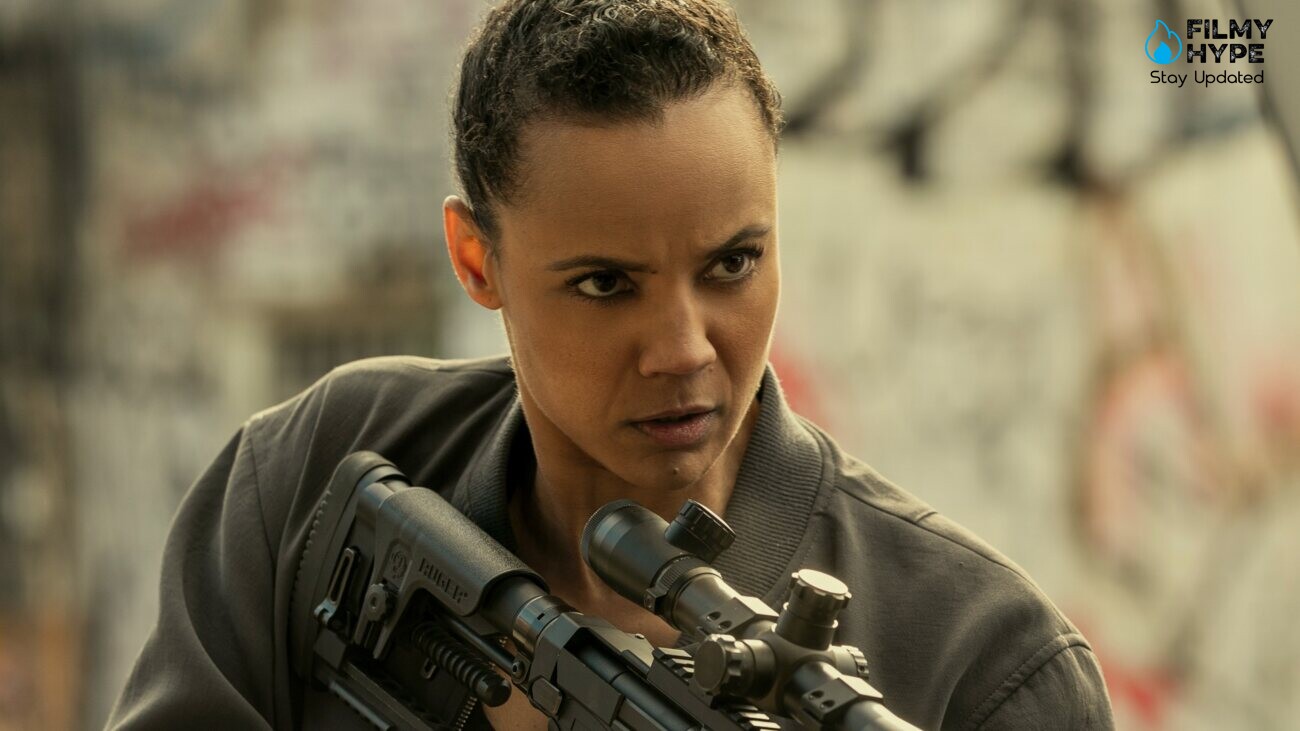
Neagley arrives on Prime Video as the most anticipated spin-off in the Reacher universe and finally puts Frances Neagley at the center, played by Maria Sten, who is comfortable both in the action and in the most introspective moments. After being the perfect, cynical, and competent sidekick to Alan Ritchson’s vagabond vigilante, the character here gains a universe all her own: gray Chicago, a rural commune with a cult aura, and a pharma company too clean to be innocent. The thesis is simple. Neagley is a delightful, well-crafted series that functions as an evening action thriller. However, it remains too tied to the Reacher model. Similar narrative mechanisms, somewhat archetypal villains, and a sense that action, in the end, can solve almost anything. Autonomous identity is there, but it is in the making. Maria Sten holds the stage, and the character evolves, but the same authorial hand is still perceived too much around him.
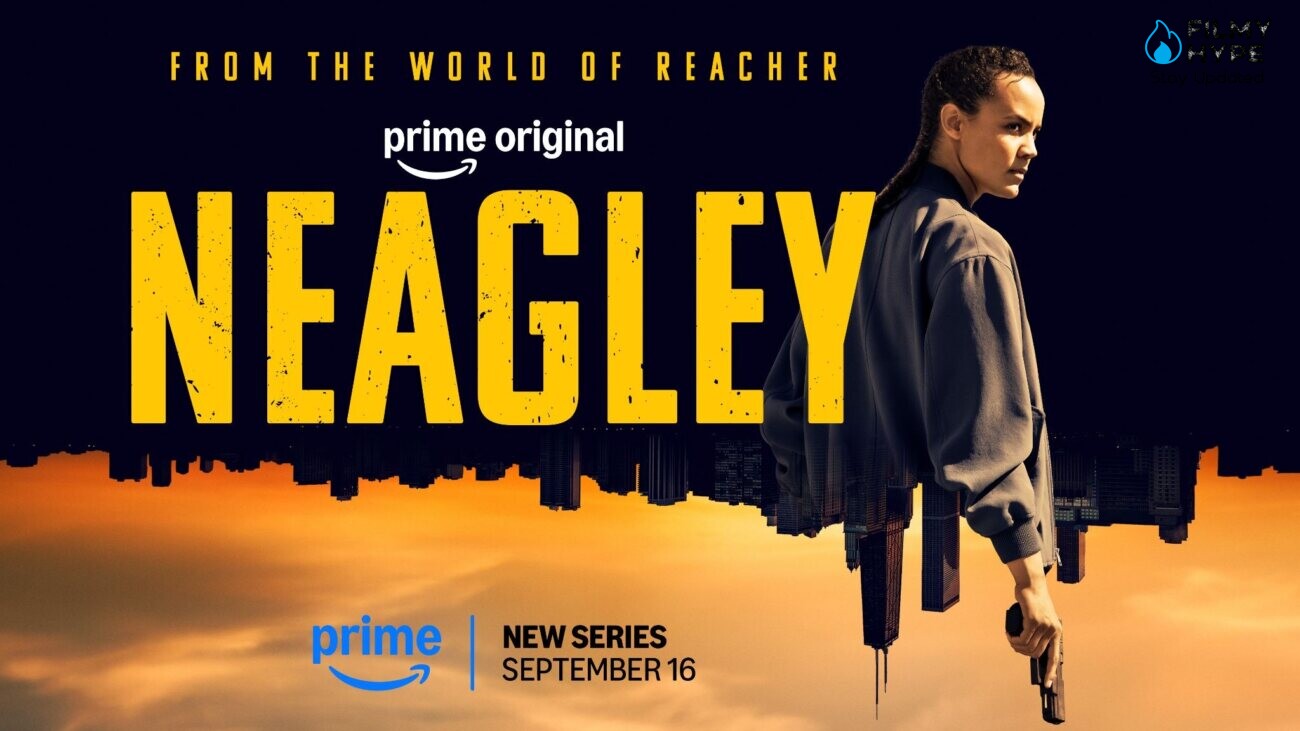
Typically, TV series that spawn spin-offs have characteristics—number of main characters, plot complexity, release timing—as opposed to the TV series based on Lee Child’s novels, whose seasons are released every year and a half and each time tell a new story that ends in the space of eight episodes and in which the entire cast always changes except obviously the protagonist and his sidekick, who each time makes an important but decidedly reduced appearance. In short, Neagley presents itself as an unexpected series in every sense, but unlike A Knight of the Seven Kingdoms, it turns out to be the spin-off we deserved more than what we needed.
Neagley Season 1 Review: The Story Plot
Neagley opens with an image already typical of the Reacher universe. A childhood friend of the protagonist, Tommy Crane, apparently dies by suicide under a subway train, naked and in an altered state. Frances Neagley, convinced that Tommy didn’t take drugs, launches a pro bono investigation that takes her from Chicago to Echo Canyon, a rural town with a cultic aura, until she becomes entangled with corrupt cops and Big Pharma. The balance between action and investigation is good. Neagley‘s character does not become a female Reacher, although she does try in some passages. The plot is predictable, however, because the good guys and the bad guys are clear from the start.
And the pleasure lies more in how the case is solved than in what will happen. The eight episodes don’t feel overly long, but some passages could have been drier. The series could have focused better, cutting some exhibition redundancy. The ending leaves a mixed feeling. If Neagley were conceived as a single season, it would feel a bit rushed while remaining consistent with the story arc. If there is a sequel, however, the closure leaves room for a more reasoned development of the characters and the emotional consequences of the investigation. In both cases, the structure holds up, but not surprisingly. Neagley is a solid thriller, not a twist mystery.
Neagley Season 1 Review and Analysis
We’ve said it, and we’ll say it again: no one was dying to see a spin-off about Reacher‘s recurring guest star. Sure, someone (including us) was actually curious to know why Neagley beats and kills but doesn’t shake hands or hug, but we could live quietly without knowing it, let alone use it as a pretext for a spin-off. But if it went well for Lee Child, evidently this production had its why. Which, in the end, is the same as the parent series (or, in this case, should we say parent series?): entertaining, with robust doses of strokes of genius and strokes of violence, to see at the end the good that somehow strangely prevails over the evil. Furthermore, an equally effective dose of drama is represented by the protagonist’s disorder, which gives the series greater depth.
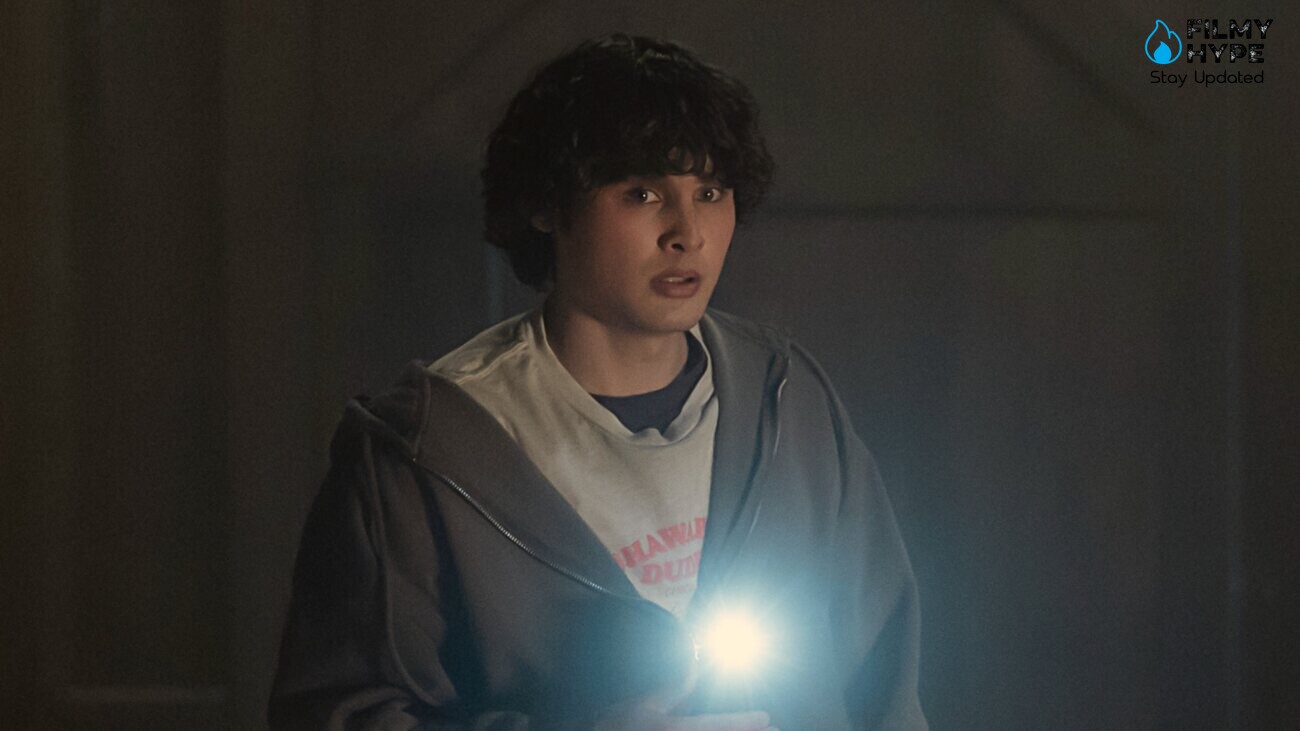
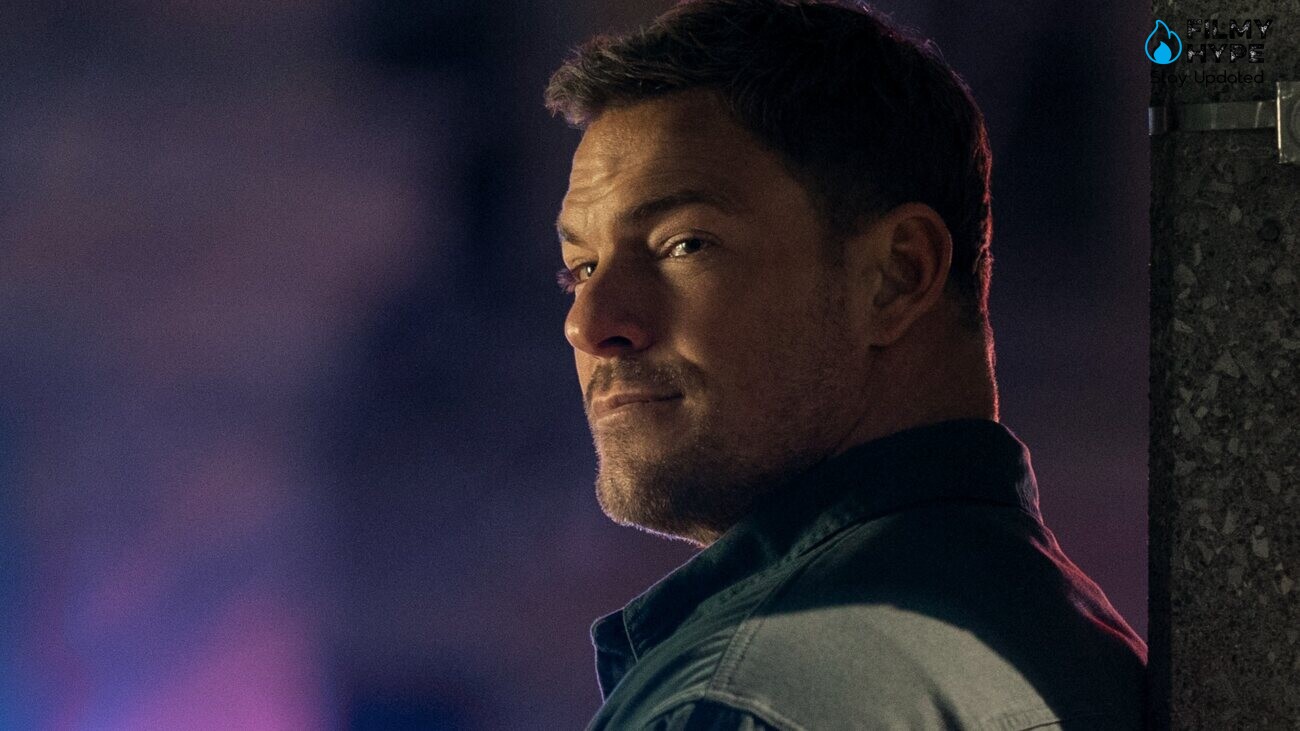
Of course, now it will be harder for Santora and company to maintain a stable and coherent connection between the two series, but in an age of extremely complicated TV series that come out every three years and never reach a solution, Santora offers audiences a well-made, entertaining product that never endures satisfaction. For our part, a heartfelt thank you. The beginning suggests a more promising direction. Alan Ritchson appears as Reacher, helps Neagley foil a kidnapping, and shares a stint at the stadium with her. Their understanding tells of years of mutual trust without the need for explanation. Reacher is a giant intolerant of rules; Neagley is methodical, controlled, and capable of anticipating his moves. Together they work because they are different. Separating them, then, isn’t necessarily a mistake: it might be an opportunity to find out what makes Frances interesting outside of that relationship.
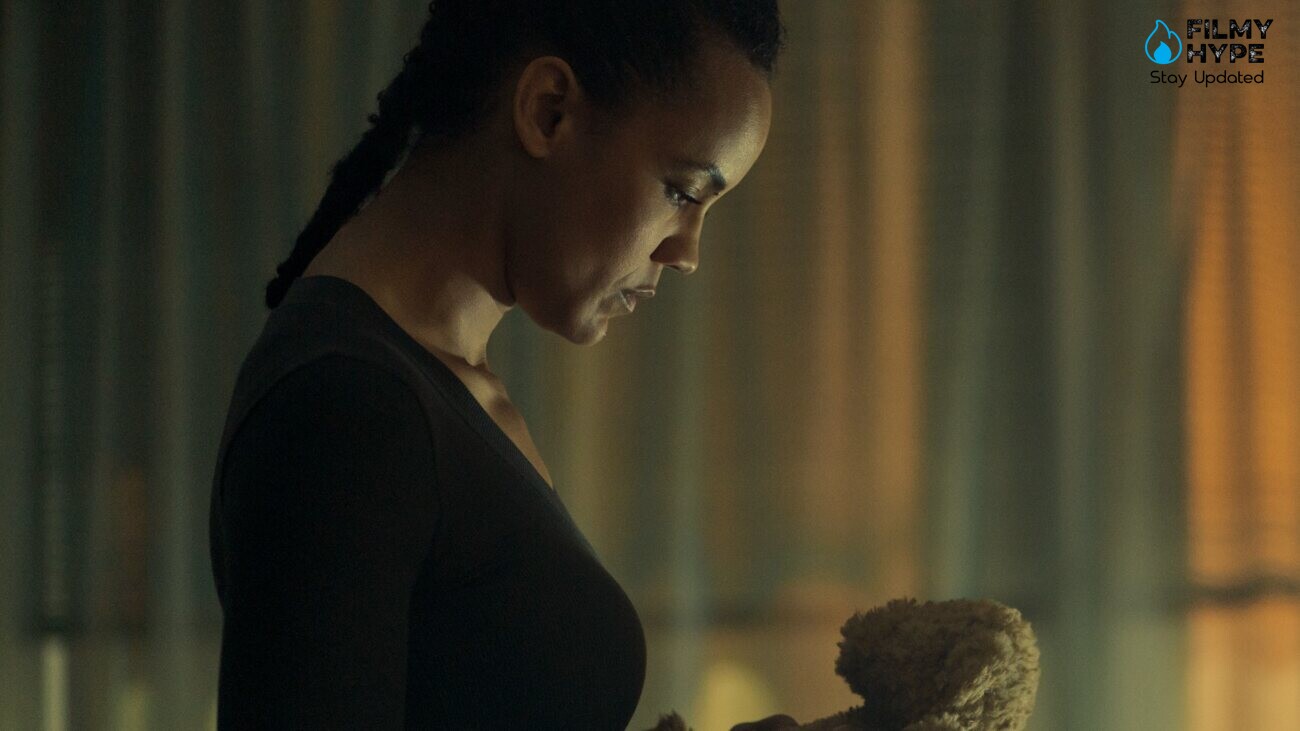
The series instead chooses the more conventional route. The investigation into Tommy’s death is overlapped by his relationships with his ailing father, childhood memories, and the protagonist’s difficulty accepting physical contact. These are potentially significant elements, but the script tends to declare their importance rather than construct it through the character’s actions and contradictions. Aptiphobia becomes a continually recalled trait; trauma, an explanatory key, is called upon to justify its isolation. The paradox is that Neagley was more complex when we knew her less. In Reacher, all it took was her efficiency and Jack’s respect for her to suggest an independent personality.
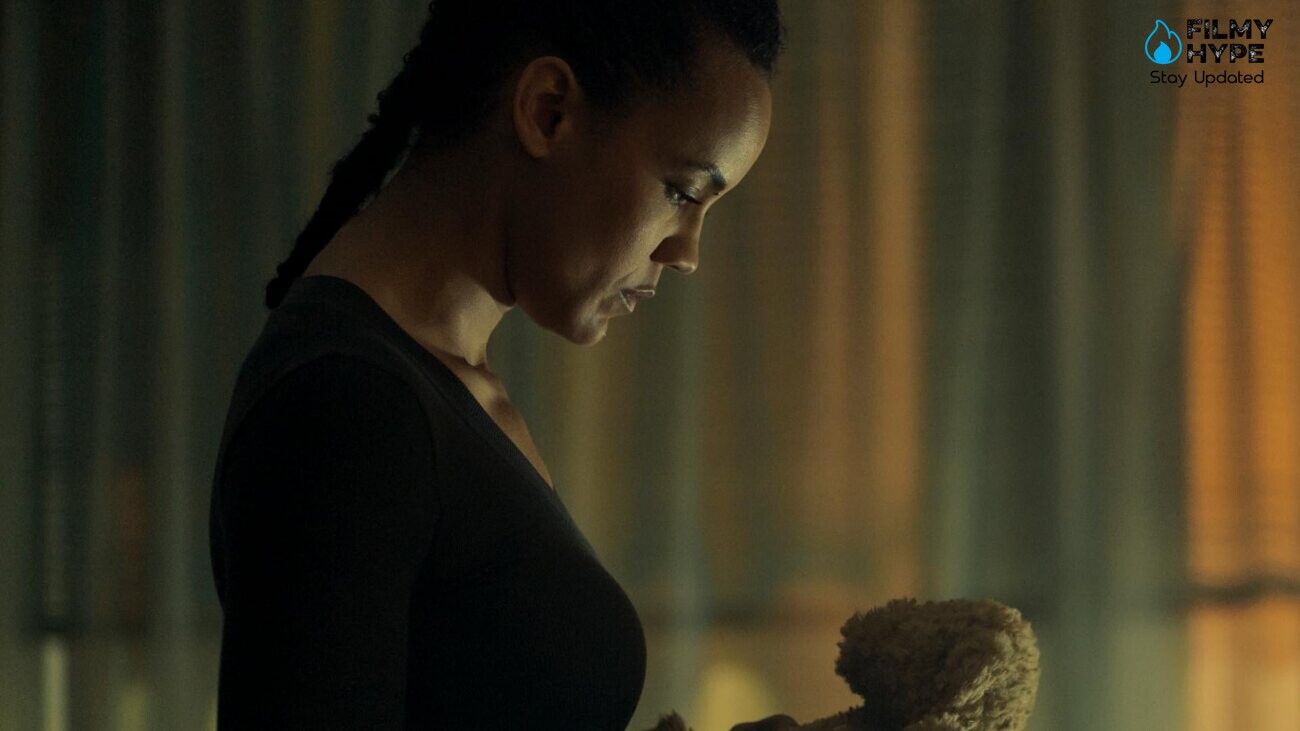
Here, in an attempt to make her more vulnerable, the authors assign her a repertoire of wounds and family ties that end up weighing her down. Not because an action protagonist has to be emotionless, but because a painful biography doesn’t automatically equate to a compelling story arc. Sten does what he can to give consistency to the material. Her dry performance avoids turning Frances into a female copy of Reacher: she doesn’t need to physically occupy every shot to assert herself, and in the action scenes she conveys a believable combination of precision and aggression. The relationship with Riley also introduces some nuance, especially when the initial mistrust leaves room for a more personal collaboration. These are moments where you glimpse the series that Neagley could have been.
What is missing above all is a case worthy of the protagonist. Tommy’s death leads to a plot that brings together a cult, pharmaceutical business, and corruption, but the quantity of ingredients doesn’t make the mystery any more compelling. Narrative lines multiply without producing truly surprising discoveries; once the bigger picture is understood, the investigation continues to revolve around information that takes too long to develop. Eight episodes of about three-quarters of an hour thus become an excessive measure for a story that would have benefited from greater concentration.
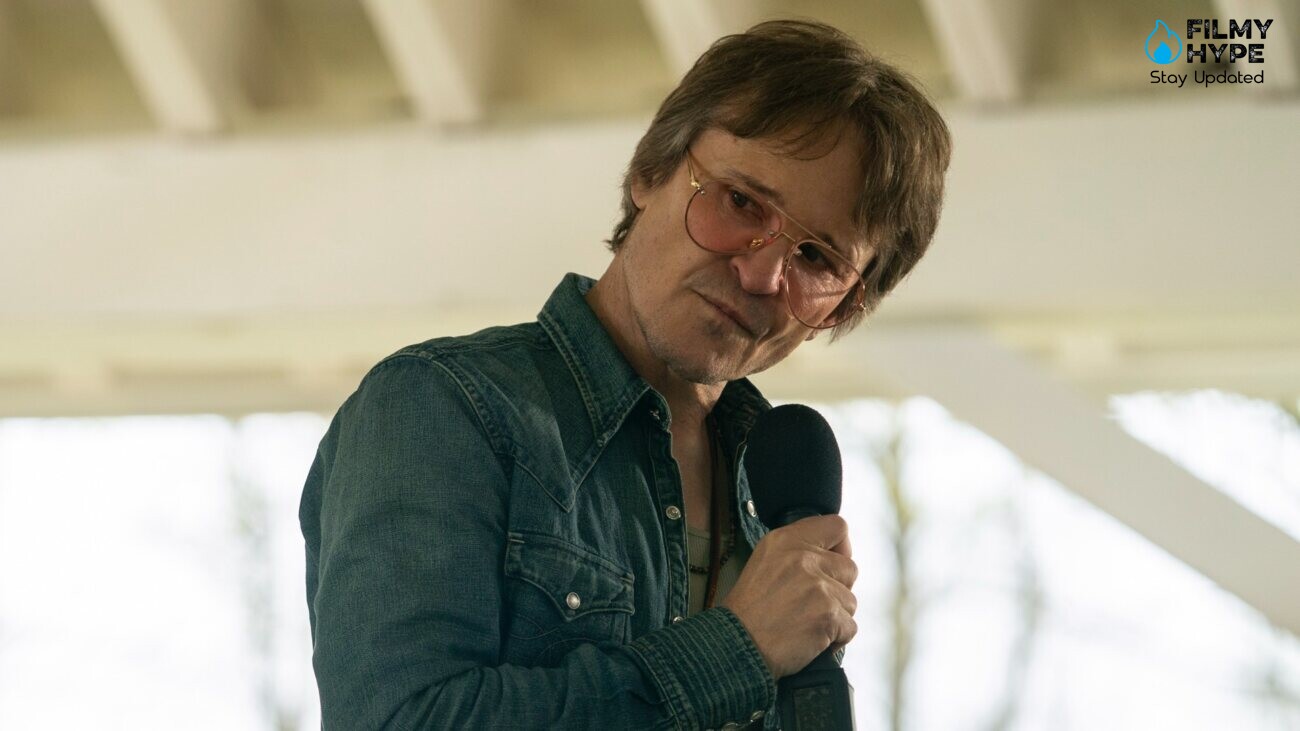
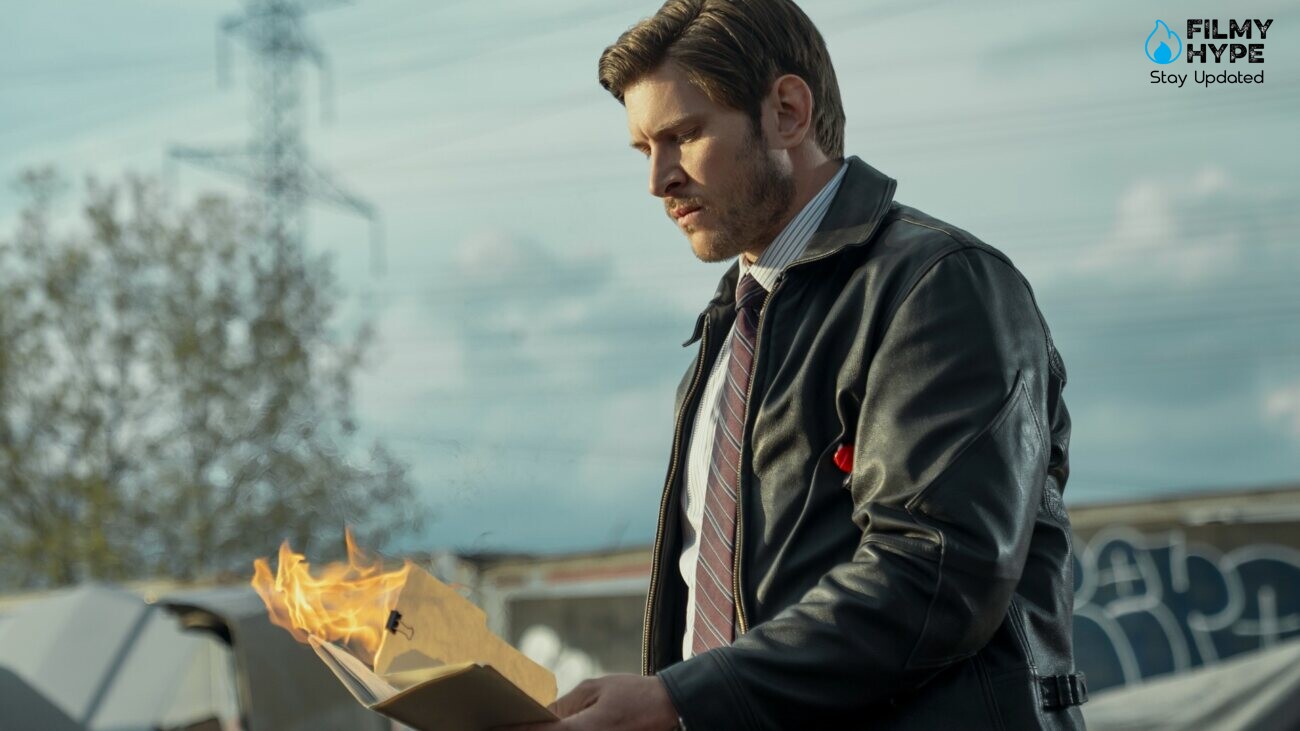
Not even the antagonists can fill the void. Damon Herriman’s community leader, with his messianic poses and musical performances, offers a few grotesque moments; Matthew Del Negro’s pharmaceutical executive instead pushes the caricature of the unscrupulous powerhouse. The series often verges on the pleasure of the most cheeky pulp but seems to hesitate just when it should embrace it. The result is a world populated by recognizable figures, rarely eccentric or menacing enough to make their mark.
The action sequences retain a certain effectiveness and are a reminder of why this formula has found an audience. But in Reacher, the simplicity of the plot is offset by the protagonist’s almost mythological charisma: watching him enter a room means expecting the balance to change. Neagley can’t just replicate that mechanism on a different scale. It would need a more ingenious investigation, better-developed relationships, or a truly new perspective on the same universe.
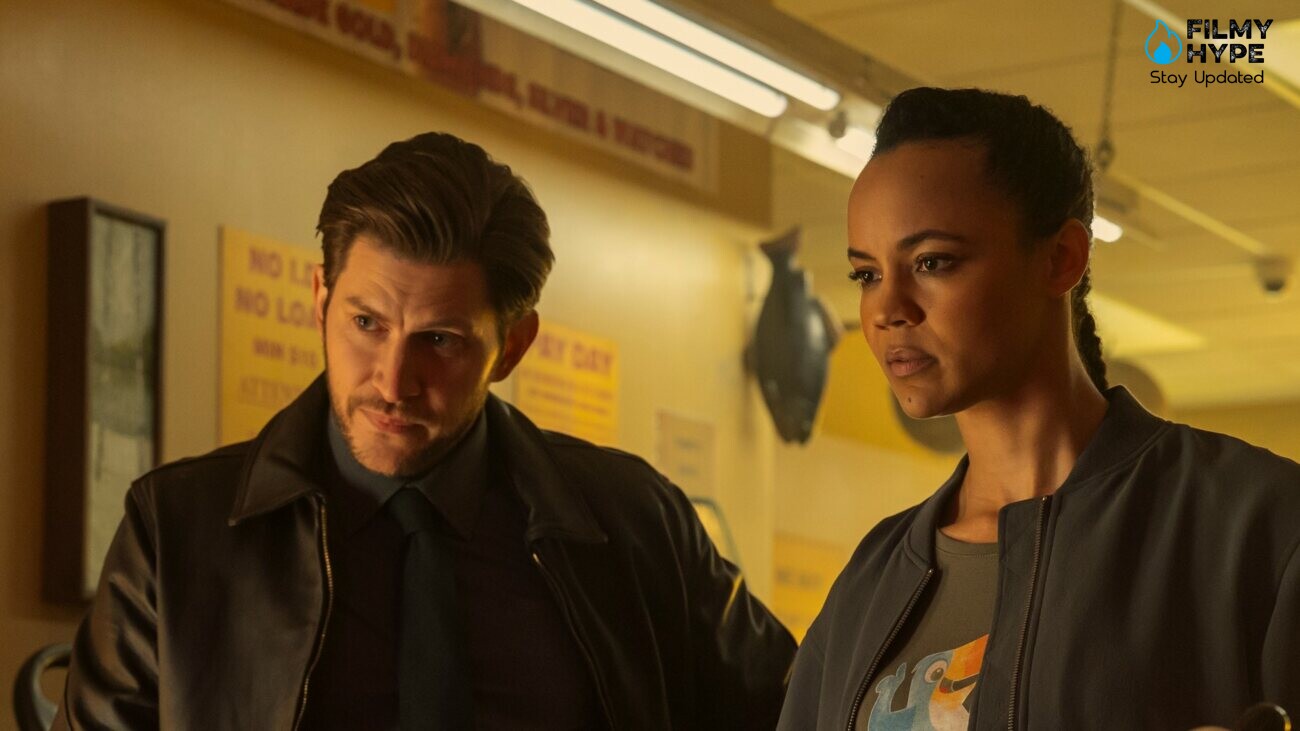
Compared to Reacher, Neagley offers more personal action and direction. No one is a superhero; there is always a margin of doubt about the fate of the characters. In some cases, the suspense shifts from “how” to “if” they will emerge alive. With Reacher, you knew he’d always get away with it; the question here is how the authors will get them out of nearly impossible situations. Too bad some clichés weaken credibility. Two different scenes show Neagley in the crosshairs of a rifle. She notices the bad guys instead of shooting and gets lost in chatter. Once she can pass, two seem like a comedian. Of course, if they had pulled the trigger, we would have stopped at the second episode. But a little more action and a little less talk before the execution, it wouldn’t have hurt.
And then there’s always that question that leaves you a little taken aback: but who finds all these bodies left lying around? Also, because some are just a little excessive. Like the Swede in the alley, left standing with a protruding iron stuck in his skull. In short, all these suspicious deaths are also there. But the feeling is one of excess winking at the tone of the franchise, and that’s fine, but sometimes it breaks the immersion. On the atmospheric side, however, Neagley convinces. Gray, urban Chicago, rural, isolated Echo Canyon, the ICBM silo used as a laboratory, and the contrast between closed and open spaces create a believable world. The director uses these environments well. On the one hand, the city as a place of sin; on the other, the country as a place of salvation. Except then proves the exact opposite. On this dualism, the series finds a visual identity of its own, more intimate and less of a War Machine than Reacher.
Neagley is in his first season and is looking for his place. And, like all spin-offs, it has its own autonomy. The postponements (and expectations?) in Reacher are constant. The same authorial hand is perceived, a similar directorial style. Certain narrative mechanisms are the same, as is the grammar of action. Watching episode after episode, a question arises: if we didn’t know Reacher, would Neagleyla watch the same? And, above all, would we like it? Alan Ritchson’s cameos are logical, enjoyable, and not cumbersome. You don’t expect Jack to arrive at any moment, like the cavalry, to resolve the situation. So, they don’t steal the show, but they remind you of the bond between the two characters. The last one, already mentioned, mentions Philadelphia, strongly consolidating these eight episodes with the fourth season of Reacher.
And here an interesting paradox fits in. Audiences approach this spin-off because they know and appreciate the universe of the parent series. But if one were to hypothesize the reverse path, it is by no means a given that Neagley‘s vision alone would generate the curiosity to go and discover Reacher‘s adventures. In this case, it is the older brother who acts as the driving force and legitimizes the younger sister, while the strength capable of reversing the course seems to be lacking. In short, the feeling remains that the bond of dependence is strongly asymmetrical. Neagley works. Both as the first step of an expanded universe and as a single season. He has enough depth to stand, but his identity is still too tied to his older brother. The series walks on its own but does so on the same terrain, with the same rules. It remains to be seen whether, in the future, it will be able to trace new ones.
Neagley Season 1 Review: The Last Words
Overall, Neagley is a decent product. Well done, enjoyable, with just the right amount of Reacher nonsense that keeps you glued to the screen. It works as an evening action thriller when you’re not looking for extreme psychological complexity but want to follow a solid investigation, with well-choreographed action and relatable characters. However, it remains too anchored to the Reacher model. He has, however, something more. A virtue that, at the same time, is a significant risk: total freedom. While Reacher must respond to the rigid canon of adaptations from Lee Child’s books, Neagley lacks a set pattern. Having no literary trail to follow, more or less literally, the screenplay has the rare opportunity to take risks, exploring new territory. And break away from the shadow of the giant. If the writers find the courage to truly dare, this series has the potential to take flight and transform into a superior product, capable not only of holding its own against its bigger brother but even surpassing it.