Episode 5 of House of the Dragon opened with Otto Hightower (Rhys Ifans) telling his daughter, Queen Alicent, that her husband doesn’t have much longer to live. The episode ended with Grand Maester Mellos providing the very ill Viserys with subpar care. These two events, combined with some curious moments early in the season, make it possible to suspect that a plot against House Targaryen might be underway. And if so, it could mean that the Grand Maester’s Conspiracy, a major theory in A Song of Ice and Fire, is absolutely true.
House of the Dragon: The Grand Maester Conspiracy, Explained?
The Grand Maester’s Conspiracy posits that the order based at the Citadel is responsible for the disappearance of magic in Westeros. Several characters, including Maester Marwyn himself, known as the Wizard, believed there was a pact among certain maesters to exert influence within the Houses to which they were assigned. It was also believed that countless members of this community were responsible for ridding the continent of dragons and the Targaryens who rode them.
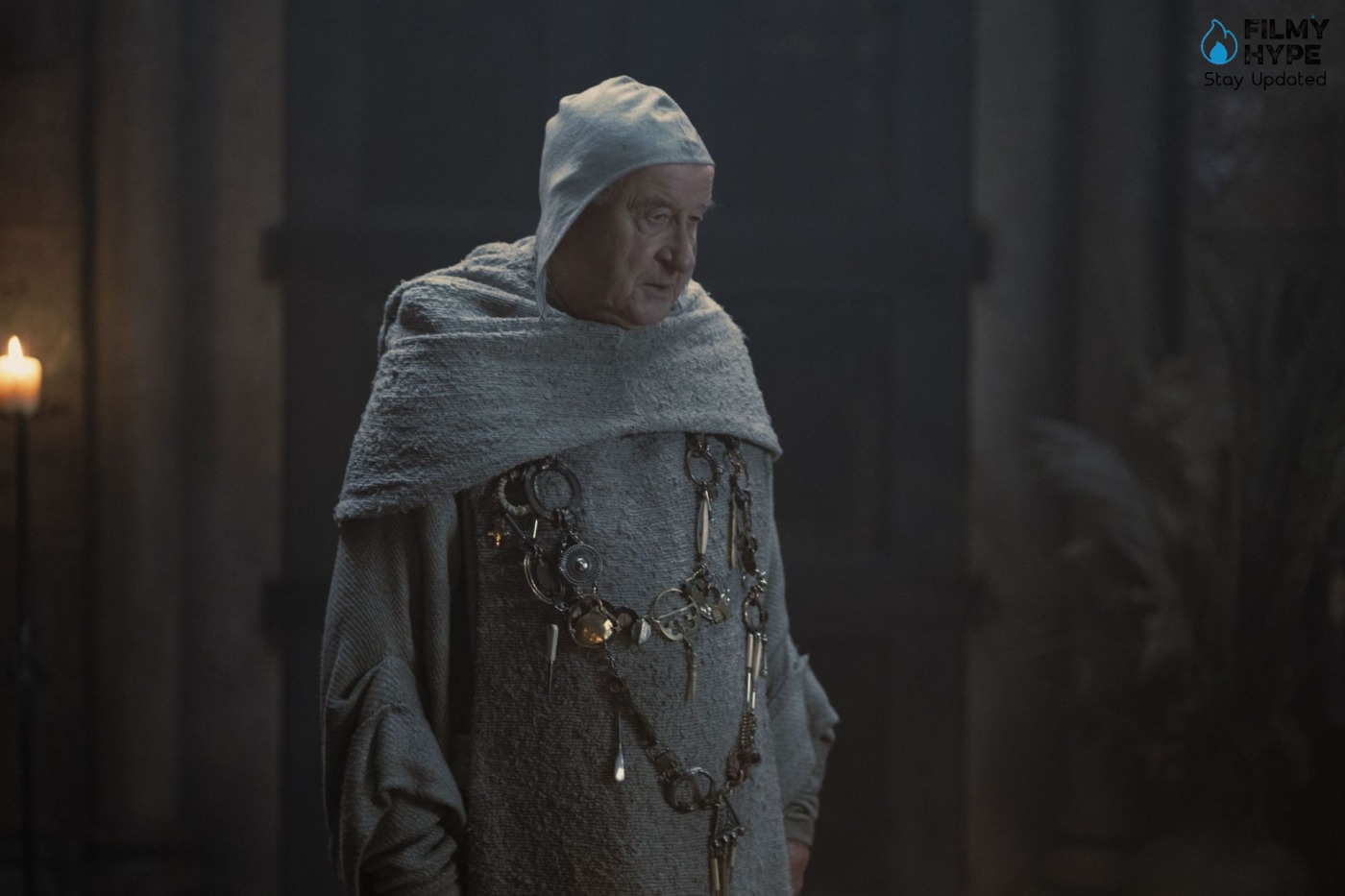
The Grand Maester in House of the Dragon (Image Credit: HBO)
In both Game of Thrones and House of the Dragon, there has been the presence of maesters, learned men who wear chains around their necks. The masters act as advisors, healers, and teachers to the lords and their children. There is one assigned to each castle in Westeros, and they serve whoever governs their assigned position. The masters are trained at a kind of university called Citadel, located in the city of Oldtown in Reach.
Each master gives up his last name when he begins his studies, making it impossible to know who they really are, where they come from, or where their true loyalties lie. In George RR Martin’s books, it is sometimes suggested that maesters have a role beyond the obvious. They may even be part of… a Grand Master conspiracy. This theory has been around the internet thanks to ‘A Song of Ice and Fire’ fans for years, but it wasn’t actually covered in Game of Thrones. Could it happen in House of the Dragon?
How Maesters Came to Be and Their Connection to House Hightower?
Maesters are the healers, teachers, and scientists of the Seven Kingdoms, and they have been so since long before the Targaryens arrived on the shores of Westeros. They came into being when a man named Peremore Hightower gathered learned men from the far reaches of the known realm in an attempt to learn everything he could about how the world worked.
After his death, his brother, King Urrigon Hightower, granted a small plot of land within his territory to these men. There, they would build the Citadel and become the maesters who appear in both House of the Dragon and Game of Thrones. A man of any rank could, if he so desired, go to the Citadel to learn and try to forge his own path of knowledge. Upon completing his training, he would take his vows, promising celibacy, landlessness, and renunciation of his family name. From then on, he would be known only by his title (Maester, Grand Maester, Archmaester) and his given name.
The Role of Maesters in House of the Dragon?
Maesters are only sent to castles, to houses that matter, and to those who can pay the Citadel for the honor. Despite their position of servitude, they wield considerable power within the households to which they are assigned. While living with their chosen family, they learn many things their lords would prefer to keep secret: illnesses, potential pregnancies they wish to see through, and countless private messages sent to allies and enemies alike, as they are the ones who control the ravens.
For some illiterate Lords and Ladies, their maesters read and write all their correspondence, and they are therefore completely dependent on them for vital information.
When a Maester dies, the archmaesters of the Citadel choose their replacement. The Lords have no way of learning the history of the man to whom they will now entrust all their secrets. A maester’s duty is to serve their assigned houses as healers, teachers, and messengers, and yet they may still be loyal to their own families. It is also possible that these men, who have lived and trained together, some from a very young age, are loyal to one another and to a common purpose.
The Archmaesters within the conspiracy could choose men loyal to their cause and send them to serve in the most influential castles in the realm, to influence whatever outcome they choose.
The Maesters owe their existence to House Hightower and continue to live on their lands. It is logical, then, that these clever men of the Citadel consider keeping the Hightowers happy one of their greatest concerns. It remains to be seen whether they are truly aligned and whether this is a spoken or unspoken agreement.
However, if it ever comes to that, the maesters’ choice would be simple, as siding with their benefactors is a no-brainer. In the House of the Dragon timeline, this will come into play after the death of King Viserys, and every man and institution within the kingdom will be forced to choose a side.
The Grand Maester’s Conspiracy to Eliminate the Power of House Targaryen
In the A Song of Ice and Fire books, several characters express distrust of the maesters. In A Dance with Dragons, a northern lady named Barbrey Dustin calls them “grey rats” and points out their considerable power over the lords they serve. Dustin also suggests that the maesters orchestrated the events leading to Robert’s Rebellion and the downfall of the Targaryen dynasty. Evidence for this Grand Maester Conspiracy is scarce, but, indeed, lords and ladies rely heavily on them for almost everything.
The maesters are also directly responsible for their lords’ medical care and possess extensive knowledge not only of medicine but also of poison. In House of the Dragon, Grand Maester Mellos (David Horovitch) has been providing Viserys (Paddy Considine) with questionable treatments for his illness. He uses leeches on the king’s body, a method that clearly doesn’t work. In episode 5 of House of the Dragon, “We Light the Way,” the young Maester Orwyle (Kurt Egyiawan) suggests giving Viserys some kind of medicine to treat him, but Mellos dismisses it, saying that using leeches “always helps.” If that were true, why did Viserys never get better?
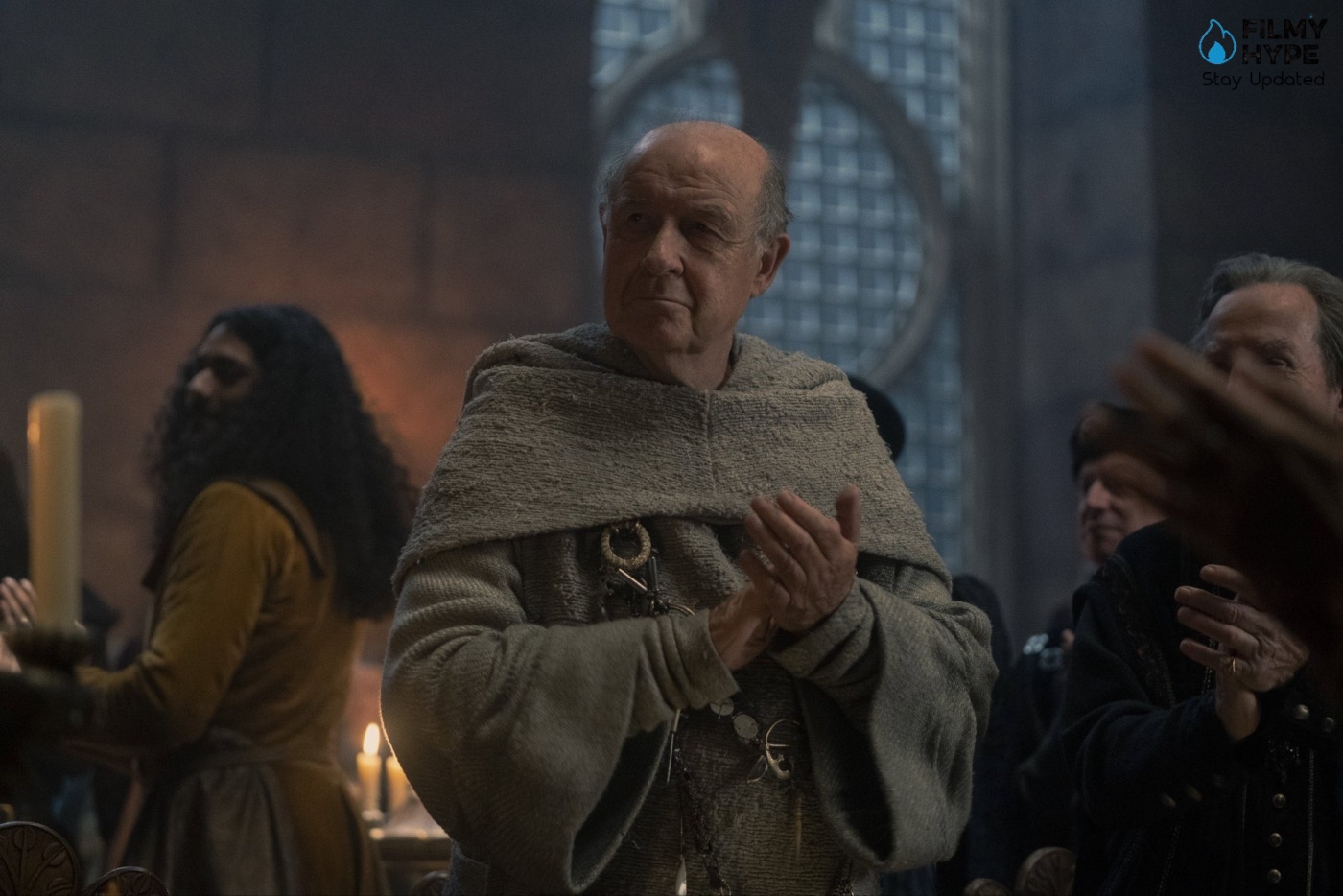
Grand Maester Mellos (Image Credit: HBO)
So, what evidence is there of the Grand Maester’s Conspiracy in the House of the Dragon timeline to overthrow the Targaryens and kill their dragons? Many of the king’s injuries could have been simple cuts caused by the Iron Throne and shouldn’t have been difficult to heal. However, Mellos has failed for two decades, weakening the king throughout his reign. There is also the possibility that he orchestrated the deaths of Queen Aemma (Sian Brooke) and the infant Baelon to prevent the birth of a healthy male heir, though so far there is no evidence to prove this.
All the dragons born during this time, since they have been exposed to the maesters, are much smaller than even their most recent ancestors, which diminishes their effectiveness as weapons. While this is attributed to their growth in the dragon pits, when Daenerys Targaryen (Emilia Clarke) imprisoned Viserion and Rhaegal in Game of Thrones, they continued to grow. Furthermore, only half of all dragon eggs hatch, which is never attributed to any particular cause. If the Grand Maester’s Conspiracy exists and they are working to eliminate the Targaryen dragons, this would be an excellent place to start.
Perhaps more importantly, the question remains: why would the maesters be conspiring against the relatively peaceful reign of the Targaryens? Maesters possess superior knowledge of science and medicine, and the fact that they write most of the historical accounts—the source text for House of the Dragon is Fire & Blood, a historical account compiled from collected history books, many of which were written by maesters—makes them one of the most powerful groups in Westeros when magic is absent. However, in a world where magic exists, any man, woman, or child can find themselves with the ability to overthrow the established order and those who seek to maintain it. Therefore, it seems best for the Citadel to eradicate all forms of magic from the world.
The Targaryen Maesters and Dragons
At the end of A Feast for Crows, Sam Tarly arrives at the Citadel and meets a man named Marwyn the Wizard, an archmaester known for his eccentric behavior and expertise in magic. Marwyn is something of an outcast at the Citadel because he dabbles in the magical arts and because he spent years in the mysterious city of Assai. Nevertheless, Marwyn briefly questions Sam about his encounters with the White Walkers and then declares that he is leaving Oldtown to search for Daenerys:
“Who do you think killed all the dragons last time? Brave dragon hunters armed with swords? The world the Citadel is building has no place for sorcery, prophecy, or crystal candles, let alone dragons.”
By the end of A Dance with Dragons, and presumably by the end of House of the Dragon, almost all the dragons will be dead. So, perhaps the series will offer clues about the supposed Grand Maester’s Conspiracy, and fans will be able to discover if Marwyn was right. Did the maesters use their influence to try to kill the dragons, who have no place in the world they are trying to build?
It’s worth noting that the Hightowers are one of the most powerful houses during the Dance of the Dragon and are supported by the maesters because they rule Oldtown. There are many scenes where Mellos is seen talking to or exchanging glances with Otto Hightower and his brother Hobert.
While this doesn’t mean the Grand Maester’s Conspiracy is a fact, it’s a detail that could come into play later on. In the Game of Thrones and House of the Dragon universe, many people despise dragons. While they are the source of magic and power for House Targaryen, everyone else is powerless to stand against them if the time comes. And that time will come, sooner or later.
House of the Dragon: The Maesters’ Role in Viserys’ Death
In episode 8 of House of the Dragon, “Lord of the Tides,” Lord Corlys Velaryon (Steve Toussaint) is said to be near death from “blood fever” in a message delivered to Princess Rhaenys (Eve Best) by Maester Kelvyn (Haqi Ali), who received the news from another unnamed maester. This exchange makes it clear that the control of information, over which maesters wield power, could easily turn the tide of any war. In this case, their words trigger the battle for the Driftmark throne between Ser Vaemond Velaryon (Wil Johnson) and Lucerys Velaryon (Elliot Grihault).
Before his death, Viserys was in very poor health. Without knowing the details of his suffering, it is still perplexing that his condition is so dire, given that he has the best maesters in the Seven Kingdoms tending to him. When Daemon Targaryen (Matt Smith) smells the King’s tea, he discovers it’s heavily laced with poppy milk, which certainly keeps the King confused enough for Otto Hightower and the Queen to rule in his place, as well as slowly poisoning him.
Maesters prepare many brews at the request of those they serve. Some of these infusions are meant to prevent pregnancy, as the one offered to Rhaenyra and a handmaid, and some to alleviate pain, like the King’s. However, no one can tell if their brews are the ones requested or some other tea with a sinister purpose. The fact that the King is well enough to appear for Rhaenyra and prevent the Greens from striking him first after he misses a dose of his poppy milk seems to imply something nefarious.
Regardless of the cause, whether by the maester’s design or not, King Viserys’s death will ignite a civil war that will greatly contribute to ridding the world of both dragons and Targaryens. It is not only the King: the maesters of King’s Landing, Driftmark, and Dragonstone hold the lives of all the major contenders for the Iron Throne in their hands in the course of their duties.
If any of them were to die, whether from a long illness, war wounds, or childbirth, no one would claim them. Perhaps this is where the Grand Maester’s true Conspiracy lies: in his potential to silently affect the lives of the most powerful people in the realm without raising suspicion or blame, and his ability to hide behind his chains and control the fate of the world.