


The End of Oak Street Ending Explained: David Robert Mitchell’s The End of Oak Street has finally arrived in theaters, and the ending is going to generate a lot of conversation. Not because it’s ambiguous in the way It Follows was, where the horror simply keeps following you into the credits. This ending is stranger and more complicated. It involves time travel, a death that isn’t quite permanent, and a paradox the film deliberately refuses to resolve. By the time the credits roll, you’ll have watched the Platt family survive dinosaurs, cosmic anomalies, and the collapse of everything they knew. But what actually happened in those final minutes—and what it means for the characters—requires some careful unpacking.
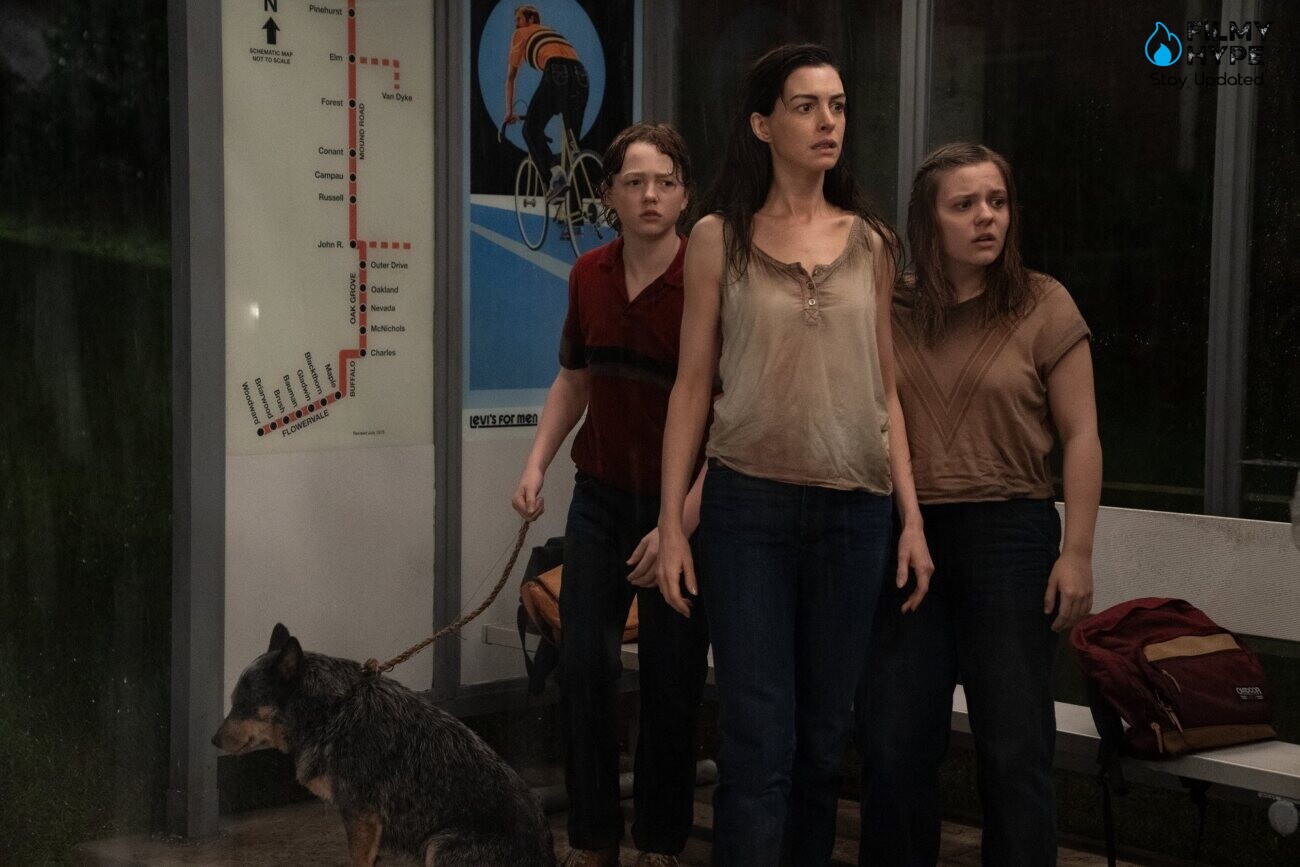
The End of Oak Street Ending Explained: What Happens to Greg and the Paradox That Changes Everything
Written and directed by the director of It Follows and Under the Silver Lake, who for the first time is grappling with a medium-to-high budget film and especially science fiction, The End of Oak Street tells the story of a family from suburban America in the 1980s (so dear to the author) who suddenly find themselves catapulted into the Jurassic era along with their entire neighborhood. As seen in the trailer for The End of Oak Street, together the protagonists will have to find not only a way to survive velociraptors, tyrannosaurs, and other prehistoric monsters, but above all a way out of the nightmare and a way home to the present.
If you haven’t seen the film yet, stop reading now. This is a full spoiler breakdown of the finale.
The Basic Setup
The premise of The End of Oak Street is straightforward: a mysterious cosmic event tears a suburban neighborhood from its normal place in time and space, dragging it into an environment populated by prehistoric creatures. The Platt family—Denise, played by Anne Hathaway, and Greg, played by Ewan McGregor—are at the center of the chaos, along with their two children. The film spends most of its runtime following their struggle to survive in this hostile landscape, fighting off dinosaurs and trying to understand what happened to them.
What caused the anomaly? The film never fully explains it. There are references to solar activity and strange storms, and the event coincides with an impossibly bright light. But Mitchell, true to form, is more interested in the aftermath than the mechanics. The mystery isn’t the point. The family is.
How Does Greg Die?
Greg Platt dies in the prehistoric world. This is the most devastating moment in the film, and it happens while Greg is trying to protect Denise. During one of the creatures’ attacks, he initially manages to fend off a dinosaur, but the tables turn. Greg is killed while saving his wife. Denise is left alone with their two children and the other survivors, forced to continue without him.
For a while, it seems like this is the film’s final word on Greg. The family has lost its anchor. The survival story continues, but something essential is gone. And then the movie reveals it’s been holding something back.
How Denise Gets Home
The same anomaly that brought Oak Street into the past is still out there. In the finale, Denise and the other survivors manage to reach what appears to be a sphere or passage of energy connected to the cosmic event. By crossing through it, they’re able to leave the prehistoric world.
But they don’t return to the moment they left.
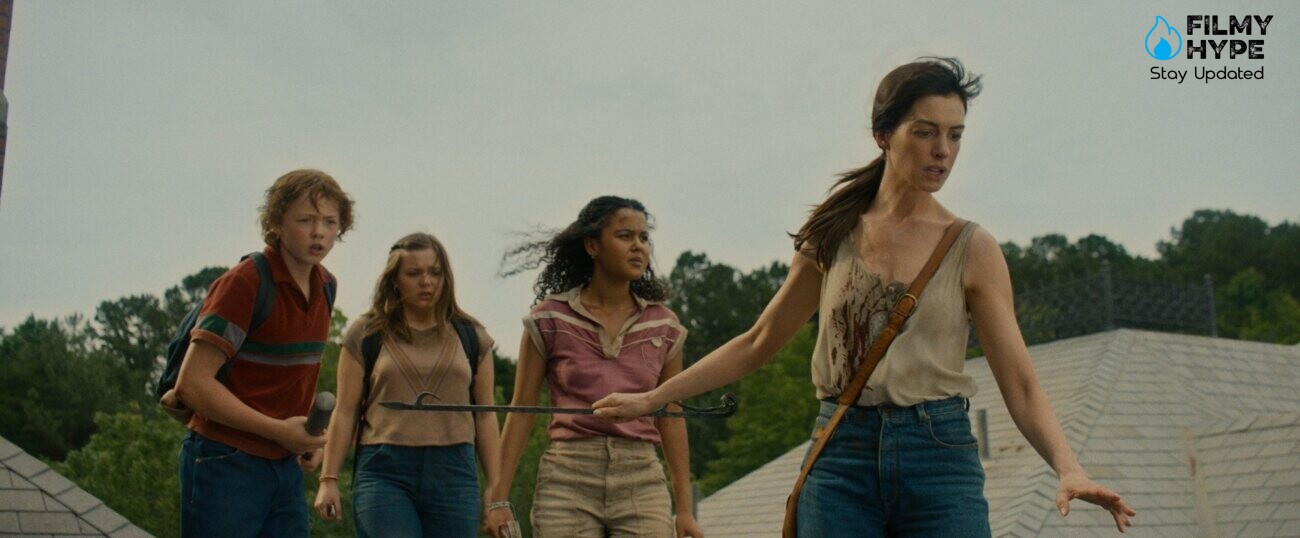
Denise reappears in the present approximately twenty minutes before Oak Street was originally dragged into the past. She’s not coming home after the fact. She’s coming home before it ever happens.
This changes everything. For the first time, Denise isn’t just reacting to the crisis. She knows exactly what’s about to occur. She has twenty minutes.
Why Denise Orders a Pizza?
This is the detail that everyone will be talking about. Before the anomaly, Greg is going through a difficult time. He’s been working as a delivery driver. Denise, realizing she has a narrow window to save him, sends a delivery request that pulls Greg out of the Oak Street area at the exact moment the cosmic event occurs.
She can’t prevent the anomaly. But she can change who gets caught in it.
Greg, in this new version of events, never gets dragged into the past. He never fights the dinosaur. He never dies. The Greg we followed through the prehistoric world is gone. The Greg we see safe at the end belongs to the minutes before the event, the version who never experienced any of it.
This isn’t a resurrection. It’s a prevention. Denise has gone back far enough to change the circumstances of her husband’s death before it ever happens.
Does She Save the Neighbors Too?
As much as she can. Once Denise realizes she’s returned twenty minutes early, she tries to warn other residents of Oak Street, getting as many people out of the neighborhood as possible before the anomaly hits. She can’t erase what she experienced. She can’t stop the event itself. But she can use her knowledge to reduce the damage, to keep people from being dragged into the nightmare she just escaped.
It’s a shift in perspective for the character. For most of the film, Denise has been a victim, reacting to forces beyond her control. In the finale, she finally has an advantage. She knows what’s coming. And she uses that knowledge.
The Paradox the Film Leaves Open
Here’s where things get genuinely weird. If Denise, her children, and the other survivors return twenty minutes before the anomaly, their original versions should still exist in that timeline. The Denise who was living her normal life twenty minutes before the event didn’t disappear just because a future version of her arrived. Which means, for a brief window, there should be:
Two Denises? Who died?
Two versions of each child
Two versions of every character who returned from the past
The film doesn’t resolve this. At least one secondary character makes the duplication evident—there are moments where the version who came back through the anomaly and the original version are suggested to exist simultaneously. The movie isn’t operating on a model of time travel where the past is simply rewritten. It’s allowing for the possibility of coexistence.
This is probably the aspect of the ending that will generate the most debate. It’s not a mistake. It’s a deliberate choice. Mitchell is playing with the implications of time travel rather than tidying them away.
Two Years Later?
The film makes a final time jump. Two years after the events on Oak Street, Denise has turned her experience into a book. She’s recognized for helping save several residents through her warnings. The family is living what looks like a normal life again.
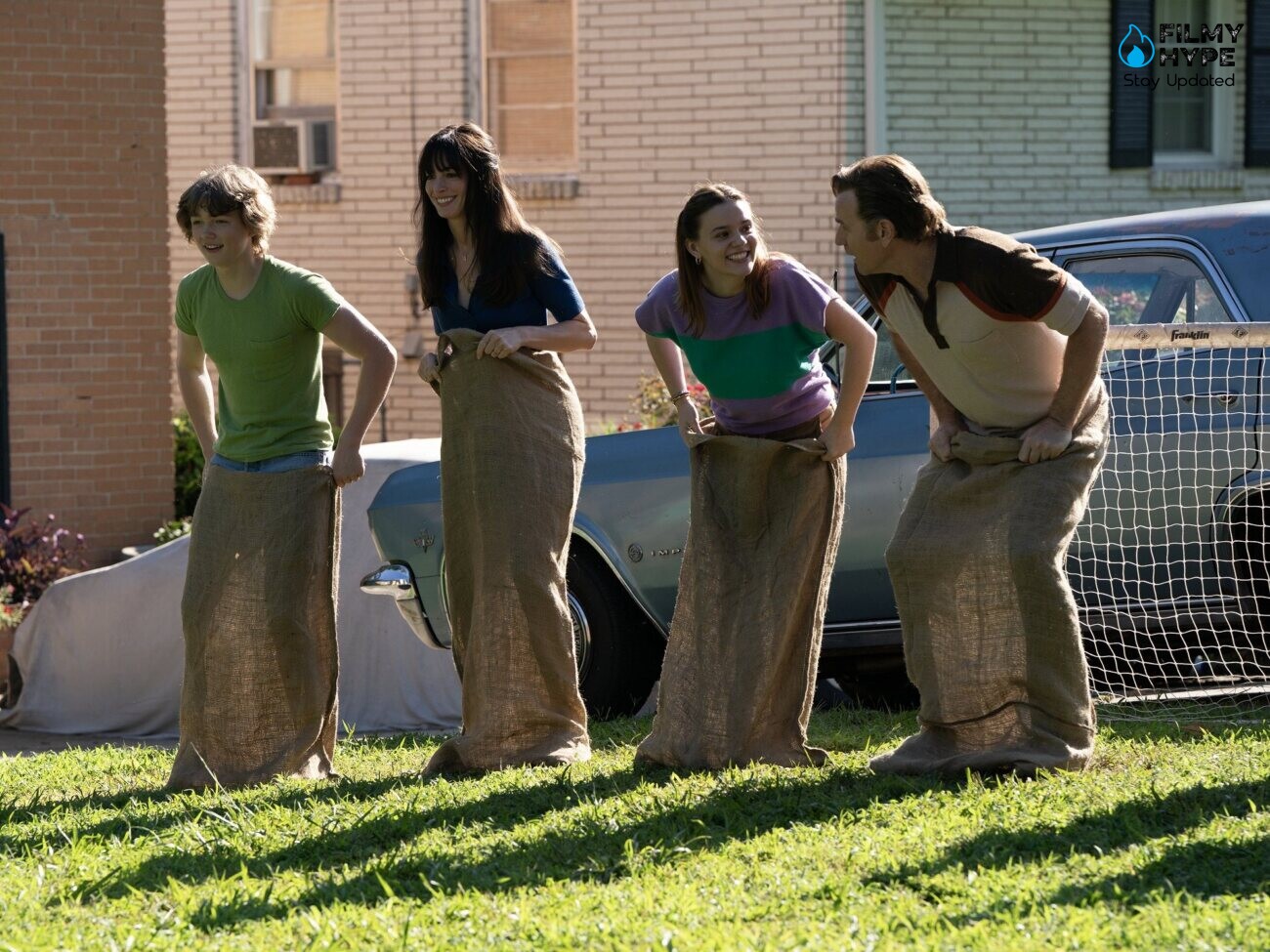
But the viewer knows something that makes this normality complicated. Somewhere, in some timeline, Greg died. The Platt family spent days surrounded by dinosaurs millions of years in the past. That experience didn’t get erased. Denise remembers it. The children remember it. The book she’s written is a way of processing an event that, technically, no longer happened—or at least, didn’t happen to the people now living this ordinary life.
The film doesn’t pretend the trauma is gone. It just shows that the family found a way to keep going.
Is There a Sequel Coming?
The ending leaves room for one. The origin of the anomaly is still unexplained. The paradox of duplicate versions is unresolved. The phenomenon can apparently connect different eras, and we don’t know how far it reaches or what else it might pull through.
But the film doesn’t end with a sequel tease. There’s no final scene establishing a larger universe or setting up a franchise. The story of the Platt family concludes. Denise and Greg are together. The children are safe. The neighborhood, or what remains of it, is recovering.
Whether the movie returns for another chapter is an open question. But the ending works as an ending. The mystery doesn’t need to be solved for the story to feel complete.
What It All Means
At its core, The End of Oak Street is a family story. The dinosaurs are terrifying. The time travel is mind-bending. But the emotional engine is simpler: what would you do to protect the people you love?
Denise can’t stop the catastrophe. She can’t explain it. She can’t undo the trauma she and her children experienced. But she can save Greg. She can warn the neighbors. She can use the knowledge she gained through suffering to make the world just slightly less broken.
The film’s final message isn’t about solving the mystery. It’s about what you do when you finally have the chance to act. Denise gets twenty minutes. She uses them.
The paradox lingers. The anomaly remains unexplained. The experience of the prehistoric world doesn’t disappear. But the family survives. Greg is alive. And for a movie that spends so much of its runtime taking everything away from its characters, that’s as close to a happy ending as David Robert Mitchell is ever likely to give us.