


Moria Netflix Ending Explained: The Netflix series Moria doesn’t try to make its subject easy to understand. It presents Moria Casán as she’s always been: contradictory, magnetic, impossible to pin down. Over eight episodes, the show traces her rise from the revue theaters of Argentina to her status as one of the most recognizable and polarizing figures in Latin American entertainment. But the final stretch of the series focuses on something that even Moria‘s most devoted fans might not fully remember: the arrest in Paraguay, the nine days in prison, and the scandal that briefly threatened to end everything she’d built.
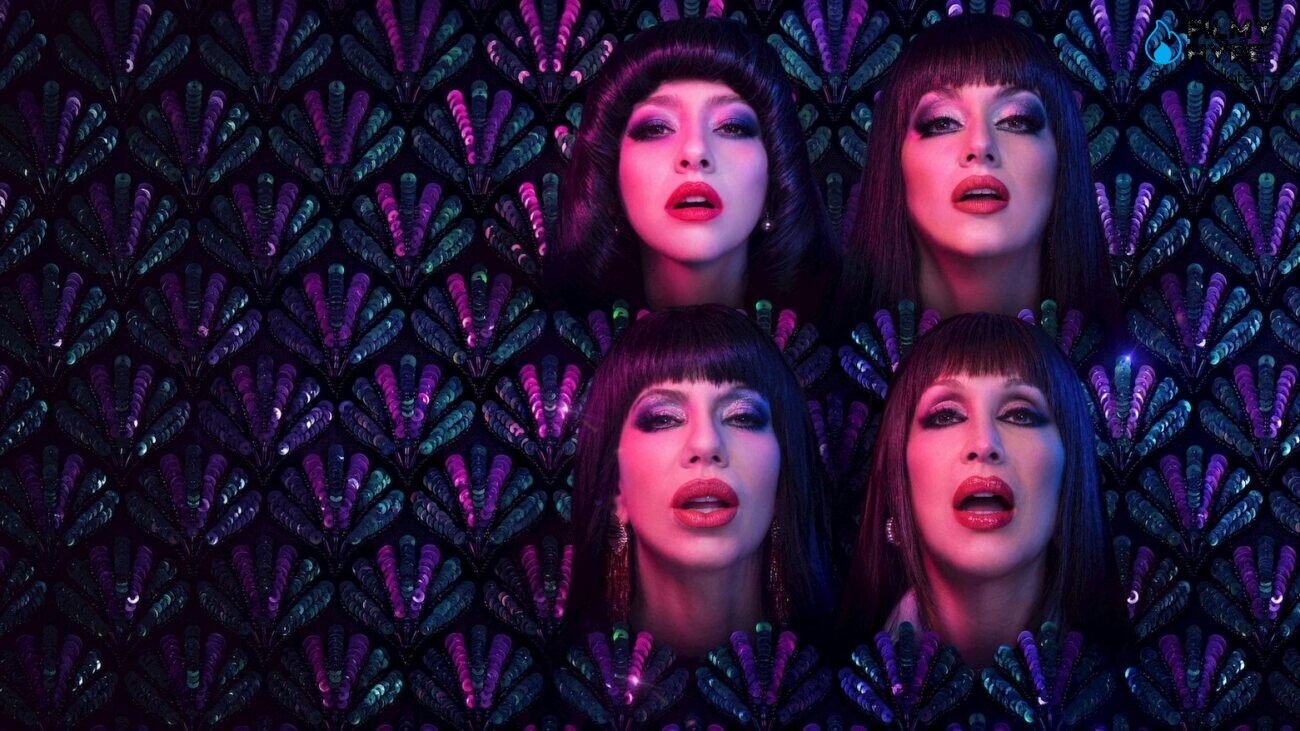
The series uses that arrest as its climax, not because it represents a fall, but because it demonstrates the central thesis of the entire project. Moria Casán doesn’t get destroyed by scandals. She absorbs them. Every controversy, every public humiliation, every personal disaster becomes another layer of the mythology she’s spent decades constructing. The imprisonment in Paraguay isn’t an ending. It’s just another chapter in a story that refuses to conclude.
Moria Ending Explained: What happens with Mario Castiglione?
Before the arrest, the series traces how Ana María Casanova became Moria Casán. She abandons her law studies, walks away from the conventional path her family might have imagined for her, and throws herself into the world of entertainment. Her weapons aren’t just her looks or her talent. They’re her refusal to censor herself, her willingness to say what others won’t, and a sexuality that she wields with deliberate provocation.
Her popularity grows. She becomes an icon for the LGBTQ+ community, not because she courts them strategically but because her whole persona—the excess, the defiance, the refusal to apologize for existing loudly—resonates with people who’ve been told to keep themselves small. She doesn’t set out to be a gay icon. She becomes one by being herself, unapologetically, and the community recognizes something in that.
But the rise has costs. The series doesn’t shy away from the casualties.
What Happens Between Moria and Her Daughter Sofía?
Moria‘s relationship with Mario Castiglione, an actor and writer, produces her daughter Sofía. But their professional lives complicate everything. When television executives decide that Mario is a liability for Moria‘s career, she separates her work from his. The romantic relationship doesn’t survive the professional split. Mario later admits he still loved her, and he takes some responsibility for the breakup, but the damage is done. They remain linked through Sofía, though the connection is strained.
The series treats this as one of the central tensions in Moria‘s life. She wants love. She wants family. But she also wants the career she’s built, and the career keeps demanding sacrifices that the people around her aren’t always willing to make. Mario isn’t presented as a villain. Neither is Moria. They’re just two people whose ambitions and needs stopped fitting together.
Later, Moria‘s relationship with businessman Luis Vadalá follows a similar pattern. Years together, and then it ends when she discovers he’s been lying about his financial situation and using money from her for his own businesses. Again, the series doesn’t turn him into a monster. He’s just another person who couldn’t match the scale of what Moria represents.
Why Does Moria End Up Detained in Paraguay?
The most painful relationship in the series is between Moria and her daughter. Moria pushes Sofía toward the spotlight from a young age, projecting her own ambitions onto the girl. When Sofía grows up and starts dealing with the consequences of fame—the scrutiny, the pressure, the personal struggles that come with being Moria Casán’s daughter—the tension explodes publicly.
The series doesn’t offer a clean resolution. Sofía remains part of Moria‘s life, but the relationship is complicated in ways that can’t be fixed with a single conversation. Moria‘s dominant personality has shaped her daughter’s existence, and the series doesn’t pretend otherwise. There’s love there. There’s also damage. The two things coexist, the way they so often do in real families.
Does Moria Finally Get Out of Prison?
The Paraguay story begins innocuously enough. Moria participates in a promotional event for a jewelry store. After the event, the owners report that several pieces she wore have gone missing. Moria denies stealing anything, and the series suggests the jewelry issue was a setup—the owners used the artist’s presence to report the pieces as stolen and collect insurance.
But then something else happens. During the investigation, police search her belongings and find 1.6 grams of cocaine in her bag. The jewelry case may have been a scam, but the drugs are real, and possession charges are enough to put her in custody.
Moria enters the Buen Pastor women’s prison in Asunción. Initially denied bail, she faces the possibility of a long legal battle in a foreign country. What happens next is, in retrospect, exactly what you’d expect from Moria Casán. Many of the inmates recognize her immediately. Her arrival becomes a media event. The prison becomes another stage.
She stays for nine days before being released on parole. Then she leaves Paraguay and returns to Argentina.
What the Ending Means
The series could have used the arrest as a cautionary tale, a moment of reckoning where Moria finally confronts the consequences of her excess. It doesn’t. Because that’s not what happened, and Moria is too honest to pretend otherwise.
Instead, the imprisonment becomes the ultimate demonstration of what the series has been arguing all along. Moria Casán cannot be destroyed by scandal because scandal is the medium she works in. She’s spent her entire career turning controversy into content, transforming public outrage into another layer of her persona. The arrest in Paraguay isn’t a fall from grace. It’s another story she gets to tell, another chapter in a mythology that’s been under construction for decades.
The woman who entered the prison was already famous. The woman who left nine days later was even more famous. The scandal didn’t diminish her. It amplified her.
The Survivor
What the series ultimately suggests is that Moria‘s genius—if you want to call it that—is her ability to metabolize anything. Sentimental failures. Family confrontations. Professional betrayals. Legal trouble. None of it destroys the character she’s built. It all becomes part of the character.
The ending doesn’t present her time in prison as the worst thing that ever happened to her. It presents it as just another thing that happened, another obstacle she absorbed and turned into something usable. Moria doesn’t survive scandals by avoiding them. She survives by being bigger than them.
The final moments of the series find her back in Argentina, her status as a media personality intact. The woman who started out wanting to be the center of attention has never stopped being one. For better or worse, the mythology endures. The arrest didn’t break her. Nothing has broken her. And the series suggests, with a certain amount of admiration and a certain amount of unease, that nothing will.
The real story of Moria Casán isn’t about a fall. It’s about a refusal to fall. The scandals come and go. The spotlight stays. And the woman at the center of it all keeps moving forward, incorporating everything into the performance, never apologizing, never slowing down. The prison was just another stage. The show goes on. It always does.