


Umthetho Ending Explained: Netflix’s South African series Umthetho arrived with a premise that feels both specific and universal: a prosecutor who believes in the law, forced to confront what happens when the law fails the people she loves. Over seven episodes, the show builds a dense web of corruption, family obligation, and moral compromise, all centered on Mbali, a woman who starts convinced that justice can be found within the system and ends up discovering that the system was never built to deliver it.
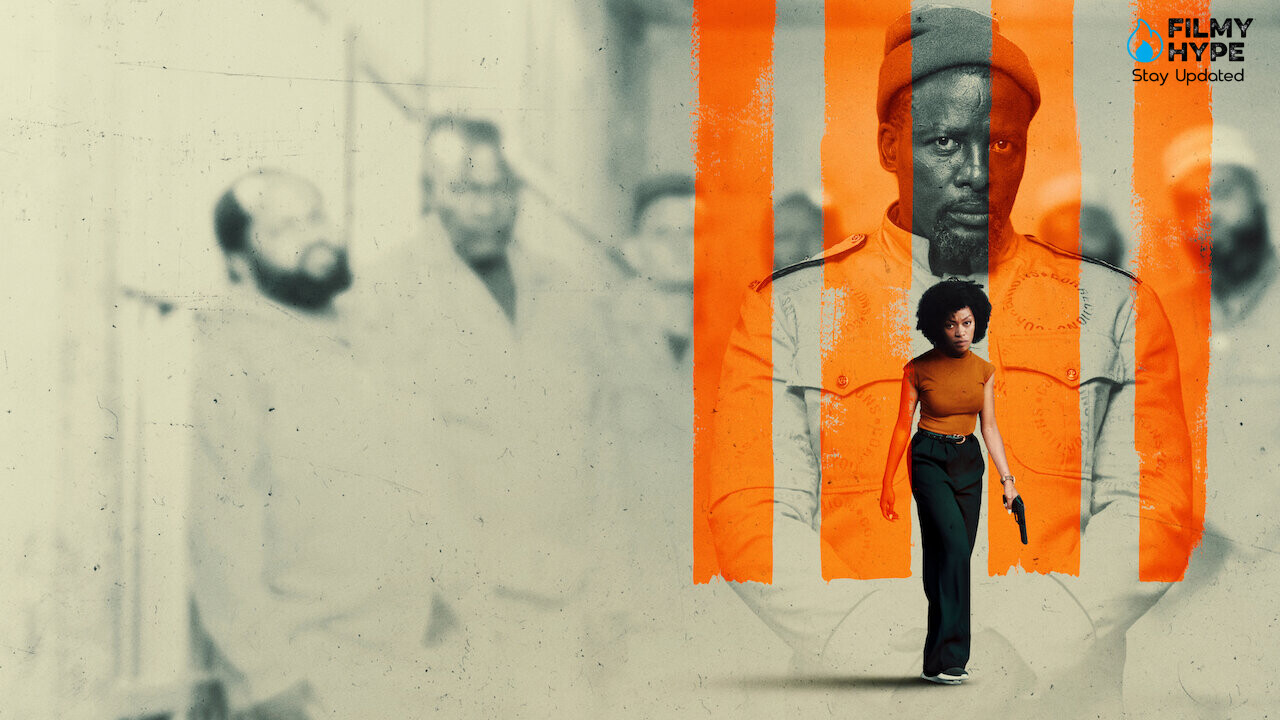
The ending has left audiences reeling, not because it’s ambiguous in the way some prestige dramas are, but because it forces viewers to sit with an uncomfortable truth. Mbali doesn’t escape her circumstances. She doesn’t find a clever legal solution that preserves her integrity. She crosses a line that she spent the entire series insisting she would never cross. And the show doesn’t offer her a way back.
Umthetho Ending Explained: What Happens to Mbali?
Mbali begins the series as a prosecutor, someone who’s built her identity around the idea that the law can be a tool for justice. Her brother Moses is the opposite: a criminal, someone who operates outside the system, someone Mbali has spent years defining herself against. The distance between them isn’t just circumstantial. It’s philosophical. She believes in institutions. He believes in survival.
The final episode puts that belief to the test. Crystal uses Sphelele, Mbali‘s younger brother, as leverage. She forces Mbali to confront Detective Tau, the man who’s been investigating the corruption that surrounds them all. The confrontation takes place at the police department, where Crystal and Mbali have gone to destroy evidence.
Crystal tells Mbali to shoot Tau. For a moment, it seems like Mbali might refuse—that she might find another way, that the law might somehow save her. But Tau manages to overpower Crystal, and Mbali, seeing no other option, makes the choice that redefines her entire character: she shoots him. Tau dies. Crystal dies in the ensuing chaos. Mbali walks out with the gun still in her hands.
The scene is deliberately structured as a mirror of Moses. Mbali has spent the whole series insisting she’s different from her brother, that her commitment to the law makes her something other than the criminal he’s become. But when her family is threatened, she reaches for the same tool he would have used. The violence she once condemned becomes, in her hands, the only available response.
What Happens to Moses and Sphelele?
While Mbali is making her devastating choice, Moses is fighting his own battle inside the prison system. He manages to expose some of the corruption that’s been festering there—evidence of abuse, of a massacre, of officials like Agnes who’ve been complicit in the violence. The information reaches the public, increasing pressure on the authorities and forcing a reckoning that’s been building all season.
Moses also confronts Scarra, a prisoner who collaborated with the warden. The fight ends with Scarra dead, killed by Moses. After that, Moses consolidates control among the inmates, using the information he’s revealed to demand better conditions. It’s a victory, of sorts, but it’s won through the same violence that put him in prison in the first place. The series doesn’t pretend otherwise. Moses isn’t redeemed. He’s just more effective now.
Sphelele’s kidnapping is the catalyst for everything. His situation demonstrates how easily the family can be used as a weapon, and it explains—without excusing—why Mbali makes the choice she makes. When someone you love is in danger, the moral calculus shifts. The lines you thought were fixed start to blur. Mbali discovers this in the worst possible way.
What Happens During Moses’ Escape?
Moses and his men use a tunnel built from the outside to escape from prison, but the police are already waiting for them thanks to the information provided by Mbali. Agnes takes advantage of the situation to turn the operation into a real massacre, and he personally shoots Moses.
Afterwards, the authorities manipulate what happened and publicly present the escapees as responsible for the confrontation. But Moses is not dead: survives the shooting and ends up imprisoned again. Mbali then understands that she has been used. They intended to avoid a tragedy, but their decision has helped Agnes and Tau execute their own plans.
How Does Crystal Die?
Crystal discovers that Mbali was the one who betrayed her husband’s escape plan and decides to take revenge. After confronting her, Mbali manages to convince her to go to Detective Tau’s apartment, supposedly to destroy the evidence he keeps against Moses.
Actually, Mbali prepares a trap. Upon entering, he deliberately leaves a blood mark on the wall to warn Tau that something is happening. When Crystal tries to surprise the detective, he is already prepared. After a confrontation, Tau manages to subdue Crystal and ends up strangling her to death.
What About Warden Agnes?
Meanwhile, Moses continues to have problems inside prison. Scarra tries to take advantage of his weakness to gain control and orders Zola to kill him, but he remains loyal to Gaz’lam and helps Moses set up a trap.
They fake his death and manage to lure Agnes to her cell. When the warden arrives convinced that she has finally gotten rid of her enemy, Moses takes her hostage.
The situation also leads to a confrontation between Moses and Scarra. Scarra insists on resolving their differences through a fight, and Moses ends up killing him, although later he asks the other prisoners to abandon this spiral of violence and remain united in the face of the abuses of the authorities.
The prisoners then use Agnes to force the political leaders to negotiate. Its main requirement is clear: they want her to be removed and for her rights and dignity to be respected.
Finally, the authorities accept the conditions, and Agnes is removed from her position in exchange for the release of the hostages.
What the Ending Means
Umthetho doesn’t offer a happy resolution. It doesn’t provide the comfort of seeing justice done, of watching the corrupt get their comeuppance while the righteous walk free. Instead, it leaves Mbali in a position of profound uncertainty. Her career as a prosecutor is compromised. She’s now a fugitive, running from the consequences of killing a detective. The law she believed in can’t protect her anymore—not because the law is inherently corrupt, but because she’s now on the wrong side of it.
The closing question is whether Mbali will find a way out or whether she’ll end up repeating her brother’s path. The series doesn’t answer this. It can’t. The point isn’t to resolve Mbali‘s story; it’s to leave the audience sitting with the same question that’s been hovering over the entire season.
How much of our own morality are we willing to sacrifice to protect the people we love?
Mbali‘s answer, in the end, is almost everything. She sacrifices her career, her principles, her identity as someone who believed in the law. She becomes, in the final moments, the thing she spent her life opposing. And the show refuses to tell us whether that transformation is tragic or necessary.
The Mirror
The relationship between Mbali and Moses is the spine of the series, and the ending brings it into sharp focus. They’ve been positioned as opposites from the beginning—the prosecutor and the criminal, the woman who believes in systems and the man who believes in force. But the finale reveals that they’re not opposites at all. They’re the same person, responding to the same pressures in different ways.
Moses turned to crime because he saw no other way to survive. Mbali turned to the law for the same reason. When the law fails her, she doesn’t become a better person. She becomes her brother. The violence was always there, waiting for the right circumstances to surface.
The series doesn’t judge her for this. That’s what makes it so unsettling. It understands that morality is conditional, that the lines we draw are only as solid as the circumstances that hold them in place. Mbali didn’t shoot Tau because she wanted to. She shot him because the alternative—losing her family—was unbearable. The choice was wrong, legally and morally. But the series asks you to imagine yourself in her position. What would you have done?
The Uncertainty
The ending leaves Mbali running. She has the gun. She has the knowledge of what she’s done. She has no plan, no exit strategy, no way back to the life she built. The show doesn’t tell us whether she gets caught, whether she escapes, whether she somehow finds a way to live with what she’s become. It just ends, with Mbali in motion, carrying the weight of her choice.
That uncertainty is the point. Umthetho isn’t interested in resolution. It’s interested in the moment when the mask slips, when the identity you’ve constructed for yourself collapses under pressure, when you discover that you’re capable of things you never imagined. Mbali‘s story ends not with a verdict but with a question. The series trusts the audience to sit with that question, to feel its weight, to understand that some choices don’t have clean endings.
The show’s title, Umthetho, means “the law” in Zulu. The law was supposed to be Mbali‘s refuge. It was supposed to be the thing that separated her from the chaos around her. But the law, the series suggests, is only as strong as the people who enforce it—and when those people are corrupt, when the system is broken, when the choice comes down to principle or family, the law becomes just another thing you can lose. Mbali loses it. She loses everything. And the series ends with her still running, still carrying the gun, still trying to outrun the person she just became.