


Bad Lieutenant: Tokyo First Look: The “Bad Lieutenant” franchise shouldn’t exist. That’s not a criticism. It’s just a statement of fact. Abel Ferrara’s 1992 original, starring Harvey Keitel as an unnamed, drug-addicted, profoundly corrupt NYPD detective spiraling through a crisis of faith, was never designed to launch anything. It was a singular, grimy, deeply Catholic howl of a movie—the kind of personal, uncompromising work that doesn’t leave room for sequels. Ferrara certainly never wanted one. When Werner Herzog picked up the basic concept seventeen years later for Bad Lieutenant: Port of Call New Orleans, reimagining it as a darkly comic vehicle for Nicolas Cage’s particular brand of unhinged genius, Ferrara famously wished the filmmakers would “die in Hell” for their trouble.
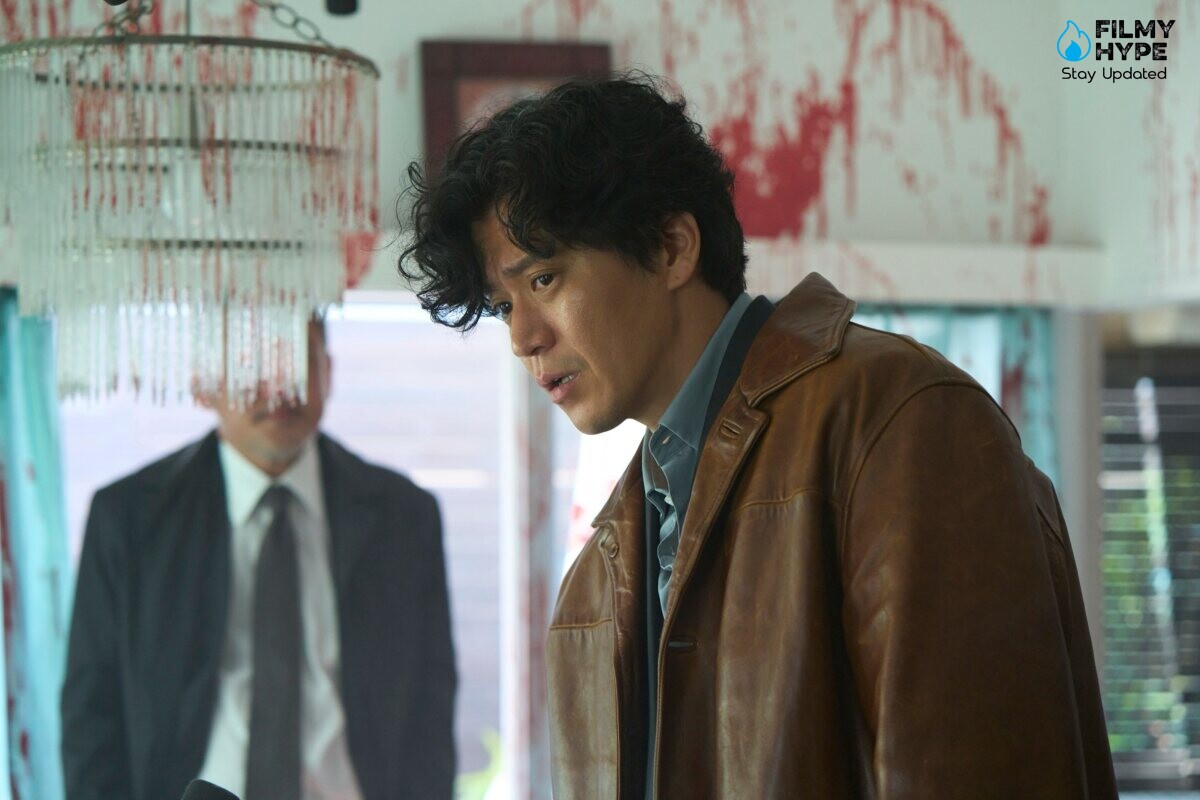
Bad Lieutenant: Tokyo First Look — Takashi Miike Takes the Franchise Into Uncharted Territory
Both films survived the curse. They’re now regarded as two very different but equally fascinating takes on the same loose premise: a cop so thoroughly compromised that the line between lawman and criminal has become meaningless. Now a third filmmaker is taking his swing at the concept. If anyone was going to make sense of this strange, unofficial, deeply unlikely franchise, it was probably going to be Takashi Miike.
The first images from Bad Lieutenant: Tokyo have arrived, ahead of its world premiere at the Toronto International Film Festival in September and eventual U.S. release through NEON. Miike, the director behind Audition, Ichi the Killer, and 13 Assassins, has built a career on material that makes other filmmakers flinch. His presence at the helm of this project immediately changes the conversation around what a Bad Lieutenant movie can be.
The Cast: An Unlikely Trio
The casting choices alone suggest Miike is taking the franchise somewhere it’s never been. Shun Oguri, known to international audiences from Godzilla vs. Kong and a long career in Japanese film and television, plays the disgraced detective at the center of the story. He’s the kind of actor who can project moral exhaustion without tipping into melodrama—a useful quality when you’re playing a character whose defining trait is having abandoned any pretense of integrity.
Alongside him are two performers whose presence in a Takashi Miike crime thriller would have been hard to predict. Lily James, who broke out in Baby Driver and has since moved between period dramas and action fare, appears in a role the production is keeping vague—described only as an FBI agent with some connection to the case. James has spent recent years proving she’s more versatile than her early ingenue roles suggested, and Miike’s chaotic energy could push her into genuinely new territory.
Then there’s Liv Morgan, the WWE star who’s been building an acting career alongside her wrestling work. Casting a professional wrestler in a serious crime thriller might seem like stunt booking, but Miike has never been a filmmaker who cares about conventional credibility. He’s interested in presence, in the strange alchemy that happens when you put unexpected performers in proximity and let the tension build. Morgan’s role hasn’t been detailed, but Miike’s history with physically demanding performances suggests she won’t just be standing around looking tough.
The supporting cast is comprised of Japanese talent that knows how to navigate Miike’s distinctive rhythms. Shotaro Mamiya, Shuhei Nomura, Nanase Nishino, and Yuka Mukai round out the ensemble. The screenplay comes from Daisuke Tengan, a longtime Miike collaborator whose credits include Audition and 13 Assassins. That pairing—Miike and Tengan, working together again—is the strongest signal yet that Bad Lieutenant: Tokyo isn’t going to be a polite, respectful homage. It’s going to be dangerous.
What the Story’s About
The plot follows a disgraced Tokyo detective pulled into a web of corruption, addiction, and violence. The case that consumes him involves a vengeful former yakuza member, a mysterious FBI agent, and the disappearance of a young woman from a powerful American family. The elements are familiar enough—the compromised cop, the crime that becomes an obsession, the institutions that are supposed to uphold justice but mostly just complicate things—but the relocation to Tokyo and the involvement of the yakuza suggest Miike is going to ground this story in specifically Japanese criminal underworld dynamics.
The yakuza have been a recurring subject throughout Miike’s career, and he’s always treated them less as exotic villains and more as participants in a system of violence that’s both highly structured and fundamentally irrational. The presence of a former yakuza member as a central figure in the plot suggests the film will explore the intersection of institutional corruption—the police, the FBI, the wealthy American family—with the more ritualized brutality of organized crime. That’s rich territory for a filmmaker who’s spent decades examining how violence operates as both a social structure and a psychological compulsion.
What Miike Brings to the Franchise
The Bad Lieutenant films, for all their differences, share a core idea: a police officer so thoroughly lost that the only thing keeping him moving is the case in front of him. Ferrara’s version was Catholic, agonized, a man drowning in guilt he couldn’t process. Herzog’s version was absurdist, a man so disconnected from conventional morality that his behavior became a kind of deranged performance art. Both films understood that the corrupt cop story works best not as a procedural but as a character study—a portrait of someone whose job has permitted him to act on his worst impulses, and who has long since stopped trying to resist.



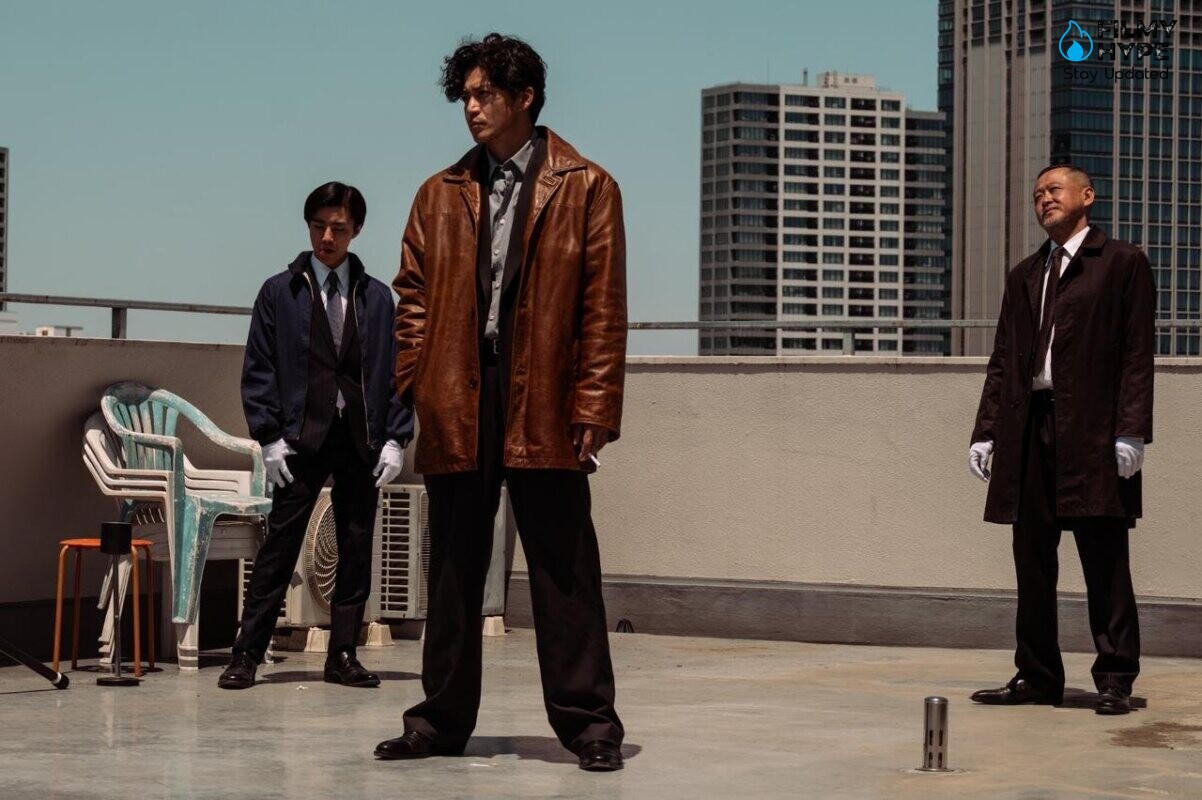
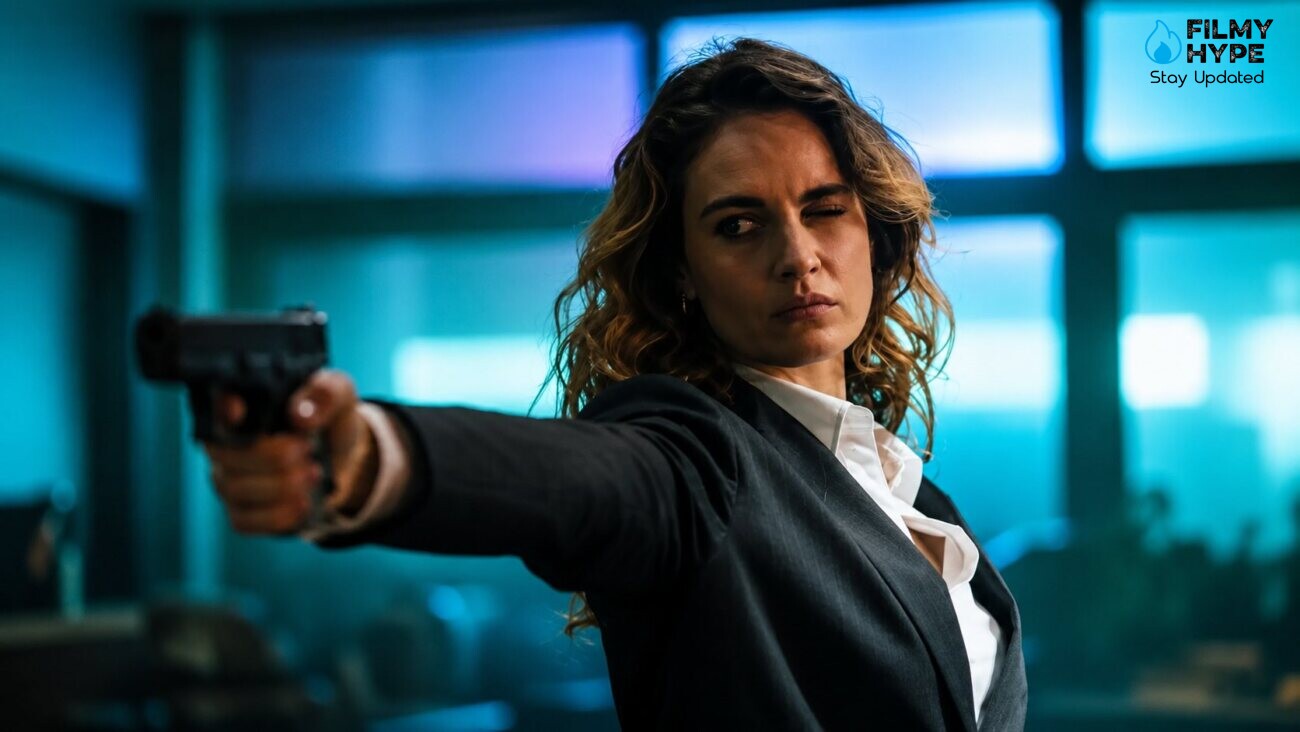
Miike is perfectly suited to this material. His films have always been interested in the relationship between violence and identity, in the way people construct themselves through the things they’re willing to do to others. His corrupt cop won’t be a Catholic penitent like Keitel’s or a manic force of nature like Cage’s. He’ll be something stranger—a man whose disintegration follows a logic that might not be immediately visible but will, by the end of the film, feel inevitable.
The images released so far show Oguri in various states of unraveling. The lighting is harsh. The spaces are cramped. Tokyo, in Miike’s framing, looks less like a gleaming metropolis and more like a series of traps—alleyways that don’t lead anywhere, rooms that feel too small for the violence they contain. This is Miike operating in the register of his crime films rather than his more outlandish horror work, but the boundary between those modes has always been thin in his filmography.
The Premiere and What Comes Next
Bad Lieutenant: Tokyo will have its world premiere at the Toronto International Film Festival in September, with NEON handling the U.S. release. TIFF has long been a launching pad for films that blur the line between genre and art cinema, and Miike’s presence there suggests the festival sees this as more than just a crime thriller with a recognizable title.
The film is being positioned as a standalone story rather than a direct sequel to either the Ferrara or Herzog versions. It shares thematic DNA with its predecessors—the corrupt cop, the consuming case, the sense of watching someone destroy themselves in real time—but the relocation to Japan and the involvement of the yakuza make it its own thing entirely. You won’t need to have seen the earlier films to understand what’s happening, though familiarity with them will deepen your appreciation of how radically Miike is reimagining the premise.
For Miike, whose filmography now stretches past a hundred titles and encompasses horror, crime, children’s films, musicals, and things that resist easy categorization, Bad Lieutenant: Tokyo represents both a continuation of his long-running interest in criminal underworlds and an unexpected entry into a franchise that has no right to exist but keeps producing fascinating work anyway. Ferrara might not approve. But then, Ferrara didn’t approve of Herzog either, and that turned out fine.
The Bad Lieutenant name now covers three films by three radically different filmmakers, each taking the same basic concept and bending it toward their own obsessions. Miike’s obsessions—violence, identity, the systems that create the very corruption they claim to fight—are a natural fit. The first images suggest he’s made something that honors the spirit of the franchise by refusing to be beholden to it. That’s exactly what a Bad Lieutenant movie should do.