


The finale of Below takes what looks like a classic survival story about a sea creature and turns it into something much larger: a story about environmental collapse and about the relationship between people and the land they live on. The horror series, set in Newfoundland, builds its mystery around a giant iceberg that appears without warning off the coast of a small fishing community. Its arrival lines up with a string of unexplained events—deadly attacks, a strange illness spreading among residents—until a tentacled creature is finally discovered lurking in the deep. But when protagonist Calvin Penney manages to ward off the danger, the story doesn’t end in clean victory.
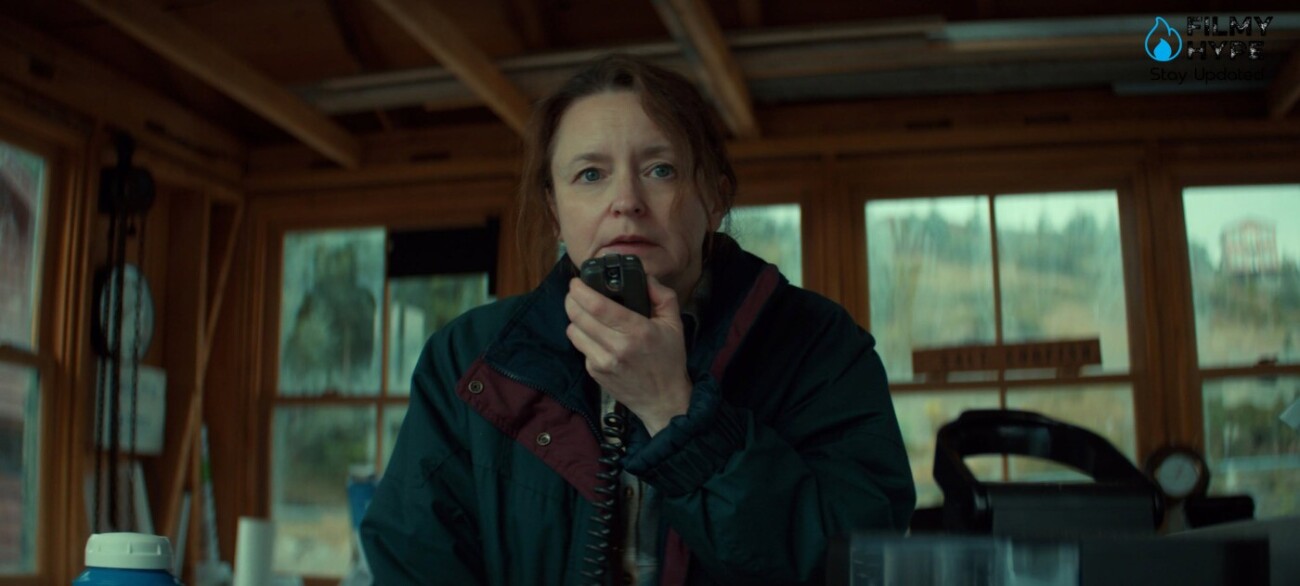
The final shot, in which Calvin and his family spot a line of additional icebergs on the horizon, suggests this was never an isolated incident. Making sense of that image means connecting three separate threads: the true nature of the creature, the Penney family’s past, and the economic interests quietly threatening Snook’s Arm’s survival. The giant squid isn’t simply a monster that arrived to destroy the town. It’s an animal that’s been forced out of its own habitat, and its presence is a symptom of a much broader crisis. Meanwhile, as the community fights to defend itself, it discovers it’s been the victim of a system that views the land as nothing more than a resource to be extracted.
Below Series Ending Explained: The Icebergs Are Nests? The Squid Is Protecting Its Eggs?
Calvin’s story is defined by a tragedy in 1986, when residents of Little Pot Rock were forced to relocate to Snook’s Arm under a government resettlement program. During the sea transport of the family’s house, the building sank, taking Calvin’s father, Leo Penney, down with it. The official explanation blamed structural problems, but Calvin, then a child, saw something moving beneath the surface. Forty years later, as the new community faces yet another potential relocation, that same presence seems to have returned. That connection initially makes the creature look like a recurring curse, something destined to follow the family.
The massive iceberg appearing in front of Snook’s Arm’s harbor is the first concrete sign of danger. Calvin, who earns his living harvesting ice, had previously given marine biologist Fonda Howander an unusual sample—one his main buyer rejected as unfit for human consumption. Her analysis reveals it isn’t ordinary ice at all but a mucous-like substance produced by an enormous living organism. As attacks at sea multiply and images of a tentacled creature surface, Fonda realizes they’re dealing with a giant squid—quite possibly the same animal connected to Leo’s death.
The decisive discovery only arrives in the series’ final stretch: the iceberg isn’t a natural formation. It’s a nest, built from organic material and eggs. The creature never came to the town to hunt humans or claim territory—it came to lay eggs, and it’s trying to protect them. That revelation changes how every earlier attack reads in hindsight. When Wade and Jerry Biles open fire on the iceberg, for instance, they aren’t just provoking an aggressive animal—they’re threatening the creature’s only chance at reproduction. Its violence becomes a defensive response, even though the consequences for the town remain devastating.
Calvin’s solution grows directly out of that new understanding. While the military prepares an airstrike that risks destroying the entire port, he decides to move the nest away himself, using his boat and a large net. With help from his family, he drags it far enough out to lure the squid away from shore. The plan works because Calvin stops treating the creature as an enemy to be eliminated and instead recognizes its maternal behavior. Snook’s Arm isn’t saved through superior force—it’s saved through understanding what’s actually happening.
That doesn’t mean the squid gets a happy ending, though. The series makes clear its natural habitat lies deep in the Arctic, where cold temperatures allow its eggs to develop. Rising ocean temperatures and melting ice forced it south along the Labrador Current, eventually carrying it into waters unsuitable for reproduction. The creature dies after exhausting its energy, and the eggs never hatch. Calvin saves his town, but he can’t undo the environmental shift that caused all of this in the first place.
Who Is Mudder, Really?
For most of the series, Mudder is presented with all the standard trappings of a movie monster. She’s mostly unseen at first, glimpsed through fragments like a giant eye, tentacles breaking the surface, and the marks left on her victims. That approach feeds a fear built on not being able to comprehend what’s living in the deep.
Fonda’s first scientific theory identifies the creature as a possible Architeuthis dux, the real-world giant squid. Dr. Sayed later clarifies that Mudder belongs to a far older and more dangerous form of life, one that survived in conditions that would normally keep it away from human activity. References to the krakens of old maritime legends add a mythic dimension, linking modern science to the fears of fishermen from centuries past.
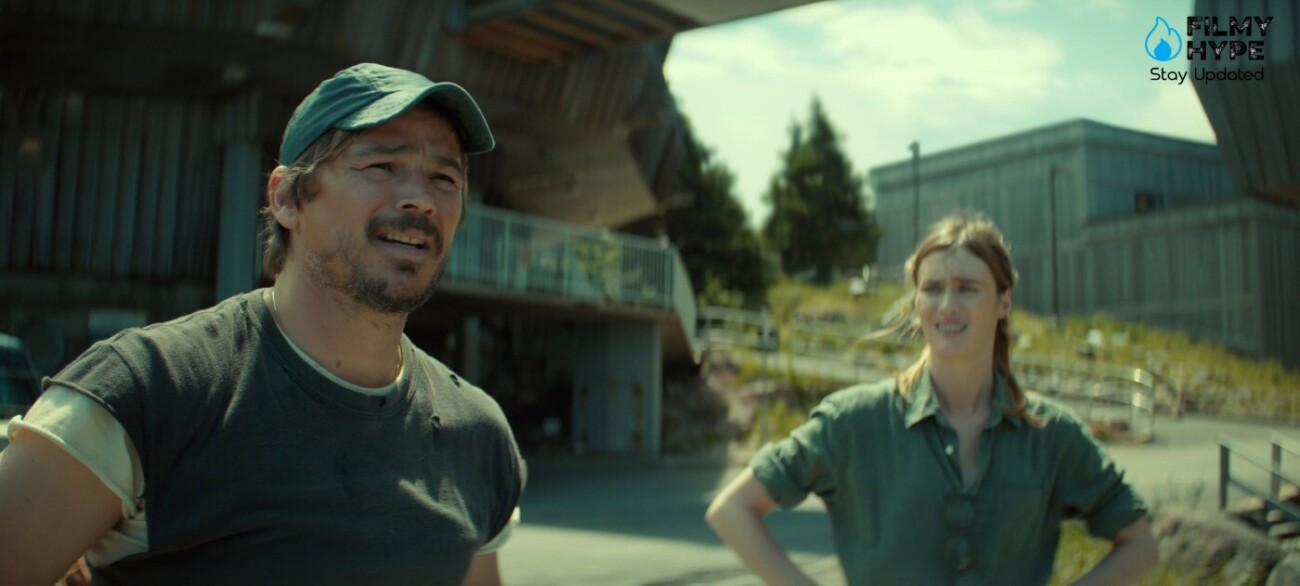
Mudder’s defining trait only becomes clear in the final episodes. She shows territorial behavior, notable intelligence, and a fierce drive to protect her lineage. When Steve Bruner and Dr. Sayed’s submersible tries to follow her, she even rids herself of the tracking device by severing the tentacle it was attached to, proving she can respond to human strategies.
So her behavior isn’t that of an animal driven only by a destructive urge. Mudder acts to survive, feed, and reproduce, like any other life form. The difference is that her size and abilities make that behavior incompatible with humans sharing the same water.
It’s worth not swinging too far the other way and turning her into a totally innocent creature. The squid kills many people, destroys boats, and indirectly causes further deaths through her secretions. The miniseries doesn’t whitewash any of that. Instead, it asks us to read her actions within a natural balance that’s already been disrupted. She doesn’t stop being dangerous once her motives are understood. She just stops being a malicious enemy.
That distinction is one of the show’s sharpest ideas. Nature can be deadly without being evil, because it doesn’t operate on the moral standards humans use to judge their own conduct. Mudder isn’t after revenge and doesn’t appear to assign ethical meaning to her victims. She protects what lets her survive, even when the results are tragic for anyone nearby.
What the Final Icebergs Really Mean?
When Calvin and his family head back out to sea to harvest ice, they find the horizon crowded with icebergs, almost forming a wall in front of the coast. After learning what the first one really was, the image is deeply unsettling: these could be more nests, belonging to other creatures pushed toward Snook’s Arm by the same forces. The series never directly shows another squid laying eggs and doesn’t confirm that every iceberg shares the same origin—but it frames the moment so viewers understand the danger immediately.
The point isn’t simply that Calvin may face more monsters. If the first squid arrived because its habitat became uninhabitable, then many possible nests suggest the problem could involve an entire population. What the townspeople initially read as a freak accident turns out to be the local face of a much larger change. The ocean is losing its balance, and the creatures that live in it are searching for new places to survive—inevitably colliding with human communities along the way.
That’s where Below breaks from the traditional rules of monster storytelling. The creature really is dangerous: it destroys boats, kills people, and produces a substance that causes an illness driving residents toward the sea. The series never softens that violence or pretends its victims should see the animal as harmless. But it separates moral responsibility from consequence. The squid acts on instinct, trying to protect its offspring. Humans, on the other hand, have the tools to understand the consequences of their choices—and frequently choose to ignore them anyway.
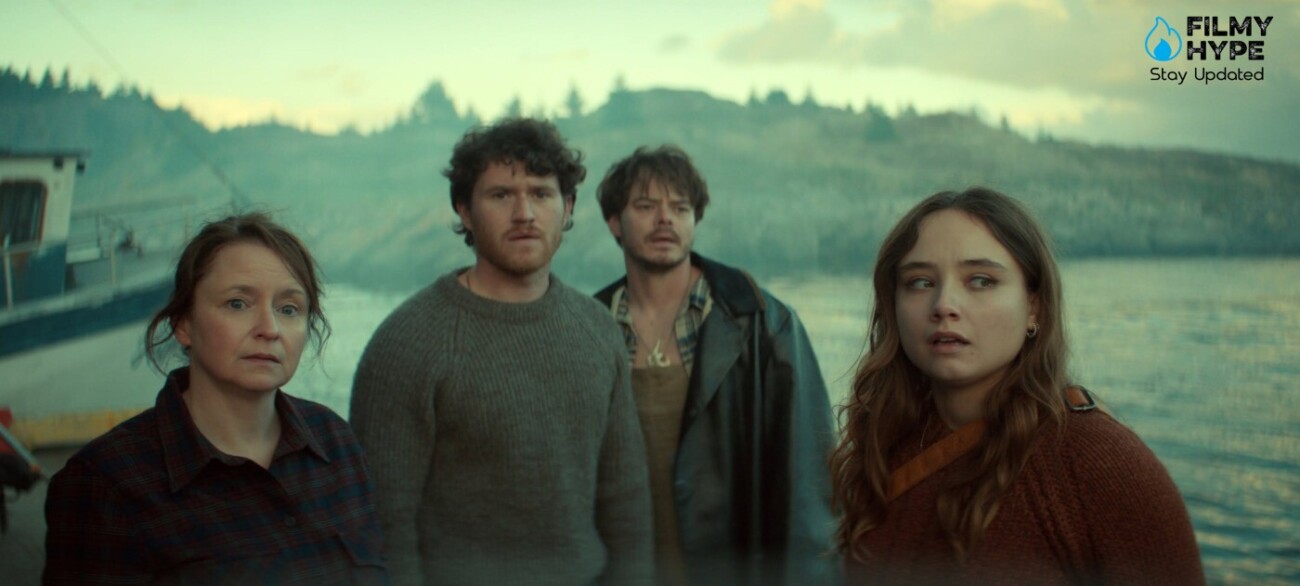
In that sense, the final icebergs become an image of inevitability. Calvin has proven that one conflict can be resolved without destroying the land or killing the creature, but his solution can’t be repeated forever. If the oceans keep changing, other species will seek refuge near human settlements, and new emergencies will follow. The ending doesn’t undermine his victory—it simply shows its limits. Saving Snook’s Arm from one attack doesn’t remove the conditions that made that attack possible.
Even the squid’s death carries meaning. The animal crosses an entire ocean searching for a place to give birth, only to arrive somewhere that can’t sustain its young. Its journey becomes a migration without a real destination—an escape from a compromised ecosystem that ends in the impossibility of reproducing. Its tragedy quietly mirrors, on a different scale, the situation facing the people of Snook’s Arm: both are trying to hold onto a home while larger forces push them out.
Calvin’s Past and the Crocker Plan: Who Gets to Stay Home?
The squid’s threat is tied from the start to another problem: a new resettlement project that could erase Snook’s Arm. Economic hardship and limited job prospects push part of the population toward accepting compensation to leave, while Calvin firmly refuses. His resistance could be read as simple nostalgia for the place he grew up, but the return to Little Pot Rock reveals something far more concrete underneath.
The earlier relocation wasn’t just a response to the community’s struggles. Crocker Brewery and Distillery had discovered valuable copper and cobalt deposits beneath the land and pushed for the residents’ resettlement so those resources could be exploited. That same strategy is now being repeated in Snook’s Arm: persuade the population to leave through financial compensation while concealing the true value of what’s underneath. The project isn’t really about modernizing a struggling community—it’s about transferring control of a territory from its inhabitants to a private company.
The squid’s arrival hands Crocker an unexpected opportunity. If the military destroyed the port to eliminate the creature, the town’s main economic lifeline would be gone, leaving many residents with no real choice but to accept the relocation offer. That’s why Crocker keeps pushing for the airstrike even after Calvin has already drawn the nest away. Eliminating the threat is no longer necessary to protect anyone — but it remains very convenient for those who want the land. The lieutenant’s final refusal to carry out the bombing is what stops the plan from succeeding.
This revelation completes the parallel between the people and the sea creature. The squid has been displaced from its habitat by environmental transformation; the residents of Little Pot Rock and Snook’s Arm are being pushed out of their homes by economic interests that treat land as a commodity. In both cases, the people and animals who live somewhere gradually lose the ability to decide their own futures. The key difference is that the animal’s migration is a consequence of ecological crisis, while the community’s displacement is also the product of deliberate political and economic choices.
That gives Calvin’s arc a deeper meaning. As a child, he watched helplessly as he lost his home and his father, without fully understanding what happened. As an adult, he faces a similar situation, but this time he has the means to act. By saving the port and preventing the bombing, he doesn’t just protect his family — he interrupts, at least temporarily, the same mechanism that destroyed his original community. And thanks to the discovery of the mineral deposits, the townspeople now understand the true value of the land Crocker wants, and can negotiate with far greater awareness.
Still, even this victory is provisional. The company continues pursuing its goals through legal channels, and the town’s economic future remains far from secure. Much like with the iceberg, the ending distinguishes between solving an emergency and removing its root causes. Calvin manages to keep his family’s history from repeating exactly as it did before, but he can’t erase the forces that continue to threaten the community.
That’s why Below‘s final image is more unsettling than any squid attack. The icebergs filling the horizon don’t just suggest new monsters might appear — they suggest the world the characters know is changing faster than they can control. The sea, which has always given Snook’s Arm both its identity and its survival, has become the place where the consequences of a broken balance are showing up.
The ending leaves Calvin and his family’s fate open, but it closes the series’ argument cleanly. The real horror isn’t the unknown creature in the deep. It’s learning that the creature is desperately trying to survive in a world that can no longer host it — while human beings keep repeating the same patterns of exploitation that make their own lives increasingly fragile.
Climate Change Is the Real Engine of the Story?
Climate change in Below isn’t just the explanation for why the creature appears. It touches nearly every part of life in Snook’s Arm. The community is already struggling before the squid starts attacking boats. Fishing, which for generations provided jobs, food, and cultural identity, no longer offers the same prospects. Calvin has to look for other income and turns to harvesting ice, while resettlement is pitched as the answer to the town’s troubles.
So environmental decline doesn’t only show up through spectacular events. Even before Mudder arrives, the land and sea are already changing, and residents are dealing with the economic and social fallout. The traditional way of life looks less and less sustainable, and families are forced to choose between leaving and trying to reinvent themselves.
The miniseries also raises the possibility of a collapse in Atlantic Ocean circulation, linking it to global climate change. That echoes a real scientific concern: the weakening of the Atlantic meridional overturning circulation, or AMOC, a system of currents that helps spread heat across the Atlantic. The show uses a dramatized version, imagining extremely fast and violent consequences.
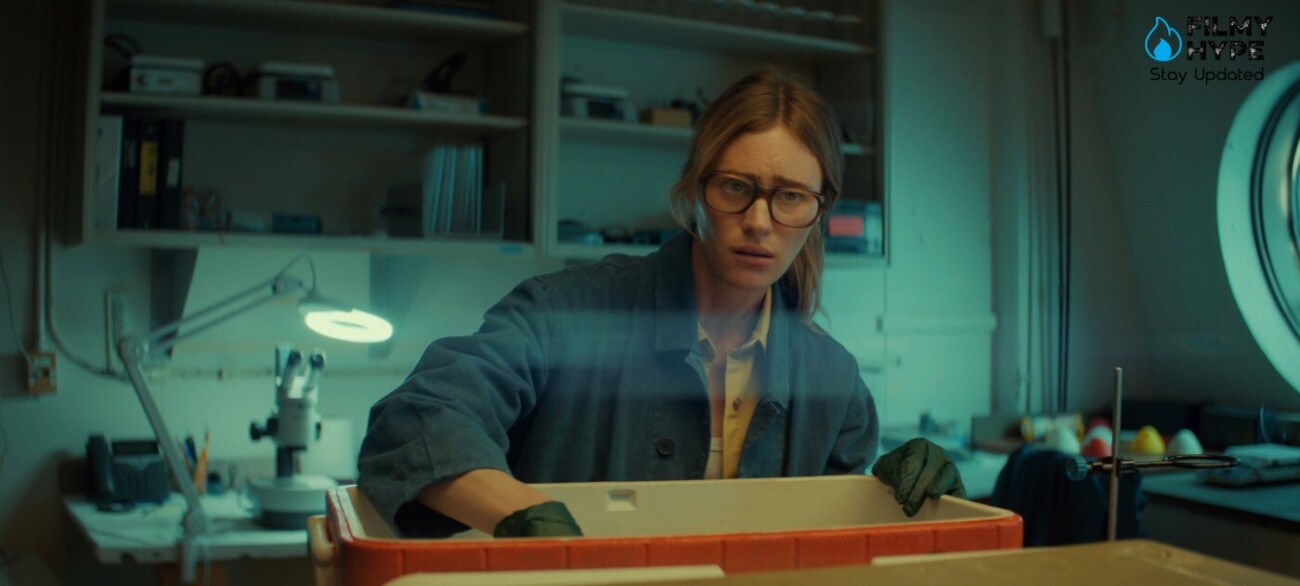
What matters is that the oceans aren’t treated as a fixed backdrop. They’re dynamic systems that marine life, climate, and human activity all depend on. Changing temperatures can shift where species live, alter food availability, and make environments that supported certain balances for centuries inhospitable.
That makes climate warming the story’s true systemic antagonist. Unlike Mudder, it can’t be led away by towing an iceberg offshore, and it doesn’t vanish when a local emergency ends. It’s still present after the finale, as the new icebergs on the horizon show. It’s a problem bigger than any individual character, and none of Snook’s Arm’s residents can fix it alone.
That reading matches comments Mackenzie Davis made during promotion for the series, where she stressed the importance of weaving the climate theme into the story without turning it into an explicit lecture.
Nature Isn’t the Enemy: The Monster Gets Flipped?
One of the finale’s biggest shifts is how it asks viewers to rethink the relationship between people and the natural world. In the early episodes, Calvin sees Mudder as the main cause of his pain. She’s tied to his father’s death, the wrecked boats, the danger to his children, and the possible erasure of his community. Killing her seems like it would solve everything.
The ending shows how incomplete that view was. Mudder didn’t come to Snook’s Arm to hunt Calvin or take revenge on the residents. She’s responding to environmental conditions that threaten her survival and her young. Her aggression grows out of a forced overlap between human territory and an animal that needs specific conditions to reproduce.
The reflection gets sharper when you look at how the humans behave. Fishermen catch marine animals for a living, researchers try to study Mudder despite serious risk, and businesspeople want to mine the region’s underground for profit. Each character, in different ways and for different reasons, views nature through the lens of their own needs. The giant squid does something similar, defending her habitat and trying to secure her young’s future.
The show doesn’t claim all these actions are morally equal. But it does challenge the assumption that nature must bend to human needs. Mudder becomes monstrous mostly when she collides with the townspeople, yet from the animal’s perspective, it’s the humans who are the invasive presence.
That gives Calvin’s final act extra weight. He can’t save the town by asserting dominance over the creature. He saves it by understanding what she needs. Only when he gives up on killing her does he find a solution that protects both his family and the animal. Victory isn’t the destruction of the monster. It’s the possibility of coexistence built on respecting each other’s space.
Why Does Mudder Cause Hallucinations?
Another key piece of the story is the creature’s secretions. From the early episodes, the ice Calvin harvests has an odd ammonia smell and is first judged unfit for commercial use. Fonda’s tests show the substance contains organic material, while residents start developing increasingly disturbing symptoms.
Those include heavy sweating, uncontrollable thirst, mental confusion, hallucinations, and self-destructive behavior. Wade, after direct contact with the creature, is haunted by visions of Maggie, while Barry, the researcher who analyzed the samples, steadily loses control until he throws himself into the sea. The danger, in other words, doesn’t only come from the cephalopod’s physical attacks. It also spreads through its secretions in places humans live and work.
The most telling example involves ice used in drinks. Something first treated as a profitable resource ends up as the route by which contamination reaches the community. The story draws a cause-and-effect line between trying to exploit an unfamiliar natural substance and the unpredictable consequences of using it.
Narratively, the hallucinations also introduce a murky dimension somewhere between supernatural horror and biological science fiction. The figure of the Old Witch seems at first to belong to local legend, but as the story develops, it suggests the characters’ experiences may also be shaped by the psychoactive effects of Mudder’s secretions.
The miniseries doesn’t fully explain every piece of this. The appearances and the bond between Wade and Maggie keep an enigmatic quality that adds to the story’s mood. Still, the contamination works as another sign that humans can’t fully control what they don’t understand. Even a seemingly harmless substance can become devastating when it’s brought into everyday life without knowing what it is.
The Real Antagonist: The Crockers’ Economic Interests?
If Mudder is the most visible threat, the ending reveals another danger that has been hanging over Snook’s Arm all along. The Crocker family, which controls major economic activity in the region, has been encouraging residents to relocate not just because of the fishing downturn, but mainly to gain control of land rich in mineral wealth.
The discovery comes when Calvin, while at Little Pot Rock, finds documents about mining rights to a large cobalt and copper deposit. Moving the population would give investors access to resources worth far more than the compensation offered to families. The resettlement plan, pitched as a necessary step toward better living conditions, takes on a very different meaning.
It’s important to separate the two sides of this. Snook’s Arm’s economic struggles are real, and some residents genuinely want to leave. Ruth, for example, sees resettlement as a real chance at a more secure future, while Jay hopes to use the payout to clear his debts. The issue isn’t the choice to leave. It’s that people are being asked to make a life-altering decision without knowing the financial interests behind it.
When Mudder starts attacking the town, the Crockers see a chance to speed things up. The monster justifies military intervention, evacuation, and even a possible bombing of the area. What’s a tragedy for the residents becomes a convenient circumstance for investors.
This is one of the show’s sharpest accusations. Exploiting natural resources isn’t shown only through physical destruction of the environment, but through the power of economic interests to steer collective decisions. Land gets reduced to the value of the minerals underneath, while the history, traditions, and ties of the people who live there become afterthoughts.
In the finale, the lieutenant’s refusal to bomb the iceberg therefore carries meaning beyond ending the emergency. Once Mudder leaves, the immediate excuse for destroying the area vanishes. The Crockers lose their shortcut to what they want, and the community gains a clearer sense of what its land is worth. That doesn’t solve every financial problem, but it lets residents face them knowing a crucial part of the truth.
Little Pot Rock: When Respect for Nature Becomes Fanaticism?
Calvin and Wade’s time at Little Pot Rock adds another layer that keeps Below from becoming a simple story of innocent nature versus destructive humanity. The people of the abandoned settlement have built an unusual relationship with Mudder, treating her as an almost divine presence that provides food and protection in exchange for sacrifice.
Walton and his father use a device to summon the creature and appear to benefit from her presence, hauling in remarkable amounts of fish. Maggie shows extreme devotion to the monster and takes part in rituals that include the mutilation of Phil, who is meant to be sacrificed.
These characters embody a warped form of adapting to nature. Rather than trying to understand the animal’s behavior rationally, the people of Little Pot Rock have built a mythology around her, attributing a higher will to which all human action must submit. The result isn’t greater harmony with the environment. It’s a community ruled by fear, isolation, and violence.
The contrast with Calvin and Fonda is clear. They also conclude Mudder doesn’t have to be killed, but they get there through observation, comparison, and understanding her needs. The residents of Little Pot Rock turn her into an object of worship and justify cruelty in the name of devotion.
The series seems to suggest that the right relationship with nature isn’t total domination or blind submission. Understanding the natural world takes knowledge and the ability to recognize its dangers, without assigning it human intentions or moral meaning that don’t belong to it.
Calvin, Wade, and What Fatherhood Means in the Ending?
Alongside its environmental concerns, Below is mostly a family story. Calvin has built much of his identity around losing his father when he was a child. The houseboat accident didn’t just scar his childhood. It shaped how he approaches his own children.
For years, Calvin has tried to protect his family by keeping control of major decisions. His wish to buy a new boat and build a business for his kids comes from a genuine need to secure their future, but it also becomes a kind of imposition: he pictures a life others are supposed to share without checking whether it’s what they want.
His relationship with Wade shows this difficulty best. Calvin sees his son as vulnerable and tends to keep him out of risky situations, while Wade wants to be treated as someone capable of making his own choices. Being left out of the expedition and Calvin’s attempt to replace him on the research vessel, feed Wade’s frustration and widen the gap between them.
The turning point comes at Little Pot Rock, when Wade saves Calvin by killing Walton. In that moment, the dependence flips: it’s no longer only the father protecting the son, but the son proving he can protect his father. The experience forces Calvin to accept that Wade has grown up, and that continuing to treat him like a child could destroy their bond.
You can also read Calvin alongside Mudder. Both are parents desperately trying to protect their young. Both react aggressively when they sense a threat, and both risk causing painful consequences through that very protectiveness. Calvin only understands the creature when he recognizes in her an instinct that runs deep in himself.
So the ending isn’t just a reconciliation between father and son. It’s a change in what protection means. Calvin comes to see that loving Wade isn’t about shielding him from every danger, but about respecting his independence and learning to trust him. Their decision to work together on the boat again signals a relationship finally built on partnership rather than control.
Leo Penney’s Death: Trauma and the Fear of the Ocean?
The death of Calvin’s father, Leo, is the event the whole story grows out of. The miniseries opens with the young Calvin helplessly watching the houseboat sink, unable to save his father. For forty years he relives that moment through nightmares and memories, carrying a guilt that colors everything in his life.
Discovering Mudder’s existence finally gives a concrete explanation for what had long seemed unexplainable. The huge eye glimpsed beneath the house and the giant shadow slipping back into the water take on new meaning. Calvin’s childhood trauma wasn’t just the product of a scared kid’s imagination: something real was beneath the surface.
The trip to Little Pot Rock lets Calvin confront the most painful part of that memory. When Walton shows him Leo’s grave, Calvin confesses he feels responsible for his father’s death because he cut a rope during the accident. Walton helps him see that the act was necessary to survive, and that he couldn’t have prevented the tragedy without putting himself at risk too.
The significance of that exchange is mostly emotional. Calvin has spent much of his life trying to control his surroundings, as if he could stop an uncontrollable event like the one from his childhood from happening again. His attitude toward Wade, his stubborn insistence on staying in Snook’s Arm, and his urge to eliminate Mudder can all be read as consequences of that fear.
In the finale, Calvin doesn’t erase the past or get revenge for his father’s death. He finds a different way to live with the memory. The creature he’d tied to his family’s tragedy is recognized as a living being with needs of her own, while his relationship with Wade lets him break the pattern of passing his fears down to the next generation.
Why Do More Icebergs Appear in the Last Scene?
The last sequence reopens the mystery just as the story seems finished. Calvin and Wade are back to fishing together, the community has avoided forced resettlement, and Mudder is no longer an immediate danger. While out on the water, the two spot new icebergs in the distance.
The image works on several levels. As plot, it suggests Mudder may not have been the only creature of her kind to reach Newfoundland waters. If the first iceberg was her nest, other icy masses raise the possibility of more individuals or more breeding structures. But the series doesn’t show any new creatures and doesn’t confirm that each iceberg hides the same threat. That’s a deliberately open hypothesis.
On the environmental level, the meaning is clearer. The new icebergs indicate that the processes behind the emergency haven’t stopped. Warming oceans and changing polar regions keep altering the environment regardless of whether Calvin’s operation worked. Saving Snook’s Arm from one creature isn’t the same as solving the climate crisis.
The final scene also changes what ice means to the protagonist. At the start, Calvin saw icebergs mainly as a business opportunity, a resource for earning money and supporting his family. After learning what was inside the first one, he can’t look at them the same way. They’re now giant blocks of the unknown, demanding caution and respect.
The closing image suggests the natural world still holds dimensions humans don’t fully grasp. Even after one mystery is solved, others remain, and what looked like an exceptional event may turn out to be one piece of a much larger transformation. That ecological reading is also supported by insights published around the miniseries’ release.
What Does the Title “Below” Mean?
The title does more than point to the deep sea. For much of the story, the danger seems to live beneath the ocean’s surface, where Mudder hides before she strikes. But over six episodes, a second layer appears, tied to everything buried in the lives of the characters and the community.
Under the water is an unknown creature. Under the surface of the Penney family are decades of trauma, regret, and misunderstanding. Calvin has to deal with his father’s death, Wade with his need to be recognized, Jay with his debts, and Mary with the difficulty of rebuilding a family relationship after years apart.
The community hides something Below its surface too. The copper and cobalt deposit is wealth literally buried in the ground, and its value shaped the Crockers’ decisions. The documents Calvin finds reveal that the threat to the town’s future comes not only from the ocean but from interests residents never saw.
And beneath the ice lies the possibility of new life. What the townspeople take for an inanimate object conceals Mudder’s eggs, turning the story’s most unsettling element into an image of motherhood and survival.
The title can be read as an invitation to look past what’s immediately visible. Fear usually comes from the unknown, but understanding means digging deeper, getting past first impressions, and recognizing the complexity of what lies beneath events.
The Bottom Line: What Is Below Really Saying?
The finale closes Calvin Penney’s story with a choice that upends what the miniseries had set us up to expect. After spending most of the story trying to understand and fight the giant squid, Calvin finds that the answer isn’t to kill her but to let her return to an environment better suited to her needs. The creature first labeled a monster turns out to be a mother defending her young, and the real conflicts emerge from climate change and economic interests threatening the community.
Mudder’s story becomes a fantastical picture of what global warming can do. Melting ice, shifting ocean temperatures, and transformed habitats upset natural balances and create situations where different species come into conflict. Horror lets the show make visible an environmental problem that, in real life, usually unfolds through slower and more complicated processes.
At the same time, the Crockers’ storyline shows how exploiting natural resources can tangle with the economic hardship of the most vulnerable communities. Snook’s Arm risks disappearing not only because the sea is changing, but because its land is considered more valuable for what’s underground than for the people living on top of it.
The reconciliation between Calvin and Wade gives this reflection a more personal ending. Calvin learns that protecting someone doesn’t have to mean controlling them, and that understanding others’ needs can matter more than imposing his own decisions. It’s a lesson that applies both to fathers and sons and to humans and nature.
The central message of Below is that understanding what frightens us can change how we choose to deal with it. But the icebergs in the last shot are a reminder that awareness alone doesn’t automatically fix the world’s problems. Nature keeps changing, and people have to learn to live with consequences they can’t always predict or control.