

One of the things House of the Dragon does better than almost any other television show right now is explore how characters see each other—or more accurately, how they fail to. Rhaenyra Targaryen exists in the minds of the people around her as at least a dozen different women. To Alicent, she’s a threat wrapped in the memory of a childhood friend. To the smallfolk, she’s either a usurper or a rightful queen, depending on which rumors they believe. To her enemies on the Green Council, she’s a tyrant waiting to happen. To her sons, she’s a mother trying to hold the world together.
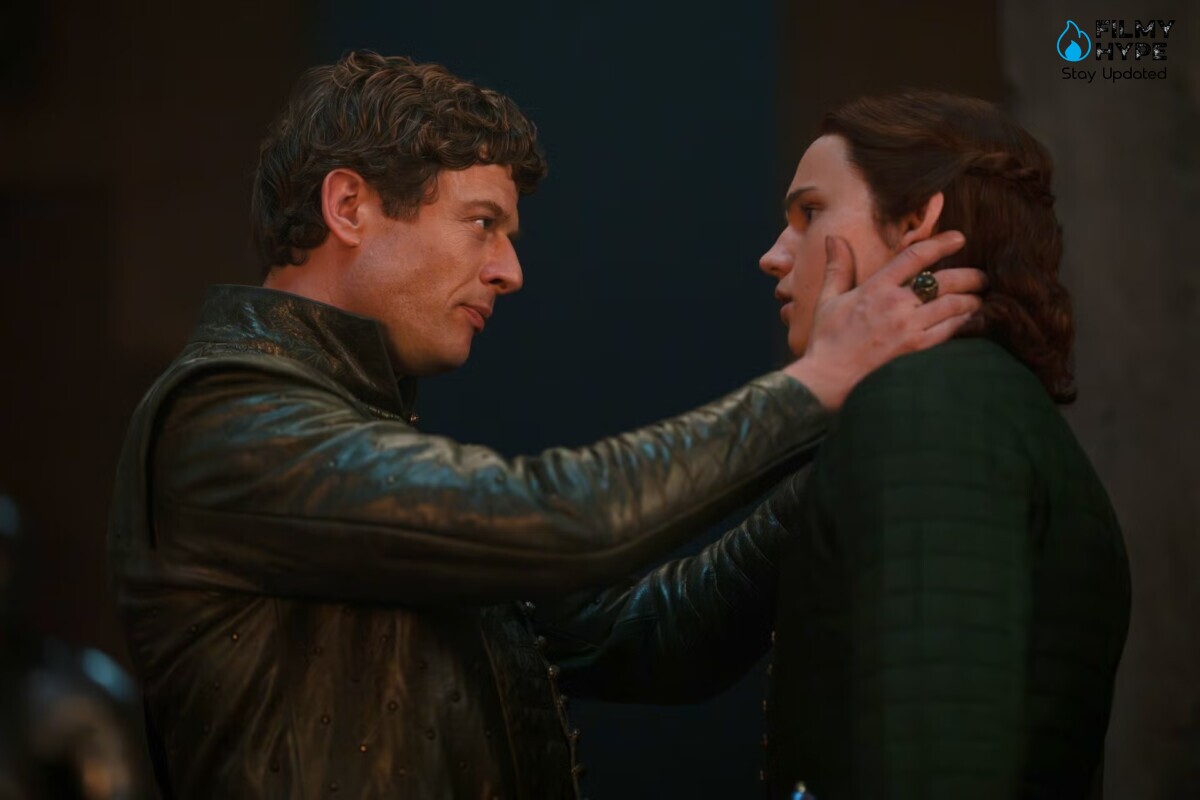
However, the show’s real brilliance emerges when it juxtaposes these external projections with the private reality of Rhaenyra’s actual relationships. Two characters in particular—Daeron Targaryen and Rhaena Targaryen—serve as unexpected mirrors for each other, revealing how war distorts perception and how the same woman can be seen as both savior and executioner depending on who’s doing the looking.
The Double Face of Rhaenyra: Alicent’s Daeron Hope Disguised as a Political Calculation?
Let’s start with Daeron, because he’s the Targaryen we’ve seen the least of and the one Alicent seems to be pinning her fragile hopes on. Daeron was sent to Oldtown as a child, raised away from the toxic atmosphere of King’s Landing, away from Aemond’s simmering resentments and Aegon’s self-destruction. By all accounts, he’s grown into something the other Green children never quite managed to become: gentle. Reasonable. The kind of young man who might be capable of breaking the cycle rather than perpetuating it.
Alicent clings to this idea. When she speaks of Daeron, there’s something almost desperate in her voice—not the pride of a mother boasting about her son, but the hope of a woman searching for evidence that not everything she touched turned to ruin. She wants to believe that Rhaenyra might spare Daeron precisely because he’s different. He wasn’t raised in the snake pit. He didn’t participate in the bullying and the scheming. If there’s any Green child who deserves clemency, surely it’s the one who had the least to do with the war’s origins.
But here’s the thing about Alicent’s hope: it’s still filtered through a political lens. She’s not really thinking about Rhaenyra as a person she once knew. She’s thinking about Rhaenyra as the Queen of the Blacks, a figure whose decisions will be determined by cold calculation and the brutal logic of dynastic survival. When Alicent imagines Rhaenyra showing mercy to Daeron, she’s imagining a political transaction—a concession granted because it serves some strategic purpose, not because Rhaenyra is capable of genuine compassion.
This says more about Alicent than it does about Rhaenyra. Alicent has spent so many years operating within the machinery of court politics that she’s forgotten how to think about people outside that framework. She remembers that Rhaenyra was once her friend, but she can’t quite believe that friendship could survive everything that’s happened. The girl who read storybooks with her under the weirwood tree has been replaced, in Alicent’s mind, by a rival monarch. And rivals don’t grant mercy out of love—they grant it out of calculation.
The books complicate this further. Book Rhaenyra is called “Maegor with teats” by her enemies, and not entirely without reason. She hardens as the war progresses. She makes choices that are cruel and politically disastrous. But the show has given us a Rhaenyra who is more recognizably human, more visibly torn between the demands of power and the instincts of a mother who has already lost too much. Alicent can’t see this Rhaenyra clearly because she’s too close to the conflict, too wounded by her own choices, too invested in the narrative that makes her rival a monster.
Rhaena’s Paranoia: The Fear of Being Unforgivable
Now flip the board and look at Rhaena, because her situation is the perfect inverse of Alicent’s—and in some ways, much more revealing.
Rhaena has spent years living under Rhaenyra’s roof at Dragonstone. She wasn’t a political pawn or a hostage. She was family. Rhaenyra raised her alongside Baela, Jace, Luke, and Joffrey, making no distinction between her biological children and Daemon’s daughters from his marriage to Laena. This wasn’t a cold, formal arrangement. It was a home. Rhaena knows Rhaenyra not as a queen or a rival or a political figure, but as the woman who was there for every meal, every lesson, every moment of grief after Laena’s death.
And yet, when Rhaena finds herself in the wilderness, tracked by Caraxes, consumed by the terror of having indirectly caused Jacaerys’s death or acted with insubordination, her first instinct isn’t to trust in that history. Her first instinct is panic. She becomes convinced that Rhaenyra will never forgive her. In Rhaena’s mind, the loss of a son will transform the queen into an executioner. The woman who raised her will become the woman who destroys her.
This is paranoia speaking, not reality. But it’s paranoia with deep roots. Rhaena has just witnessed or learned about the deaths of Luke and, now, potentially Jace. She knows what grief is doing to the family. She’s also carrying her own complicated feelings about not having a dragon, about being the Targaryen daughter who has to prove herself in other ways. Guilt and fear and inadequacy swirl together, and suddenly the woman Rhaena has known for years is replaced by a terrifying specter—not because Rhaenyra has changed, but because Rhaena’s circumstances have.
Daemon as the Voice of Truth
And this is where the narrative does something genuinely surprising. The person who brings Rhaena back to reality isn’t some wise counselor or sympathetic sibling. It’s Daemon.
Daemon Targaryen—the Rogue Prince, the man whose name is synonymous with impulsiveness and brutality, the father who has made terrible choices and committed terrible acts—is the one who looks at Rhaena and tells her the truth. If she explains what happened, if she makes it clear that she was trying to help the cause and protect the family, Rhaenyra will understand. Not because it’s politically convenient. Not because Rhaena is useful to the war effort. But because Rhaenyra genuinely loves her and will be capable of seeing past the surface of events to the intention underneath.
This is a remarkable moment for Daemon as a character. For all his violence, for all his unpredictability, he knows his wife. Not the queen. Not the claimant. The woman he married, the mother of his children, the person who has built a family with him at Dragonstone despite everything the world has thrown at them. Daemon understands that Rhaenyra’s fundamental nature—her instinct to protect and forgive the people she considers her own—isn’t a political posture. It’s a fact. It’s who she is when the crown comes off.
His intervention here also serves as a quiet rebuke to everyone else in the story who has projected monstrosity onto Rhaenyra. Alicent sees a rival who might, if she’s feeling generous, grant clemency as a transaction. Rhaena sees an avenging figure who will demand blood for blood. Daemon sees his wife. And he’s right.
The Family That Dragonstone Built
Daemon’s certainty doesn’t come from nowhere. It’s rooted in years of shared domestic life, the kind of history that the political narrative of the Dance completely erases.
Think about what Dragonstone was before the war. Rhaenyra, Daemon, Baela, Rhaena, Jace, Luke, Joffrey, and the younger children—all living together in that dark, windswept fortress, making a family out of a situation that could easily have been fractured and cold. Baela and Rhaena weren’t stepdaughters in the fairy-tale sense, rivals for their father’s affection or obstacles to the new wife’s children. Rhaenyra treated them as her own. She had no reason to do this other than genuine love—they weren’t threats to her sons’ inheritance, but she could have been distant, formal, correct without being warm. She chose warmth instead.
This matters because it establishes the baseline reality that war then distorts. Rhaenyra’s maternal instinct isn’t limited to her biological children. It encompasses the whole blended family she and Daemon created. Rhaena, in her panic, temporarily forgets this. Alicent, in her political paranoia, can’t conceive of it. But Daemon, who has seen it in operation for years, can state it as a simple fact: explain yourself honestly, and she will forgive you.
The Tragedy of Misaligned Perceptions
Put these two threads side by side, and a devastating pattern emerges.
Alicent hopes Rhaenyra will spare Daeron because she wants to believe her childhood friend hasn’t been completely consumed by the monster of queenship. But she hopes this from the outside, no longer able to access the woman Rhaenyra actually is. She’s hoping for clemency from a stranger, because the friend she once knew has been buried under decades of betrayal and political warfare.
Rhaena fears Rhaenyra will destroy her because she’s been temporarily blinded by guilt and trauma. She’s forgotten what she should know better than anyone: that Rhaenyra is a protector first and a punisher only when pushed past all reasonable limits. Her fear is understandable but wrong, and Daemon—of all people—is the one who reminds her of the truth.
Daemon alone seems to see clearly. Not because he’s wiser than everyone else—he’s demonstrably not—but because he’s the one character who has never lost sight of Rhaenyra as a person rather than a symbol. He loves her, and love in this world is a kind of clarity. It cuts through the propaganda and the paranoia and the projections. It sees the human being beneath the crown.
The double face of Rhaenyra Targaryen isn’t really a double face at all. It’s a single woman refracted through the fears and hopes of everyone around her. To Alicent, she’s the Queen of the Blacks, potentially merciful but ultimately unknowable. To Rhaena, in her moment of crisis, she’s a terrifying avenger. To Daemon, she’s simply Rhaenyra—capable of understanding, capable of forgiveness, capable of seeing the people she loves clearly even when they can’t see her the same way.
What This Means for the Dance
This pattern of misperception isn’t just character texture. It’s the thematic engine driving the entire tragedy. The Dance of the Dragons happens because people stop seeing each other as people. They see rivals, threats, symbols, and obstacles. They see what their fear tells them to see rather than what’s actually in front of them.
Alicent and Rhaenyra’s relationship is the primary example of this, but it ripples outward to infect everyone. Rhaena’s momentary terror is a smaller echo of the same dynamic. Even Daemon, for all his clarity about Rhaenyra, has his own blind spots about other people. The war makes everyone into a distorted mirror, reflecting grotesque versions of the people they once knew.
The tragedy is that Rhaenyra probably would spare Daeron, if given the chance, for exactly the reasons Daemon would understand—not because it’s politically advantageous, but because he’s family and he’s young and he didn’t start this war. And Rhaenyra would forgive Rhaena, if told the truth, for exactly the reasons Daemon articulates—not because Rhaena is useful, but because Rhaena is loved.
But war rarely gives people the chance to explain themselves honestly. It rarely creates conditions where forgiveness feels possible. Instead, it traps everyone in their own perceptions, their own fears, their own desperate hopes about what the other side might do. The double face of Rhaenyra—merciful mother or merciless queen—is ultimately a projection. The real woman exists somewhere in between, but almost no one is in a position to see her clearly anymore.
That’s the horror at the heart of House of the Dragon. Not the dragons themselves, not the battles, not the betrayals. The horror is that by the time anyone understands what they’re actually fighting about, it’s too late to stop. The mirrors have all shattered, and everyone is bleeding from the shards.

