

Along with Obsession and Backrooms, Leviticus is one of the best horror movies of this year, and here, religious horror is taken to a brutal and heartbreaking level. The Australian film talks about love, identity, and desire, and what happens when religious fanaticism passes through them and obscures them, also causing things like guilt, shame, and hatred to appear, which here take the form of a dark entity and violence, which pursues the protagonists.
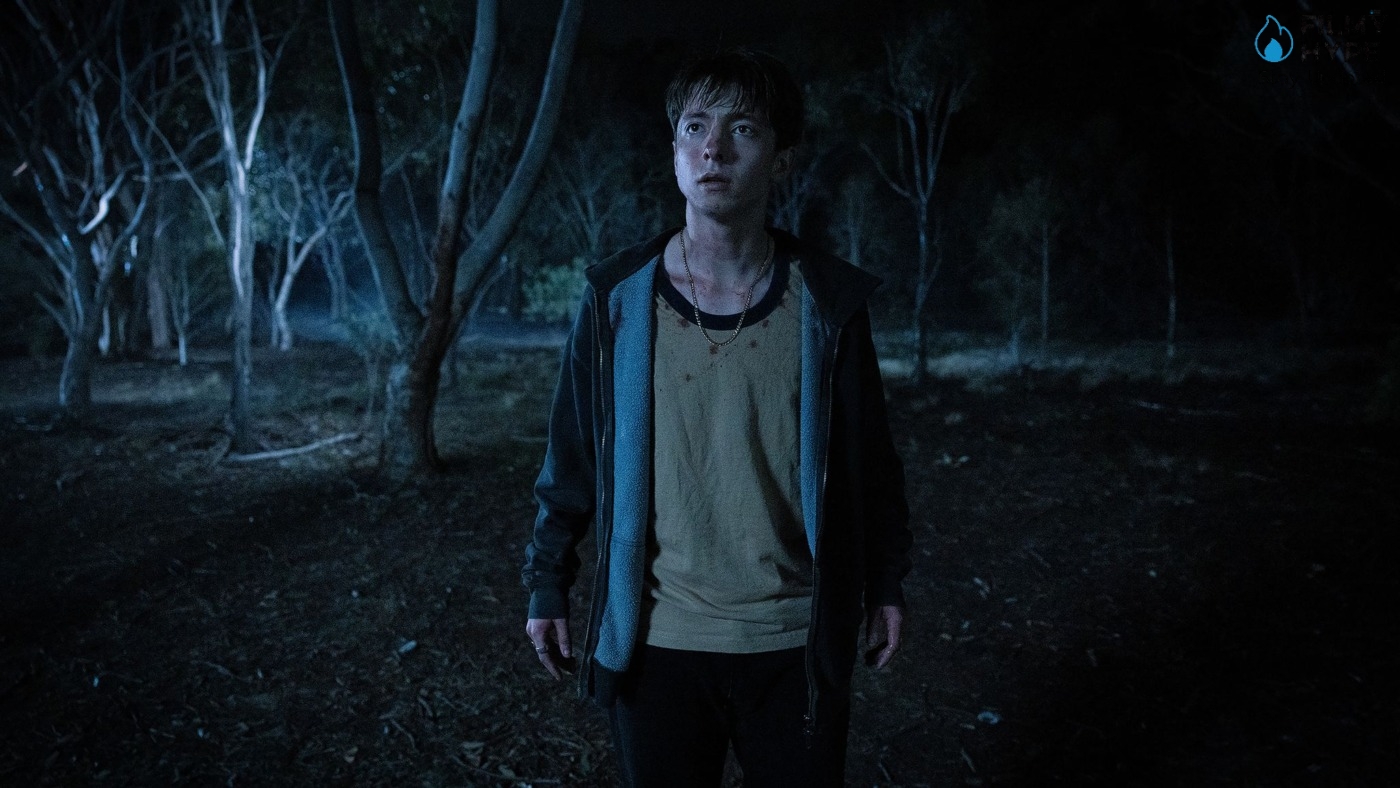
Leviticus, the first movie from Adrian Chiarella, follows Naim and Ryan, two teenagers who live in a small Australian community, where Christian ideals and religion mark and control everyone’s lives. Naim and Ryan fall in love and have a secret relationship, which becomes the center of a scandal when Naim discovers Ryan with Hunter, a classmate, and jealousy leads them to do something unthinkable: accuse Ryan and Hunter of being with the community leaders.
Leviticus Movie Ending Explained: How Does the Ritual Work? and What About Naim and Ryan?
To deal with this, the community decides to call a priest to perform a ritual to try to “save” their children from their own dark desires. What this ritual does is invoke a dark entity, which takes the form of the people the victims most desire, and begins to pursue them. If they let themselves be carried away by desire, then the entity kills them violently. Naim is also subjected to this ritual, and he and Ryan must fight to stay away from this entity, while they look for a way to undo the “curse” and free themselves from this presence that uses their own desires against them.
What happens in this movie (that brings the religious terror on very human ground) it is devastating for many reasons, terrifying for many reasons, and leads to a bittersweet ending that can be interpreted in many ways. Additionally, the entire film is filled with symbols that talk about faith, sacrifice, the idea of purification, and using religion as justification for doing terrible things.
How Does the Ritual Work in Leviticus?
When adults discover their children’s feelings, because Naim tells everything, the community comes together to try to “cure them” (all of this is inspired by real conversion therapy controversies).
The parents call a priest who, first, makes Ryan and Hunter drink something that looks like water; Then he recites a kind of verse that talks about Aaron’s sons, fire, and sin, and lights a flame with a lighter, which he asks them to see.
Hunter and Ryan have seizures and fall to the ground. From that moment on, they begin to be chased by a dark entity that takes the form of the other, to deceive them, make them approach, and try to kill them when they are within their reach. Hunter is killed by this entity, which he believes is Ryan, and Ryan is constantly attacked by it, thinking it is Naim. Eventually, Naim is also subjected to this curse and begins to see the entity in Ryan’s form.
The cure works like a curse. The entity sticks to the person or people subjected to the ritual and pursues them to use its own desires against it. The objective is not to teach a lesson; it is to kill those who allow themselves to be carried away by their forbidden desires, in addition to making people distrust those they love most, because they cannot know if it is really them or the entity.
What Do Fire and Aaron’s “Children” Represent?
During the ritual, the priest (who is more of a shaman than a priest) repeats a verse that talks about fire and Aaron’s sons. In Leviticus, Aaron is the older brother of Moses, who becomes the spiritual leader, and he and his descendants must take care of carrying out the rituals and making the offerings and sacrifices to seek forgiveness for the sins committed by the people, to maintain their relationship with God.
In the story, two of Aaron’s sons break the rules and are consumed by fire. After this, Aaron and the rest of the family must continue working to maintain the purity of the town and their own.
Also in Leviticus, fire is a symbol of God and his “judgment of sin”, and is used as an element of purification and punishment for some serious sins (according to Christ Church Woodford, one of those sins is sexual immorality, which in the movie is what Ryan, Hunter, and Naim are accused of).
Why Do Naim, Hunter and Ryan See The People They Want Most?
That is part of the ritual, but it is also a way to use their desires against them, to make them afraid of themselves, to let their guard down, to seek pleasure, and to get closer to the people they love.
It is psychological torture, where it is not only intended to punish the body, but also the mind, making the person want to completely distance themselves from the people they want and love. As explained later in the film, the entity can change shape, and that means that, from the ritual, the victims are in danger whenever they feel attraction or desire for someone.
Is There a Way to Destroy the Creature?
Naim realizes that fire can stop the entity, which hurts and stops it, and, for a moment, it seems that it can also destroy it, but later we see that this is not the case.
After burning down the building where he traps the entity, and discovering what his mother thinks of him, Naim decides to leave town and goes to a truck stop, where he reunites with Ryan. The two leave together, but Naim manages to see the entity, in Ryan’s form, from the window, proving that it was not destroyed and that it will probably always be with him.
The only thing you can do is learn to identify it, stay away, and be surrounded by other people, so that it does not get close.
What Does the End and Revelation of Naim’s Mother Mean?
That ending shows that Naim and Ryan decide to leave that place where they will never be understood and accepted, and try to find a place where they can be themselves and where they can be together, but that fear, that danger never It’s going to abandon them. Not only for the entity, but also for the people who act out of hatred and violence every time they encounter someone who is different from them, or who goes out of the box.
The most brutal thing about the film is when it is revealed that Naim’s mother, played by Mia Wasikowska, knew what was going to happen to his son if he subjected him to the ritual, and he decided to do it anyway. The mother would rather lose her son and see him suffer than see him have his own desires that went against his religious beliefs.
She even decides not to help him and not listen when he tells her what is happening and when he needs help. The hardest thing is that this is also a reflection of the attitude of many people, and many parents, in the real world.
The Sacrifice of a Child and the Connection with Religion?
Sacrificing a child is something that appears a lot in religion, and not only in Catholicism. Abraham was going to sacrifice his son, Isaac, because God asked him to, and God himself sacrificed his crucified son to save humanity from sin.
In religious beliefs, this is an act of redemption and trust in God, and usually has a benefit or some kind of payment, and is also a test of obedience and trust in God.
When families do this in the movie, they are doing that, placing their trust in God, being obedient, and seeking that benefit, which in this case would be for their children to be “cured” of their instincts and desires, and to stay on track. path “correct”. The interesting thing is that something different happens: the children stop trusting them and decide to distance themselves from the community that decided that they preferred them to be dead and suffer, before letting them be themselves.