

2026 has been a great year for terror, and Leviticus, Adrian Chiarella’s new film, promises to be one of the best films of this year, along with other titles that have already managed to surprise, as is the case with Backrooms, Obsession, and Lee Cronin’s The Mummy. Leviticus has a story that is a little reminiscent of that of It Follows, which was one of the films that revolutionized horror cinema a little over a decade ago, presenting a more psychological, disturbing, and catchy type of horror (because it stays with you for a long time).
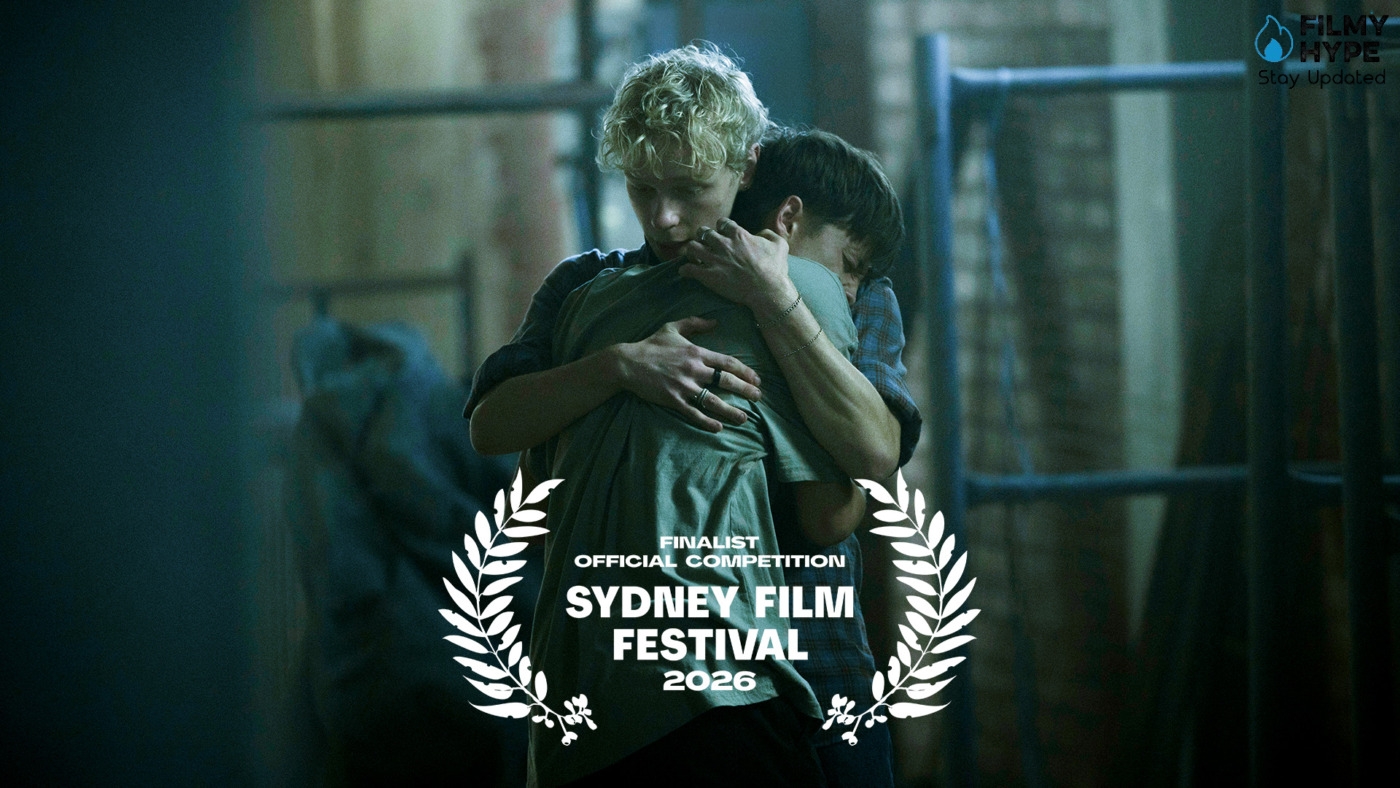
The film (releasing June 18) follows Naim (Joe Bird) and Ryan (Stacy Clausen), two teenagers who live in a very conservative Christian community. Naim and Ryan fall in love and begin to explore their desires, but when their community discovers this, the two are subjected to a conversion therapy/ritual, where a dark entity is released and begins to haunt them. The particularity of this entity is that it takes the form of the person the victim wants most, so Naim sees the monster as Ryan, and vice versa. And, if they let themselves be carried away by desire, by the feelings they feel for the other, and decide to act on it, then the monster chases them, attacks them, and does everything possible to kill them with violence. Obviously, the horror movie is fiction, but there is a lot of reality behind what happens and the concept of the monster.
Leviticus: The True Story of the Horror Movie You Should See If You Liked Obsession?
Leviticus director Adrian Chiarella achieves what seems complicated and twisted at first glance: taking supernatural horror and turning it into a social diagnostic thermometer. Or what is the same, consciously and twistedly psychoanalyze the sense of horror to point out cultural and social violence. All are focusing on the brutal conversion therapies that millions of young people undergo queer they suffer in the world every year.
But instead of taking the simple route of analyzing a similar topic from psychological terror, the director does so from the supernatural. Furthermore, from a terrifying vision that turns the film into a disturbing mix about spiritual darkness and that which awaits beyond. So the starting point is deliberately mundane: a gray town in Victoria, Australia, with industrial chimneys and perpetually cloudy skies. The kind of place where people go to church not by faith, but by having nothing else to do.
But especially, the script (which the director also writes) explores Niam (Joe Bird), a teenager recently arrived with his mother (Mia Wasikowska), who smiles in a way that makes you distrust all smiles. As expected, Niam wants to escape the town as soon as he can or at least find a place he can consider his own. Doubly isolated by the move and his sexual orientation, the character soon seems to struggle with a twisted idea: fitting in involves suppressing his identity or homogenizing it through the violent method of removing any behavior that may be uncomfortable.

The plot of Leviticus is brilliant in its ability to analyze and reconsider the fact that the fear of rejection is also a door to hatred. Complex ideas that the plot handles, Niam must deal with rejection, violence, and ostracism. Finally, when this lonely, isolation-horrified boy meets the handsome, slightly rebellious Ryan (Stacy Clausen), who exists in every small town in every small-town movie, the recipe for disaster seems obvious. This teenage romance that anywhere else in the world would simply be a story of growth becomes Leviticus at the open door to disaster. One that will lead both young people to brutal conversion therapy, but will also transform their suffering into a type of perverse horror that surprises with its sinister and unpredictable quality.
What Does Leviticus Mean?
Leviticus gets its name from a reference to one of the Old Testament books of the Bible, which is also known as the Book of Moses.
Leviticus says that God told Moses that God wants all people to be holy as God is holy.
“The book of Leviticus provides the ancient Israelites with instructions (or laws) for life in the presence of God outside the Garden of Eden. It guides them toward a way of life united with a holy God”, he says, The Bible Project.
It is also a book that talks about offering sacrifices, even animal sacrifices, instead of the life of a human. Its goal, according to the site, is “to bring human beings “through death” back to the eternal and good life originally conceived and back to living in unity with God”.
Practically, it is a kind of book of rules and instructions that people must follow to follow God’s way. For the film, this title makes a lot of sense, as it takes place within a very conservative community, where certain acts and desires are considered bad and punished (such as falling in love with a person the community does not consider “right”).
Is Leviticus a True Story?
The supernatural elements of this film are, fortunately, fiction, but there are real elements that are as disturbing as any monster, because they talk about cruelty, harshness, violence, hatred, and homophobia.
It is not known who created the infamous ones conversion therapies, but it is believed that they have their origin in the mid-1800s, and that little by little they began to be adopted by many religious groups, who sought “to help” their followers eliminate behaviors, thoughts, attractions or desires that did not adhere to their ideologies or beliefs (other than male-female), and that they considered sins.
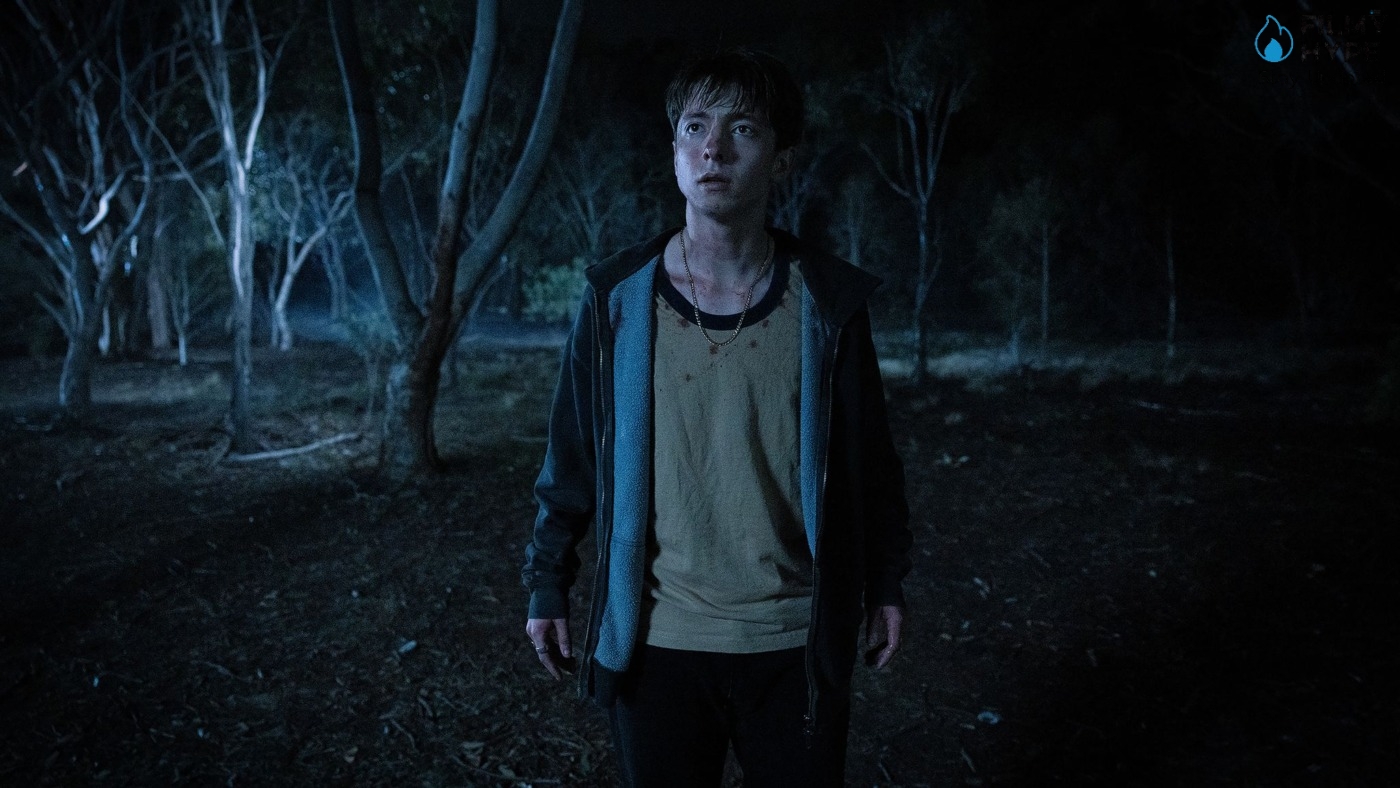
These therapies, which still exist, are controversial because they tend to be extreme, violent, degrading, and, sometimes, also humiliating. They are designed to break people in an attempt to “heal them”.
“When nonconforming identities were considered a medical illness, psychiatrists used medical treatments, such as electroconvulsive therapy, lobotomy, drugs and psychoanalysis, to cure or prevent ‘deviation, he says, National Museum of American History.
The museum adds that “during the last 20 years, approximately, the conversion therapy has been scientifically discredited and is no longer medically approved as effective or appropriate”.
Even though it is a “therapy” that has been discredited (by psychology itself) and criticized for its methods that can be very extreme (and is illegal in some places), many religious groups continue to use some forms of this, and this is what takes us to the history of Leviticus, where two teenagers are subjected to these therapies and, as a consequence, are pursued by a terrifying entity.
What’s Chasing You Has Your Face?
The most interesting formal decision in the film (and also the riskiest) is to turn trauma into a physical entity. The premise works almost with a simplicity reminiscent of It Follows (David Robert Mitchell) and his terrifying vision of a shapeshifting entity capable of adapting its appearance to chance and turning the enemy into anyone. In this case, the supernatural force that stalks Niam and Ryan takes on the appearance of the person they each desire. Not an anonymous monster nor an abstract shadow, but the other boy. This investment is cruel in a very specific sense: it turns desire into a source of danger. When you look at someone you love and can’t tell if it’s real or the thing that wants to kill you, love itself becomes uninhabitable.
The twist gets scarier as Leviticus analyzes the idea of longing, love, and attraction as a source of punishment: of conversion therapy with all its psychological and physical brutality, on the lookout for a twisted creature capable of devouring the possibility of desire. The metaphor works in multiple registers simultaneously.
First, the psychological one: conversion therapy tries exactly that, to make desire perceived as a threat.
Second, the one that links the characters: children who have gone through this type of intervention learn to distrust their own feelings, to treat them as symptoms of something dangerous.
Third, the cinematographic: the paranoia it generates in the viewer replicates the experience of the characters. You don’t know who to trust, nor does anyone who goes through the horror of not having a real idea of what is happening.
Religious Saturation and Gothic Monotony
Chiarella has a very precise eye for spaces. Victoria, in its film version, is neither a picturesque place nor an obvious hell. It’s worse than that: so the director analyzes the threat not as part of the environment, but of what happens within it, that invisible layer of mutual surveillance that in small, religiously cohesive communities can become suffocating without anyone naming it. A detail that Leviticus analyzes again and again.
Especially when reflecting on the idea of evil. Not even Niam’s mother (overcome and devoured by devotion) until the church, converted into an observer and judge of behavior. The film bases the fear of those who are different not on inner darkness turned into a threat, but on perceptions about the limits of acceptance and intolerance. That is, perhaps, the most incisive comment of Leviticus: the most lasting damage is not done by monsters who know they are monsters, it is done by those who are convinced of their goodness. Faced with that type of certainty, arguing is useless. Surviving is the only possible response in the midst of a progressive horror that becomes increasingly suffocating and terrifying. The high point of this sober, disturbing and brilliant premise, destined to become one of the best horror films of the year.